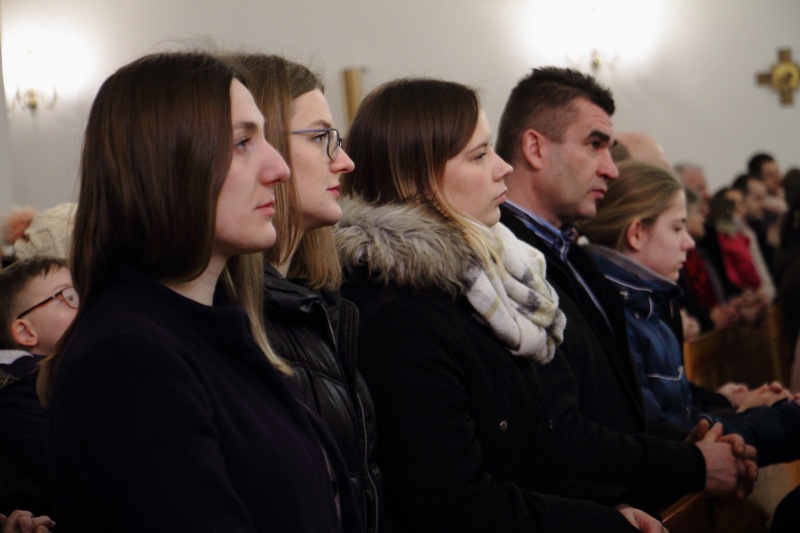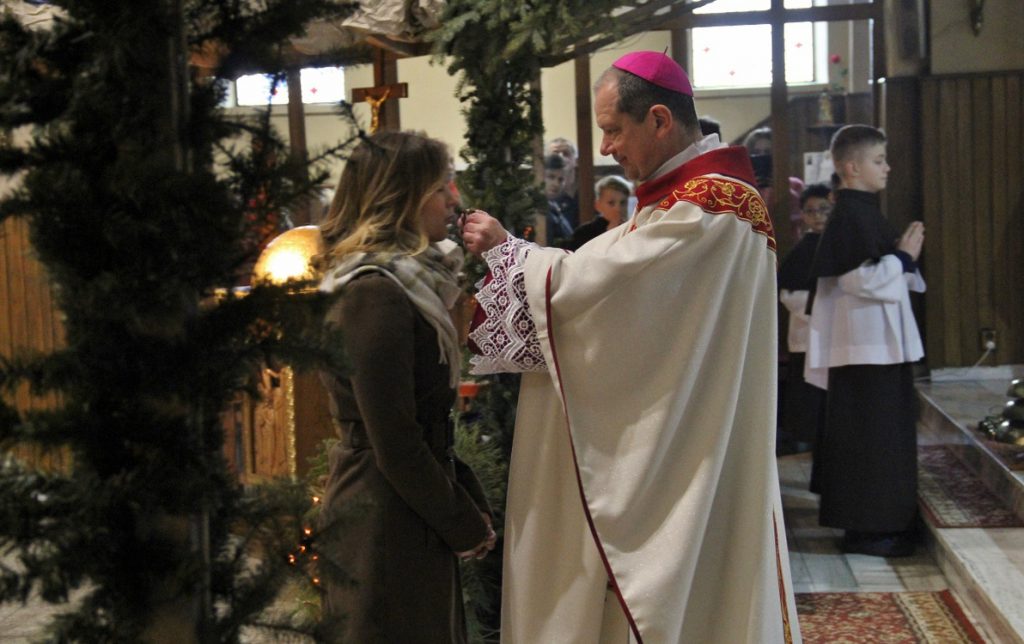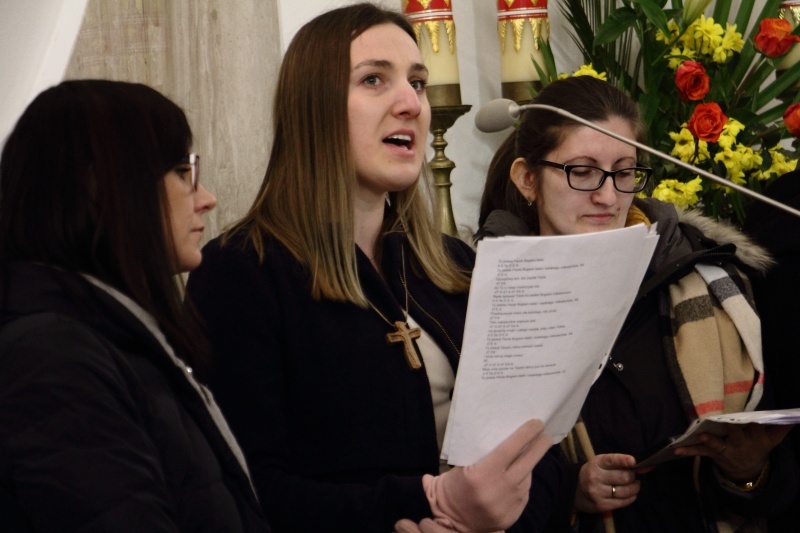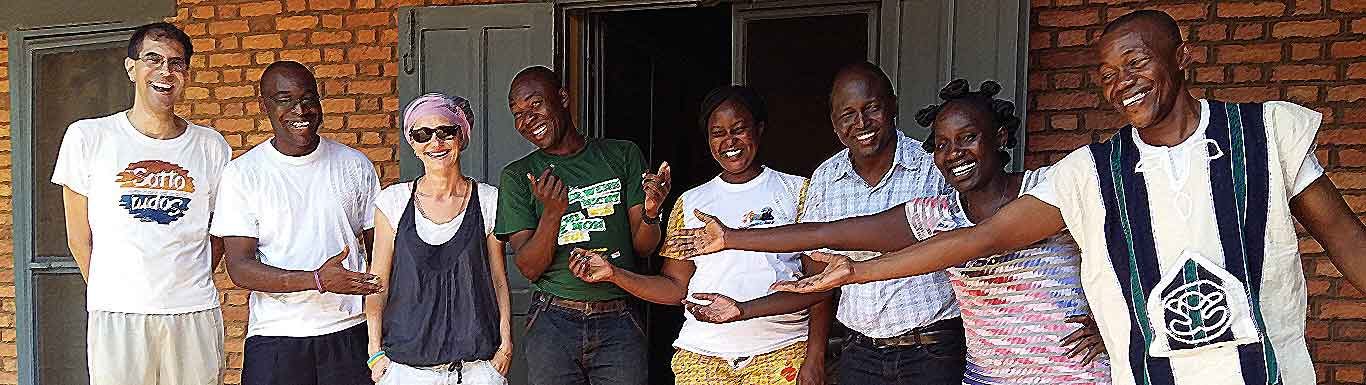
This year three girls joined our polish CLM movement and are now officially Comboni Lay Missionaries.
Agnieszka, Ewelina and Marcela are currently doing their “life in a community” experience in Comboni father’s house in Cracow.
Soon, Ewelina and Agnieszka will go to Peru for 2 years’ mission, to Arequipa where they will replace Paula and Neuza.
Marcela will join the community in Mongoumba – Central Africa, where another polish CLM – Monika is currently working on the mission too.
These three months are filled with meetings with different people and learning life all together.
They have language classes (Spanish and French), meetings where they discuss and interpret God’s words for Holy Bible.
Ewelina and Agnieszka are volunteers in the family emergency and Marcela started her voluntary work at hospital.
As they say most of their free time they are spending on perfecting the languages, they will soon use very often and on talking with Comboni fathers, brother and themselves.
Let’s pray for them so they could be true witness of God’s love and mercy every day of their mission and their life in general.
It is said that experience is the best teacher and for us as candidates undergoing formation to become Comboni Lay Missionaries, this was and is part of our learning process. The experience had been planned months prior with the selection of two candidates (Beatrice Imali, a nurse, and Angeline Njeri, a teacher) as the first of the group to experience missionary life and work in mission territories. The experience was to be led by our formator, Fr. Maciek Zielinski. The journey from Nairobi to Amakuriat Mission in West Pokot County started on the night of 2nd December 2019 with a slight detour to Kacheliba Parish for breakfast and little rest the next morning. We arrived at the Mission at around 1:30pm to a warm welcome from the entire community (both MCCJ and CMS) and the Provincial Superior of the MCCJ in the Kenyan Province, Fr. Austin Radol.
With Rev. Fr. Austin on our first night in the mission
After a goodnight’s rest, we embarked on our duties the following day as scheduled in the MCCJ Amakuriat Community’s calendar prior to our arrival. Beatrice started work at the dispensary in the mission ran by an amazing and hardworking Sr. Gabriella. Angeline embarked on a journey of youth formation and pastoral work in Amakuriat and other outstations within the Parish. The missionary experience meant to last for about three weeks had already began. This was later followed by the sharing of meals and hearty laughter with the community later in the day. Even on our first days there, we knew that the experience would be a wonderful one.
Angeline conducting youth formation at Chelopoy, an outstation
Josephine (joined us later) conducting youth formation at Kaakow, an outstation of Amakuriat Parish
It was important to not only be fully engaged in the work of the Comboni Family in Amakuriat Parish but to also observe and interact with the people and try to learn as much as we could about them. The intricate workings of a society and it’s culture serve as a great teacher to an aspiring missionary. In our engagements with them, we not only were able to pick few words here and there, but also got to experience their enriching faith and community as a people. The Mass was celebrated with joyful singing and it felt like everybody knew everybody.
Nevertheless, there never lacks challenges that one observes even on a day to day basis. Due to limited health facilities, the dispensary is always having patients streaming in. Some patients so sick that Sr. Gabriella has to rush them to Moroto, Uganda. The heaviness of the workload could be seen in the face of Beatrice, who though tired always expresses the joy she feels in serving the sick.
Youth formation not only enables you to engage with the youth, but also opens one’s eyes to the need for youth sensitization on personal growth and development, especially through education and spirituality. However, the society has still yielded great young men and women who have and are still working towards the betterment of themselves as individuals and as a community. This can be clearly seen by the youthful young men and women working in the dispensary, the youth and young children in schools and the various professionals within the schools and churches. The work of the Comboni Missionaries in this area can be clearly seen and continues to grow daily. But even then, a lot remains to be done. It is as the Lord put it, “The harvest is great but the laborers are few”. This puts into perspective the need for Comboni Lay Missionaries in not only Amakuriat Parish but in other missionary territories here in Kenya and the world as a whole.
Beatrice, Sr. Gabriella and the staff at the dispensary
Our formator, Fr. Maciek, has always insisted that it is important to also experience community life, albeit even for short periods at a time before basic formation is completed. In our short stay, we were able to see the beauty of harmonious living among community members, and the joy it brings to the mission. We felt at home and social interactions between us and the MCCJ and CMS community in Amakuriat were something we will live to treasure. We even got to celebrate Fr. Maciek’s and Beatrice’s birthdays, and our first international CLM Feast Day with the community!
Celebrating CLM feast day with the MCCJ community in Amakuriat
With the end of the experience drawing near, we knew that this was an experience we would relate to our colleagues once back in Nairobi. There is guaranteed nostalgia, and the desire to serve as Comboni Lay Missionaries has only been strengthened by this experience. We hope that our experience also inspires other CLM candidates to keep discerning and aspiring to engage in such rewarding and blessed work. We hope to be back someday. Until then, to the amazing West Pokot community, Keriama! (See you again).
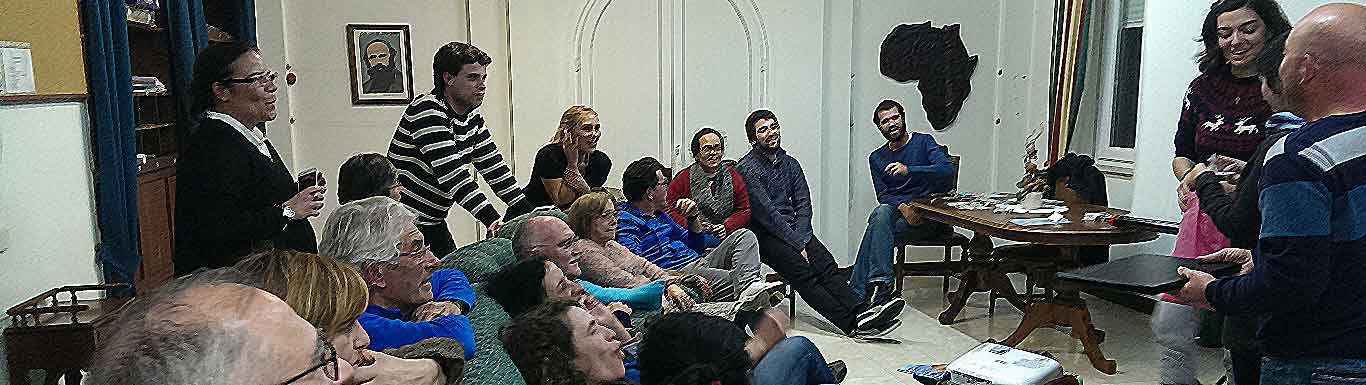
One year after the general assembly in Rome and the greetings of Pope Francis we celebrated with the Comboni-Family the Comboni Lay Missionaries movement day together with volunteers in the global south and north, who decided to be inspired by Saint Daniel Comboni, strengthened by a movement of lay Christians and lifelong dedicated to spread the good news of the Gospel.
We started with a World-Cafe with statements from Pope Francis about mission today, mission in shrinking communities, mission in post-colonial Europe and in times of global climate change. Those arriving had the opportunity to comment on selected statements at several tables. The idea was to exchange ideas in several small groups at parallel tables.
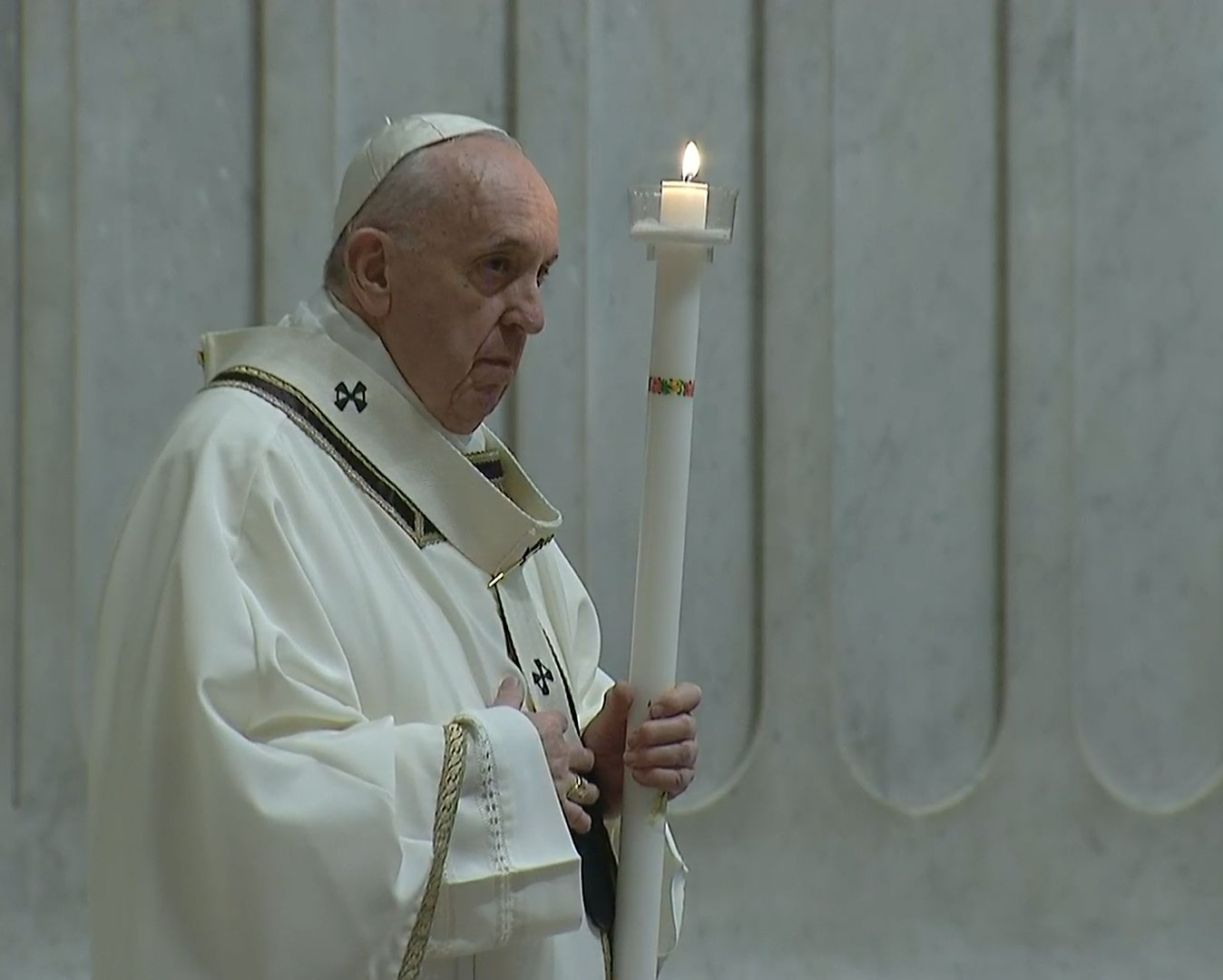
Afterwards, a short video of the Pope’s greeting in Rome in December 2018 (compiled by Christina from Brazil) and the greeting of the Central Committee of the Comboni Lay Missionaries were read out partly as an introduction to the feast. It dealt with the reading of the third Advent and the joy with which the gospel is to be proclaimed as well as the growing together of the CLM nationally and internationally. The new international logo of the Comboni Lay Missionaries was presented. This was the result of a cooperative process last year and was selected from several proposals.
The word service was initiated by a “search order”. Those present were invited to collect various objects during a walk, from which a crib should then be designed. Thus, the current times and the past were brought together as well as aspects of global integration and injustice, pollution and mission today. The two MaZ-in-service, the returning MaZler *, the CLM international and the numerous Comboni friends, who had responded to the invitation but unfortunately could not be there, were included in the prayers.
The feast continued in the dining and living room. A “shepherd’s meal” was prepared there. This again illustrated the upcoming Christmas. Thanks to many helping hands, there was a delicious, social get-together, rounded off with cake and children’s Christmas punch (as two families brought their four children as well). During the evening and the following day, congratulations and pictures came from CLM celebrations in Mexico, Kenya, Guatemala, Portugal, Spain, Egypt, Italy and from Rome were shared live via WhatsApp while the feast.
Moving on with the reporting on my trip to Kenya I would like to share with you about my visit to the new group of CLM candidates which is coming up there.
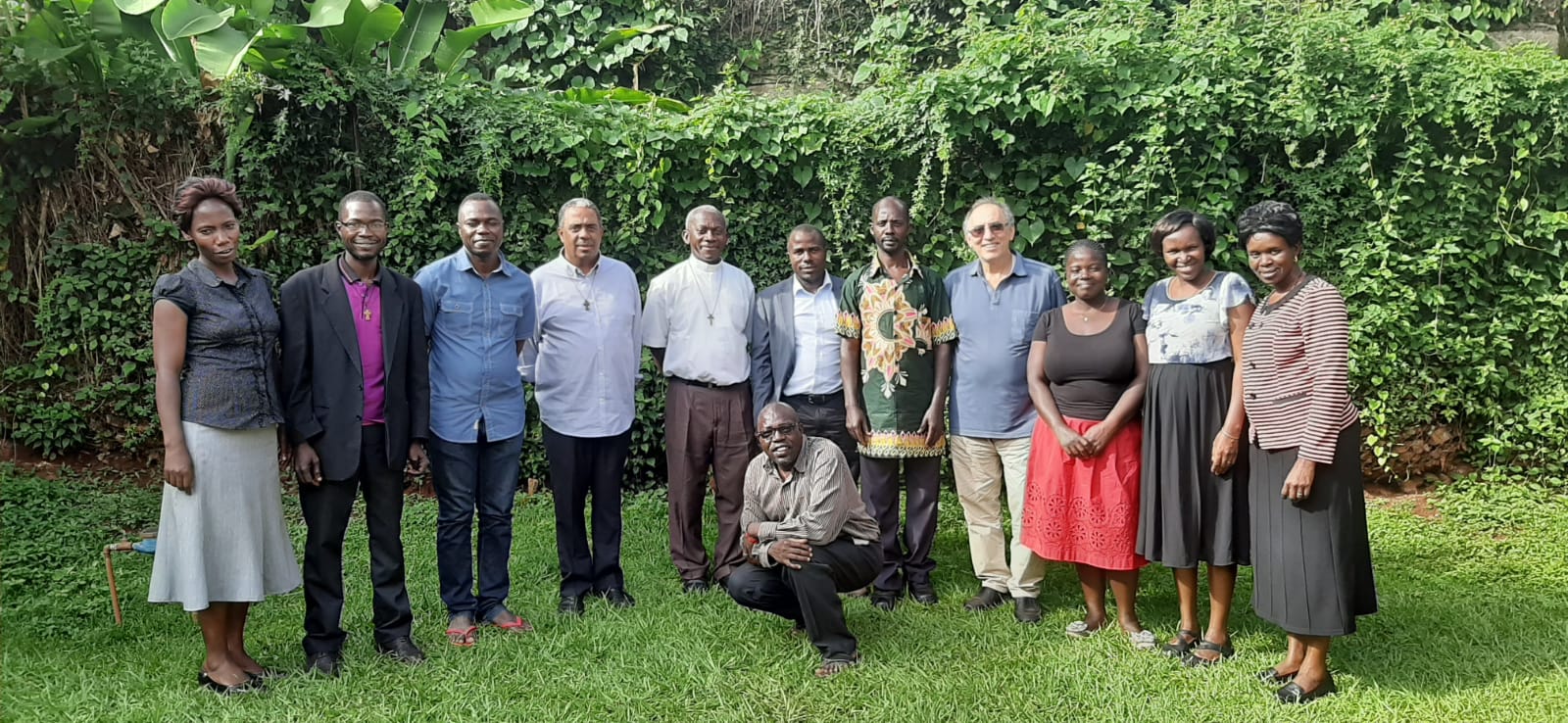
The group has been getting together for over a year in Nairobi. They meet on the first weekend of the month. Many of them come from the Friends of Comboni group, but in some way some of them would like to take another step forward and follow the CLM vocation.
First of all, I must give thanks for the reception I have received through this time, starting with my reception at the airport on my first day. Four members found a way to be there to welcome me. From there, we went to the home of one of them where she had lunch ready for us. A great welcome to establish a family spirit. Fr. Maciek joined us for lunch. He follows the group with the help of Fr. Claudio, whom I met later in Embakasi.
We spent the afternoon together even though I must admit that I was very tired because of the trip. After that, they drove me to the house of the Comboni Sisters of South Sudan, which is at the opposite end of the city. At that point I could see the chaos that grips circulation in a capital as large as Nairobi and that would be with me wherever I went in Kenya.
On the first Friday of the month they took me to Embakasi, outside the city and near the airport, which is the Comboni community that is the point of reference for the group and where they meet monthly.
We had supper together and shared how the week had been for each one. Thus, early Saturday morning we were able to start our meeting.
The purpose of the meeting was to get to know each other better, starting with a presentation of the CLM at the international level, our history and the agreements reached at our last international meetings. All this in order to share on how the group is developing, what are its immediate tasks and spend some time on lectures, resolving doubts that are normal for a new group and looking at the challenges that will arise in the future.
They are in the second year of formation and they will soon reach an important moment. It will be time to decide and make a missionary option both at the personal and at a group level. This formation they are receiving must help them discern their personal missionary vocation, but also discern as a group the missionary options they will accept. This is what we talked about mostly. The Lord has called each one of them to be missionaries. So, this formation must help them decide the direction of the rest of their lives. If they decide to enter the CLM, they will have to see if the Lord calls them to leave Kenya and go to some of our missionary communities. But they must also discern if they are called to open a missionary presence far away from Kenya or in a neighborhood of Nairobi. For instance, for them Amakuriat and the Turkana area are important points of reference some have already visited. Next month two of the women will initiate a small mission experience there helping the health center, youth work and in general pastoral activity.
Each time the Lord gives rise to new vocations he does it to answer the many needs of the world. What is the Lord asking of them? This is what they must discern. They must keep in mind the needs and special cases that we must face in our condition as CLM being lay, single or married.
I also want to comment on the project of the sale of honey they carry out to find funds. It is something they already introduced to us in their blog and in which they are very involved. They buy honey from the Pokot warriors and thus help that community. Then they transpose it and sell it to earn something to live with, to buy what they need for the group and also to help finance the common fund at the international level. It is hard work requiring a lot of time, staying up on Saturday night or getting up very early on Sunday to fill the jars of one kg or half a kg, wash the empties that will be used to buy more honey. Then they must label them, follow the sales and keep the administration. This then brings them to do promotion in the parishes and also to sell during the week to relatives, coworkers and friends to earn something. This is a group that, from the very beginning, not only shares monthly about its activities, but also wants to contribute to our common cause.
During my last days in Kenya I also had the opportunity to chat with some of them, to know their families and their personal concerns.
It is wonderful to see how the Lord keeps on calling. A new group in Africa is, without a doubt, a great challenge for us as CLM. We ask St. Daniel Comboni to accompany it, to animate it and to fill it with his passion for Mission. “To Save Africa with Africa” is a slogan that keeps calling many Africans to serve their neediest brothers and sisters wherever they are.
May the Lord give them strength and courage in the journey ahead.
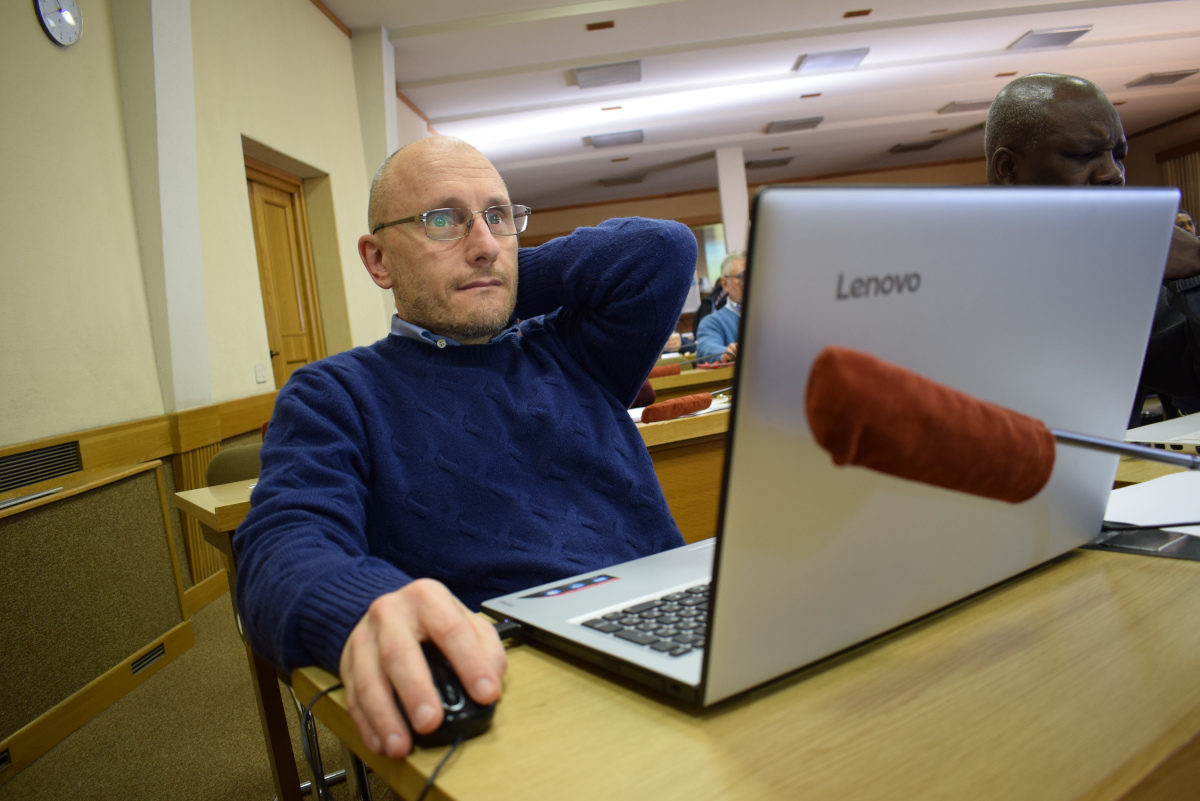
Greetings to one and all! As several of you know, these last few weeks I was on a visit to Kenya. I experienced a lot of things during those days and I would like to share some of them with you. My first item will be to tell you about my first days in Nairobi, when I had the opportunity to attend the Silver Jubilee celebrations of Tangaza University College.
First of all, I must thank the community of the Comboni Sisters that hosted me during these first days while I was attending the Silver Jubilee of the Tangaza University College. I include Sr. Teresita, with whom I shared all these days, who showed me around and explained the place’s history. We shared good days when we could converse and get to know a little better the reality of Kenya and, through the other sisters, of South Sudan as well.
Tangaza University College was born 25 years ago. It was a pioneering idea in many ways and, above all, an inspiration that the Comboni family and other congregations and people are still supporting.
In particular, these days they celebrated the 3rdAnnual African Conference on Entrepreneurship during which lectures and round tables were held over the purpose and the importance of social entrepreneurs in Africa and specifically in Kenya.
Kenya faces many economic difficulties and a high level of unemployment, especially among the young. This reality which statistics throw at us stands in contrast with all that was discussed during these days. The gathering was a venue where to share experiences and challenges among a solid group of entrepreneurs. These are people filled with initiative and with many ideas that want to change the country.
Social entrepreneurship goes well beyond the interest to have a business survive and make a profit. Generating wealth in the country and its repercussion in society are two supporting pillars for these entrepreneurs.
We all know the importance of investing in education and health care in a country, but this is only a first step. The second step is the challenge for civil society to generate a just wealth for all. It means to generate a development that will improve food availability, provide better transport, a better agriculture that will satisfy people’s needs, infrastructures and, finally, to raise the level of life of the people, the level of health care for all and a care of the environment, because it is the only way to guarantee a better future for all.
These days dealt with all these things. The plenary sessions and the round tables that were held were all equally interesting. This included, in a parallel way, the exhibits of small enterprises that are opening up in this field and the contacts made possible between people sharing an interest in opening new businesses that will offer solutions to concrete problems.
It was often stressed that the problems of Africa can only be solved by Africans. This is very much in tune with St. Daniel Comboni who, almost two centuries ago, was saying, “Save Africa with the Africans.”
All this made me reflect a lot on our style of mission, our missionary priorities as a Comboni family, and especially as lay people. For sure, as lay people we are much closer to this reality. And even though it is true that not everyone is called to be an entrepreneur, it is certain that our missionary activity must grow along these lines of helping local people, especially the young, to build sustainable wealth and development. It is important to be involved not only in education, health care and social matters, but also the economic development of society and local communities must be a priority in our missionary planning, in our formation, in our vocation promotion.
Clearly there continues to be much work ahead and all our gifts remain few as we place them at the service of those most in need.
Este sitio web utiliza cookies para mejorar su experiencia. Si continúa navegando consideramos que acepta el uso de cookies, pero puede optar por lo contrario si lo desea.
This website uses cookies to improve your experience. If you continue to browse we consider you accept the use of cookies, but you can opt-out if you wish. Acepto Puede obtener más información - You may have more information here
Politica y privacidad de Cookies - Privacy & Cookies Policy
Privacy Overview
This website uses cookies to improve your experience while you navigate through the website. Out of these, the cookies that are categorized as necessary are stored on your browser as they are essential for the working of basic functionalities of the website. We also use third-party cookies that help us analyze and understand how you use this website. These cookies will be stored in your browser only with your consent. You also have the option to opt-out of these cookies. But opting out of some of these cookies may affect your browsing experience.
Necessary cookies are absolutely essential for the website to function properly. This category only includes cookies that ensures basic functionalities and security features of the website. These cookies do not store any personal information.
Any cookies that may not be particularly necessary for the website to function and is used specifically to collect user personal data via analytics, ads, other embedded contents are termed as non-necessary cookies. It is mandatory to procure user consent prior to running these cookies on your website.