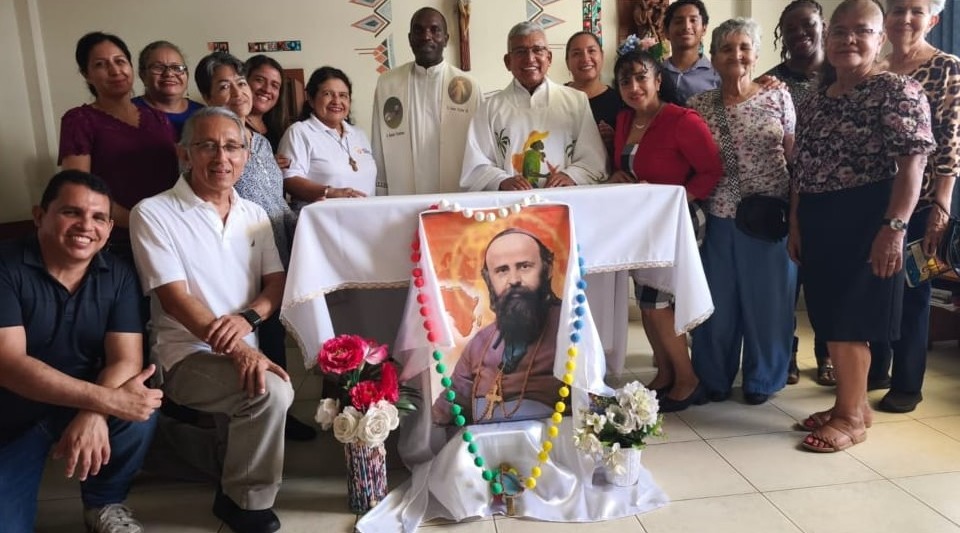
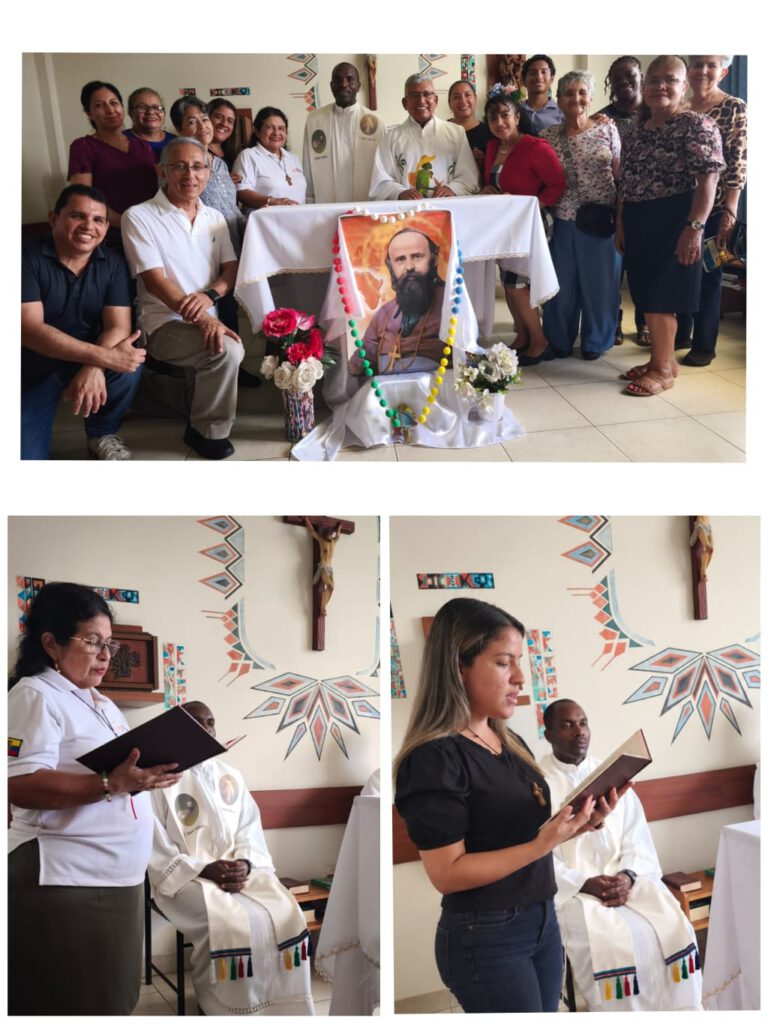
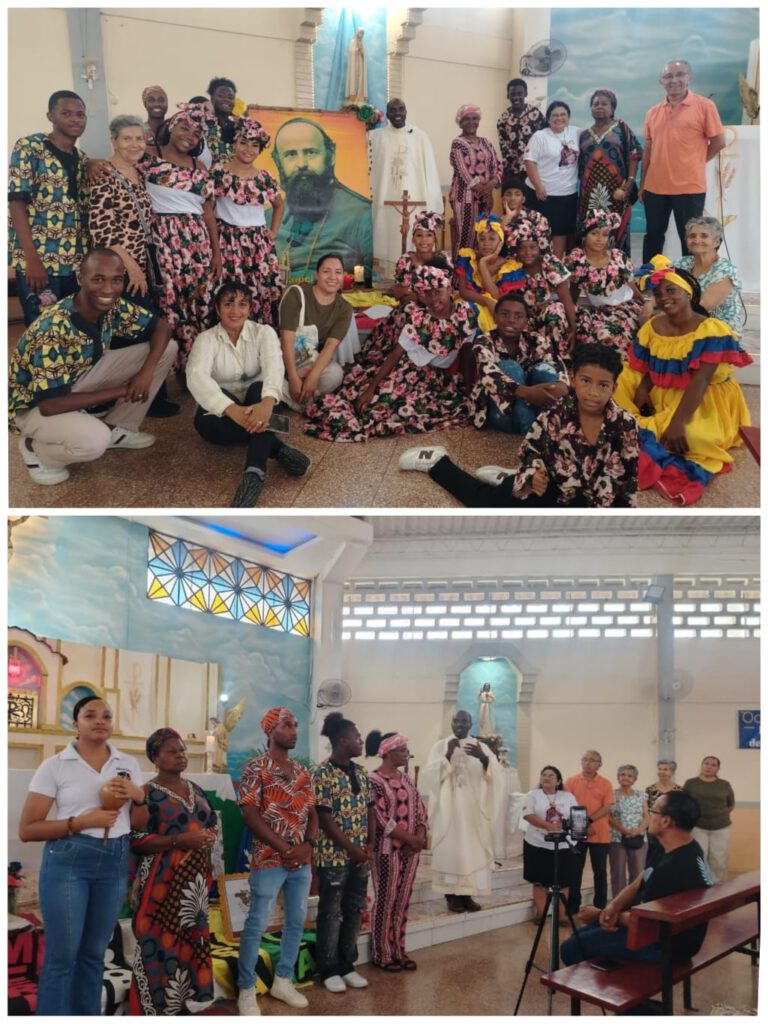
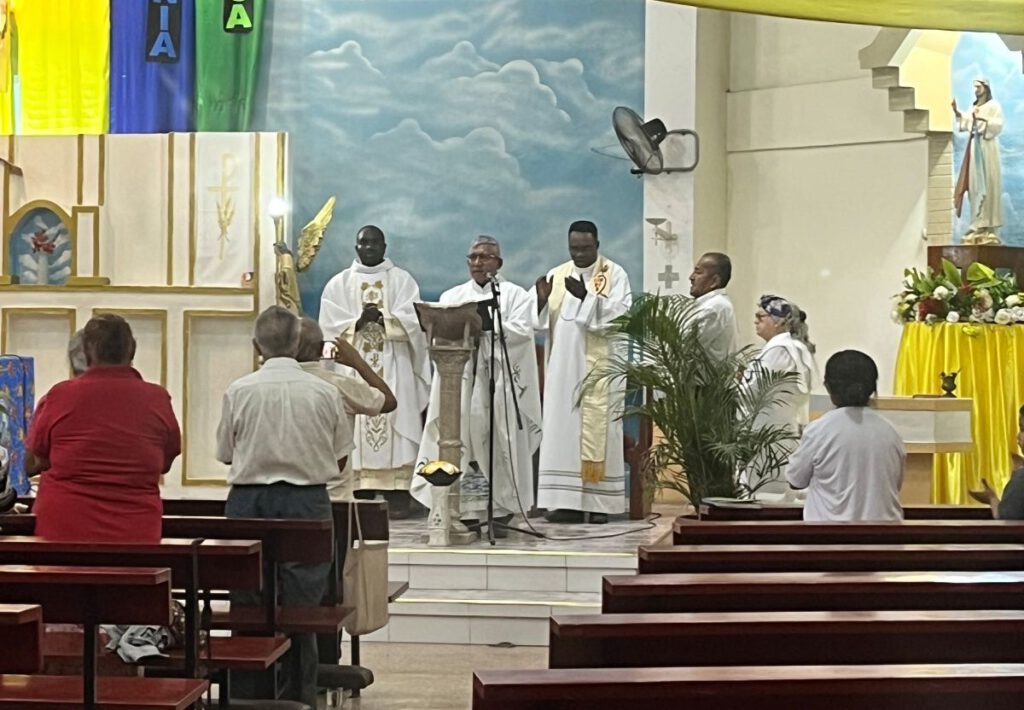
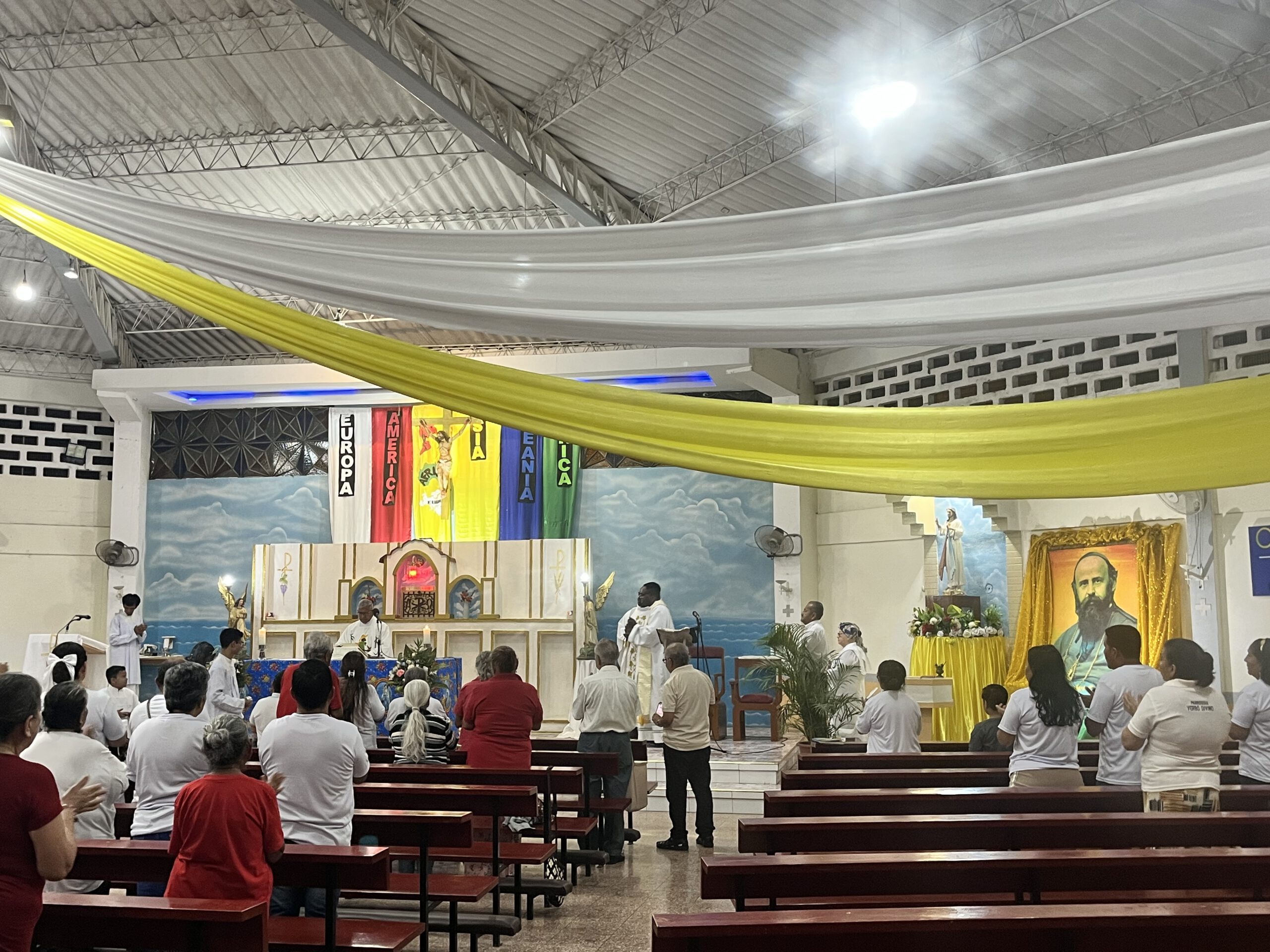
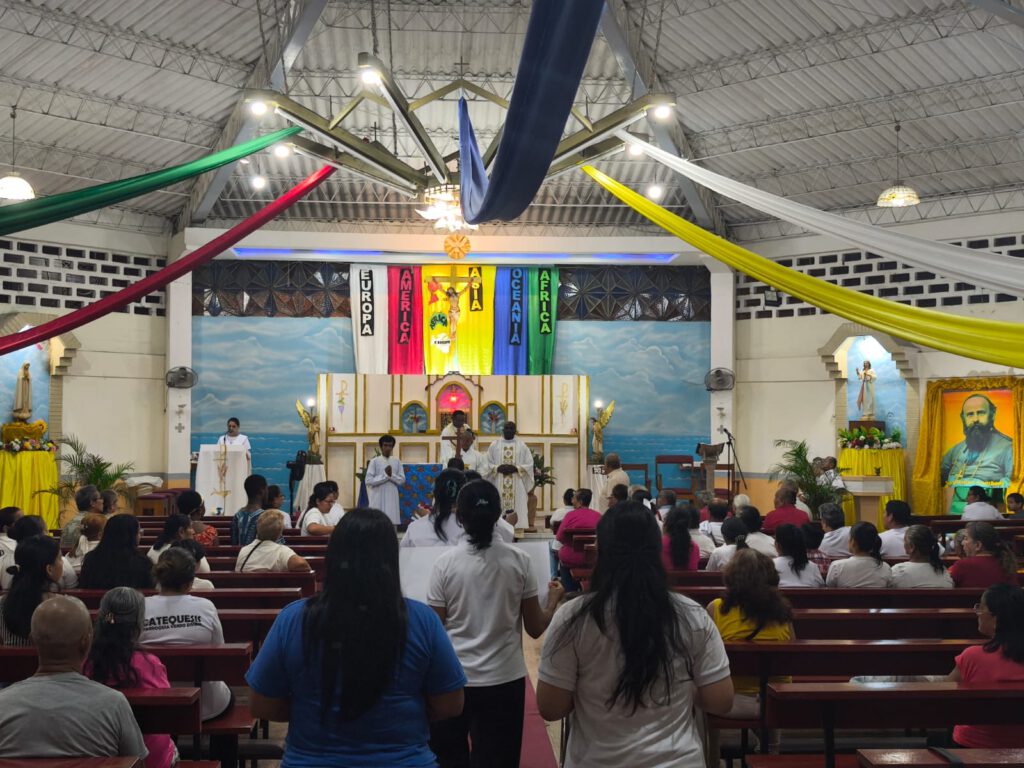
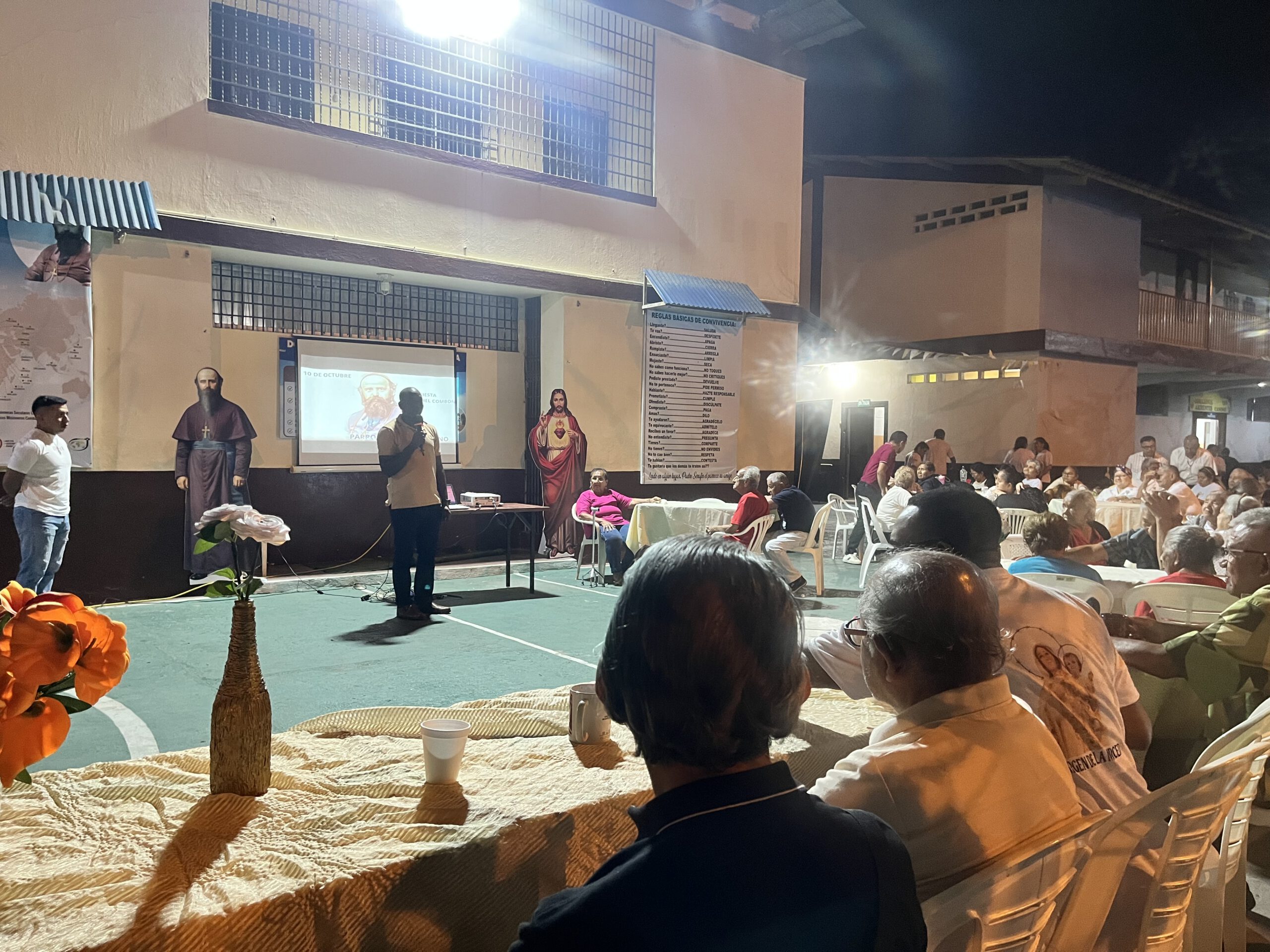
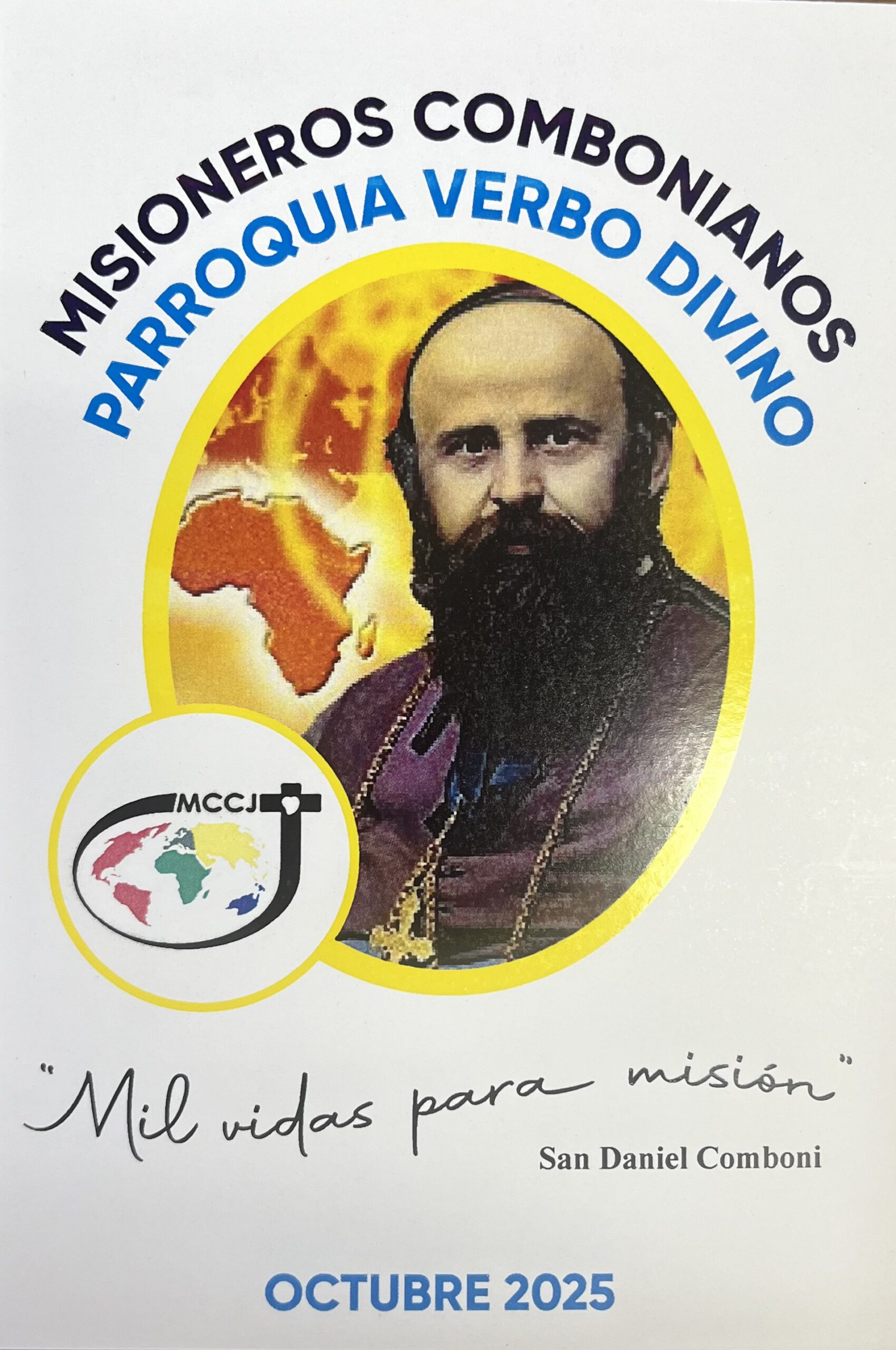
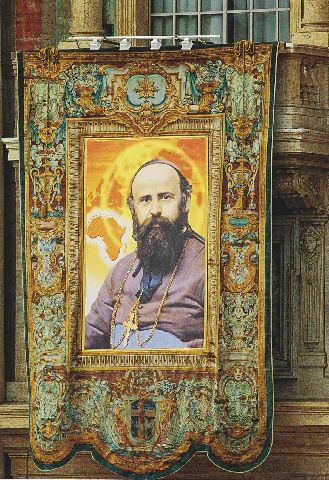
With joy, faith, and a missionary spirit, the Comboni Lay Missionaries in Ecuador celebrated the feast of St. Daniel Comboni on October 10 at the Afro-Ecuadorian Cultural Center in Guayaquil, in an atmosphere of fraternity, prayer, and community fellowship.
The day began with the celebration of Holy Mass, a special moment to give thanks for their shared missionary journey and to renew their commitment to continue living the Comboni charism in service to the poorest and most needy. Afterward, the participants shared a time of fellowship, strengthening the bonds of friendship, communion, and fraternity that animate the life of the community.
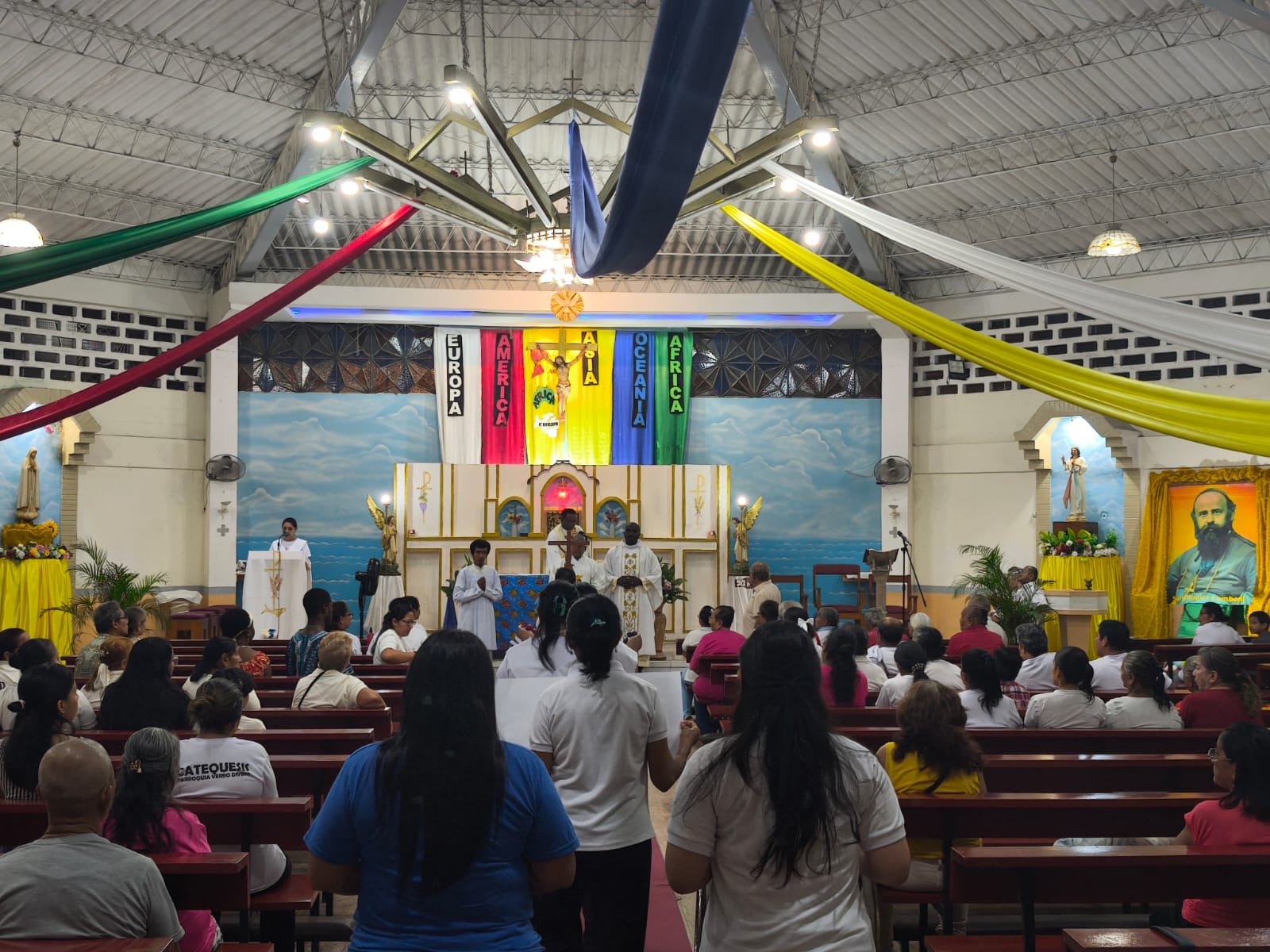
The celebration continued on October 11 with a brief tribute during Holy Mass at the Verbo Divino Parish, where the legacy of St. Daniel Comboni was also joyfully commemorated and the commitment to continue walking together in the mission was renewed.
These gatherings provided an opportunity to share our faith, give thanks for the gift of the missionary vocation, and reaffirm that the mission is built in community, through closeness, solidarity, and commitment to those most in need.
Inspired by the Comboni charism, the Comboni Lay Missionaries continue to bring the Gospel to life in their families, communities, and places of service, with the hope of contributing to a more just, fraternal, and supportive world.
Saint Daniel Comboni, continue to inspire and accompany our mission!
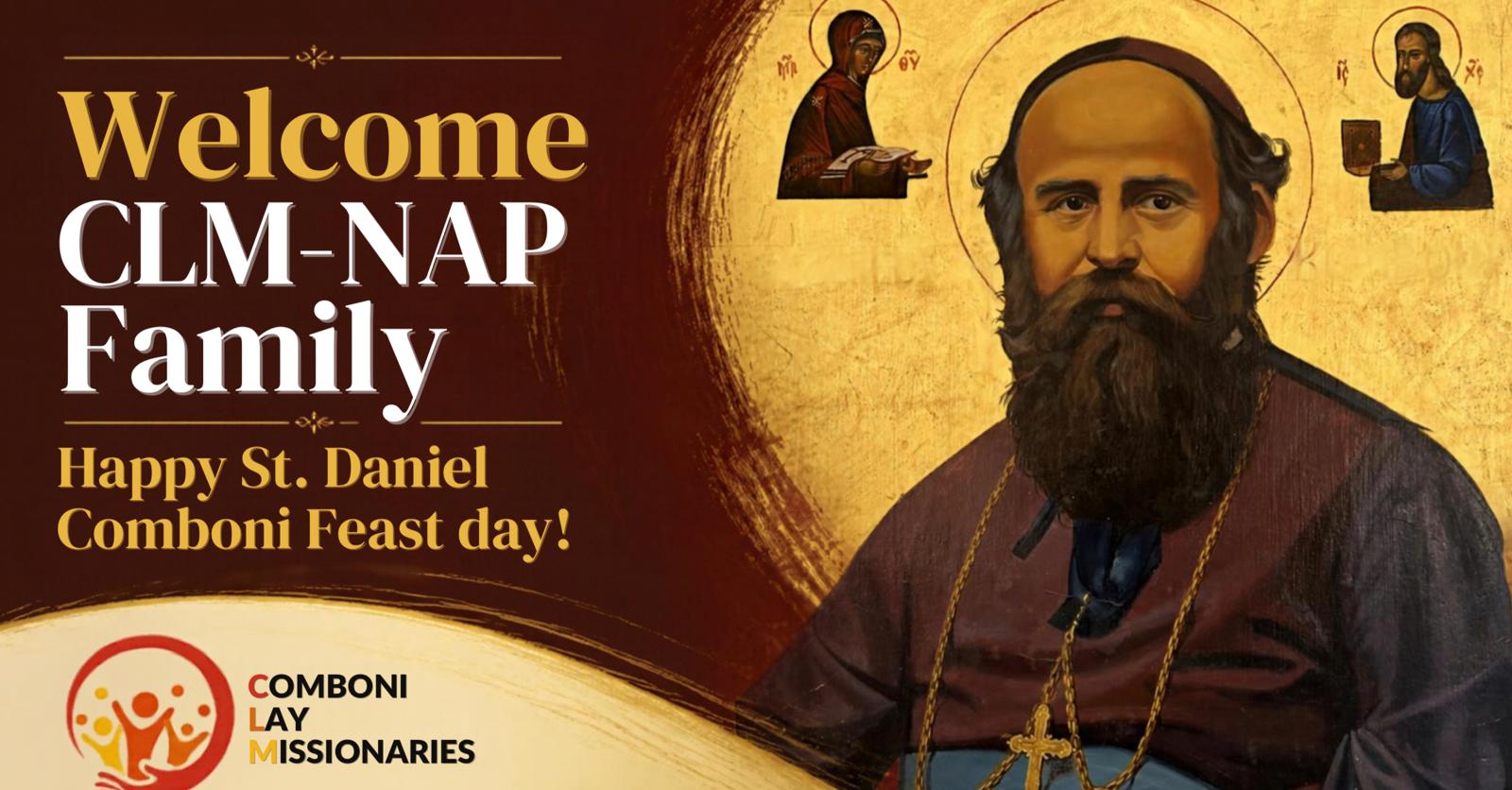
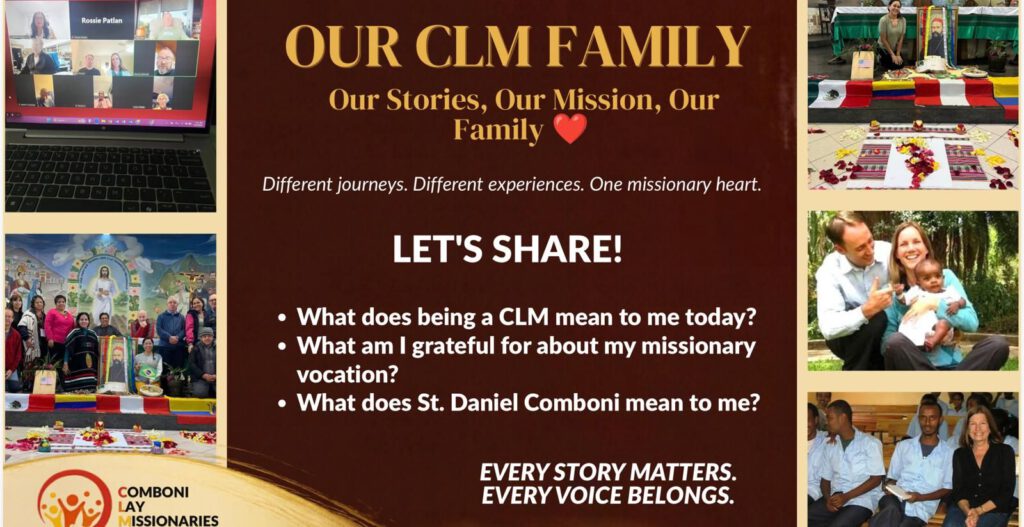
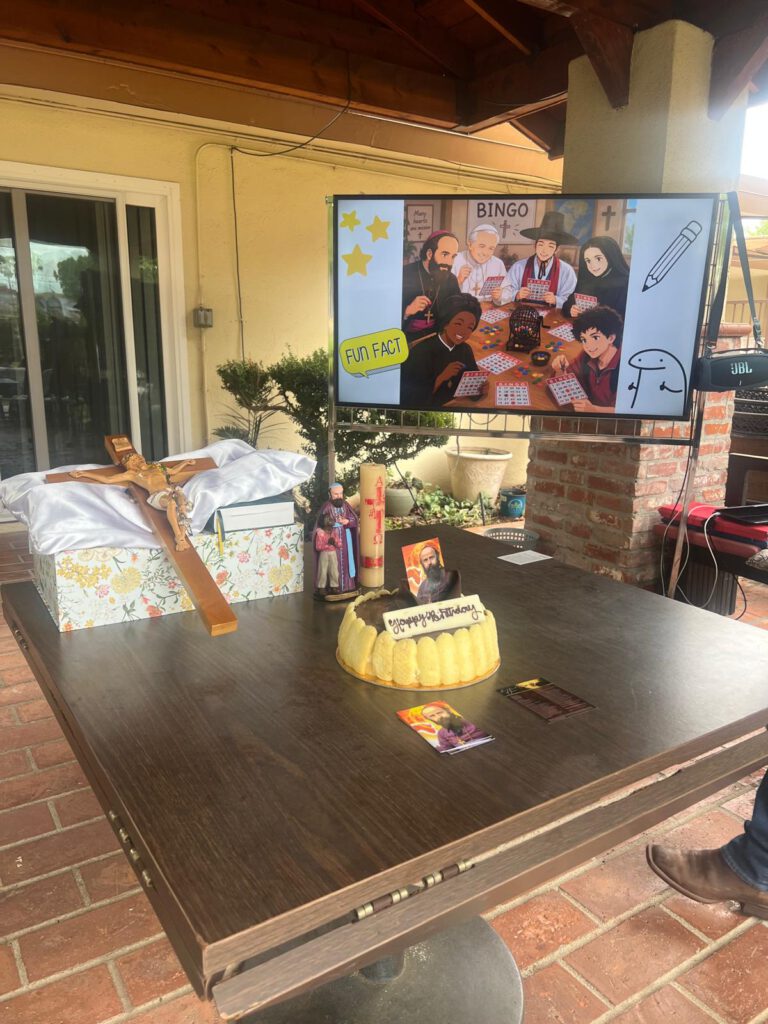
On October 10, the Comboni Lay Missionaries of the North American Province (CLM NAP) came together to celebrate the feast of our beloved missionary father and inspiration, St. Daniel Comboni. It was a beautiful day of prayer, fellowship, and renewed missionary spirit as we celebrated not only the life of St. Daniel Comboni but also the gift of our shared vocation.
United in Prayer, Even Across the Miles
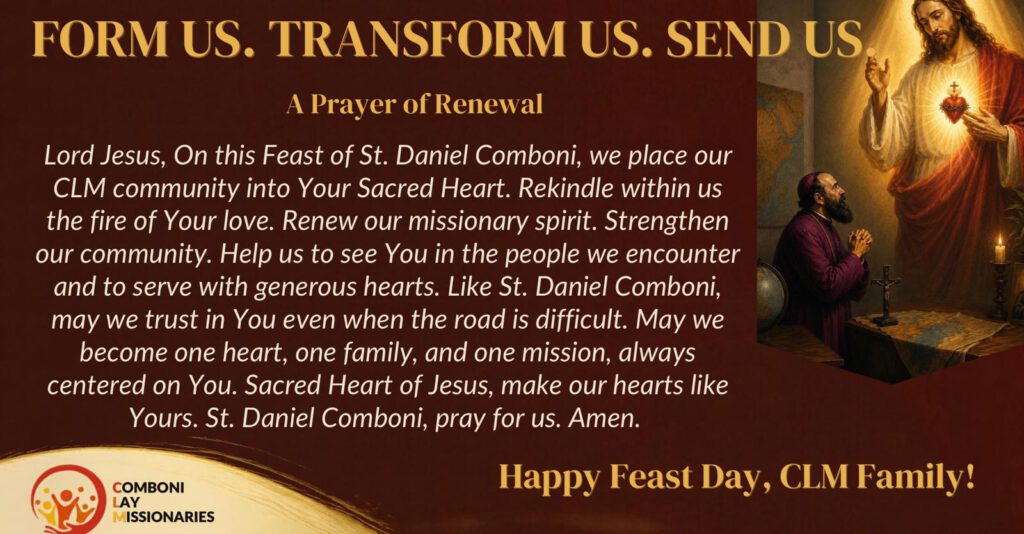
Our celebration began with a morning Zoom prayer gathering, bringing CLMs together from different places to pray and give thanks for the gift of our Comboni charism. We began by praying the final day of our novena to St. Daniel Comboni, entrusting our community, our missionary vocations, and the people we serve to his intercession.
Knowing that not everyone could join us online, we also made space for the voices of our absent members. Through their personal reflections and messages, they were able to share what they are grateful for about being CLMs and what St. Daniel Comboni means to them. Although we could not all be physically present or connected at the same time, we were reminded that we remain one missionary family, united in prayer and in the Sacred Heart of Jesus.
Our gathering was also a meaningful opportunity to look toward the future as we begin a new chapter of ongoing formation. Inspired by Comboni’s example, we renewed our desire to grow in faith, deepen our missionary spirituality, and continue supporting one another in our vocation.
Celebrating Together in Faith and Community
Following our morning prayer, we continued the celebration with Holy Mass alongside the local community in California, giving thanks to God for the life and missionary witness of St. Daniel Comboni.
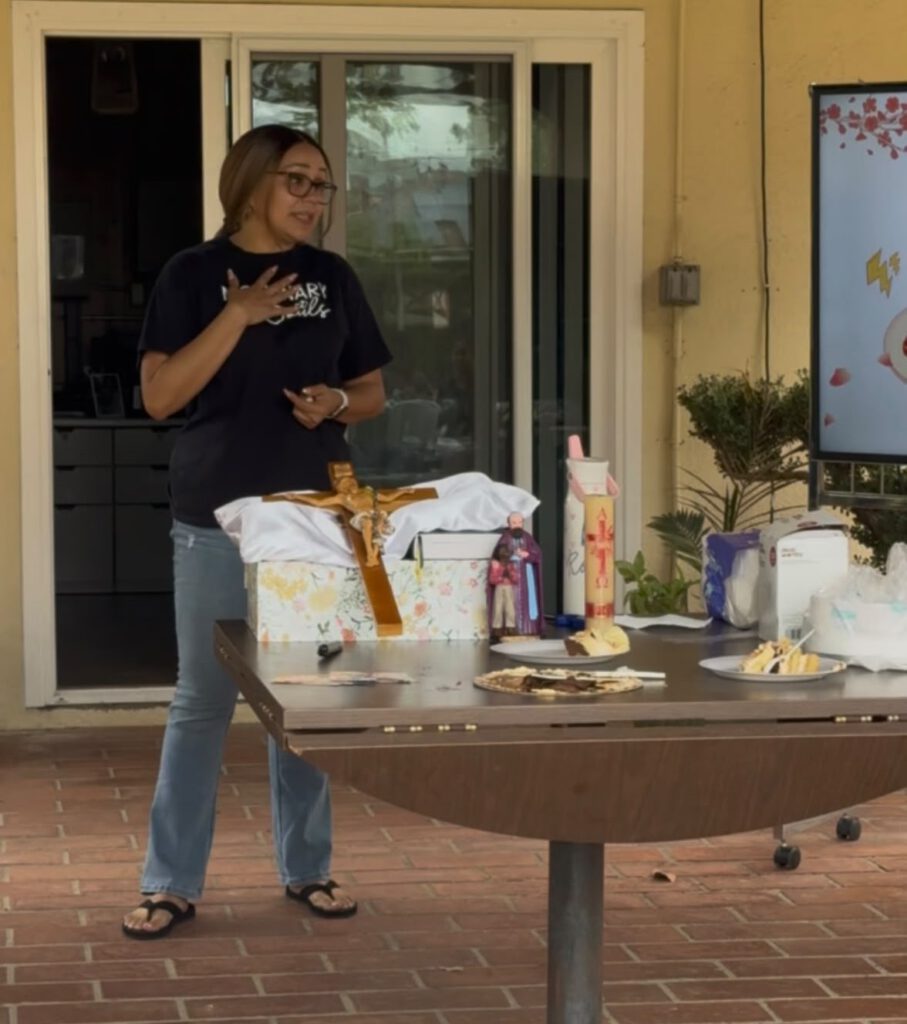
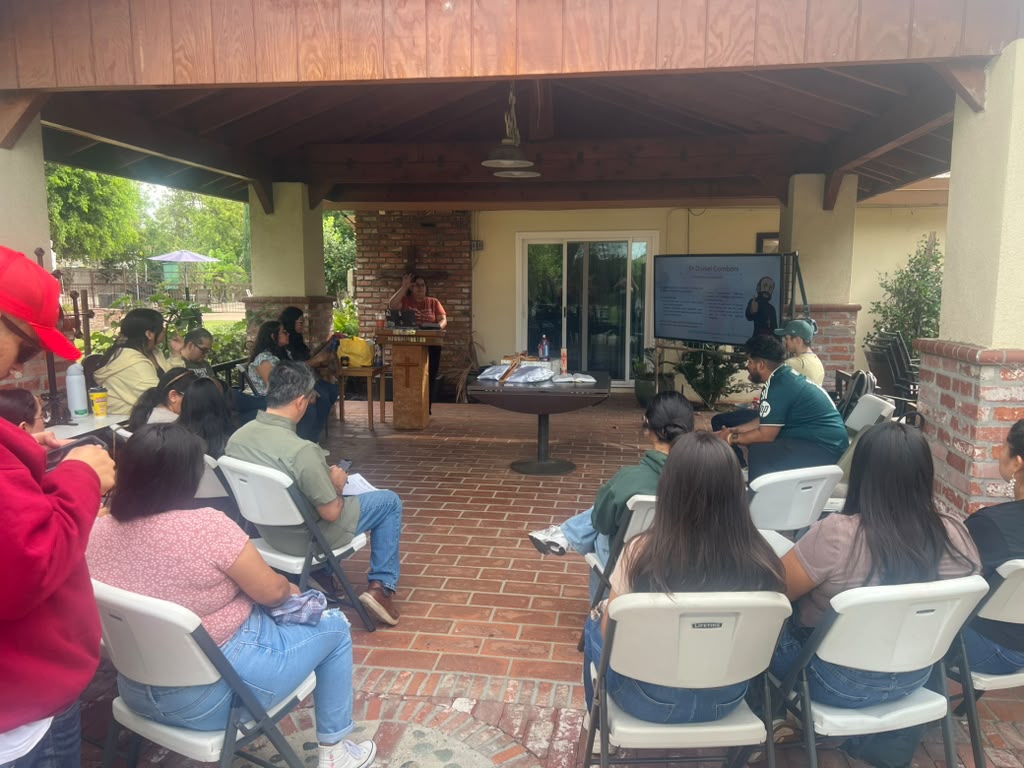
We concluded the morning with a joyful, in-person gathering at the Comboni Mission Center in Covina, California, alongside the young adult ministry, Missionary Souls. We shared fellowship, celebrated our missionary family, and, of course, enjoyed some cake! It was a simple but beautiful way to bring our celebration to a close, sharing the joy of our faith and the spirit of Comboni with the next generation.
Rekindling the Fire of Mission
As the CLM NAP community continues its journey of renewal, this feast day was a reminder that the Comboni charism is alive in each of us. St. Daniel Comboni allowed the love of the Sacred Heart of Jesus to transform his life and send him out in service to others. His example continues to inspire us to respond generously to God’s call, recognizing the dignity of every person and serving with hearts full of love.
Though we may be separated by distance, we remain connected through our shared vocation and commitment to mission. We are grateful for everyone who participated, sent a message, prayed with us, or joined us in spirit.
May St. Daniel Comboni continue to intercede for our CLM community as we grow together in faith, strengthen our bonds of fraternity, and renew our commitment to serve wherever the Lord calls us.
St. Daniel Comboni, pray for us!
Sacred Heart of Jesus, make our hearts like Yours!
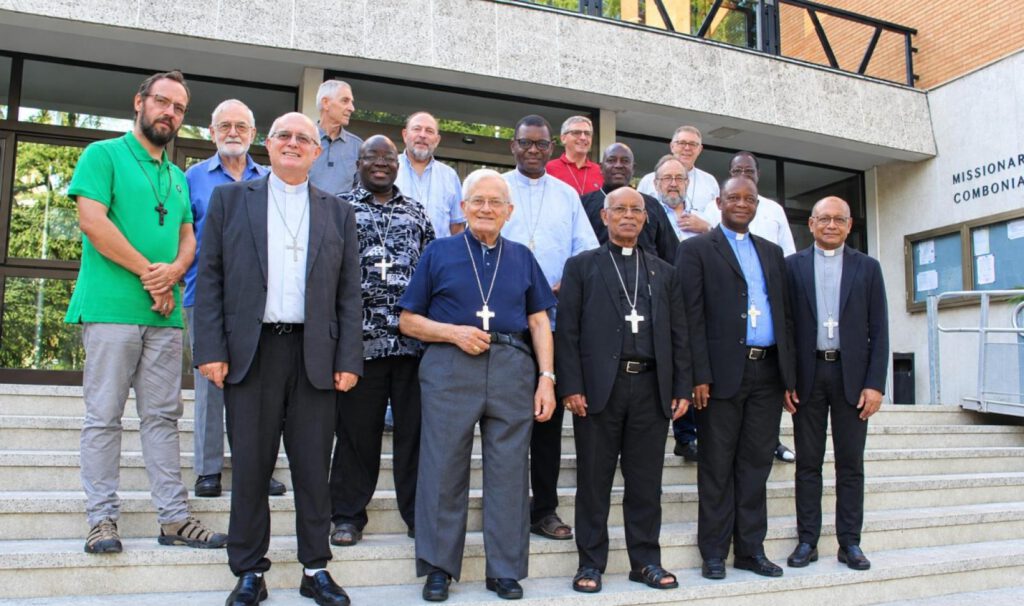
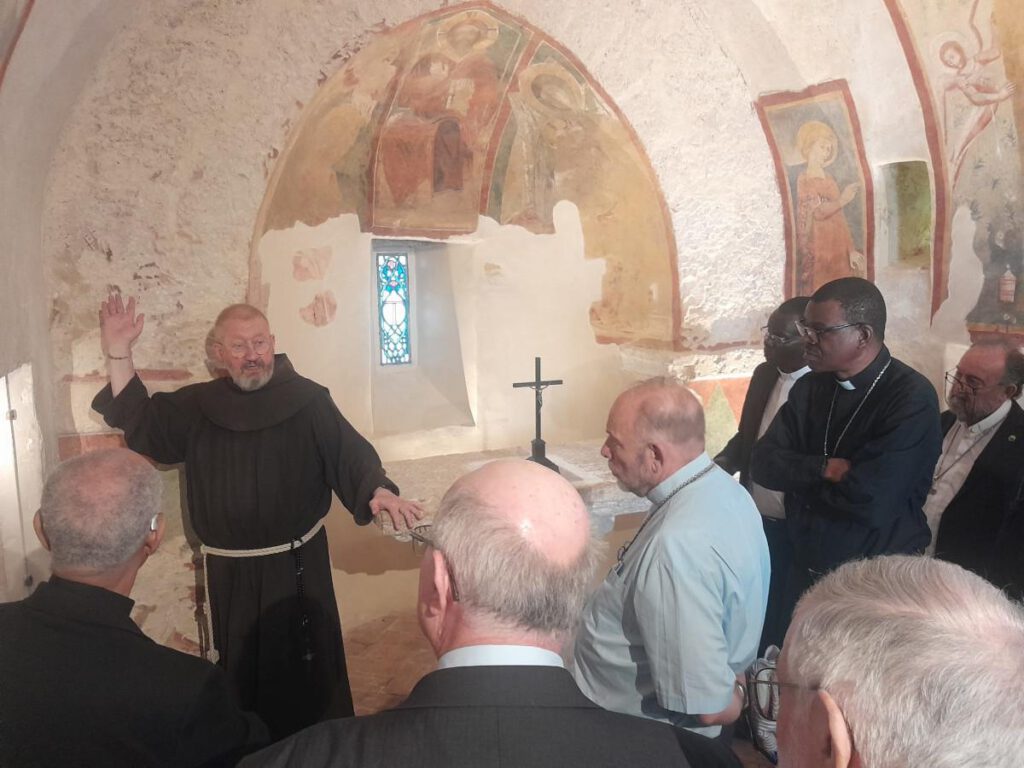
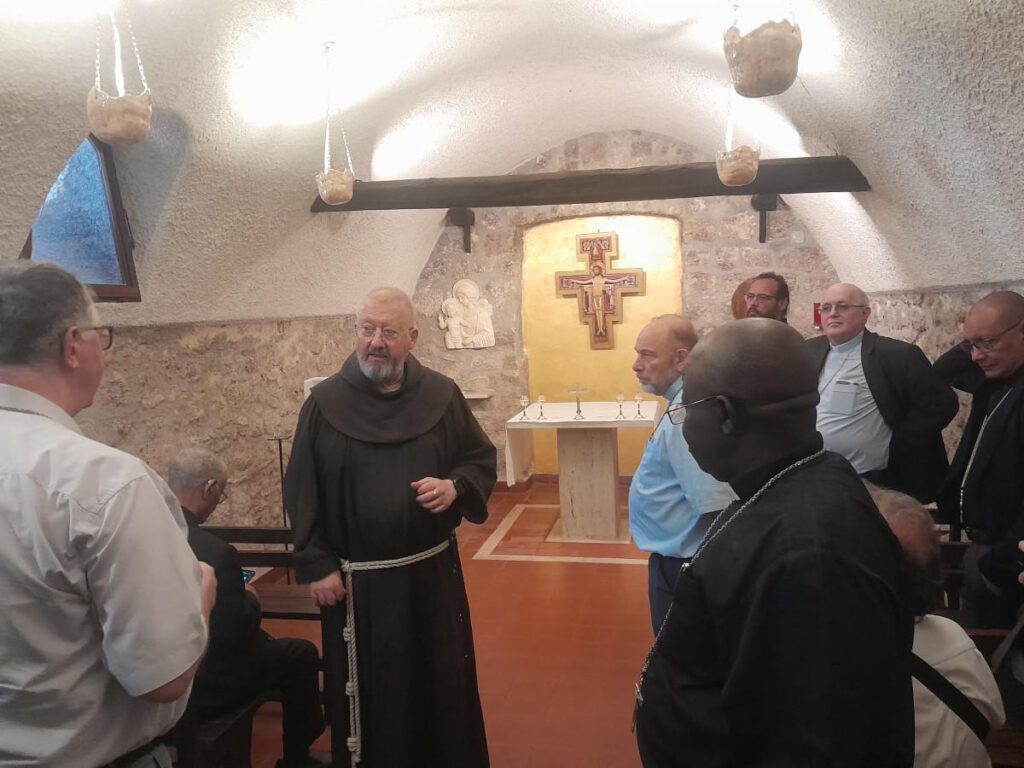
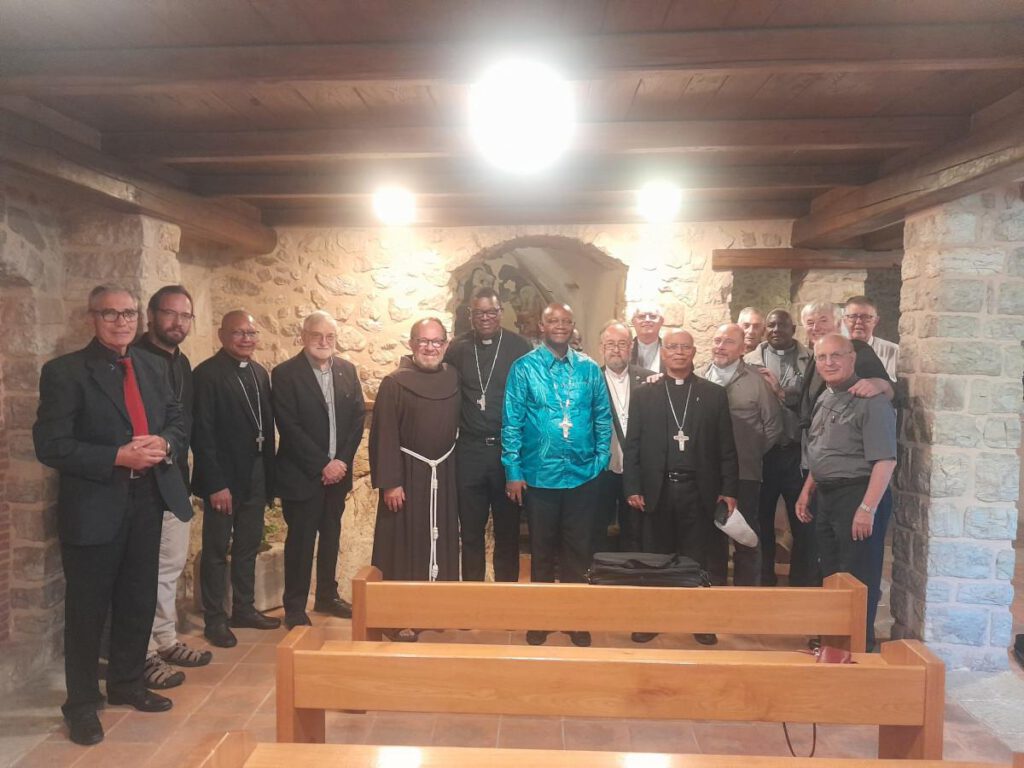
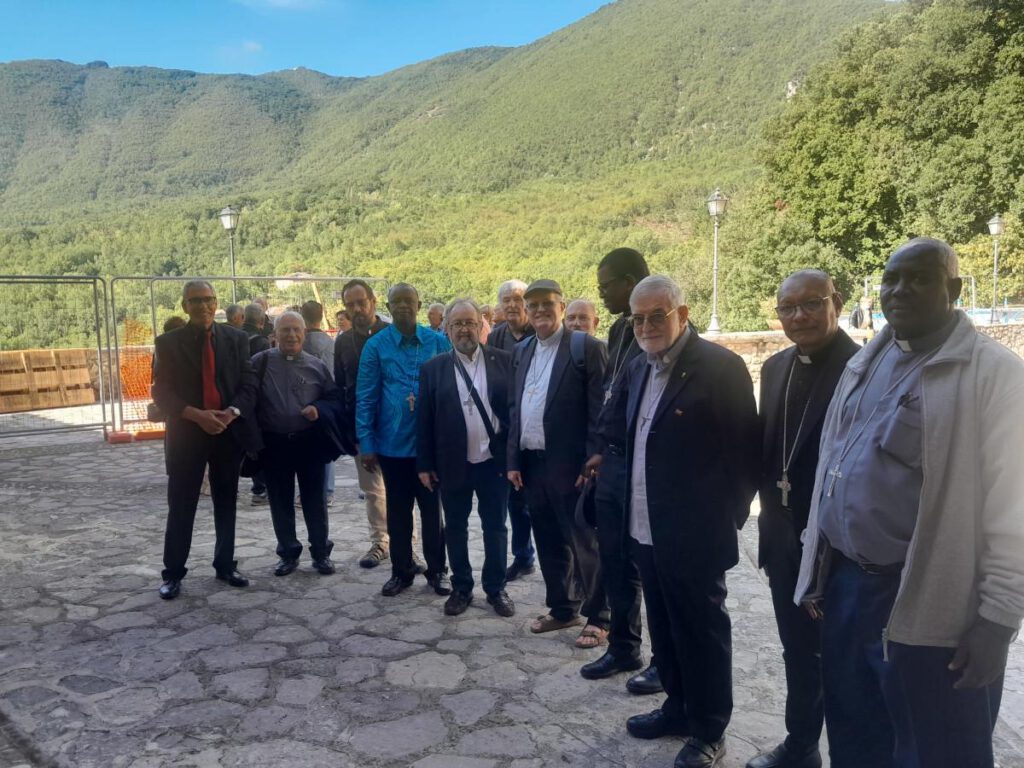
Sixteen of the 23 Comboni bishops serving the local Churches in Africa and Latin America met in Rome from September 16 to 21 for a meeting of formation and sharing, also leaving a message for the Comboni Family at this time of reconfiguration.
MESSAGE OF THE COMBONIAN BISHOPS TO THE COMBONIAN FAMILY
“When he saw the crowds, he felt compassion for them” Mt 9:36
Dear brothers and sisters,
we, the Comboni bishops, met at the General House of the Comboni Missionaries of the Heart of Jesus for a moment of ongoing formation and sharing. With this letter, we wish first of all to express our deep gratitude for this opportunity to meet and for the welcome we received at the General House. Being here, in the house that preserves the memory and journey of the Institute, allows us to share not only an institutional moment, but above all a Comboni fraternity that springs from the same missionary calling.
We wish to give thanks for the gift of missionary vocation in our Institutes, for the service that so many brothers and sisters offer to the Church on the different continents and, above all, for the witness of so many missionaries who, often in silence and in difficult situations, continue to live the charisma of Comboni faithfully, participating in the mission of Christ wherever the Church is called to be a presence, listening, reconciliation and hope.
We would like to share with you a word that seems particularly important to us at this moment in the life of our Institutes and the mission: the heart. Pope Francis, in Dilexit nos, invited us to return to the heart. Not as an inward-looking refuge, but as the place where the person rediscovers his or her unity, recognizes what truly matters and opens himself or herself to the encounter with God and with others. Pope Leo, with Dilexi te, has deepened this theme by speaking of the need to love the poor. Today, as always, the world needs a Church that sets no limits to love, that knows no enemies to fight but only men and women to love (DT 120). Love for the poor is the evangelical hallmark of a Church faithful to the heart of God (DT 103).
It is from the heart that mission is born. And perhaps precisely here lies one of the deepest challenges we face today: renewing mission means, first of all, allowing our hearts to be renewed. In a time of epochal change, our Institutes too are undergoing profound transformations and feel the need to rethink structures and ways of operating. Mission calls us to make courageous choices. But every reorganization acquires its true meaning when it arises from listening to God’s call and remains oriented towards the good of the mission, without ever losing sight of the good of each person.
For this reason, we must not simply ask ourselves: how can we continue to do what we have always done with fewer people and fewer resources? The deeper question is: what is the Holy Spirit asking of the Comboni charism today? What new form of mission? What renewed understanding of our way of being Church? Which structures are truly at the service of the Gospel and which, instead, risk becoming ends in themselves? The reorganization of our Institutes is therefore a necessary journey to be undertaken without fear and can also become a grace: an opportunity to return to what is essential and to allow the charism received from Comboni to find new forms, suited to the realities in which we are called to live today. We hope that this journey will take place in a spirit of synodality, through a renewed relationship between the local Churches and the Institutes of consecrated life, between priests and lay people, women and men, the elderly and the young.
Mission is participation in the mission of Christ. And a missionary Church is a Church that does not live for itself, but for others. For this reason, we need a renewed understanding of our way of being Church. We cannot proclaim reconciliation if our communities do not become places of reconciliation. We cannot speak of peace if we do not learn to preserve peace in our relationships. We cannot proclaim fraternity to a divided world if we ourselves do not become brothers capable of listening to one another, forgiving one another and supporting one another.
For this reason, we would also like to renew together an appeal for peace, disarmament and reconciliation. We live in a world marked by wars, violence, rearmament, polarisation and fear. In many of the places where missionaries are present, populations carry in their bodies and memories the wounds of conflicts. As a Church, we cannot resign ourselves to the logic of violence. And we missionaries are called to be artisans of peace. Disarmament concerns not only political and international decisions: it also calls for conversion of the heart and fosters a non-violent and peaceful disposition in relationships. It means disarming our hands, but also our words, judgments, fears and mistrust. A reconciled mission can become a seed of reconciliation.
During our meeting, we encountered another word that seems decisive to us: care. Care for ourselves, for our brother, for the ecclesial communities to which we are sent, together with care for our common home. Care is neither weakness nor withdrawal into ourselves, but loving attention to life. We are aware that care is an essential part of the ministry of a bishop; therefore, we ask the Lord for the wisdom and sensitivity necessary to be welcoming fathers and companions on the journey of our communities. The Church also needs missionaries who know how to care for their spiritual life, their humanity, their formation, the deepening of Comboni spirituality, their health, their relationships and their vocation. A missionary who does not care for himself risks, over time, losing the ability to care for others. We need to build communities in which everyone can feel welcomed, listened to and accompanied. We need to learn once again that our brother is not an obstacle to mission: he is part of the mission itself. And we need to care for creation, because in the beauty of the earth we can still recognise something of the beauty of God’s love.
Dear brothers and sisters, looking at the world with the heart of Christ, we no longer see merely problems to be solved, but people to love, communities to accompany in faith, wounds to bind up, and beauty to preserve. The times in which we live are not easy, but if our heart remains aflame with the love of Christ, then, even in our poverty, we will be hope for the world. Let us therefore ask the Lord to renew in us the missionary heart of Comboni. A heart capable of seeing, listening, making common cause with those who suffer and with those who rejoice, sharing their wounds and their hopes.
We assure you of our prayers and ask you to pray for us too, so that together we may serve the People of God with humility and courage.
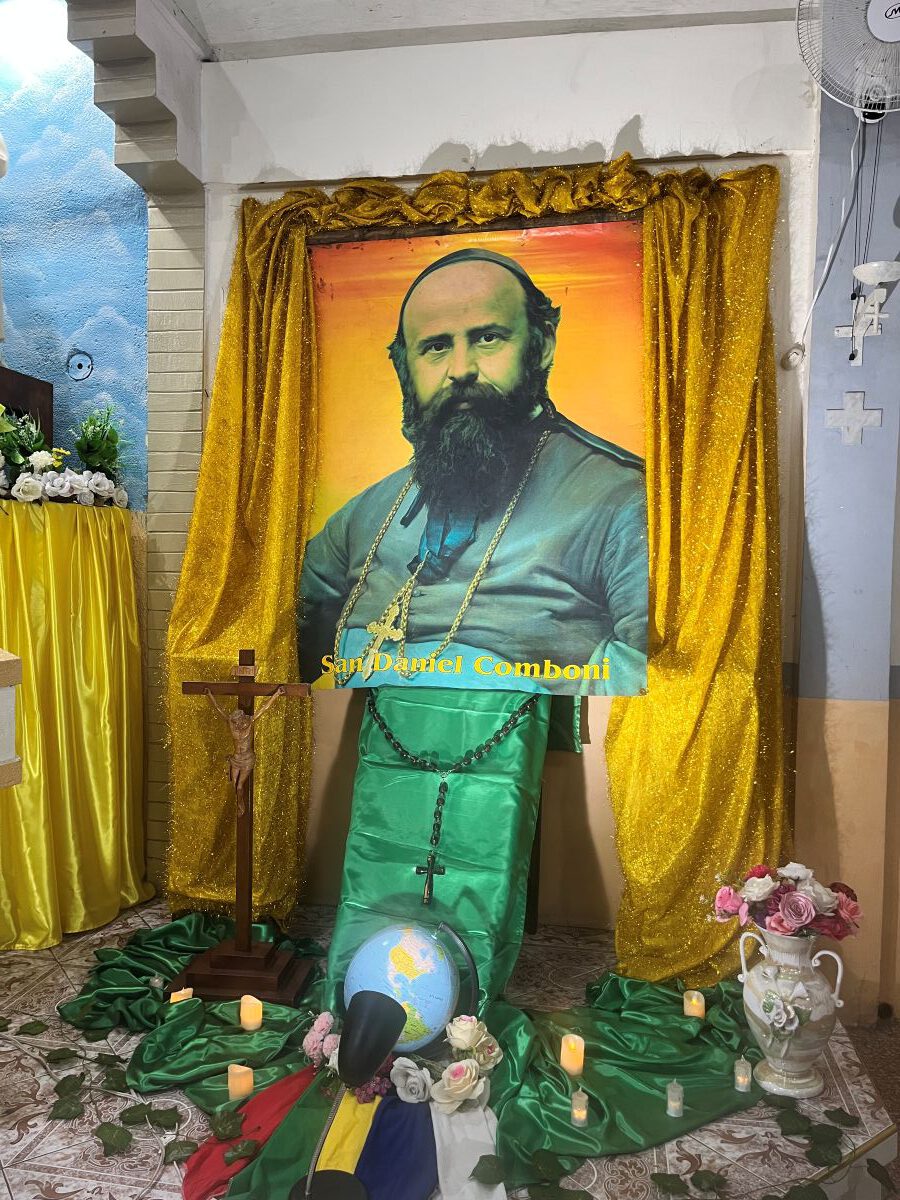
The Comboni Family of Guayaquil, Ecuador, organized several activities to celebrate our founder, St. Daniel Comboni. A novena was held from October 1 to 9 this year at the Divine Word Missionaries, with the participation of parish groups, under the direction of Fr. Seraphin Kakwata, MCCJ.
Each day began with the missionary rosary focusing on the continents, followed by the Eucharist and the novena with readings from Comboni’s writings in order to increase knowledge and charism, not only among the members of the Comboni community, but also in the parish community.
For the feast day, we were joined by more parish groups, groups that are part of and collaborate with the Comboni Missionaries: the Afro Pastoral, Lay Missionaries, Ecopax, Friends of the Mission, Missionary America, and Prohuma.
On Friday, October 10, Mass was concelebrated by Fathers MCCJ Seraphin Kakwata, Fernando Flores, and Vicente Turinawe, who shared with the entire community present facts and stories about the mission and invited us to participate more actively in proclaiming the Gospel and helping communities.
At the end of the Eucharist, we were invited to a fraternal agape with the parish community, and we took the opportunity to talk and share our experiences as a Comboni family. Fr. Vicente Turinawe MCCJ from Uganda gave a presentation on some of the activities in his missionary journey and also on what has been done in the parish so far in 2025.
We give thanks for all that we have experienced and achieved during this time, which has strengthened us as a Comboni family and, in one way or another, is motivating others to share the missionary charism in the style of St. Daniel Comboni, not only among those of us who are on this journey but also among others who want to be part of this apostolate, aware that our work and action can be the seed that will bear fruit for the mission in the coming years.
Congratulations to all Comboni Missionaries on this celebration, which fills us with joy and rekindles in each one of us the love and commitment to the charism of our Founder and his zeal for the mission to the poorest and most needy in our places of action.
We greet you with the peace and joy of our Lord Jesus Christ, and we extend our warmest wishes to you on the solemnity of Saint Daniel Comboni, our Founder. This day is a special occasion for all of us, and for everyone whose life has been touched and inspired by his example and mission.
Two weeks ago, we concluded our Inter-capitular Assembly, which had begun with a day of formation on the theme Reviving the Fire for Mission. A clear message emerged: the urgent need to strengthen our unity and to build communities capable of responding to the challenges of our times, making careful use of the human and material resources entrusted to us. At the same time, we must recognise that our Comboni identity must be preserved and strengthened: some confrères leave the Institute, others retire, and we wonder where the courage to go where others dare not go has gone
From the very beginning, we have been an international and multicultural family. This diversity is not a mere detail: it is a sign of the Kingdom and a testimony that communion among peoples and cultures is possible in Christ. It is a message of hope for a world often divided. Preserving this gift is more essential than ever, if we want to counteract nationalism and tribalism, which risk creeping into our communities too.
To face these challenges, we must rekindle the fire of our missionary passion. Fire is a symbol of zeal, courage, and conviction; it drives us to mission and sustains us in difficult times. Jesus Christ, the first ‘Missionary of the Father’, said: “I have come to set the earth on fire, and how I wish it were already blazing!” (Lk 12:49). Comboni also often spoke of a “heart burning with genuine love of God”: “When the Missionary in Africa has a heart burning with the pure love of God, when he keeps his eyes fixed on the contemplation of the great goodness and sublimeness of the work for which he spends himself, then all the privations, the continuous hardships, the greatest trials become a paradise on earth for his heart” (Writings, 2705).
When this fire burns in us, crosses and difficulties cannot stop us. A heart on fire remains focused on the goal and is not distracted by obstacles or setbacks.
We are convinced that a mission such as ours — whose fruits we may not fully see, where years of work may seem fruitless, and which sometimes challenges logic and hope — can only be carried forward if we are truly inflamed with passion.
Today more than ever, we feel called to rekindle this fire. Many of us feel weary or fragile, and this fatigue can affect our communities as well. To nourish the flame, we must remove the ashes and add fresh wood. The best way to do this is to return to the original fire that burned within us when we first responded to the Comboni missionary call — those moments when Comboni’s life and the mission of the Comboni Missionaries touched our hearts deeply.
Each of us remembers the moment when Comboni’s life set our hearts ablaze: perhaps it was his selflessness in responding to God’s call as an only son; or his courage to leave the Mazza Institute to pursue what he considered essential; or his perseverance in the face of opposition, even within the Church; or his steadfast faith in times of loss; or his conviction of the dignity of the African people, his tireless commitment to integral human development, his openness to diverse cultures, and his prophetic vision of mission.
Whatever the spark that first inspired us, it still burns and can rekindle our missionary fire. When we let it burn again, we overcome fatigue, indifference, and complacency; our love for mission is renewed, giving us strength to face every challenge.
And what better time than the feast of our Founder to rekindle this flame, remembering that he has given us a unique identity in the Church and in the world as Comboni Missionaries of the Heart of Jesus?
Wishing you a joyful feast day!
Rome, 10th October 2025
Solemnity of Saint Daniel Comboni
The MCCJ general council
Este sitio web utiliza cookies para mejorar su experiencia. Si continúa navegando consideramos que acepta el uso de cookies, pero puede optar por lo contrario si lo desea.
This website uses cookies to improve your experience. If you continue to browse we consider you accept the use of cookies, but you can opt-out if you wish. Acepto Puede obtener más información - You may have more information here
Politica y privacidad de Cookies - Privacy & Cookies Policy
Privacy Overview
This website uses cookies to improve your experience while you navigate through the website. Out of these, the cookies that are categorized as necessary are stored on your browser as they are essential for the working of basic functionalities of the website. We also use third-party cookies that help us analyze and understand how you use this website. These cookies will be stored in your browser only with your consent. You also have the option to opt-out of these cookies. But opting out of some of these cookies may affect your browsing experience.
Necessary cookies are absolutely essential for the website to function properly. This category only includes cookies that ensures basic functionalities and security features of the website. These cookies do not store any personal information.
Any cookies that may not be particularly necessary for the website to function and is used specifically to collect user personal data via analytics, ads, other embedded contents are termed as non-necessary cookies. It is mandatory to procure user consent prior to running these cookies on your website.