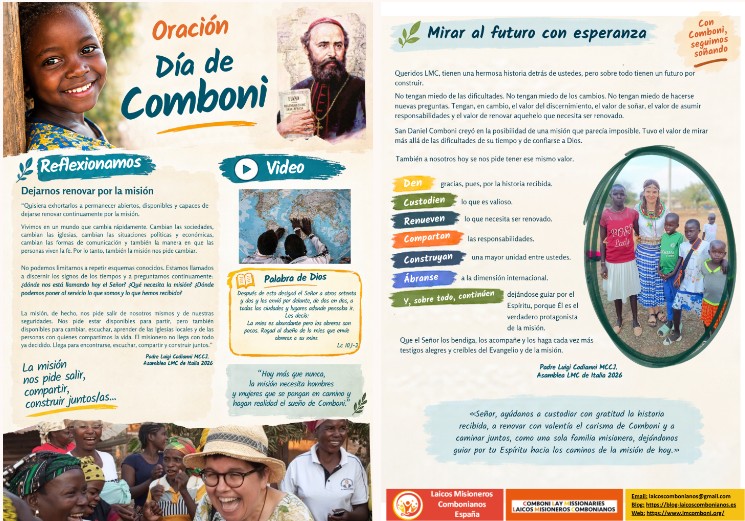
On October 10, we will celebrate the feast of St. Daniel Comboni.
It is a special occasion to return to the roots of our missionary vocation, renew our commitment, and continue to make Comboni’s dream a reality.
As Comboni Lay Missionaries, we wish to join in this celebration by inviting our groups, communities, and all those who share the missionary spirit to set aside a moment for prayer.
To that end, we have prepared a brief prayer to be said in our missionary groups—a simple prayer designed to help us come together, give thanks for the journey we have made, and allow ourselves to be challenged anew by Comboni’s missionary dream.
We invite you to celebrate this together, wherever you may be, feeling part of the same family and the same mission.
May Saint Daniel Comboni help us keep our hearts open and our eyes fixed on the mission.
Happy Feast of Saint Daniel Comboni!
Saint Daniel Comboni, pray for us and accompany us on our mission.
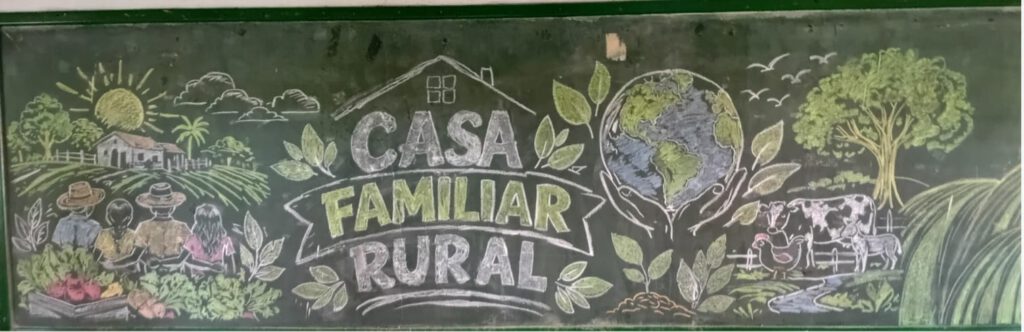
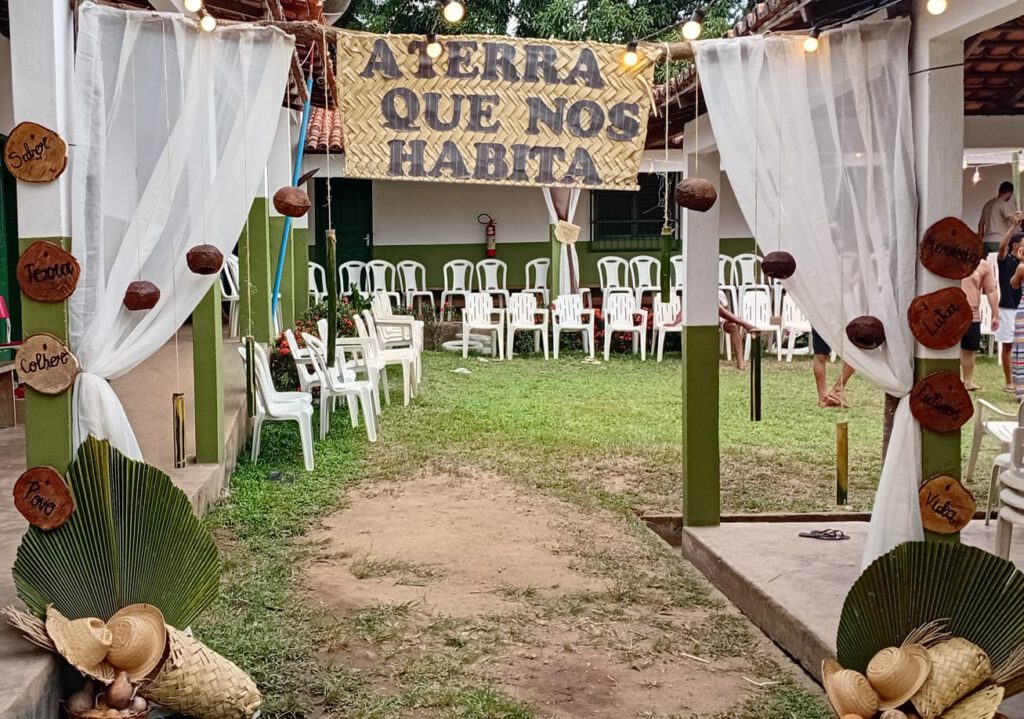
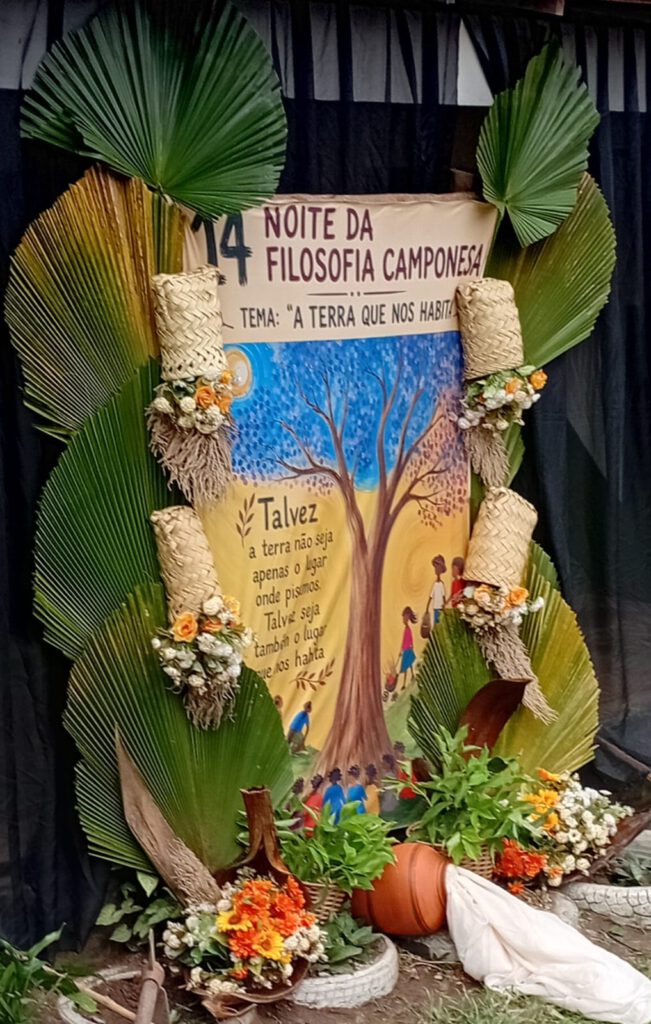
It took place on September 25, 2026, at the Rural Family School (CFR) in Piquiá, Açailândia, Maranhão. Coordinated by the Comboni Lay Missionaries, the Evening of Peasant Philosophy had the theme: THE EARTH THAT HABITS US.
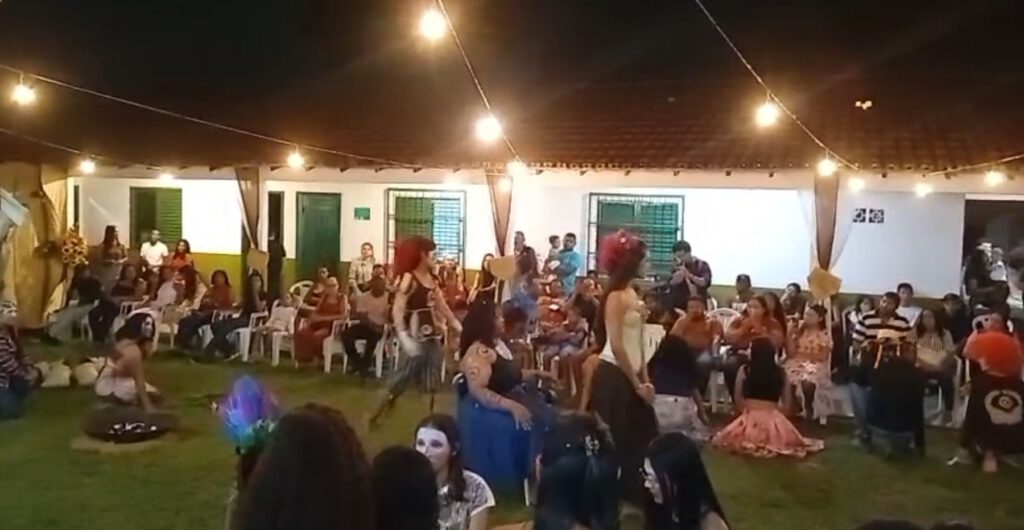
All students, family members, settlement groups from the region, and guests were in attendance.
There was a profound reflection on the theme, featuring speeches, poetry, and outstanding performances by the students and groups present at the event.
Certificates were also awarded to the graduating class who completed their studies in 2025 and are now part of the workforce.
To conclude the evening, there was a lively gathering among the coordinators, students, family members, and everyone present for this great moment of reflection on Mother Earth.
The CLM Community of Piquiá consists of two couples: Xoancar and Dida, and Tito and Regimar.
Kitelakapel community has 90% of very poor and 10% of middle class consisting mainly teachers and local government officials who earn very poor pay and a few commercial farmers who suffer hot dry weather.
Kitelakapel is under kacheliba Parish-Kenya has 17 villages and 17 elders with a chief who works closely to see on the wellbeing of the people of the community through the Kitelakapel integrated Community Empowerment- Organization and projects, 175 members officially applied and joined the CBO to work together for their community and family households and we still receiving more applicants willing to join the group. The group was formed to empower the local people, the people love unity and self-support groups through which they are able get opportunities, save money, participate in economic activities like farming of animals, plants, Poultry, bee keeping, Mama Mbonga, market trading and other socio-economic activities and with support from AMANI international we are seeing good fruits and testimonies from local communities.
Special gratitude to AMANI….
AMANI is a Kiswahili word that means peace in the Kenyan language…. the more you empower the poor the more you achieve a peaceful and prosperous society.
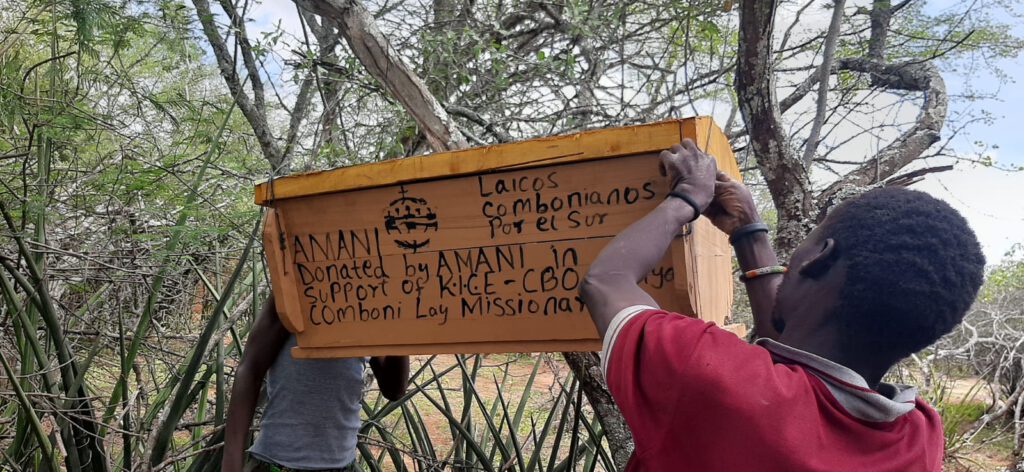
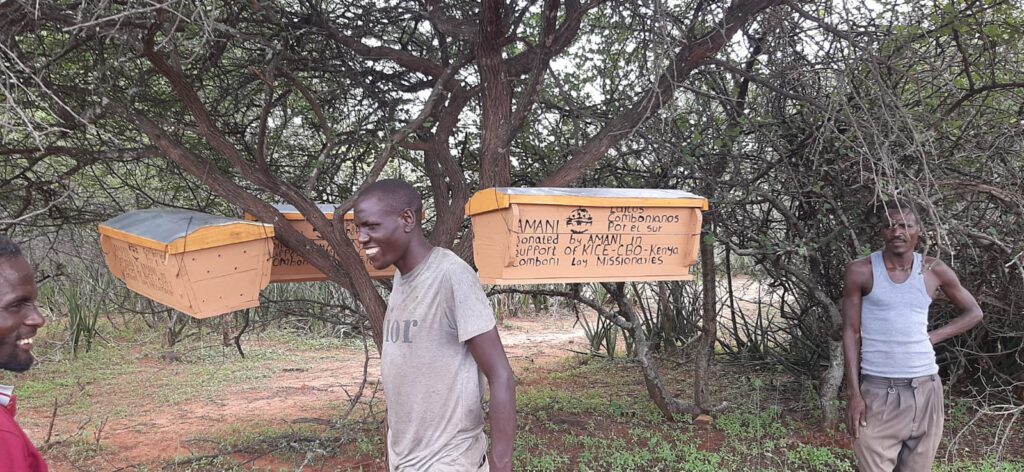
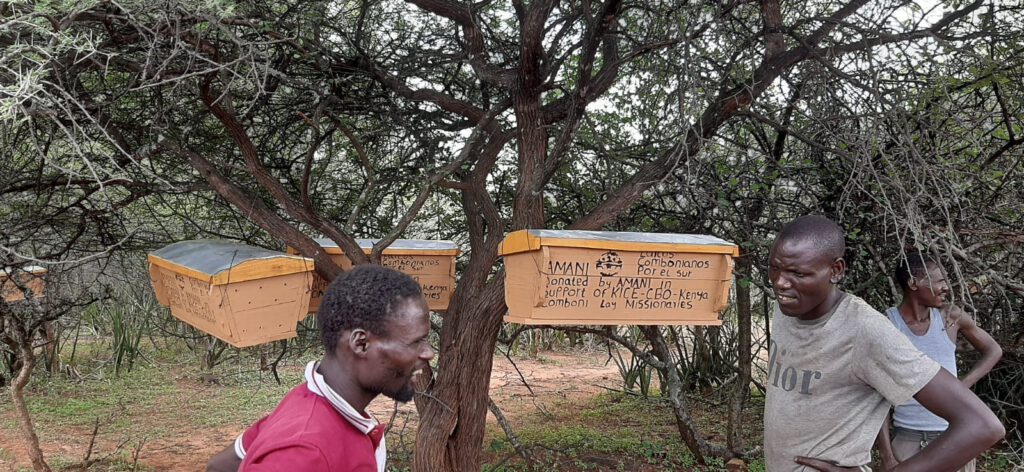
We are delighted to announce the launch of a new beekeeping project implemented by kitelakapel in konyao, It was amazing and exciting to see the bees on our first day of installation of the bee hives . In the beginning of the project we started with identification and survay of land to start the bee keeping project after several meeetings with the KICE CBO board members ,Comboni Lay missionaries and parish MCCJ ,we agreed to take on 3 acres of land in konyoa town which land belongs to MCCJ kacheliba parish as per the memorum of understanding on the usage of the land and the value of the CBO Bee farming project.
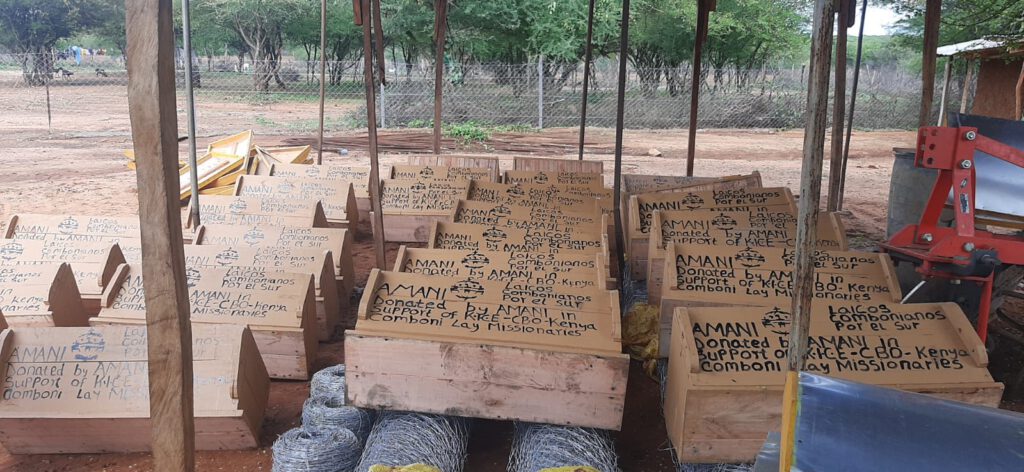
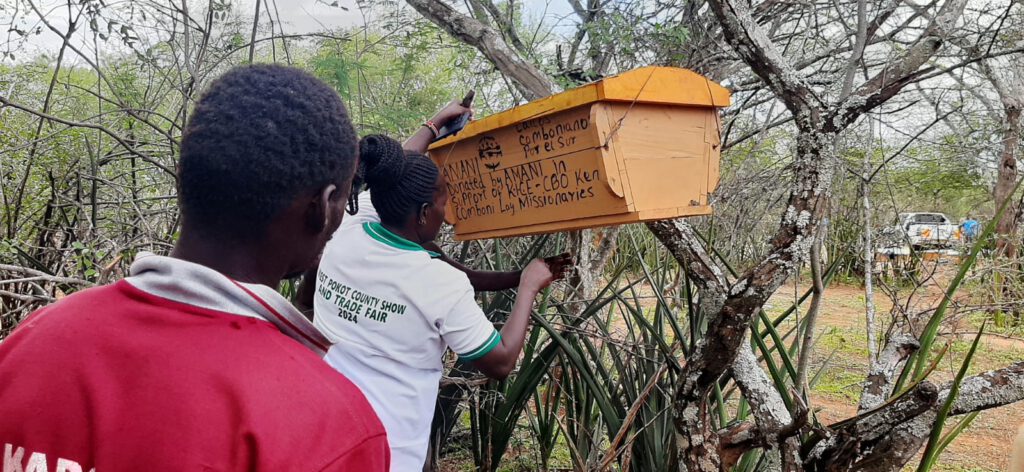
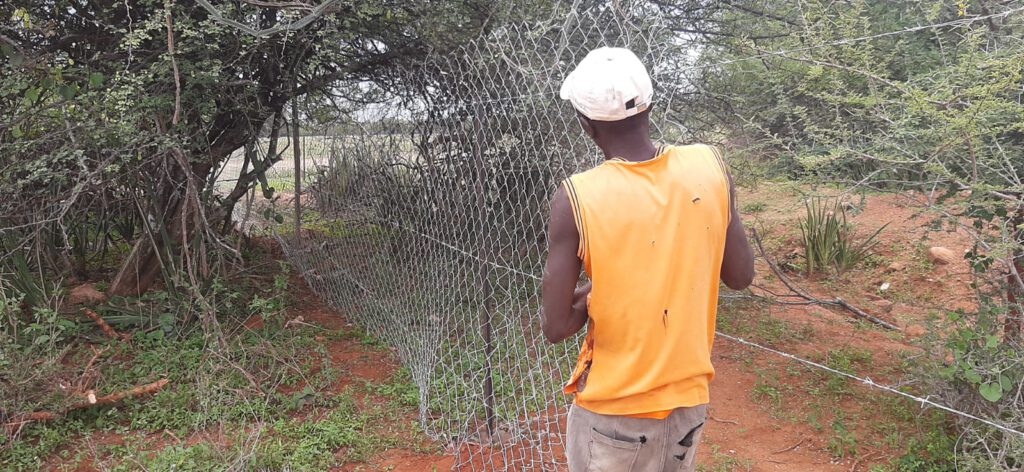
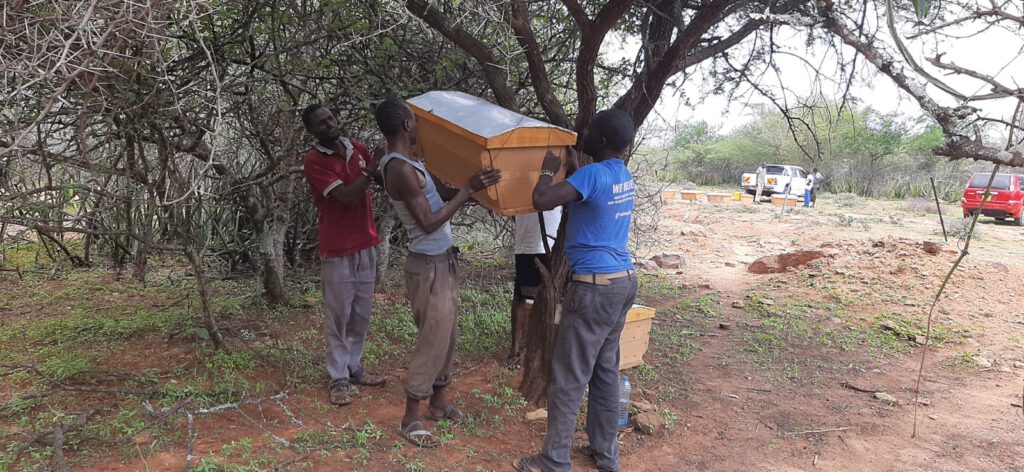
With the donation from AMANI, We finally set up 50 bee hives and fenced them on 3acres of land in konyao –west pokot one hour drive from kitelakape village.
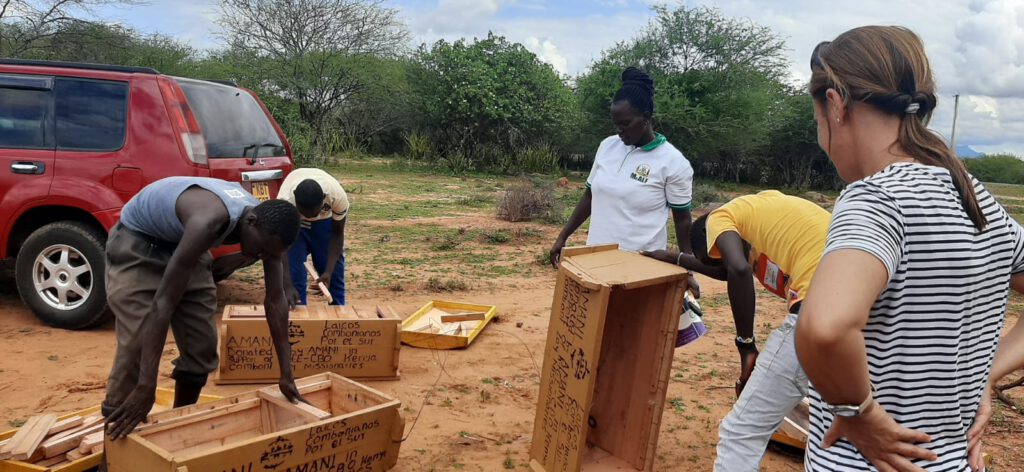
We managed to find support from the officer in charge of Bee farming from the county government ministry of agriculture West Pokot (Mrs Francisca) who guided us on how to fix them and attract bees.
A few local men where hired to carpentery, welding ,construction of the fence and clearing of the land,women breaking small stones for the fence while others making of the bee hives and others installing the bee hives in way they got temporary work and earned some little money to look after their families.We are lucky to also have the host family John Bosco the catetist of a charpel in the area of konyao who helped us with storage of the materials and bee hives and provied us some food during our visits to the beekeeping farm.
The project is being carried out with support of the local agricultural authorities and the community members. Our goal is not only to produce honey but also to create employment opportunities, support local development and promote environmentally friendly practices of Laudato Si.
ASANTE SANA (Thank you very much)…. AMANI from Kitelakapel integrated community Empowerment Community Based Organization and the people.
We’d like to share with you this conversation organized by AMANI, a Spanish NGO that collaborates with the CLM, featuring the coordinator of the Central Committee of the Comboni Lay Missionaries.
In this video, he shares a glimpse of Africa—particularly from the perspective of the LMC present on the continent—covering some history, dreams, and the commitment to remain faithful to the missionary vocation inspired by St. Daniel Comboni.
(Video in Spanish)
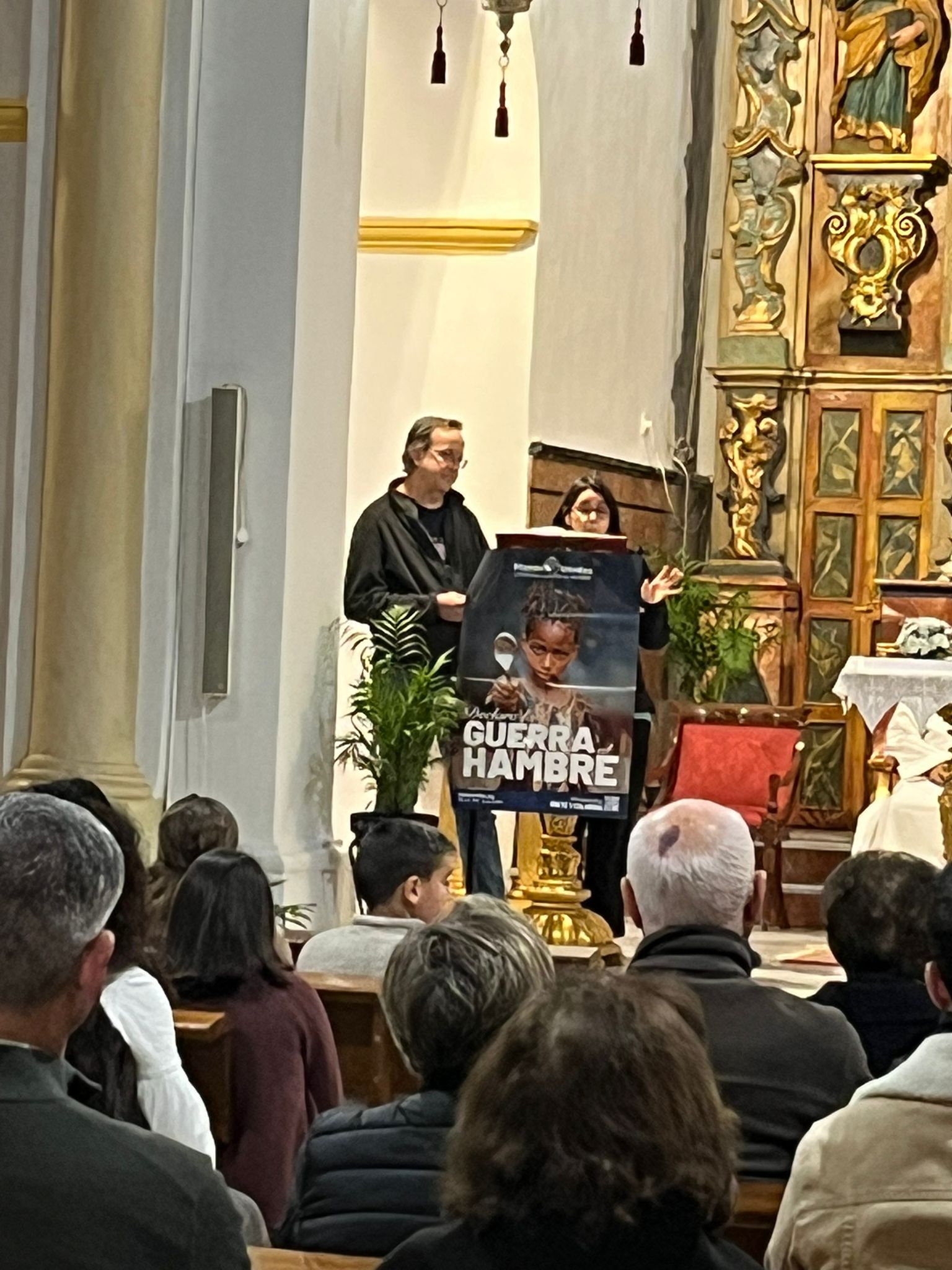
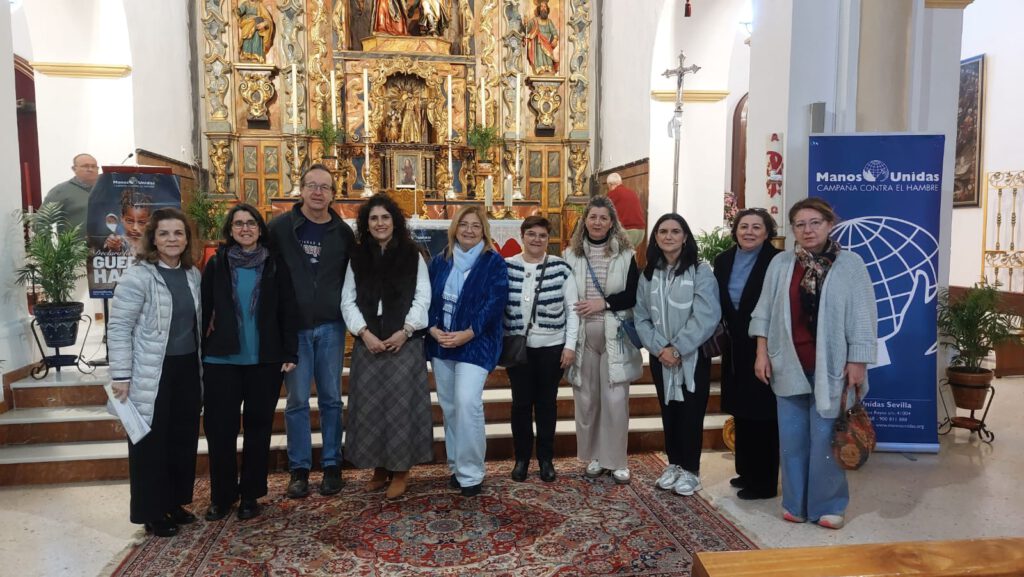
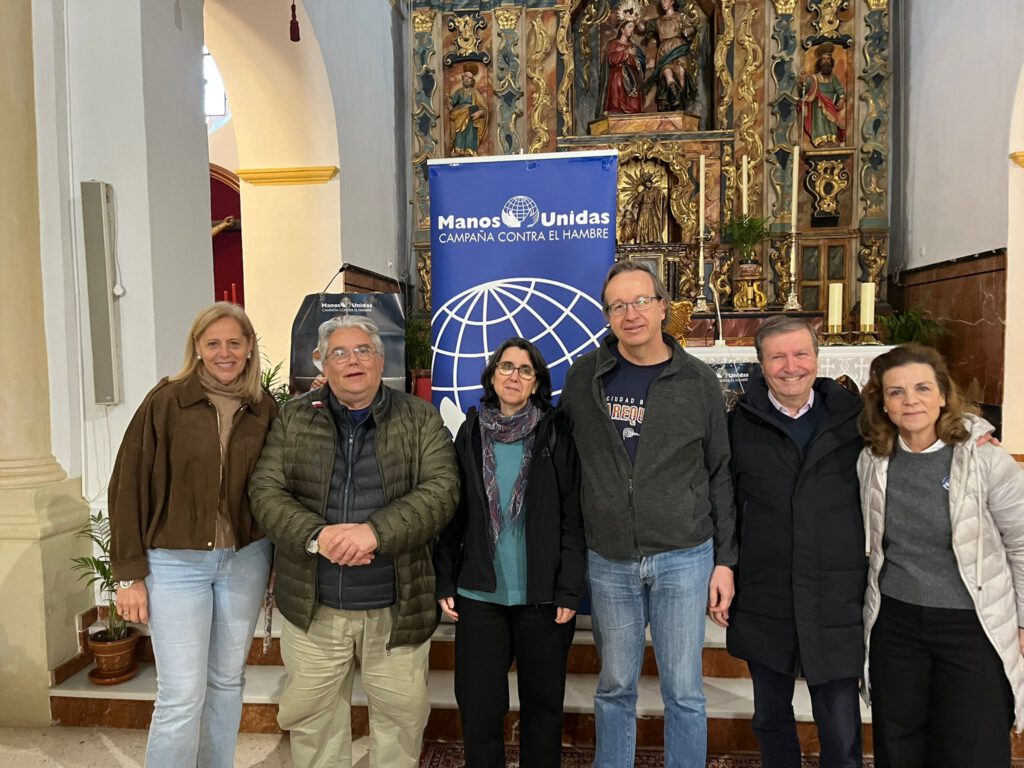
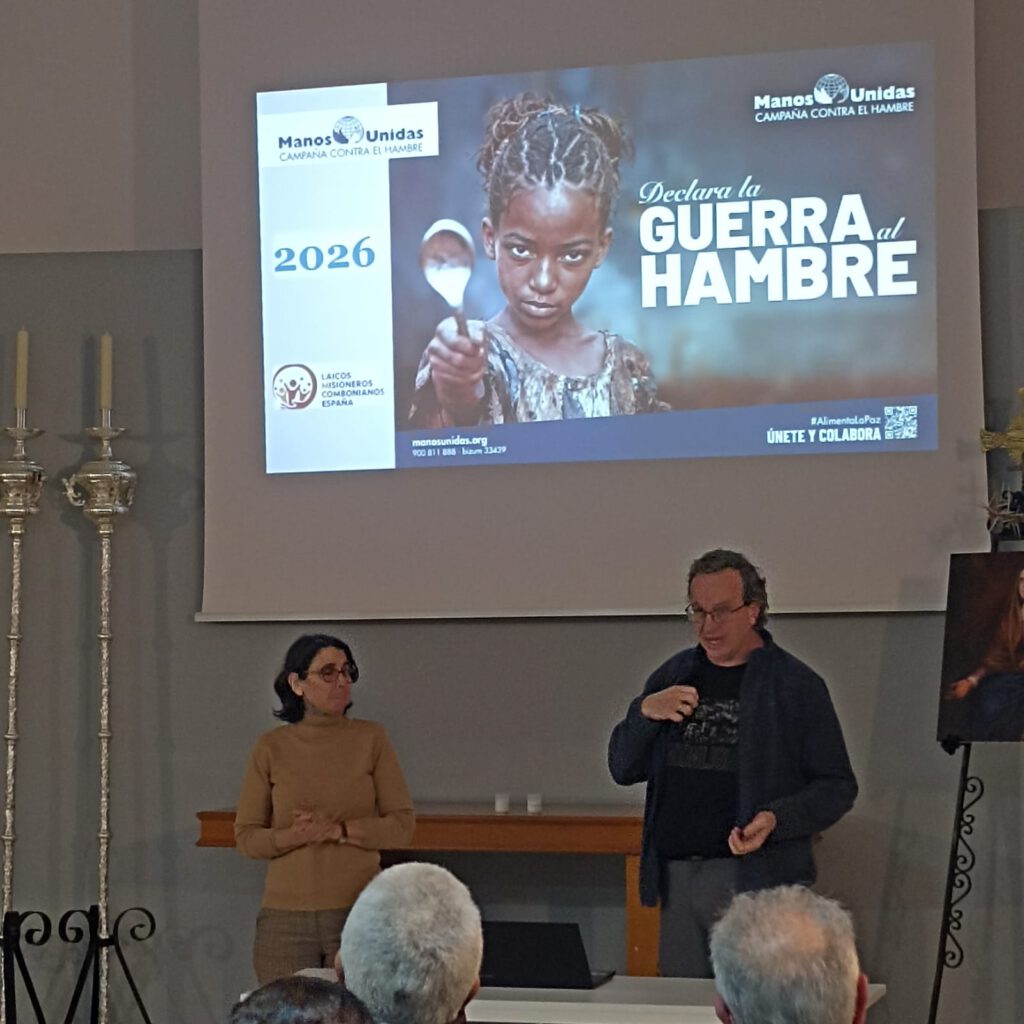
Once again, Manos Unidas, a Spanish Catholic organization that raises funds to help people around the world, has launched its campaign against hunger. With the slogan “Declare war on hunger,” it has called on people to combat the structural causes of poverty, inequality, and injustice.
For our part, we continue to collaborate as volunteers in the campaign, helping to raise awareness about these realities.
Our role is simple: to bear witness to our missionary life and explain firsthand some of the projects we have seen financed by Manos Unidas in our mission. This is not just any organization, but the way in which the Spanish Church is committed to the realities of impoverished countries and collaborates with them. Most of its funds come from this campaign, which is carried out by parishes throughout Spain every second Sunday in February, and it is time to report on it to all the people who offer their help each year.
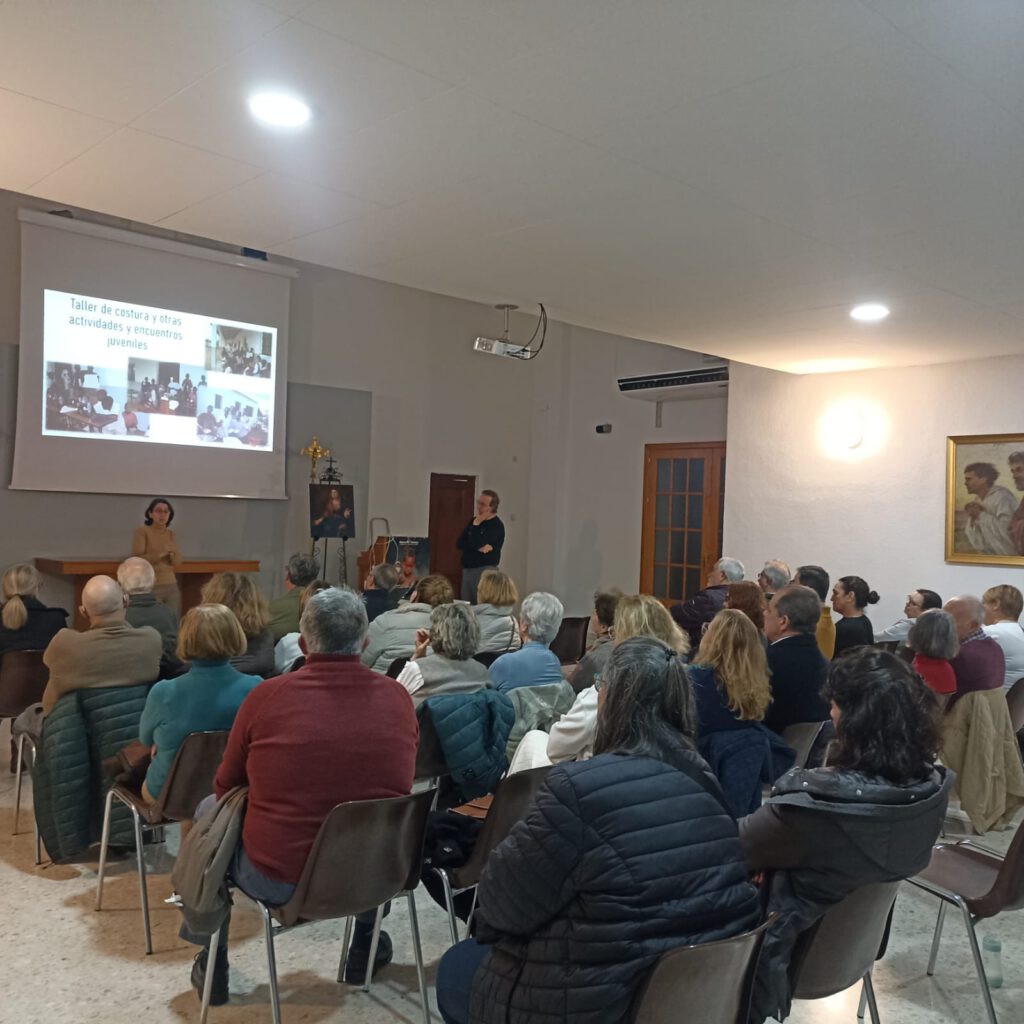
This year we have had the opportunity to visit several parishes. Often what we do is attend weekend Masses and share our mission experience and the realities of different countries where we have been as missionaries at the end of the Eucharist or after the homily.
It is very nice to see how in some parishes, such as La Encarnación in Bormujos (Seville), the whole community gets involved in the campaign. Catechists, children, and young people work during the week to help raise awareness in the community, while volunteers organize charity markets or activities such as hunger dinners.
Also, in the parishes of Cerro, Ascensión, and Los Ángeles in Seville East, the volunteers of Manos Unidas and the parish priests lovingly prepare the Masses for that weekend. At the last one, we not only had the opportunity to share in the Eucharist, but also to give our testimony to the adult catechesis group. It was an hour in which we were able to delve deeper into these realities and share photos and a deeper understanding of the causes of these situations and the struggle these countries are undergoing to move forward. In reality, our help as missionaries or our support for certain Manos Unidas projects is nothing more than support for the work and sacrifice that the communities carry out. These communities are the real protagonists and the ones who teach us so much about resilience, about not losing hope, about being creative when you have few resources. We learn so many things from them that it is only fair to share them with our communities of origin at this time.
We hope that the faith and energy they show will also revitalize our communities in Spain and that we will be able to collaborate in building a more just world for all.
Best regards, Alberto and Maricarmen.
Este sitio web utiliza cookies para mejorar su experiencia. Si continúa navegando consideramos que acepta el uso de cookies, pero puede optar por lo contrario si lo desea.
This website uses cookies to improve your experience. If you continue to browse we consider you accept the use of cookies, but you can opt-out if you wish. Acepto Puede obtener más información - You may have more information here
Politica y privacidad de Cookies - Privacy & Cookies Policy
Privacy Overview
This website uses cookies to improve your experience while you navigate through the website. Out of these, the cookies that are categorized as necessary are stored on your browser as they are essential for the working of basic functionalities of the website. We also use third-party cookies that help us analyze and understand how you use this website. These cookies will be stored in your browser only with your consent. You also have the option to opt-out of these cookies. But opting out of some of these cookies may affect your browsing experience.
Necessary cookies are absolutely essential for the website to function properly. This category only includes cookies that ensures basic functionalities and security features of the website. These cookies do not store any personal information.
Any cookies that may not be particularly necessary for the website to function and is used specifically to collect user personal data via analytics, ads, other embedded contents are termed as non-necessary cookies. It is mandatory to procure user consent prior to running these cookies on your website.