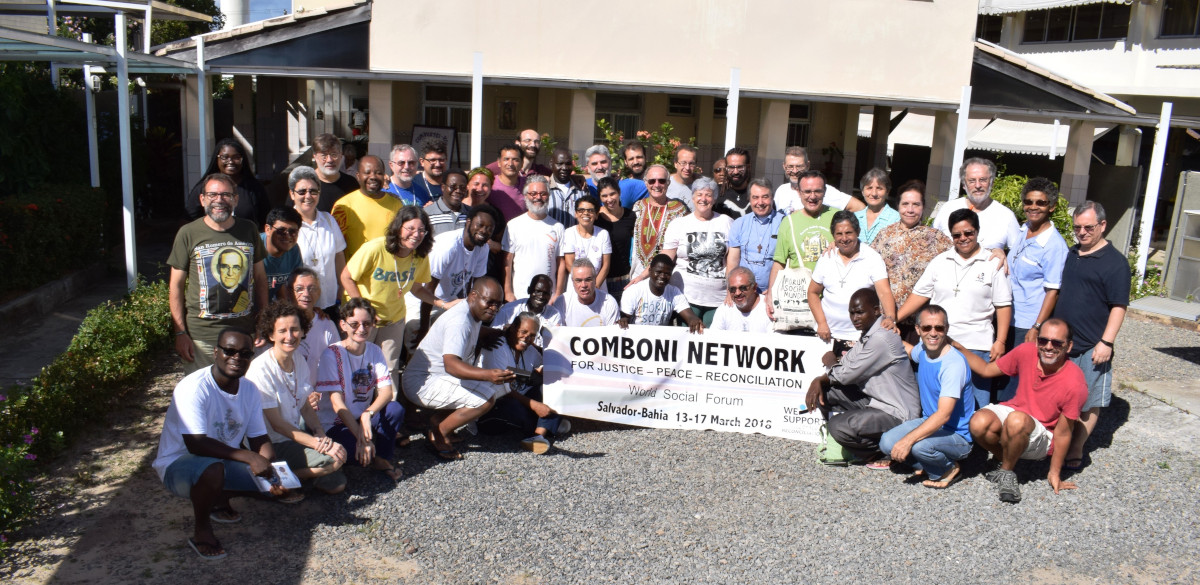
COMBONI FAMILY COMMISSION ON SOCIAL MINISTERIALITY
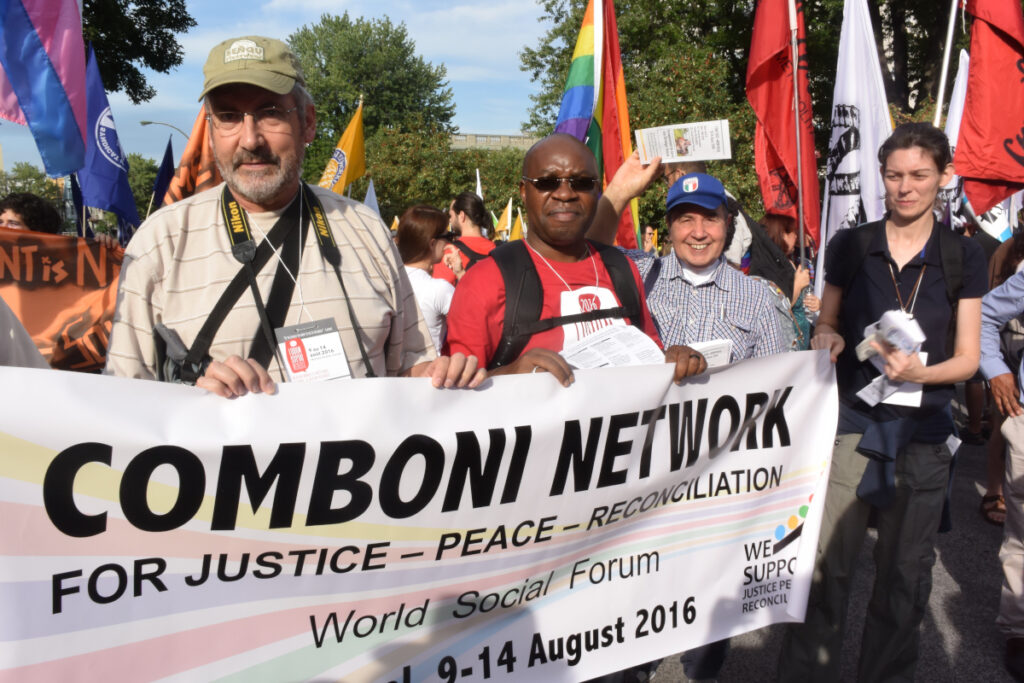
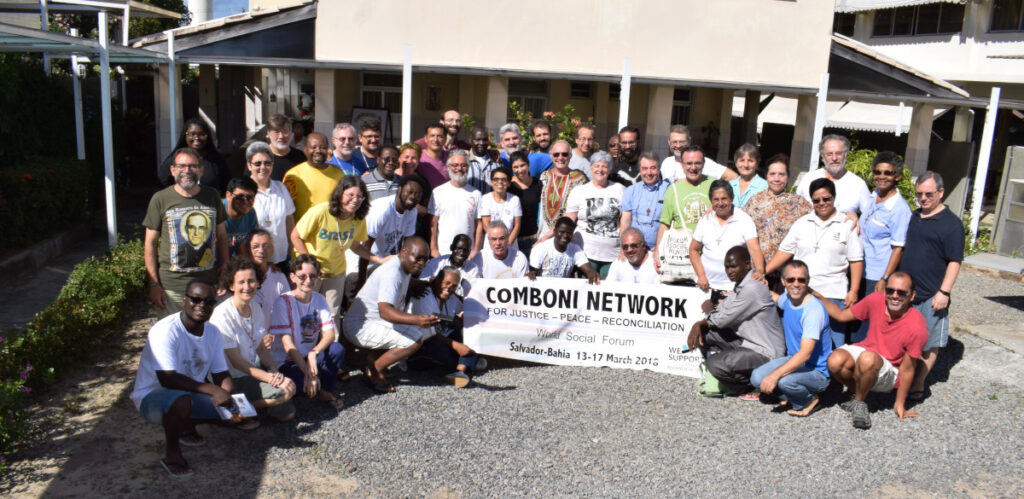
TOWARDS THE COMBONI SOCIAL FORUM 2021
ROME (EUR) 3 – 7 JULY 2021
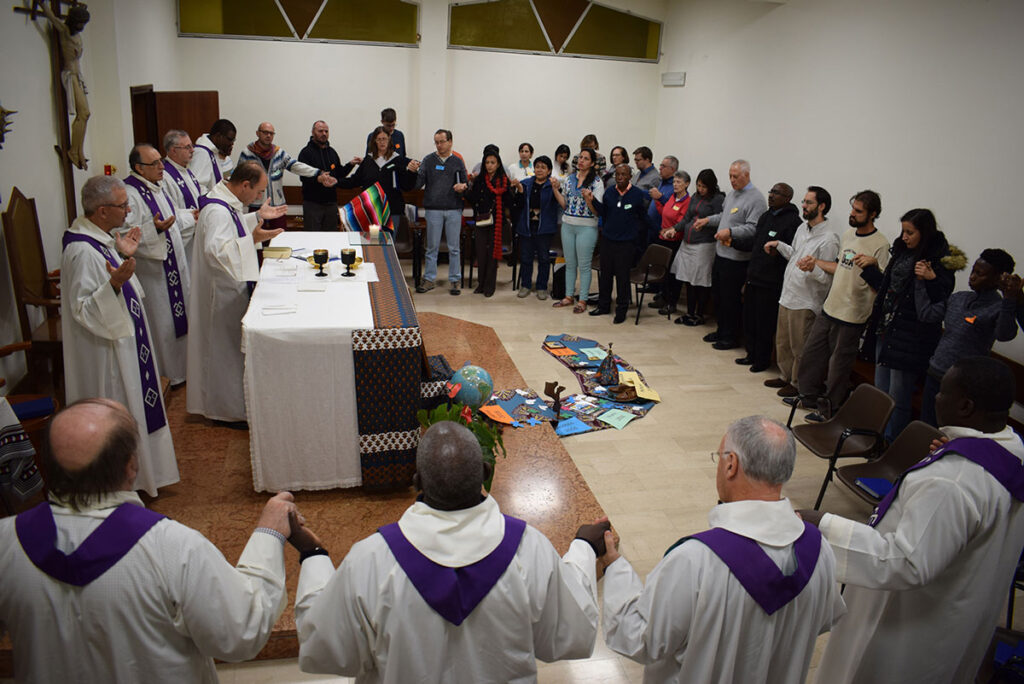
Dear brothers, sisters, secular and lay Combonians! Peace to you!
We have known for some time that you have been waiting for the green light to indicate the names of the representatives of your provinces who were to participate in the Social Ministry Forum. We thank you for your patience and availability.
Unfortunately, in view of the stalemate created by the COVID-19 pandemic, it was not possible to convene the Comboni Social Forum in July 2020 as planned, and even the hypothesis of meeting again in December 2020 has been lost in view of a second wave in recent times. We are sorry once again to have to postpone this important event as a Comboni family, but the situation wisely asks us to reorganize ourselves for better times.
The event is therefore postponed to 3-7 July 2021.
However, in order to enhance this time that will bring us to the Forum in presence, we can animate the Comboni Family and prepare it for the event.
We are focusing on two 2-day webinar events: a first one in December 2020, and another one in March 2021.
FOR PREPARATION:
Circulate the article published in Nigrizia in September 2020 to present the book WE ARE MISSION. The MCCJs will find it directly in the COMBONIAN FAMILY of November 2020. This action is intended to help participants to focus on the work and arrive prepared for the December 2020 event.
DECEMBER 2020:
2-day Webinar, Friday 4th and Saturday 5th December, from 3.00 p.m. TO 5.00 p.m. Rome Time
Contents:
= A change of epoch: the prophetic path of the Church (speaker to be confirmed). The aim is to offer a broader framework for the Comboni Social Forum, in the context of Evangelii Gaudium (EG), Laudato Si (LS), Fratres omnes (FO) Tutti Fratelli.
= The Comboni Social Forum in relation to the prophetic path of the Church (speaker to be confirmed). A theological reflection on the path of the FSC.
Format:
Two 2-hour webinars, including one interaction space (max 30 min). The webinar would be broadcast from Rome, with a following group in attendance. In other places, where possible, participants would be invited to meet and follow the talks together (and then share and reflect together), but the conferences would still be broadcast live to make it possible for anyone to participate. The recording of the conferences can be uploaded on the YouTube channel to make them accessible even to those who cannot connect live.
There should be simultaneous translation into several languages of the two conferences. Guiding questions will emerge from the conferences for group sharing / reflection (individual participants on Zoom can do it in the break out rooms) and a homework assignment in preparation for the March 2021 event.
Homework: in the months between the two events, participants will have the opportunity to deepen their understanding of the issues and put them in dialogue with their ministerial practice. Among the in-depth study tools, we strongly recommend reading the book: We are mission sent to the various provinces and communities via soft copy and also as a book.
MARZO 2021: 2-day Webinar, 5th and 6th March 2021 (Friday and Saturday)
Contents: = Presentation of the social and ministerial mapping of the Comboni family and first data analysis (in relation to the contributions of the December webinar) – group work from the results of the analysis.
= Sharing by working groups (on Zoom, with translation into several languages).
Format: Similar to the December event.
On the first day there would be a conference to be organised, followed by group work. On the second day there would be a sharing of the work of the groups (with simultaneous translation) and the launch of the Comboni Social Forum in July 2021.
Homework: In preparation for the FSC, the selected participants will prepare the presentation of their most regenerative ministerial experience.
July 2021: 5-day in Rome (Curia MCCJ) 3 – 7 LUGLIO 2021
The format of the forum in Rome would remain the one already elaborated by the organizers, with adaptations of the programme that will be carried out in the two events of December 2020 and March 2021. The advantage will be that it will be possible to deepen further and that the participants will arrive much more prepared and involved in the dynamics of the Forum.
Next November 2020 we will give you more details about the first webinar on 4-5 December 2020. We ask you to inform your members from the various provinces and communities so that they can be present on those dates and in those particular 2 hours to actively participate in the event.
On behalf of the Commission of the Comboni Family on Social Ministries, I greet you fraternally and we remain united in prayer in this difficult time but also full of new opportunities. May God accompany us and bless us!
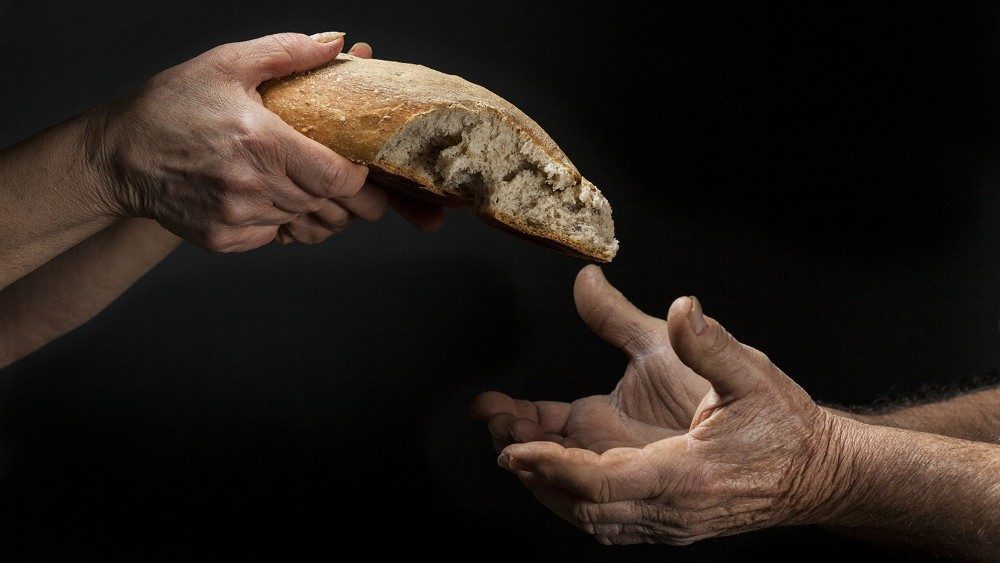
“Stretch forth your hand to the poor” (Sir 7:32). Age-old wisdom has proposed these words as a sacred rule to be followed in life. Today these words remain as timely as ever. They help us fix our gaze on what is essential and overcome the barriers of indifference. Poverty always appears in a variety of guises, and calls for attention to each particular situation. In all of these, we have an opportunity to encounter the Lord Jesus, who has revealed himself as present in the least of his brothers and sisters (cf. Mt 25:40).
1. Let us take up the Old Testament book of Sirach, in which we find the words of a sage who lived some two hundred years before Christ. He sought out the wisdom that makes men and women better and more capable of insight into the affairs of life. He did this at a time of severe testing for the people of Israel, a time of suffering, grief and poverty due to the domination of foreign powers. As a man of great faith, rooted in the traditions of his forebears, his first thought was to turn to God and to beg from him the gift of wisdom. The Lord did not refuse his help.
From the book’s first pages, its author presents his advice concerning many concrete situations in life, one of which is poverty. He insists that even amid hardship we must continue to trust in God: “Do not be alarmed when disaster comes. Cling to him and do not leave him, so that you may be honoured at the end of your days. Whatever happens to you, accept it, and in the uncertainties of your humble state, be patient, since gold is tested in the fire, and chosen men in the furnace of humiliation. Trust him and he will uphold you, follow a straight path and hope in him. You who fear the Lord, wait for his mercy; do not turn aside in case you fall” (2:2-7).
2. In page after page, we discover a precious compendium of advice on how to act in the light of a close relationship with God, creator and lover of creation, just and provident towards all his children. This constant reference to God, however, does not detract from a concrete consideration of mankind. On the contrary, the two are closely connected.
This is clearly demonstrated by the passage from which the theme of this year’s Message is taken (cf. 7:29-36). Prayer to God and solidarity with the poor and suffering are inseparable. In order to perform an act of worship acceptable to the Lord, we have to recognize that each person, even the poorest and most contemptible, is made in the image of God. From this awareness comes the gift of God’s blessing, drawn by the generosity we show to the poor. Time devoted to prayer can never become an alibi for neglecting our neighbour in need. In fact the very opposite is true: the Lord’s blessing descends upon us and prayer attains its goal when accompanied by service to the poor.
3. How timely too, for ourselves, is this ancient teaching! Indeed, the word of God transcends space and time, religions and cultures. Generosity that supports the weak, consoles the afflicted, relieves suffering and restores dignity to those stripped of it, is a condition for a fully human life. The decision to care for the poor, for their many different needs, cannot be conditioned by the time available or by private interests, or by impersonal pastoral or social projects. The power of God’s grace cannot be restrained by the selfish tendency to put ourselves always first.
Keeping our gaze fixed on the poor is difficult, but more necessary than ever if we are to give proper direction to our personal life and the life of society. It is not a matter of fine words but of a concrete commitment inspired by divine charity. Each year, on the World Day of the Poor, I reiterate this basic truth in the life of the Church, for the poor are and always will be with us to help us welcome Christ’s presence into our daily lives (cf. Jn 12:8).
4. Encountering the poor and those in need constantly challenges us and forces us to think. How can we help to eliminate or at least alleviate their marginalization and suffering? How can we help them in their spiritual need? The Christian community is called to be involved in this kind of sharing and to recognize that it cannot be delegated to others. In order to help the poor, we ourselves need to live the experience of evangelical poverty. We cannot feel “alright” when any member of the human family is left behind and in the shadows. The silent cry of so many poor men, women and children should find the people of God at the forefront, always and everywhere, in efforts to give them a voice, to protect and support them in the face of hypocrisy and so many unfulfilled promises, and to invite them to share in the life of the community.
The Church certainly has no comprehensive solutions to propose, but by the grace of Christ she can offer her witness and her gestures of charity. She likewise feels compelled to speak out on behalf of those who lack life’s basic necessities. For the Christian people, to remind everyone of the great value of the common good is a vital commitment, expressed in the effort to ensure that no one whose human dignity is violated in its basic needs will be forgotten.
5. The ability to stretch forth our hand shows that we possess an innate capacity to act in ways that give meaning to life. How many outstretched hands do we see every day! Sadly, it is more and more the case that the frenetic pace of life sucks us into a whirlwind of indifference, to the point that we no longer know how to recognize the good silently being done each day and with great generosity all around us. Only when something happens that upsets the course of our lives do our eyes become capable of seeing the goodness of the saints “next door”, of “those who, living in our midst, reflect God’s presence” (Gaudete et Exsultate, 7), but without fanfare. Bad news fills the pages of newspapers, websites and television screens, to the point that evil seems to reign supreme. But that is not the case. To be sure, malice and violence, abuse and corruption abound, but life is interwoven too with acts of respect and generosity that not only compensate for evil, but inspire us to take an extra step and fill our hearts with hope.
6. A hand held out is a sign; a sign that immediately speaks of closeness, solidarity and love. In these months, when the whole world was prey to a virus that brought pain and death, despair and bewilderment, how many outstretched hands have we seen! The outstretched hands of physicians who cared about each patient and tried to find the right cure. The outstretched hands of nurses who worked overtime, for hours on end, to look after the sick. The outstretched hands of administrators who procured the means to save as many lives as possible. The outstretched hands of pharmacists who at personal risk responded to people’s pressing needs. The outstretched hands of priests whose hearts broke as they offered a blessing. The outstretched hands of volunteers who helped people living on the streets and those with a home yet nothing to eat. The outstretched hands of men and women who worked to provide essential services and security. We could continue to speak of so many other outstretched hands, all of which make up a great litany of good works. Those hands defied contagion and fear in order to offer support and consolation.
7. This pandemic arrived suddenly and caught us unprepared, sparking a powerful sense of bewilderment and helplessness. Yet hands never stopped reaching out to the poor. This has made us all the more aware of the presence of the poor in our midst and their need for help. Structures of charity, works of mercy, cannot be improvised. Constant organization and training is needed, based on the realization of our own need for an outstretched hand.
The present experience has challenged many of our assumptions. We feel poorer and less self-sufficient because we have come to sense our limitations and the restriction of our freedom. The loss of employment, and of opportunities to be close to our loved ones and our regular acquaintances, suddenly opened our eyes to horizons that we had long since taken for granted. Our spiritual and material resources were called into question and we found ourselves experiencing fear. In the silence of our homes, we rediscovered the importance of simplicity and of keeping our eyes fixed on the essentials. We came to realize how much we need a new sense of fraternity, for mutual help and esteem. Now is a good time to recover “the conviction that we need one another, that we have a shared responsibility for others and the world… We have had enough of immorality and the mockery of ethics, goodness, faith and honesty… When the foundations of social life are corroded, what ensues are battles over conflicting interests, new forms of violence and brutality, and obstacles to the growth of a genuine culture of care for the environment” (Laudato Si’, 229). In a word, until we revive our sense of responsibility for our neighbour and for every person, grave economic, financial and political crises will continue.
8. This year’s theme – “Stretch forth your hand to the poor” – is thus a summons to responsibility and commitment as men and women who are part of our one human family. It encourages us to bear the burdens of the weakest, in accord with the words of Saint Paul: “Through love serve one another. For the whole law is fulfilled in one word: ‘You shall love your neighbour as yourself’… Bear one another’s burdens, and so fulfil the law of Christ” (Gal 5:13-14; 6:2). The Apostle teaches that the freedom bestowed through the death and resurrection of Jesus Christ makes us individually responsible for serving others, especially the weakest. This is not an option, but rather a sign of the authenticity of the faith we profess.
Here again, the book of Sirach can help us. It suggests concrete ways to support the most vulnerable and it uses striking images. First, it asks us to sympathize with those who are sorrowing: “Do not fail those who weep” (7:34). The time of pandemic forced us into strict isolation, making it impossible even to see and console friends and acquaintances grieving the loss of their loved ones. The sacred author also says: “Do not shrink from visiting the sick” (7:35). We have been unable to be close to those who suffer, and at the same time we have become more aware of the fragility of our own lives. The word of God allows for no complacency; it constantly impels us to acts of love.
9. At the same time, the command: “Stretch forth your hand to the poor” challenges the attitude of those who prefer to keep their hands in their pockets and to remain unmoved by situations of poverty in which they are often complicit. Indifference and cynicism are their daily food. What a difference from the generous hands we have described! If they stretch out their hands, it is to touch computer keys to transfer sums of money from one part of the world to another, ensuring the wealth of an elite few and the dire poverty of millions and the ruin of entire nations. Some hands are outstretched to accumulate money by the sale of weapons that others, including those of children, use to sow death and poverty. Other hands are outstretched to deal doses of death in dark alleys in order to grow rich and live in luxury and excess, or to quietly pass a bribe for the sake of quick and corrupt gain. Others still, parading a sham respectability, lay down laws which they themselves do not observe.
Amid all these scenarios, “the excluded are still waiting. To sustain a lifestyle which excludes others, or to sustain enthusiasm for that selfish ideal, a globalization of indifference has developed. Almost without being aware of it, we end up being incapable of feeling compassion at the outcry of the poor, weeping for other people’s pain, and feeling a need to help them, as though all this were someone else’s responsibility and not our own” (Evangelii Gaudium, 54). We cannot be happy until these hands that sow death are transformed into instruments of justice and peace for the whole world.
10. “In everything you do, remember your end” (Sir 7:36). These are the final words of this chapter of the book of Sirach. They can be understood in two ways. First, our lives will sooner or later come to an end. Remembering our common destiny can help lead to a life of concern for those poorer than ourselves or lacking the opportunities that were ours. But second, there is also an end or goal towards which each of us is tending. And this means that our lives are a project and a process. The “end” of all our actions can only be love. This is the ultimate goal of our journey, and nothing should distract us from it. This love is one of sharing, dedication and service, born of the realization that we were first loved and awakened to love. We see this in the way children greet their mother’s smile and feel loved simply by virtue of being alive. Even a smile that we can share with the poor is a source of love and a way of spreading love. An outstretched hand, then, can always be enriched by the smile of those who quietly and unassumingly offer to help, inspired only by the joy of living as one of Christ’s disciples.
In this journey of daily encounter with the poor, the Mother of God is ever at our side. More than any other, she is the Mother of the Poor. The Virgin Mary knows well the difficulties and sufferings of the marginalized, for she herself gave birth to the Son of God in a stable. Due to the threat of Herod, she fled to another country with Joseph her spouse and the child Jesus. For several years, the Holy Family lived as refugees. May our prayer to Mary, Mother of the Poor, unite these, her beloved children, with all those who serve them in Christ’s name. And may that prayer enable outstretched hands to become an embrace of shared and rediscovered fraternity.
Encyclical of Pope Francis on Fraternity and Friendship in Society
Pope Francis continues to ‘excel’, as he proposed in the ‘Joy of the Gospel’, his first great programmatic text. Yes, ‘excel’ is to take the initiative, to be the first to take certain steps, to move forward towards a Church and a world where fraternity is no longer a word from the dictionary but corresponds to concrete and happy lives.
“We are all sisters and brothers”, is very clear to Pope Francis, as was very clear in the life and words of Christ two thousand years ago. For more than two millennia, the world has been taking steps towards the achievement of this greater goal. We often focus more on what separates us than on what unites us. And with these arrogant postures, the world has built more walls than bridges.
With this document, Pope Francis tries to take a step towards a future of universal brotherhood. If we are truly brothers and sisters, then race, colour, country, ideas, religion, football club, personal tastes, academic titles, bank account, employment, favourite songs etc. will not be the most important things in life, because, in essence, we are all sisters and brothers to one another, without borders.
It is an inspiring text for these times of global pandemic. Published in Assisi and on St Francis’ Day, it is a sign for the whole world, as Francis is a symbol of peace and universal brotherhood. Regardless of the rivers of ink it will cause to flow, I want to make my position clear: I am completely in favour. The only journey that makes sense is the one that takes us to the hearts of others, beginning with those who think and pray differently from us. God created us brothers and sisters, and Christ asked us to love one another and to go out to meet everyone, as he did in the lands of Galilee and Samaria.
The words and gestures of the Pope in Assisi were so dense, so intense, so profound, so provocative…. To the Bishops the Pope explains: “The title is the message of Jesus encouraging us to recognize everyone as brothers and sisters and thus to live in the common house which the Father has entrusted to us.” This Encyclical Letter, on fraternity and friendship in society, has as its title the expression that St Francis of Assisi used to address everyone in order to propose to them ‘a way of life marked with the flavour of the Gospel (FT 1)’. St. Francis proposed “the essence of a fraternal openness that allows us to acknowledge, appreciate and love each person, regardless of physical proximity, regardless of where he or she was born or lives”(FT1).
Francis is an example because he sowed peace wherever he went and walked with the poor, abandoned, sick and discarded. In short, he was always by the side of the least important. He had a heart without frontiers, he did not wage wars of ideas, because he thought that the right way was to live and share the love of God, awakening in people the dream of a fraternal society.
St. Francis made a courageous and unthinkable bet for the people of his time: “he freed himself of the desire to wield power over others. He became one of the poor and sought to live in harmony with all” (FT4).
The eruption of COVID 19 gives this encyclical its reason to be, since, despite so much technological connectivity, countries show an inability to act together.
The first chapter reflects on the shadows of a closed world. The second, with the title ‘a stranger on the road’, proposes a reflection on the parable of the Good Samaritan. The third chapter invites us to imagine and generate a more open world. Then comes the proposal of a heart open to the whole world and the request for better policies to move away from populism and liberalism. Finally, the Pope speaks about dialogue and friendship in scoiety, opening up paths for bringing people together based on truth, peace and forgiveness. In conclusion, chapter eight puts religions at the service of brotherhood, removing them from all kinds of violence.
HEALING THE WORLD. CHAP. I
(Dark clouds over a Closed World, 9-55)
‘Dark Clouds over a Closed World’ is the first chapter of the encyclical ‘Fratelli Tutti’. Universal brotherhood is being held back by some trends in today’s world which hinder its development.
Many human conquests are going backwards:
“Ancient conflicts thought long buried are breaking out anew, while instances of a myopic, extremist, resentful and aggressive nationalism are on the rise” (FT 11). Many rulers forget something essential: “Goodness, together with love, justice and solidarity are not achieved once and for all; they have to be realized each day” (FT 11).
The world is being constructed under the command of foreign interests and economic powers that invest without hindrance or control, imposing a single economic and cultural model: “This culture unifies the world, but divides persons and nations, for as society becomes ever more globalized, it makes us neighbours, but does not make us brothers”(FT12).
Discouragement and distrust are being sown, especially in the new generations . We do not take good care of the world or of ourselves. We support the throw-away culture, considering that “some parts of our human family, it appears, can be readily sacrificed for the sake of others considered worthy of a carefree existence” (FT 18).
Racism remains in force, although more disguised, new forms of poverty are born, mafias take advantage of people’s fear and insecurity, women have fewer rights than men, human rights are not equal for all: “While one part of humanity lives in opulence, another part sees its own dignity denied, scorned or trampled upon, and its fundamental rights discarded or violated” (FT 22).
Moreover, “millions of people today – children, women and men of all ages – are deprived of freedom and forced to live in conditions akin to slavery” (FT24). We must fight against all forms of human trafficking, by which people are treated as a means and not an end. The world is violent; today we are living a ‘third world war’ fought piecemeal” (FT).
Instead of bridges, governments and people build “walls in the heart, walls on the land, in order to prevent this encounter with other cultures, with other people. And those who raise walls will end up as slaves within the very walls they have built… without horizons” (FT 27).
The Pope quotes the Document on Human Fraternity, written with the Grand Imam Al-Tayyeb: “we wish to emphasize that, together with these historical advances, great and valued as they are, there exists a moral deterioration that influences international action and a weakening of spiritual values and responsibility” (FT 29).
We have lost our sense of belonging to a common humanity; we have discovered distant planets without discovering the urgent needs of those who live next door; we are victims of the globalisation of indifference. For this reason, the Pope cries out: “Isolation, no; closeness, yes. Culture clash, no; culture of encounter, yes” (FT 30).
COVID 19 reminded us that we are all in the same boat facing the same storm and no one is saved alone, but only together. The pandemic forces us to “rethink our life styles, our relationships, the organization of our societies and, above all, the meaning of our existence” (FT 33). We all need each other.
We try to bring others to our country while we do not help the poorest countries, and we give cover to unscrupulous human traffickers. But “there is also a need to reaffirm the right not to emigrate, that is, to remain in one’s homeland” (FT 38). It is urgent to combat “the fear that deprives us of the desire and the ability to encounter the other” (FT 41).
We live in the digital age, but hearts are not all interconnected. There is a lot of violence and fanaticism spreading through the media today. We need more wisdom and less manipulation and false news. And furthermore: “We must not lose the ability to listen. St Francis of Assisi listened to the voice of God, the poor, the sick, nature. And he transformed all this into a way of life” (FT 48).
The Pope, in this first chapter, speaks more of shadows, but there are many paths of hope, for ‘God continues to spread seeds of good in humanity’ (FT 54).
The Pope’s challenge is a call to trust: “Let us walk in hope” (FT 55)!
Neighbour or partner? Chap.II
(A stranger on the road, 56-86)
A lot of ink has been spilled on Pope Francis’ latest encyclical, ‘Fratelli tutti’, but this only shows its importance and the debate it has provoked and still provokes. I’m going to put a few more thoughts on this bonfire…
The Pope provides a very timely reflection on the parable of the Good Samaritan, a biblical text which has provoked reactions from many academics, politicians, economists and writers, including non-believers. Pope Francis makes a distinction between being a partner (‘partners in pursuit of particular interests’ (FT 102) and being a neighbour: “free of every label and position, he was able to interrupt his journey, change his plans, and unexpectedly come to the aid of an injured person who needed his help” (FT 101). Now, this is the choice we are constantly invited to make.
The chapter which speaks of the Good Samaritan is entitled ‘A Stranger on the Road’. The Pope reminds us: “Love does not care if a brother or sister in need comes from one place or another. For love shatters the chains that keep us isolated and separate; in their place, it builds bridges. Love enables us to create one great family, where all of us can feel at home… Love exudes compassion and dignity” (FT 62).
Working his way through this emblematic parable of Jesus, Pope Francis recalls that several people passed by the person beaten up by bandits…they went away and did not stop. The Levite and the priest, men of the law and of the temple, did not stop. But there was one person who stopped, giving time to the wounded man, preventing his imminent death (cf. FT63). And the Pope dares to ask us: “With whom do you identify”? The conclusion seems obvious: “We have become accustomed to looking the other way, passing by, and ignoring situations until they affect us directly” (FT 64).
Following the Good Samaritan is an exercise in responsible citizenship, giving life to the common good: by his actions, the Good Samaritan showed that “the existence of each and every individual is deeply tied to that of others: life is not simply time that passes; life is a time for interactions” (FT 66).
We must look out for others more than for ourselves, overcoming the selfishness and individualism that characterise these times: “We cannot be indifferent to suffering; we cannot allow anyone to go through life as an outcast” (FT 68).
Today there are many wounded people about. Many feel excluded, abandoned and wounded by the wayside. We are constantly invited to choose whether we want to be good Samaritans or indifferent travellers passing by.
To put it simply, the Pope explains that there are two types of people: “those who care for someone who is hurting and those who pass by; those who bend down to help and those who look the other way and hurry off” (FT 70).
The story of the Good Samaritan is always repeating itself. Jesus “trusts in the best of the human spirit; with this parable, he encourages us to persevere in love, to restore dignity to the suffering and to build a society worthy of the name (FT 71).
There are many ways to pass by on the other side, from selfishness to indifference. But the text says something that bothers us: the people who passed by were religious. This proves that “believing in God and adoring him is no guarantee of living as God pleases” (FT 74).
Those who pass by become allies of those who attacked the man on the road. We often feel like the wounded person, thrown by the wayside in our lives. Our attitude must be one of responsible Christians: “Let us take an active part in renewing and supporting our troubled societies. Today we have a great opportunity to express our innate sense of fraternity, to be Good Samaritans who bear the pain of other people’s troubles rather than fomenting greater hatred and resentment” (FT 77).
Doing good implies not expecting thanks, because, as the Pope says, “All of us have a responsibility for the wounded, those of our own people and all the peoples of the earth. Let us care for the needs of every man and woman, young and old, with the same fraternal spirit of care and closeness that marked the Good Samaritan” (FT 79).
Finally, we must look at Jesus’ request: “go and do the same”. We have no alternatives, for Christians recognize Jesus himself in every abandoned or excluded brother’ (FT 85).
And there remains an important pastoral orientation: “catechesis and preaching speak more directly and clearly about the social meaning of existence, the fraternal dimension of spirituality, our conviction of the inalienable dignity of each person, and our reasons for loving and accepting all our brothers and sisters” (FT 86).
(Envisaging and engendering an open world, 87 – 127)
Pope Francis, in ‘Fratelli Tutti’, maintains that it is not possible “to experience the true beauty of life without relating to others, without having real faces to love” (FT 87). The world must open up more, improving the rates of hospitality. He also says that “the spiritual stature of a person’s life is measured by love, which in the end remains ‘the criterion for the definitive decision about a human life’s worth or lack thereof’”(FT 92).
It is urgent to go out towards the peripheries, some of which are very close to us, even in our own families. We must pay attention to worrying signs of racism, “a virus that quickly mutates and, instead of disappearing, goes into hiding, and lurks in waiting (FT 97). We need to give special attention to “hidden exiles”, such as disabled people and certain elderly people who do not count in competitive, successful and profit-making societies.
Globalisation cannot shape all people equally, as it “destroys the wealth and uniqueness of each person and each people” (FT 100). The future of humanity has many colours, capitalising on the wealth of diversity. We must overcome a world of partners to build a world of brothers who are close to each other, inspired by the parable of the Good Samaritan, who, “free of every label and position, was able to interrupt his journey, change his plans, and unexpectedly come to the aid of an injured person who needed his help” (FT 101).
‘Equality and freedom’ are important values, but without ‘fraternity’ they add little or nothing interesting to humanity: “Social friendship and universal fraternity necessarily call for an acknowledgement of the worth of every human person, always and everywhere (FT 106).
Genuine and integral growth is a necessary condition for promoting the moral good. Solidarity begins in “families, which are the first place where the values of love and fraternity, togetherness and sharing, concern and care for others are lived out and handed on. They are also the privileged milieu for transmitting the faith” (FT 114). The art of caring must always be present, as the highest expression of solidarity: ‘service is, to a great extent, caring for fragility’ (FT 115).
It is necessary to fight against “the structural causes of poverty, inequality, the lack of work, land and housing, the denial of social and labour rights” (FT 116). And, of course, we must commit ourselves to an integral ecology that obliges us to ‘care for the common home’ (FT 117).
Pope Francis also deals with the issue of property in depth. The Church’s Social Doctrine says that the right to private property is always subject to the universal destination of goods (cf. FT 123) and societies must “ensure that every person lives with dignity and has adequate opportunities for his or her integral development” (TF 118).
Development must be sustainable and sustained. It must “ensure personal and social, economic and political human rights, including the rights of nations and peoples” (FT 122).
International Relations must change the way it understands exchange between countries: “If every human being possesses an inalienable dignity, if all people are my brothers and sisters, and if the world truly belongs to everyone, then it matters little whether my neighbour was born in my country or elsewhere” (FT 125). The richest and most developed countries are asked not to crush the poorest, but to help them live with standards of dignity, ensuring “the fundamental right of peoples to subsistence and growth” (FT 126).
Pope Francis concludes this third chapter with hope for a better future: “We can aspire to a world that provides land, housing and work for all. This is the true path of peace, not the senseless and myopic strategy of sowing fear and mistrust in the face of outside threats. For a real and lasting peace will only be possible on the basis of a global ethic of solidarity and cooperation in the service of a future shaped by interdependence and shared responsibility in the whole human family” (FT 127).
And this latest document of Pope Francis goes a lot further. From “an open heart to the whole world” we will come to reflect on “best politics”. We must overcome false convictions which present the migrant as a usurper who has nothing to offer, the poor as dangerous or useless while the powerful are generous benefactors (cf. TF 141). We will come back to this …
Politics with love. Chap.IV
(A heart open to the whole world, 128-153)
‘A heart open to the whole world’ is the theme of the Chapter IV of ‘Fratelli Tutti’. In setting limits to the borders that the world has erected, the Pope is clear: “Our response to the arrival of migrating persons can be summarized by four words: welcome, protect, promote and integrate” (FT 129). We must offer migrants the possibility of new development (cf. FT 134) because, “if they are helped to integrate, they are a blessing, a source of enrichment and a new gift that encourages a society to grow” (FT135).
There must also be a fruitful exchange between countries, because mutual help for all benefits and increases the conviction that “we are all saved together or no one is saved” (FT 137), because everything is interconnected. In welcoming people, there is an urgent need to cultivate fraternal generosity by avoiding calculated and inhumane trade. Immigrants cannot be catalogued as usurpers who offer nothing. It is often thought that “the poor are dangerous or useless and the powerful are generous benefactors” (FT 141). The more welcoming and open a society is, the more healthy cultures based on universal values can be generated. And Pope Francis makes it clear that “Today, no state can ensure the common good of its population if it remains isolated” (FT 153).
Better politics, “placed at the service of the true common good”, are needed (FT 154). The choices made in favour of populist and liberal policies are having a negative effect on people’s lives because, “in both cases, it becomes difficult to envisage an open world that makes room for everyone, including the most vulnerable, and shows respect for different cultures” (FT 155).
Work is the best thing that a government can offer to its citizens, because it ensures everyone a life of dignity and commitment to the building up of a society.
The market does not solve all problems and financial speculation continues to wreak havoc. The Pope recalls: “The fragility of world systems in the face of the pandemic has demonstrated that not everything can be resolved by market freedom … We must put human dignity back at the centre and on that pillar build the alternative social structures we need” (FT 168).
Francis warns us that “the twenty-first century is witnessing a weakening of the power of nation states, chiefly because the economic and financial sectors, being transnational, tend to prevail over the political” (FT 172). To avoid this risk, the UN must be reformed so that “the concept of the family of nations can be truly realised” (FT 173). Universal brotherhood and social peace require a good policy which is not subject “to the economy, nor should the economy be subject to the dictates of an efficiency-driven paradigm of technocracy”(FT 177).
The fight against corruption must be relentless. And there is only political greatness “when, in difficult times, we uphold high principles and think of the long-term common good” (FT 178). Social charity is the soul of a healthy social and political order, in the pursuit of the common good: “charity is at the centre of all healthy and open social life” (FT 184). Politicians must help those who are poor, but also “change the social conditions which cause their suffering (…) by creating jobs, by exercising a sublime form of charity which ennobles their political action” (FT 187). They have to care for the weakest, for those who are victims of human rights violations.
“We are still far from a globalization of the most basic of human rights” (FT 189). The Pope condemns the criminal hunger, the tons of food that are being spoiled and the trafficking in people which is a ‘shame for humanity that international politics should not tolerate’ (FT 189).
Fundamentalist intolerance is also targeted by Pope Francis, since it damages relations between persons, groups and peoples and does not allow different voices to be heard. The Pope makes a request: “May we not be content with being enclosed in one fragment of reality” (FT 191). Hatred and fear are part of fundamentalism.
Politics is an art of loving, strengthening “the reserves of good that, in spite of everything, exist in human hearts” (FT 196). Politicians must allow themselves to be overcome by the tenderness caused by the poor and fragile of our world. We must not look at the tangible results, but at the fruitfulness of political intervention: “If I can help at least one person to have a better life, that already justifies the offering of my life” (FT 195).
Many questions remain, some of them painful: “What did I do for the progress of our people? How much social peace have I sown” (FT 197)? The Pope develops his reflection by proposing dialogue as a way to social friendship.
Voices of various colours. Chapters V-VI
(A better kind of politics, 154-197; dialogue and friendship in society, 198-224)
Dialogue implies “Approaching, speaking, listening, looking at, coming to know and understand one another, and to find common ground” (FT 198). This is a difficult but decisive task, not least because disagreements and conflicts make much more news.
Dialogue is a bridge, it establishes a middle ground “between selfish indifference and violent protest” (FT 199). It is also necessary to avoid any form of manipulative power: “economic, political, media, religious or any other kind” (FT 201).
The points of view of others must always be respected if there is to be an authentic social dialogue. In social terms, much must be invested in public debate which is “a stimulus to reach the truth better or at least express it better” (FT 203).
The media help us to feel closer to others. And in this age of information technology and social networks, “the Internet can offer greater possibilities of encounter and solidarity among all” (FT 205). But there is the other side of the coin and “we cannot accept “a digital world designed to exploit our weaknesses and bring out the worst in people” (FT 205).
Seeking consensus is a great goal: “Acknowledging the existence of certain enduring values, however demanding it may be to discern them, makes for a robust and solid social ethics” (FT 211).
Faith is an added value for believers. “As believers, we are convinced that human nature, as the source of ethical principles, was created by God, and that ultimately it is he who gives those principles their solid foundation” (FT 214)
Vinicius de Moraes is quoted as evoking the importance of creating a new culture: “Life, for all its confrontations, is the art of encounter” (FT 215). The Pope returns to his repeated image of the polyhedron that “can represent a society where differences coexist, complementing, enriching and reciprocally illuminating one another, even amid disagreements and reservations” (215).
Social peace is very laborious and requires practice. Peace is not achieved in the comfort of offices, but in the difficulties and risks of daily life: “What is important is to create processes of encounter, processes that build a people that can accept differences. Let us arm our children with the weapons of dialogue! Let us teach them to fight the good fight of the culture of encounter” (FT217)!
No one can be excluded; the peripheries also have something to offer, because experience and history show that “sooner or later, ignoring the existence and rights of others will erupt in some form of violence, often when least expected” (FT 219).
We must always have this deep and tested conviction that “no authentic, profound and enduring change is possible unless it starts from the different cultures, particularly those of the poor” (FT 220).
There are counter-values which it is urgent to banish from social practices. One of these is consumerist individualism, responsible for many abuses. The world must cultivate kindness, for it is essential not to hurt others with words or gestures considered offensive. Rather, “It involves ‘speaking words of comfort, strength, consolation and encouragement’ and not ‘words that demean, sadden, anger or show scorn’” (FT223).
In a society going at high speed, people do not seem to have time for simple but essential gestures. The Pope reminds us that “often nowadays we find neither the time nor the energy to stop and be kind to others, to say “excuse me”, “pardon me” and “thank you”. We must value expressions of kindness which create a good atmosphere and generate happiness. Pope Francis concludes: “Once kindness becomes a culture within society it transforms lifestyles, relationships and the ways ideas are discussed and compared. Kindness facilitates the quest for consensus; it opens new paths where hostility and conflict would burn all bridges” (FT224).
We must open up ways of meeting each other. We could quench a lot of thirst in this way!
Hearts that embrace. Chapater VII
(Paths of renewed encounter)
Pope Francis is clear and direct: “In many parts of the world, there is a need for paths of peace to heal open wounds. There is also a need for peacemakers, men and women prepared to work boldly and creatively to initiate processes of healing and renewed encounter” (FT 225).
There is a need to open ‘paths of a new encounter’. There is a need to dare ‘to start afresh from the truth’, for only from this standpoint will people “be able to make a broad and persevering effort to understand one another and to strive for a new synthesis for the good of all” (FT 227), without ever forgetting that “truth is an inseparable companion of justice and mercy” (FT 227).
Francis is convinced that reconciliation and the building of brotherhood require knowing what has happened: “Truth means telling families torn apart by pain what happened to their missing relatives (…) Truth means recognizing the pain of women who are victims of violence and abuse. Fraternity will only take place when the chains of violence are broken, for “violence leads to more violence, hatred to more hatred, death to more death” (FT 227). Vengeance does not solve anything and “forgiveness is precisely what enables us to pursue justice without falling into a spiral of revenge or the injustice of forgetting” (FT 252).
The paths may be difficult to travel, but it is clear that “true peace can be achieved only when we strive for justice through dialogue, pursuing reconciliation and mutual development” (FT 229).
Theories can help in the social construction of a country, but nothing will replace practical commitment: “Great changes are not produced behind desks or in offices (…) There is an ‘architecture’ of peace, to which different institutions of society contribute, each according to its own area of expertise, but there is also an ‘art’ of peace that involves us all” (FT 231).
There is no peace without justice, and this is an important indicator: “Those who work for tranquil social coexistence should never forget that inequality and lack of integral human development make peace impossible (FT 235). And one must never forget the least of our brothers and sisters, the discarded and the most fragile.
Other major themes are forgiveness (which ‘does not imply forgetting’ (FT 250)) and reconciliation, valued by Christianity and many religions. The Pope makes it clear that “Jesus Christ never promoted violence or intolerance”, for “the Gospel asks to forgive seventy times seven” (FT 238). There are legitimate struggles for the defence of rights and dignity, but “the important thing is not to fuel anger, which is unhealthy for our own soul and the soul of our people” (FT 242), even knowing that “it is not an easy task to overcome the bitter legacy of injustice, hostility and distrust left by the conflict” (FT 243).
History shows how difficult it is to heal violence, but “authentic reconciliation does not run away from conflict, but is achieved in conflict, resolving it through dialogue and open, honest and patient negotiation” (FT 244). Forgetfulness must never be proposed. “The Shoah must never be forgotten” (FT 247), nor “the bombings of Hiroshima and Nagasaki” (FT 248), nor “persecution, the slave trade, ethnic massacres” (FT 248), so as not to commit atrocities of this magnitude again. But “to remember goodness is also a healthy thing” (FT 249).
Finally, Pope Francis gets to grips with two hot topics: war and the death penalty. “War is the negation of all rights and a dramatic assault on the environment” (FT 257). After the discovery of nuclear, chemical and biological weapons, the logic of a possible just war was destroyed, given its destructive power: “We can no longer think of war as a solution, because its risks will probably always be greater than its supposed benefits. … Never again war” (FT 258)! The Pope has no doubt that “Every war leaves our world worse than it was before. War is a failure of politics and of humanity, a shameful capitulation, a stinging defeat before the forces of evil. (…) Let us ask the victims themselves” (FT 261).
And here comes the great proposal: “With the money spent on weapons and other military expenditures, let us establish a global fund that can finally put an end to hunger and favour development in the most impoverished countries” (FT 262).
The death penalty is also targeted: “Today we state clearly that ‘the death penalty is inadmissible’ and the Church is firmly committed to calling for its abolition worldwide” (FT 263). Decent conditions in prisons and the abolition of life imprisonment, “a secret death penalty” (FT 268), must be fought for.
It is necessary to follow Isaiah who announced: “They shall beat their swords into ploughshares” (FT 270). Fraternity can only be established by hearts coming together.
The fraternity of believers. Chap. VIII
(Religions at the service of Fraternity in the world, 271-287)
Pope Francis has a long experience of ecumenical and inter-religious dialogue and has no doubt that “The different religions … contribute significantly to building fraternity and defending justice in society” (FT 271). Our specific contribution as believers is that of believing in a ‘single foundation’: “As believers, we are convinced that, without openness to the Father of all, there will be no solid and stable reasons for an appeal to fraternity” (FT 272).
Our experience of enlightened and lived faith, accumulated over millennia, gives us the conviction that ”making God present is a good for our societies” (FT 274). And history also tells us that we learn from countless weaknesses and falls.
We live in times marked by the exclusion of the religious dimension from the public forum. Pope Francis asks us to review this attitude because, according to him, “it is wrong when the only voices to be heard in public debate are those of the powerful and ‘experts’. Room needs to be made for reflections born of religious traditions that are the repository of centuries of experience and wisdom” (FT 275).
Looking at the mission of the Church, the Pope reminds the world that, beyond the fields of social and humanitarian assistance and education, the Church “seeks the promotion of persons and universal brotherhood” (FT 276). And she must fulfill her mission by excluding no one, for she is “a house with open doors, because she is a Mother”(FT 276).
Dialogue with other religions is valued because there is much that is true and holy in them. But we have something specific to give to the world: “Yet we Christians are very much aware that ‘if the music of the Gospel ceases to resonate in our very being, we will lose the joy born of compassion, the tender love born of trust, the capacity for reconciliation that has its source in our knowledge that we have been forgiven and sent forth. If the music of the Gospel ceases to sound in our homes, our public squares, our workplaces, our political and financial life, then we will no longer hear the strains that challenge us to defend the dignity of every man and woman’” (FT 277). We recognise the wealth of others who drink from other sources.
Usually the pontifical documents end with a reference to Mary. Here it comes first: “For many Christians, this journey of fraternity also has a Mother, whose name is Mary. Having received this universal motherhood at the foot of the cross (cf. Jn 19:26), she cares not only for Jesus but also for ‘the rest of her children’ (cf. Rev 12:17). In the power of the risen Lord, she wants to give birth to a new world, where all of us are brothers and sisters, where there is room for all those whom our societies discard, where justice and peace are resplendent” (FT 278).
Francis returns to the hot and current theme of religious freedom and asks the political leaders of the whole world, where Christians are a minority, to be given freedom of worship and mission. This same freedom is also to be favoured for believers of other religions in countries with a Christian majority. All this because “There exists one fundamental human right that must not be forgotten on the journey towards fraternity and peace. It is religious freedom for believers of all religions” (FT 279).
Unity within the Church is also a condition of fraternity: “a unity enriched by differences reconciled by the working of the Holy Spirit” (FT 280).
Religion never goes hand in hand with violence. But it opens common spaces of solidarity: “we believers need to find occasions to speak with one another and to act together for the common good and the promotion of the poor” (FT 282). And it must be clear that “violence has no basis in our fundamental religious convictions, but only in their distortion” (FT 282). Hence the urgency of stopping “support for terrorist movements fuelled by financing, the provision of weapons and strategy, and by attempts to justify these movements, even using the media. All these must be regarded as international crimes that threaten security and world peace. Such terrorism must be condemned in all its forms and expressions” (FT 283).
God does not need anyone to defend him in his name, and every religious leader must be an authentic mediator, “ an artisan of peace, by uniting and not dividing, by extinguishing hatred and not holding on to it, by opening paths of dialogue and not by constructing new walls” (FT 284).
Fratelli Tutti ends with a Prayer to the Creator and an ecumenical Christian Prayer. The Pope’s final message is clear: “In the name of God and of everything stated thus far, [we] declare the adoption of a culture of dialogue as the path; mutual cooperation as the code of conduct; reciprocal understanding as the method and standard” (FT 285).
The world needs references and the Pope asks us to look at the lives of Luther King, Desmond Tutu, Gandhi and Carlos de Foucauld. They are shining lights for our days.
INCARNATION OF THE WORD, BROTHERHOOD AND HUMAN PROMOTION
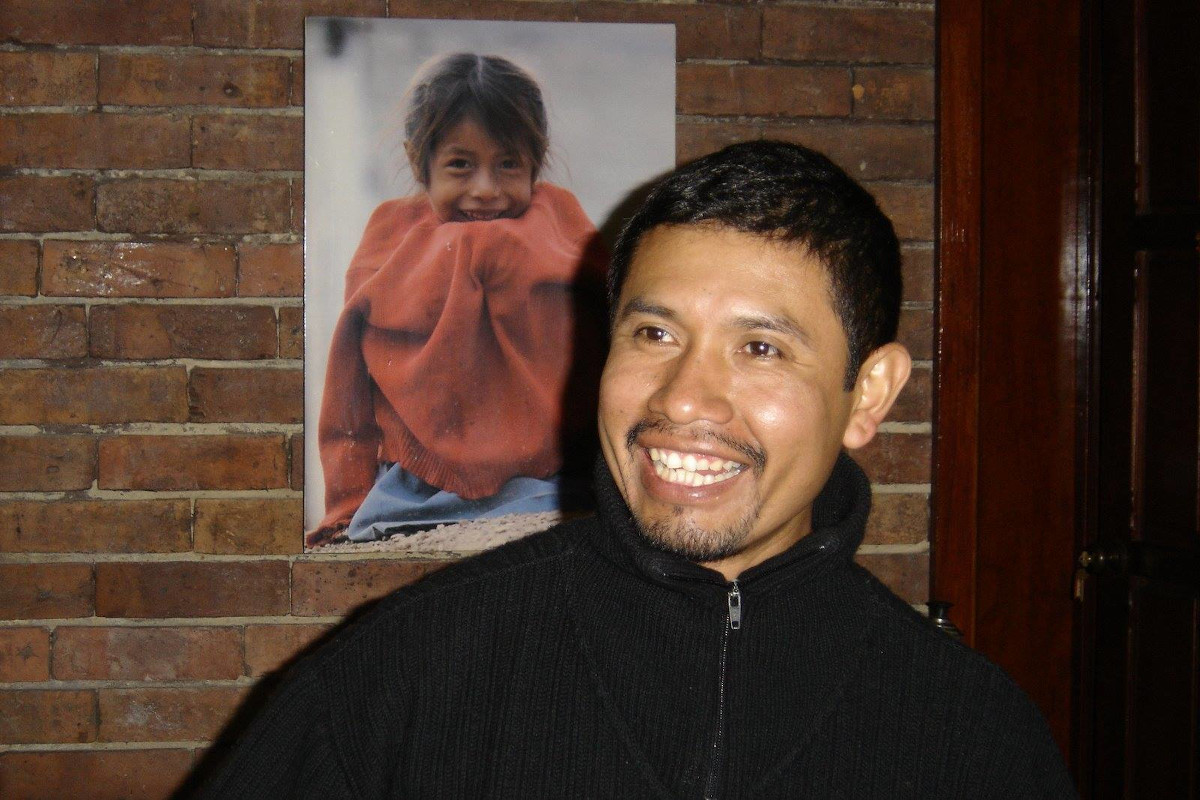
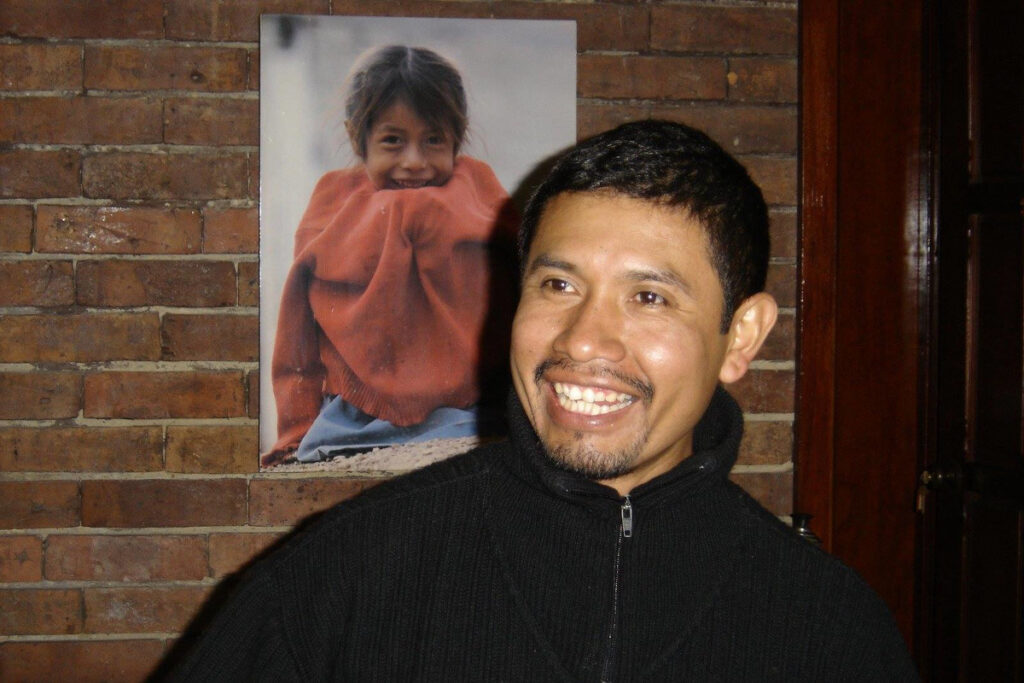
Below we present the experience of Brother Joel Cruz Reyes in Ecuador in which we highlight features of the ministry of the Brother from a new perspective of human promotion that has The Word as its foundation.
1. Encounter with the mission
In 1997 I arrived in Ecuador, assigned to the Afro-Ecuadorian Cultural Centre in the city of Guayaquil. At that time, the accompaniment of people of African descent revolved around religiosity and liturgical-sacramental and socio-political formation, with the aim of making them socially and ecclesially visible. For this purpose, the support of lay experts in psychology, anthropology, sociology, politics, etc. was sought.
From the behavior, attitudes and motivations I saw in the Afros who came to the Center, I realized that their dependence on the missionary was chronic. They had become accustomed to considering themselves materially, spiritually and morally destitute. Certainly, this behavior was a reflection of the shadows of their history that reached them in the present, but it was also a consequence of the paternalistic vision that had prevailed in their accompaniment. This did not allow them to grow in humanity and in spirit; it stagnated them in the role of “object,” not allowing them to advance toward the role of the ecclesial and social “subject.
2. Understanding and initiating processes
Little by little, I understood that these processes, although they were very good, were disconnected from faith and from The Word, as if the “regeneration of being Afro” was only a “human-social” problem. I realized that the processes did not reach the contemplation of the Afro-descendant as a child of God, made in the Hisimage and likeness, sculpted by history, adverse social and ecclesial circumstances. But in the end the human is conceived and desired by God with a specific mission in the Church, in society and in the world.
The results were logical because, on the one hand, the pyramidal accompaniment inherited by the predominant pastoral tradition of the Church made them “object-dependent” on the action of the “subject” who was the missionary. On the other hand, the intervention of lay specialists without a religious vision, of faith and disconnected from the Word of God, could not offer more than a way to see the African descendant and his history, as a personal and social “problem”. They did not see themselves as “human beings” but as a “social problem” an “object” of abuse, mistreatment and exclusion. They were convinced that they were only “victims” and not human beings with an ecclesial and social responsibility.
3. Presence that shares life
When I began to accompany with them, I realized that the presence of the Brother who, by his vocational nature, is stripped of the sacred, is gradually “rounding off” the relational pyramid in the cultural, social and ecclesial structures, until the circularity of the ministerial fraternity willed by Jesus is consolidated. I came to understand that the Brother, precisely because he is a religious, is able to contemplate the humanity of the people he accompanies and to set that humanity in motion (human promotion) in the Church and in society.
I understood that the Brother is a bridge between science and faith, between the Gospel and society, between the Church and the world, between religious and secular life, between priestly and lay ministry. Without his presence, processes often become “extreme”: they go to the “liturgical-sacramental extreme” or to the “political-social extreme. The Brother, who has a foot in both extremes, is therefore able to balance the processes of evangelization and to make the human being see his history not as a human tragedy without God, but as a sacred history of salvation, where God is not only present but becomes flesh and assumes the causes of that human being as his own.
4. The miracles of brotherhood
The Lord gave me the opportunity to see the miracles of brotherhood that spring from the awareness of knowing that we are all brothers and sisters, children of the same Father. With the same dignity and missionary responsibility as Christ, and therefore, to understand ourselves as the Black Body of Christ in that discriminatory and exclusive society that also overshadowed the Church in that context. It gave me the opportunity to experience the liberating power of “becoming one among them”, of not being afraid to “lower oneself”, just like Jesus (Philip 2, Emmaus) and to seek together with them the ways, the answers, the solutions…
By being among people of African descent as a “companion on the journey” and not as a guide or teacher, made people begin to taste and savour communion and participation, to understand the value and power of the “cenacle of apostles” dreamt of by St. Daniel Comboni. Our of these, several initiatives were born: the Brotherhood of Afro-Ecuadorian Missionaries, the Afro-Biblical Way, processes of ethno-education and cultural recreation in an urban context, Afro organizations and associations with cultural and socio-political purposes, the Afro youth ministry…
My fraternal journey with the Afros allowed me to contemplate how “the object” was transformed into a social and ecclesial “subject. And it all began when they discovered themselves as human beings, children of God, missionaries of the Father. And this awareness is sown by living with them, discussing with them, as Jesus did with his disciples: on the road, in the houses, at the feast, in their villages… talking, responding to concerns, explaining, unhurried sharing, without fixed places… often far from the temple.
Having experienced the regenerating power of brotherhood in the human being, I thought and imagined the Comboni Missionary Brother as a “midwife” of lay ministries that go beyond the structures of the temple and religious matters. A ministry that touches human and social issues; as a companion of those ministries that are born with a secular projection in order to infuse them with the Spirit and to be the transforming force of God in society.
My journey with the people made me recognize myself as a religious brother, that is, an “expert” in establishing the profound connection between the world and God, between the flesh and the spirit, between the human and the divine. The Brother is an expert at helping human beings to understand God by being a citizen who acts in the society in which he finds himself and sees God in them.
5. Questioning and looking to the future
But how can we ensure that the fraternity that promotes the humanity of the people is strengthened and does not end up being diluted in the evangelizing tradition that looks more to the liturgical-sacramental? How can we make the ministry of the incarnation of the Word in ministries that touch on human and social issues more visible and meaningful in the Institute, the Church and society? These questions found an answer in the proposal made by St. Daniel Comboni to establish Training Centres where the African does not change and the missionary does not die.
This seemed to me to be the most adequate strategy for the numerical and dispersed situation of the Brother in the Institute and, thus, to be able to think of a physical figure that accompanies the ministry of the Brother, identifies him, defines him and makes him more comprehensible. For this reason, just as the priest is accompanied by the figure of the parish, a work that explains and makes his ministry understandable, so I began to imagine a work that could release all the ministerial force of fraternity in the Institute. Thus was born the idea of the Obras Combonianas de Promoción Humana (OCPHs) and the Centro Cultural Afroecuatoriano de Guayaquil became the first of these works.
FOR PERSONAL AND COMMUNITY REFLECTION:
1. What strikes me most about this religious experience? Why?
2. What does this experience touch in me? For what reason?
3. What does it say to us as a community?
4. What part or parts of this experience can illuminate parish work or missionary projects in our communities/missions?
TO DEEPEN
Guidelines of Pope Francis and Benedict XVI on fraternity
Reflections taken from the document “Notes for a missionary spirituality on Fraternity” by Br. Alberto Degan.
In this third millennium the Pope proposes a fascinating mission: to combat the “globalization of indifference” by building the “globalization of fraternity”. Naturally, it is a call for all Christians, but in us Brothers this call undoubtedly arouses a sense of joy and particular responsibility.
– The first two messages for the World Day of Peace of Pope Francis (the messages of 2014 and 2015) are entirely dedicated to the theme of fraternity. “Fraternity is the foundation and the way to peace,” Pope Francis tells us. In fact, peace and justice are not just a ‘technical’ question of making structural changes to diminish the scandalous inequalities that characterize today’s world, nor is it just a political question. Peace and justice are, above all, a spiritual challenge: only if we feel we are brothers and sisters, children of the same Father, will people be ready to make the changes and the ‘sacrifices’ necessary to give life to a just and fraternal society. As Francis said in the Urbi et Orbi message for Christmas 2018, “without the brotherhood that Jesus Christ has given us, our efforts for a more just world would not go very far” (Psalm 84, 11-12).
– Pope Benedict proposed fraternity as an economic principle: “Economic, social and political development needs, if it is to be authentically human, to make room for the principle of gratuity as an expression of fraternity,” he stated in his encyclical “Caritas in Veritate” n. 34. And he added: “The great challenge we have… is to show… that in commercial relations the principle of gratuity and the logic of gift, as expressions of fraternity, can and must have room in ordinary economic activity” (CV 36). Benedict XVI proposes that the logic of fraternity should reconfigure our economic system.
– More recently, Pope Francis dedicated the entire message for the 2014 World Day of Peace to the theme of fraternity: “Fraternity, foundation and path to peace. The titles of the various parts of this document are: “You are all brothers, (Mt 23,8)”, “Fraternity, a premise for overcoming poverty”, “The rediscovery of fraternity in the economy”, “Fraternity extinguishes war”, “Fraternity generates social peace”, “Fraternity helps to protect and cultivate nature”. Only by taking a quick look at these titles do we come to understand that, for Pope Francis, fraternity – far from being a random and ‘romantic’ concept – is a very concrete principle of faith with inescapable social, political and economic implications. According to the Pope, social justice cannot be built if we do not first cultivate in our hearts a deep sense of fraternity.
– The first part of this Document is entitled “Where is your brother? (Gen 4:9). In the Bible, this is the second question that God addresses to man, and that means that for God it is a fundamental question. Human beings, just as they were conceived by our Creator, realize their humanity when they come out of their selfishness and concern themselves with the living conditions of their brothers and sisters, when they enter into a logic of communion and brotherhood that makes them perceive that their life has meaning only if it is lived in an attitude of solidarity with their fellow human beings. In other words, for God, to be human means to be and to see ourselves as brothers and sisters.
– Jesus presents himself to us as the “first-born among many brothers” (Rom 8:29): fraternity is the path mapped out by God for the realization of our humanity. As an African proverb says, “I am a human being because you are a human being,” in other words: ‘I feel good and can realize my humanity when I see that my brothers are also good and can realize it. But in our society the opposite logic prevails, that of the old Latin adage “Mors tua vita mea”, which means: “Your death is my life”, “Only if I kill you and take possession of your goods can I live happily”.
So it is not surprising that Helmut Maucher – president of the multinational Nestlé in the 1980s and 1990s – even said that he needed executives with a “killer instinct”. In this way, as the economist Hinkelammert states, “the fight to kill the other is seen as a source of prosperity and life”. Thus, the evangeliser proposes the model and spirituality of the brother-man against the model and ‘spirituality’ of the killer-man.
A “spiritual revolution” is needed to fight injustice and poverty, a spirituality of brotherhood that makes us understand that the defeat and death of my brother will also be, sooner or later, my defeat and death. As Martin Luther King said, “Either we will succeed in living as brothers or we will die.
– In Evangelii Gaudium (n.186) Francis states that our love for “the most abandoned of society” derives “from our faith in Christ who is always close to the poor”. Undoubtedly, in the face of so many enormous challenges, we often feel small and powerless: we have no immediate answers for WHAT TO DO. But Jesus gives us a very clear indication of WHERE TO BE: today, as yesterday, Jesus “is always close to the poor” calls us to be NEAR THE POOR, NEAR THE LAST.
Our General Chapter of 2015 accepted this invitation of the Pope, and for this reason itindicated as the first criterion for re-qualifying our commitments the criterion of “closeness to the poor” (CA15 n.44.5). This is a criterion that for us Comboni Brothers has a special value, because our Founder saw us as those who are closest to the people, because we spend more time with them: “In Central Africa, the well-prepared artisan brothers contribute to our apostolate more than the priests do to conversion, because the black students and the neophytes (the majority of whom are in the process of being converted) are the most important ones. … have to stay a fairly long time with the ‘masters’ and ‘experts’, who by word and example are true apostles for their students) are with the brothers, and they observe and listen to them more than they can observe and listen to the priests” (W5831).
Note: See also the last encyclical of Pope Francis “Fratelli Tutti” on fraternity and social friendship (October 3, 2020).
PERSONAL PRAYER
“And the Word was made flesh, and dwelt among us, and we beheld his glory (the glory that corresponds to the only begotten of the Father), full of grace and truth.” Jn 1,14
Reflections from the continental meetings of Brothers in America:
– The ministerial figure of the Comboni Missionary Brother is inserted in the midst of an ecclesial mentality and tradition that imprisons the Word of God in temples; in theoretical discourses that hardly dare to go beyond ecclesial structures that touch human and social issues,
– His vocation is to “make the Word flesh” in the context where he lives and also to shape the human being as a child of God and brother of all. This leads him to open up paths and initiatives that are not limited to the structures and traditions of the Church, because the “missionary incarnation of the Word” is lived in harmony with the times and the places where it is found.
– The fraternal spirit of God leads him to the insertion in the daily life of the people, therefore he is able to discover and rescue the richness and experience of individuals and human groups that he accompanies in mission. He aims at enriching the Church and society and promoting the truly human aspect of the people as a work and revelation of God that must be known, recognized, valued, assumed and proposed by the Church to the world.
– Living fraternally together with the people (consciously and with a missionary spirit) makes him a “radar” that captures the signs, the signals, the noises, the challenges… that the human and social reality poses today and here. For this reason, his word and contribution is decisive in the dynamism, creativity and updating of the Comboni mission.
– His evangelical-social and fraternal face makes him a “bridge” between society and the Church, between the secular and the religious, between the laity and the clergy. It is precisely for this reason that it becomes the social face of the missionary commitment of the Church. This vocational dimension inserts him into the core of human sensitivity that seeks solidarity, justice, peace, and a commitment to transforming society. Its vocation makes it a presence that strengthens the conscience and spirit of the human being to live the Kingdom as justice, peace, joy (Rm 14, 17ff)
– The role of the Brother as a consecrated person and minister of Christ, then, is the edification and human and Christian growth of persons and communities, from the perspective of the Gospel, and therefore his action does not exclude the ministry of the Word. His evangelizing presence among the people emphasizes the dimension of brotherhood in all its aspects: integral development of persons, promotion of justice, peace, human rights… that is, his ministry directly touches social, anthropological, and cultural questions from the perspective of the Kingdom of God.
SHARING IN COMMUNITY AND LINES OF ACTION
In an atmosphere of prayer and mutual listening, let us share in community the fruits of personal prayer.
Let us reflect together:
What do you think about what we have shared and prayed about the ministry of the Brother?
What do you feel the Spirit is inviting us to do, personally, as a community, as a province, and as an Institute?
How can we respond in a concrete way to the invitations of the Spirit?
Our commitment is:
“The ministry of the Brothers, disciples of the fraternal Christ, pays attention to the dimension of fraternity in all its aspects, including the integral development of persons, the promotion of justice, peace and human rights. It is, therefore, a ministry open predominantly to the social, anthropological and cultural dimension of the Kingdom of God, oriented to social transformation, to the witness and proclamation of brotherhood and to the animation of the Christian community”.
SUGGESTIONS FOR THE CELEBRATION OF THE EUCHARIST
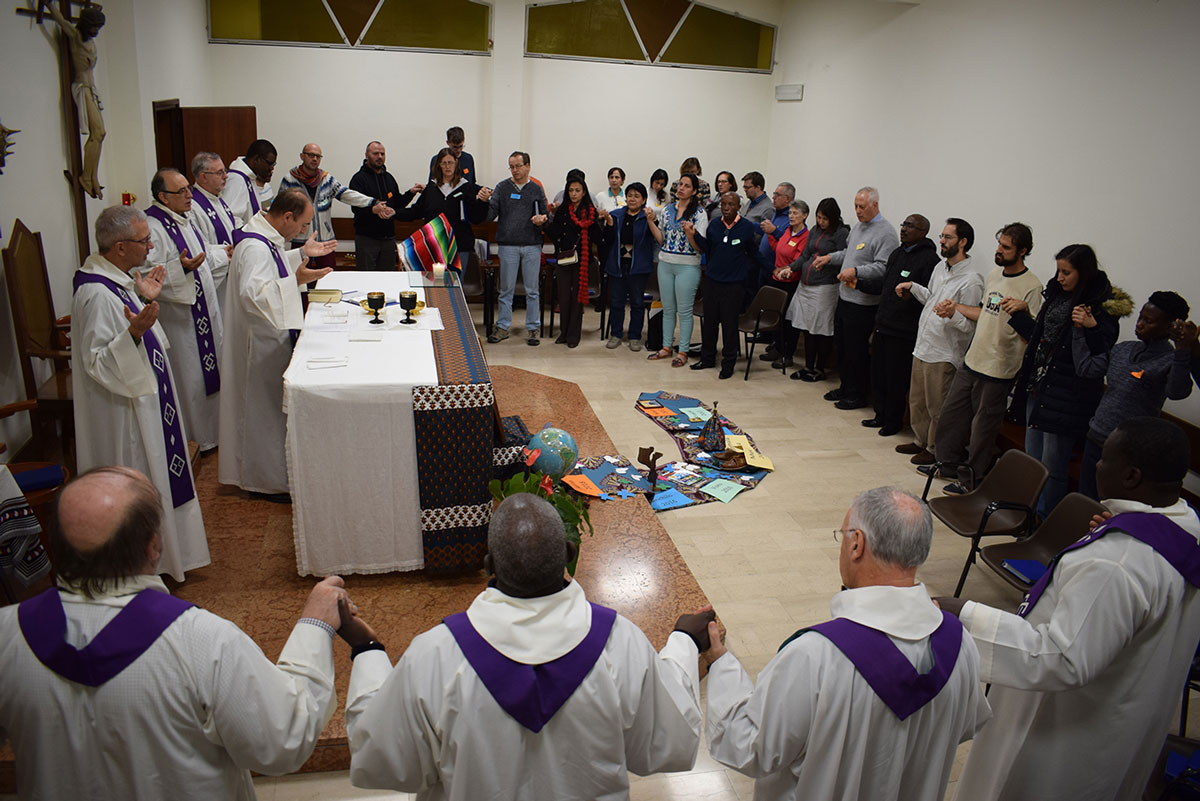
At the moment of the OUR FATHER, keep a prolonged moment of silence to think of the fraternity that is born of God.
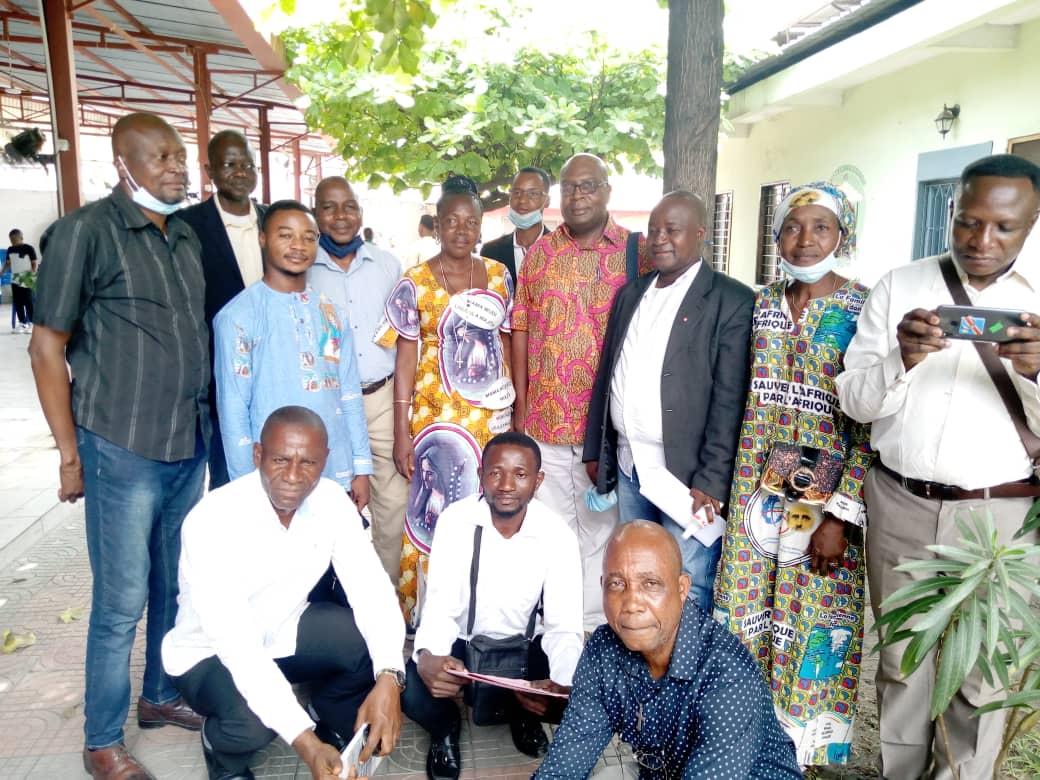
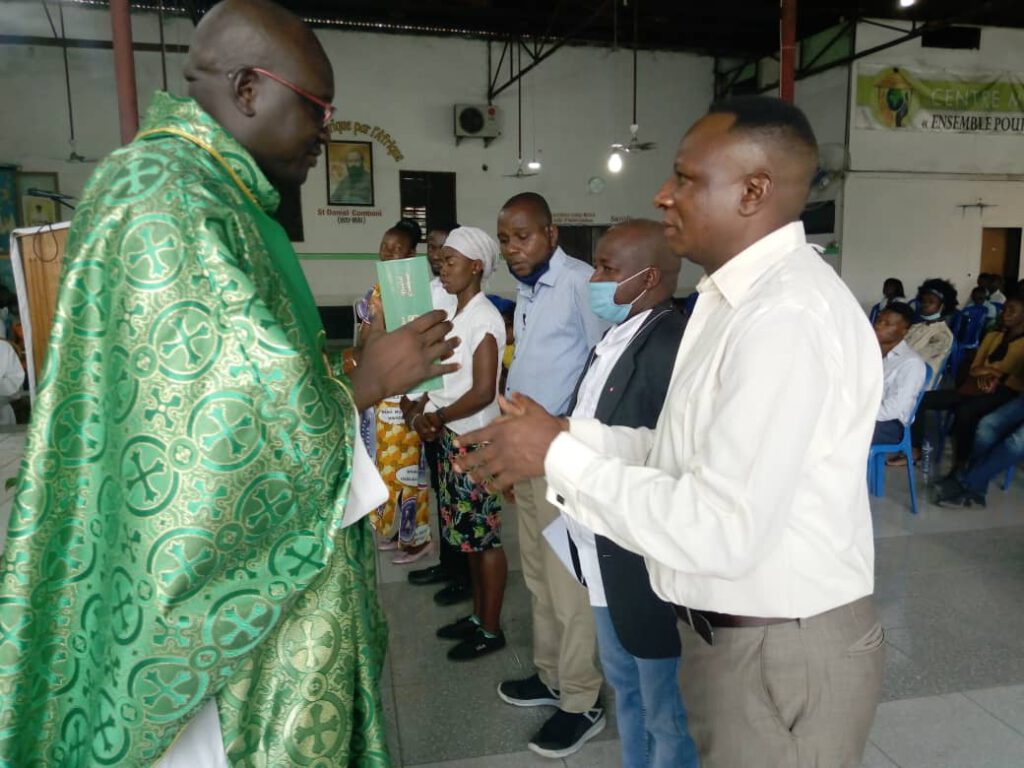
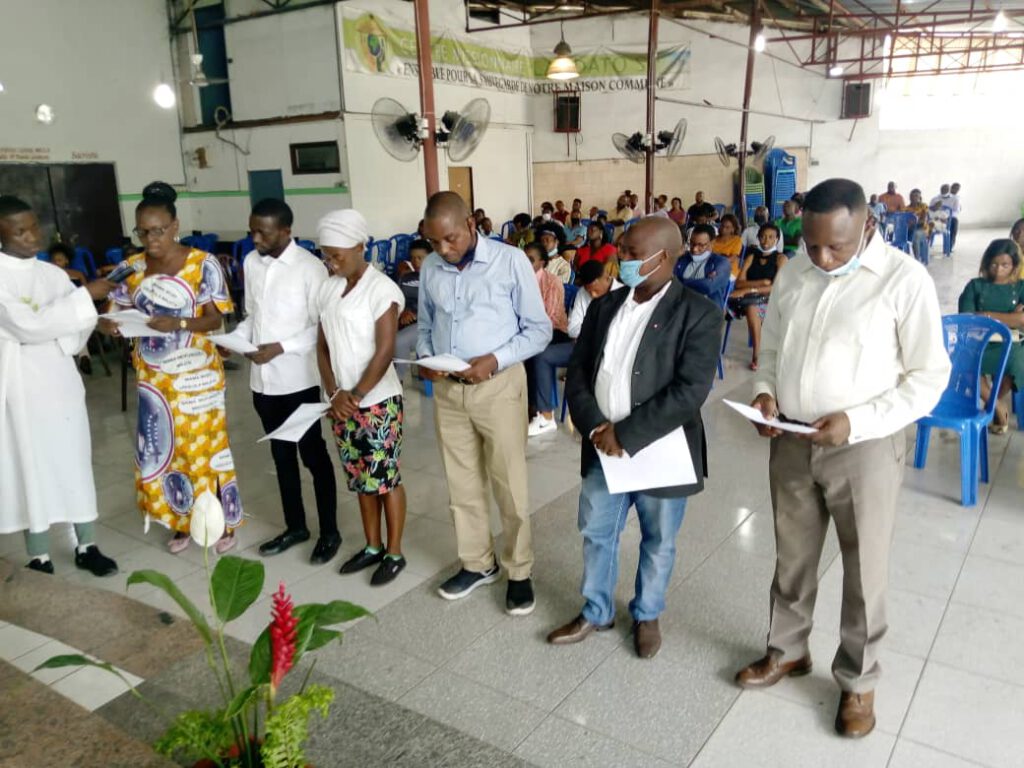
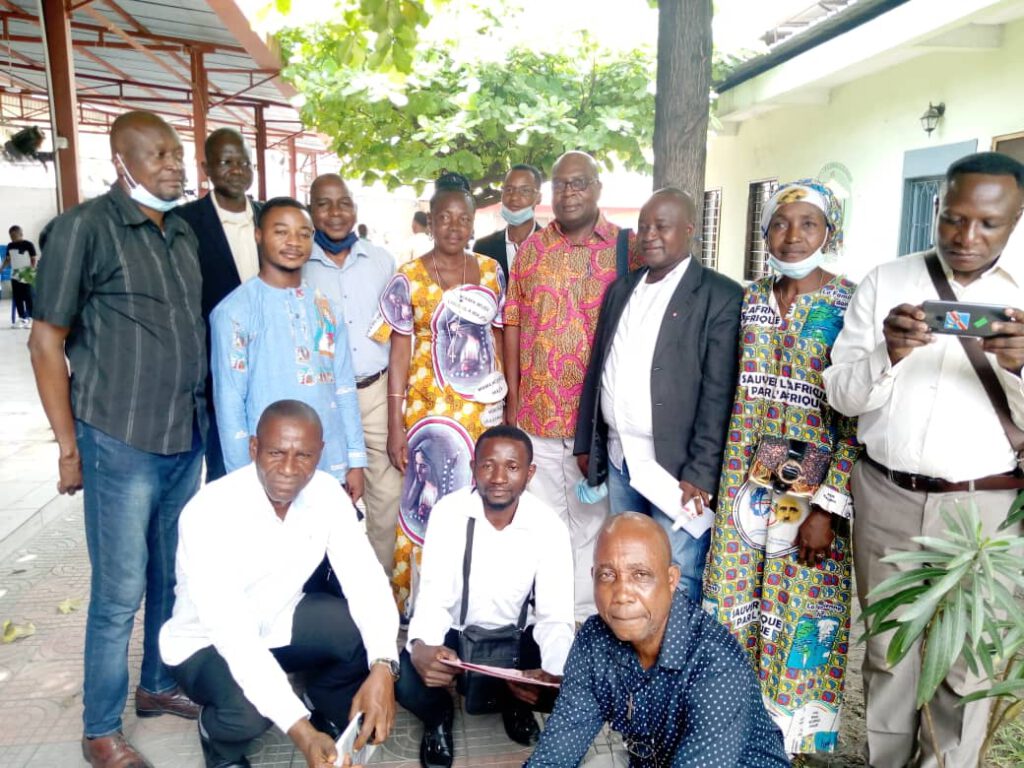
Since April 2018, this is the third time that the Comboni Lay Missionaries of Congo commit themselves to the mission ad gentes and ad vitam in the international movement of the Comboni Lay Missionaries.
There are six new members (6): Flory SEZABO, Paulin KUVULA, Guy SINYEMBO KALENGE, Fabienne EKENGE ALENGO, Christian NSONA and Cécile WAMBA, who have freely and voluntarily decided to commit themselves before God and the Christian assembly this Sunday 11 October 2020 in the parish of St. John Paul II of the Comboni Missionaries.
“You too go into my vineyard” (Mt. 20:3-4). “The lay faithful are also personally called by the Lord, from whom they receive a mission for the Church and for the world”.
All lay people are missionaries in virtue of their baptism, referring to the words by which Jesus Christ, Crucified and Risen, before ascending to heaven, entrusted to the Apostles the missionary mandate: “Go, therefore, from all nations, make disciples, baptizing in the name of the Father and of the Son and of the Holy Spirit, teaching them to observe all that I have commanded you”, in fact, it does not cease to resound, as a universal call and an ardent appeal.
As the Comboni laity grows over time, the province proceeded, for the third time, to the definitive consecration of 6 members and this, during the Eucharistic celebration presided over by its Chaplain, Fr. Célestin NGORE GALI, mccj and animated by the Choir afriquespoir des Laïcs Missionaires Comboniens, on 11 October 2020.
After pronouncing the formula of commitment before the altar, the chaplain imposed the cross on them, a sign of the following of Christ. Jesus died crucified, nailed to a cross. For Christians, the cross is the symbol of Christ’s death and resurrection. For Comboni too, suffering was represented by the cross: “We will have to tire, sweat, die; but the thought that we sweat and die for the love of Jesus Christ and the salvation of the most abandoned souls in the world is too sweet to make us turn away from this great enterprise”. It is the sign of salvation that God offers to all mankind. And the Writings of Comboni, a sign of his definitive belonging to the Comboni family.
As a driving force in mission promotion, after having organized its second provincial assembly in December 2019, the province is working to hold its 20th Congress next November 2020, together with the other Cenacles of Prayer and Missionary Spirituality.
In summary, the activities of participation for the creation and promotion of Cenacles of Missionary Prayer (MSC) and similar are developing normally. In addition to the realization of the Mission Ad Gentes, therefore, we inform that there are two members, one of whom had just completed his mission in the Central African Republic and the other is doing it locally in an orphanage.
CLM DRC
Communication Officer : Gabriel MANIMA MPELA
Este sitio web utiliza cookies para mejorar su experiencia. Si continúa navegando consideramos que acepta el uso de cookies, pero puede optar por lo contrario si lo desea.
This website uses cookies to improve your experience. If you continue to browse we consider you accept the use of cookies, but you can opt-out if you wish. Acepto Puede obtener más información - You may have more information here
Politica y privacidad de Cookies - Privacy & Cookies Policy
Privacy Overview
This website uses cookies to improve your experience while you navigate through the website. Out of these, the cookies that are categorized as necessary are stored on your browser as they are essential for the working of basic functionalities of the website. We also use third-party cookies that help us analyze and understand how you use this website. These cookies will be stored in your browser only with your consent. You also have the option to opt-out of these cookies. But opting out of some of these cookies may affect your browsing experience.
Necessary cookies are absolutely essential for the website to function properly. This category only includes cookies that ensures basic functionalities and security features of the website. These cookies do not store any personal information.
Any cookies that may not be particularly necessary for the website to function and is used specifically to collect user personal data via analytics, ads, other embedded contents are termed as non-necessary cookies. It is mandatory to procure user consent prior to running these cookies on your website.