Comboni Lay Missionaries

You Are Christmas

Navidad eres tu

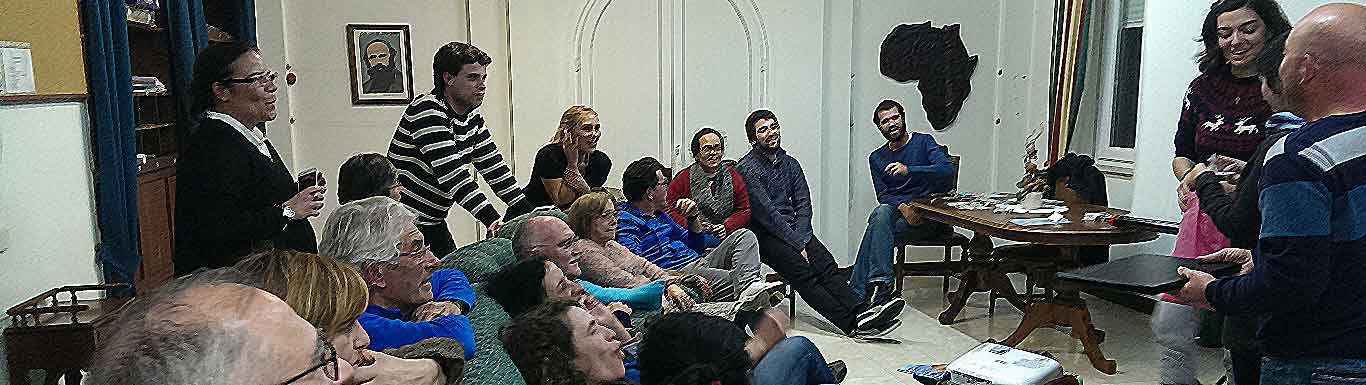
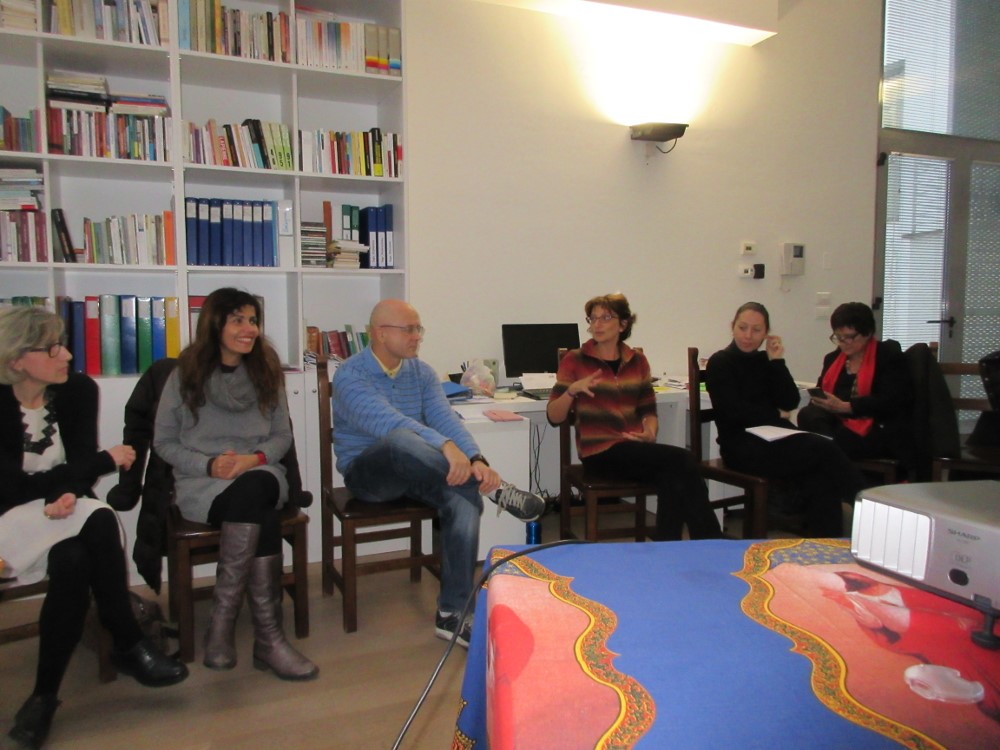
On December 17 we met in Bologna, Italy, to prepare for Christmas, to be surprised by a baby who is born – being surprised by seeing God who turns into an infant out of love for us.

We wanted to live as a group a gathering that would have the flavor of this marvelous waiting. It is a waiting that holds our attention, an announcement leading to love and a love leading to God.

We listened to the Word in the Gospel of Luke (Lk 2:8-20) and together we built the crib. Each one of us took a shepherd and we placed ourselves near the baby Jesus, reading this prayer and making it our own:

You are Christmas, when you decide to be born again every day and let God enter your soul.

You are Christmas, when you sing to the world a message of peace, justice and love.

Christmas is when you lead someone to meet the Lord.

You, too, are one of the Magi when you give of the best of what you have, independently of who the recipient is.

You are the Christmas music, when you achieve internal harmony.

You are the Christmas wishes, when you forgive and bring about peace, even as you suffer.

Endurace is a new member of our group: a young Nigerian who shared with us his difficulties as an immigrant and the agonies he underwent in order to get to Italy.

In our intentions we remember the tragedy of immigration and the many deaths shrouded by our indifference and our silence.

To accept all this and to make ourselves small is the Christmas that challenges us every day, not just on December 25.

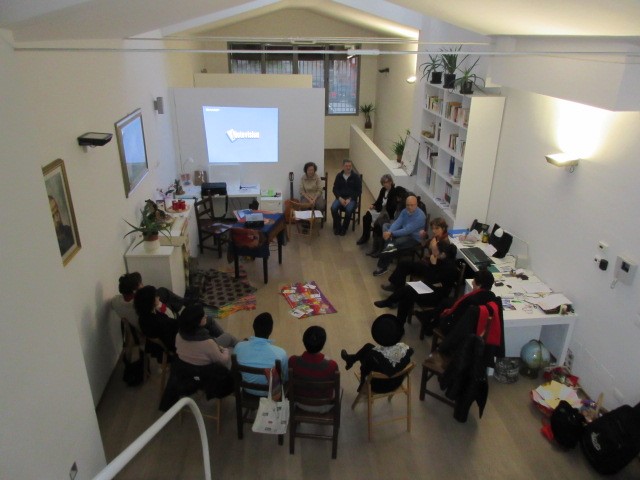
Emma also took part in our meeting. She has just return from three years of mission in Brazil.

She told us her story, her missionary journey from the CLM of Bologna and those of Brazil.

She showed us visuals of her service in prison ministry, in the peripheries of Contagem, her experience with the homeless in Salvador. Her words and the witness of her mission ad gentes were beautiful and powerful. Welcome back to the group to resume the journey with us!

The gathering ended with a community supper to which every member contributes something and where we mention important events:

The midnight Mass celebrated with the homeless at the station, and the march for peace on December 31 in Bologna.

We are very happy with these two initiatives that see us involved together with other social and missionary organizations, something that implies the participation of all since it is only by working together that we build and change the world.

Navidad eres tuMerry Christmas to all… no one excluded!

CLM of Bologna

The Trindade Community

LMC BrasilI am close to the end of my three year missionary commitment in this beautiful Brazilian land that has given and taught me a lot.

I already feel a sad void for what will happen, a feeling that will call to mind faces, situations, stories, important moments that left a mark on my missionary experience and have changed me, since I allowed them to change me and make me grow a little more.

It is good to change when Life shows you paths that can only be healthy for your heart, for better or for worse.

Mission also means growth, meeting the Other, the meeting between you and Them, with God who makes us Us, and a You.

You end up meeting an itinerant God, who never stops moving and amazing you. A God who walks barefoot with you: “take your sandals off your feet, for the place you are stepping on is holy grounds!”

And this is what I did, walking barefoot in the marvel of discovery and self-discovery, knowing that God was walking with me.

I chose to end my three years of missionary commitment in Salvador de Bahia in a community that welcomes street people. The community is called Trindade.

It has been a totally different experience from my previous ones. I left prison work, which I hope to continue in Italy, in order to get to know another very hard and hurtful social reality, the life of street people.

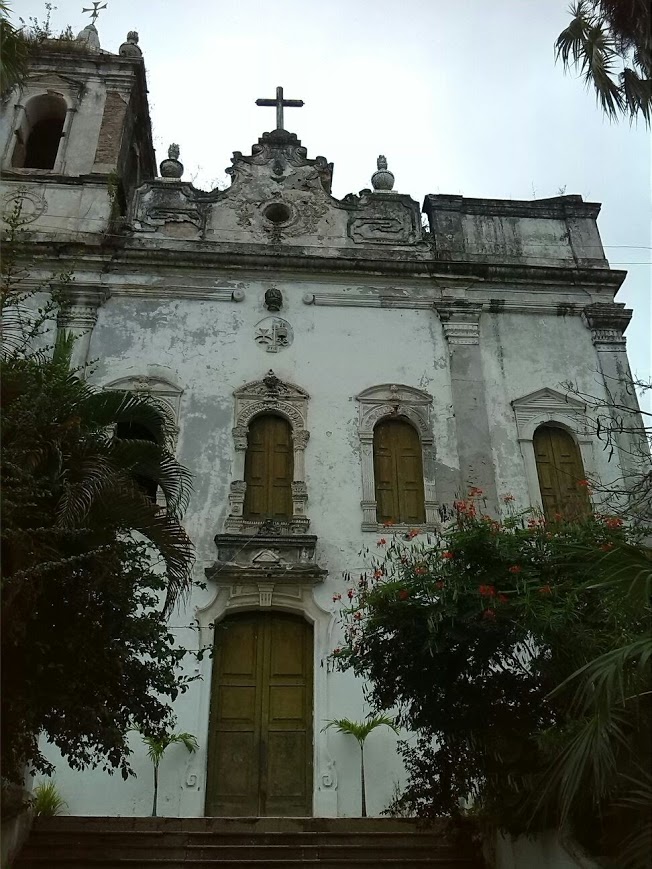
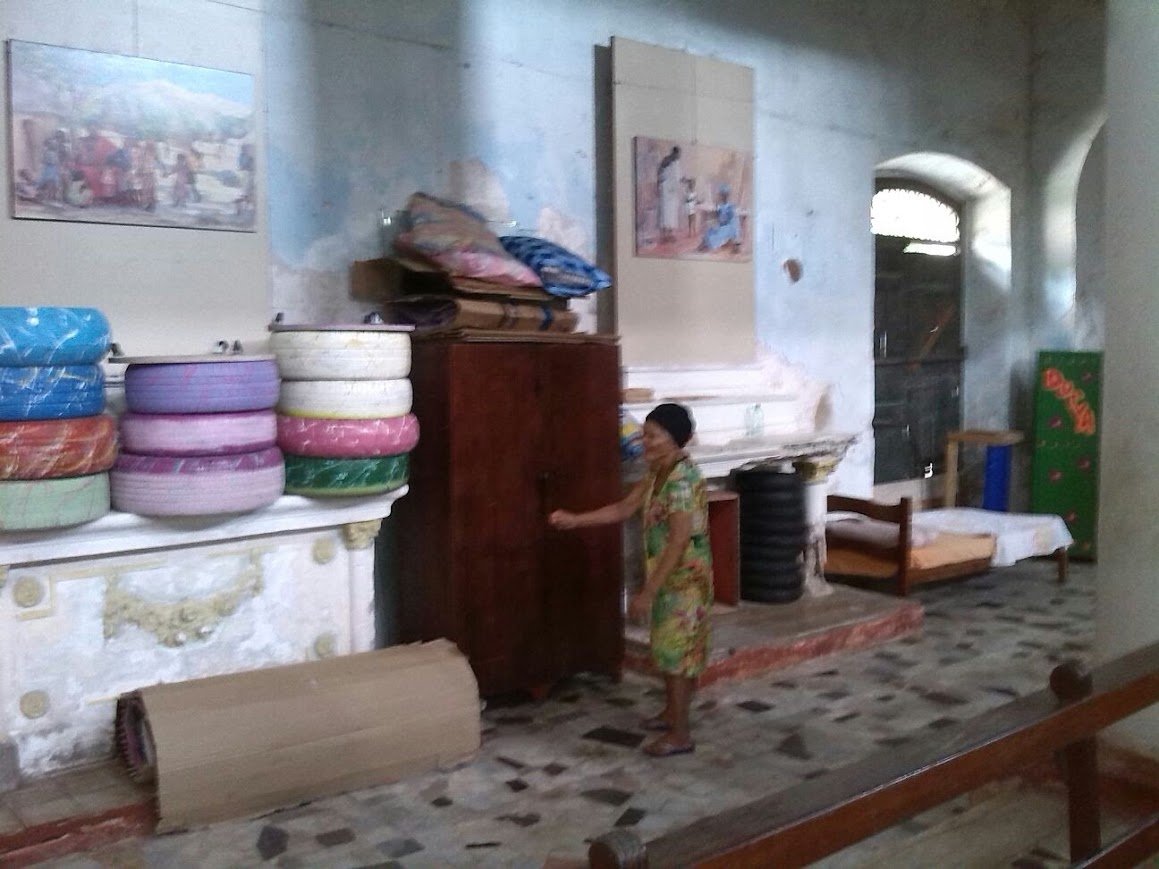
The Community of Trindade is ten years old and it is located in a neighborhood close to the harbor and to a viaduct where many street people meet. The house is an inactive church building which has become a temporary home for those who are seeking to change their lives or at least try to.
LMC Brasil

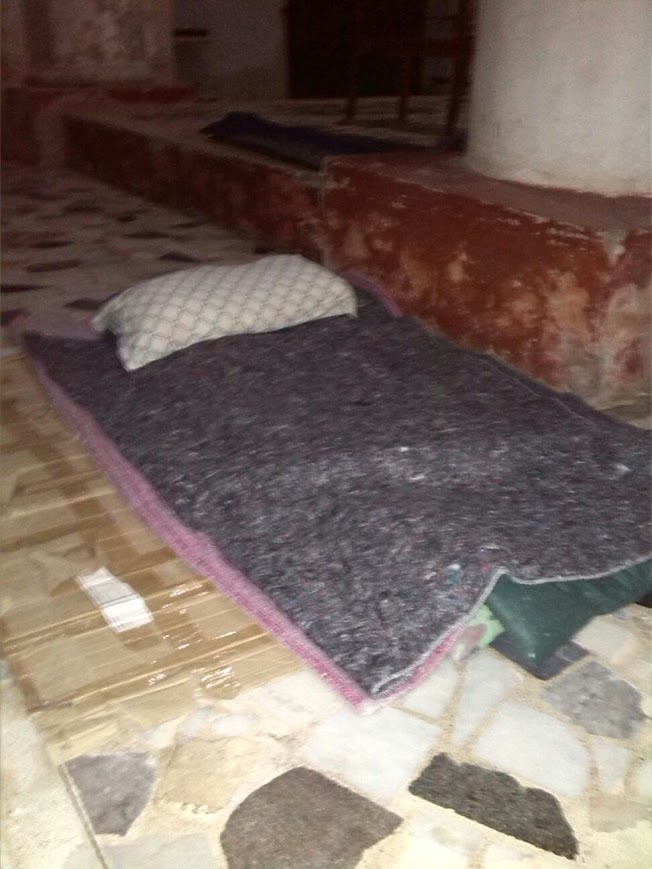
Everything happens gradually. They keep on sleeping on the floor inside the church and begin a recovery coming from within, through self-esteem and a search for one’s identity.

When you live on the street you lose everything, not only material things, but you lower yourself to the point where you no longer recognize yourself, lost in an emptiness that devour you, where alcohol and drugs consume you on a daily basis. You no longer know who you are and have no dreams to build on.

Hunger, cold, the search for a safe sleeping place become the day to day priorities.

Dependence on alcohol and drugs lead you to taking chances, through stealing or prostitution until you lose your dignity.

This community was born of the meeting of Bro. Henrique, a Frenchman, and a street person who, looking for a safe place to sleep, came across this abandoned church.

Bro. Henrique is an itinerant monk who, years ago, chose to live on the street in order to know first-hand the dramatic situation of street people, by becoming neighbor to them and live with them.

He picked this church as a nightly refuge and in time it developed into a community, a home for those who have no home and a beacon of hope.

Today it gathers 35 men and women.

The Trindade Community is not an end, but rather a place of passage, of transition.

It is a place where one can get away from dependency on alcohol and drugs, find a job, be able to stand on your own two feet after years spent on the street.

It is like trying to glue back together parts of you that have been disconnected, in order to see again the original shape that was lost.

It is a simple community where everyone helps and cooperates to its upkeep and wellbeing of all.

They all cooperate and make themselves useful from the kitchen to the cleaning, the garden and some artisan activities, each one according to his/her talents and limitations.
LMC Brasil

I, too, have my cardboard where I sleep on the floor and I help out in everything.

I am learning what it means to do this: carefully store away my cardboard which is my mattress, roll it up in order to spread it again the following night. When I walk down the street now and see a piece of cardboard I feel like saying: “Look, that’s a bed!” because for a number of people that is exactly what it is, a home on the street.

Mission helps you see things from different points of view, especially from points where people do not like to dwell or look from.

You learn that you can live with little, what it means to sleep on the floor, to be hungry, not to be able to wash, what it means to be at the periphery of existence.

A little at the time, with kindness and by being available, I am beginning to learn the stories of the people who live in the community: they are stories from the street, of drugs, alcohol, losses and violence.

The words used are harsh and full of hurt and of scars.

In this experience, just like in my prison pastoral, I learn the most beautiful and interesting lesson: you need to learn to listen without judging and to make yourself neighbor.

In the community we also have a small newspaper, Aurora de Rua (Dawn of the street), written by the street people themselves. It deals with their situation, their lives, and their stories and with the importance of recycling. Yes, because many of their handcrafted products are made of discarded material and junk.

Behind all this there is great pedagogy: to be able to construct beautiful and useful things out of what other people consider useless junk.

This is how street people or prisoners, referring back to prison ministry, think of themselves as the rejects of society.

But everything is reborn to life, a new Life.

The paper helps to spread news and the realities of the street people, who are often discriminated against, excluded, abandoned and judged. There are stories that touch your heart and help you understand the depths of some human situations, so harsh and hurt.

On Thursday night the community opens its doors to the street people of the project “Get up and Walk,” created by the community itself in cooperation with the diocese of Salvador.

Unfortunately the Church cannot hold too many people and the street problem is vast.
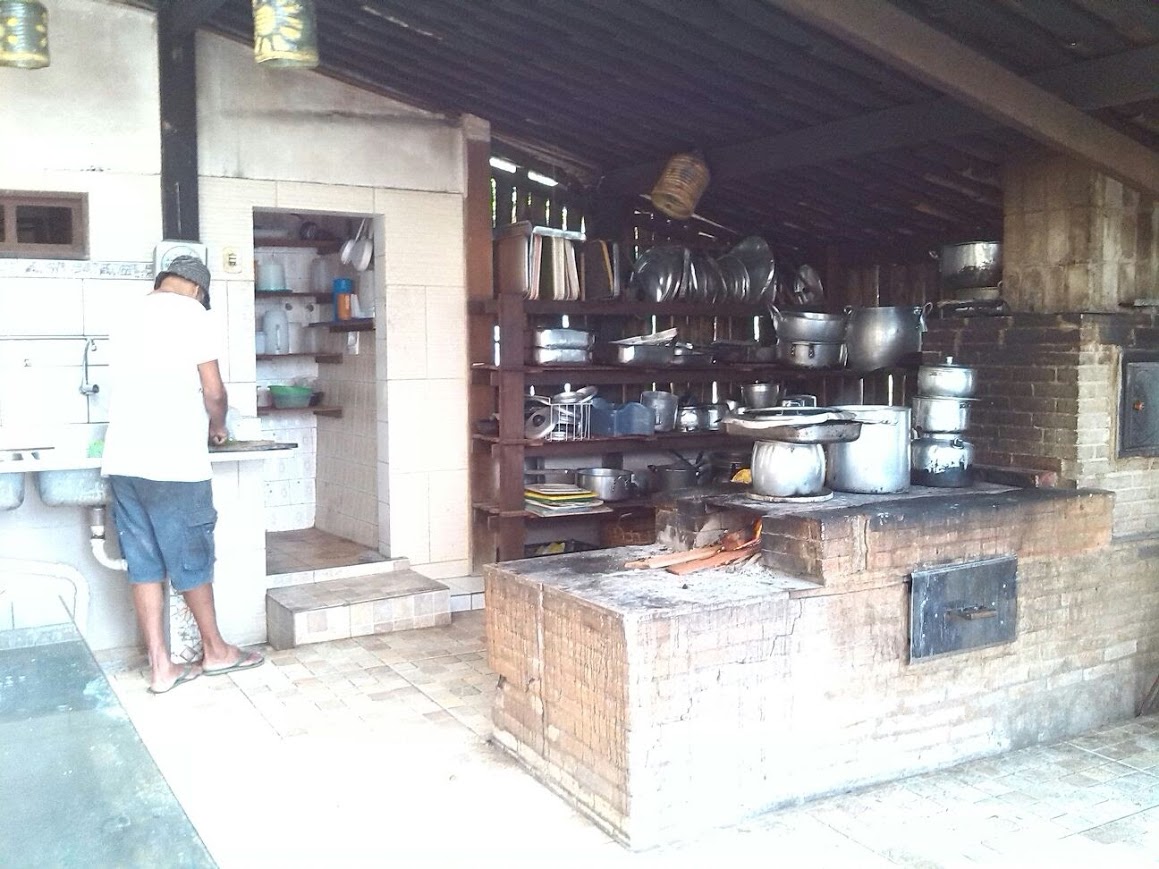
LMC BrasilThe project is a place where street people can find psychological help and assistance in filling out forms for ID cards, work papers, or also for recreational activities, a place where to shower, find clothing.

For those who so wish, Thursday nights are a way to get to know the community, have a moment of prayer, a common meal and a place to sleep. These are small steps that help to create awareness, socialization, to share a meal, to be in a quiet place and to pray together…

Thursday nights are open to all, even to visitors, people from the outside who want to share this experience.

It is a very emotional time, as we live through concrete means the Gospel of Jesus who invites all to the same table, to share the bread with everyone, no one excluded.

It is a Gospel that takes flesh in Life and for Life, the Gospel in which I believe, where I meet God and God’s face. This Face of God has many stories, many wounds and lots of beauty. This is why I like the idea of a pilgrim God always walking, within each one of us, living in our stories. I am grateful for this choice and for this last month and a half I will spend in this beautiful and important Community of Life.

I will not say good-bye to Brazil, but simply “until we meet again,” because I will never forsake the relationships I created, the people who walked with me and who taught me to walk. For all of them it will always be, “arrivederci!”

God breathes through our hearts.

Emma, CLM
Comboni Lay Missionaries meet in Portugal

Viseu

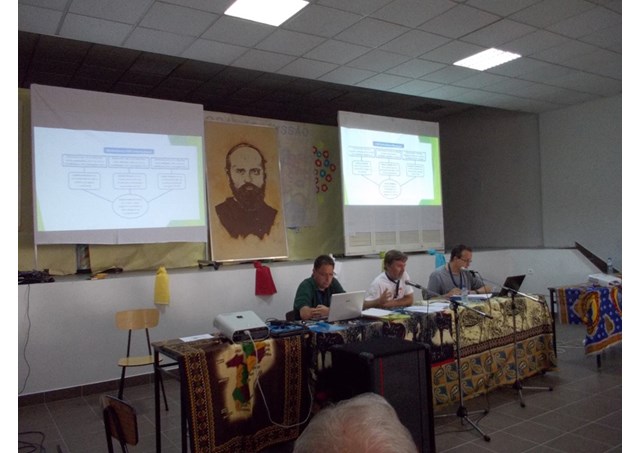
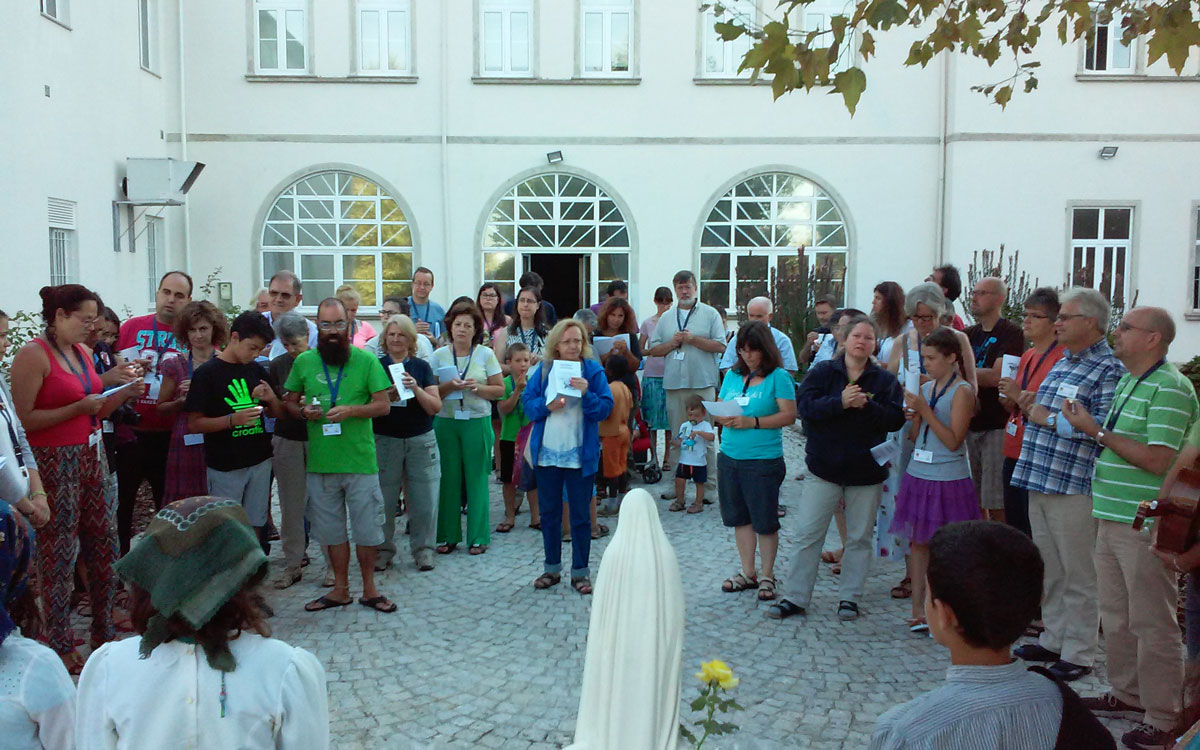
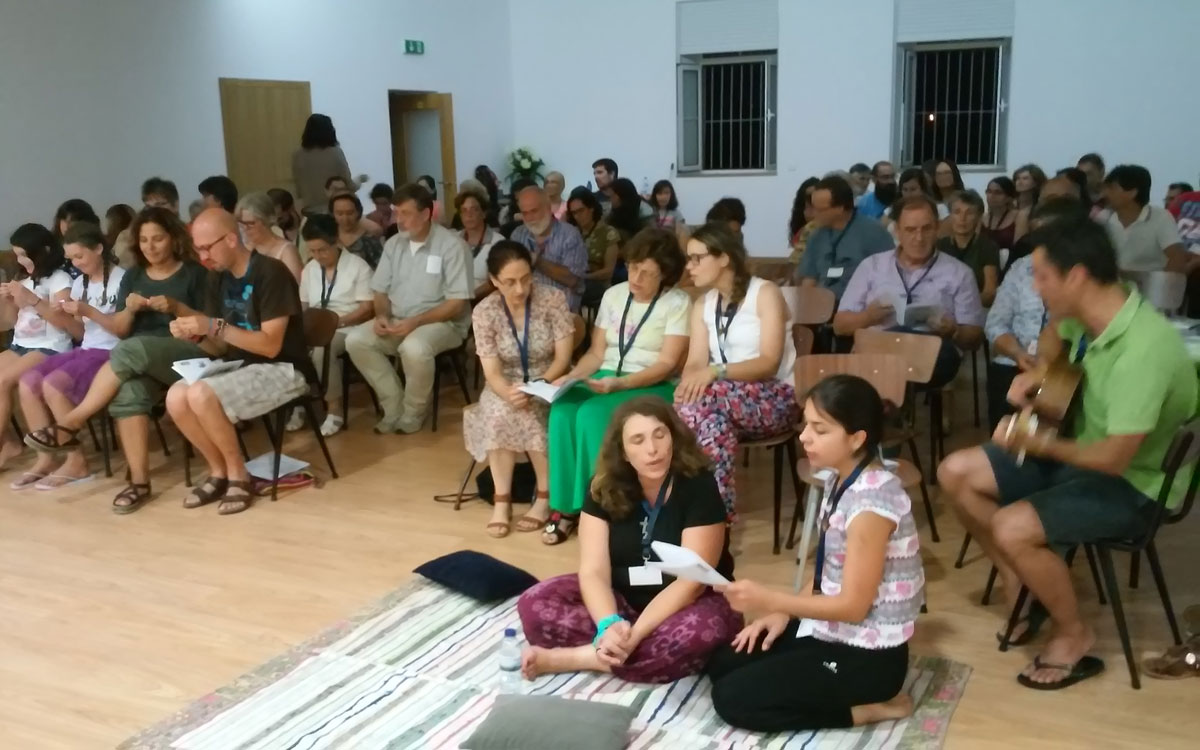
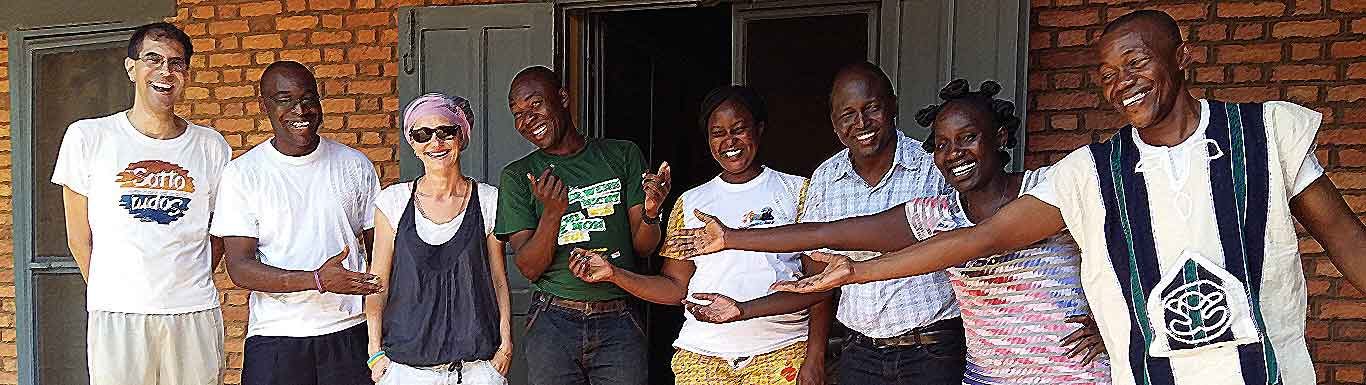
The European Assembly of the Comboni Lay Missionaries (CLM) is taking place from August 21 to 27 in Viseu, the mother-house of the Comboni Missionaries in Portugal. There are 74 adults and 22 children from Germany, Austria, Spain, Italy, Poland and Portugal in the meeting. The Comboni Missionaries who work with the CLM in their respective countries are also present. Two representatives were invited from the Comboni Sisters and Comboni Seculars. It is a week with a detailed schedule of prayer, reflexion, sharing of experiences and relaxation.

The CLM organize their European assemblies every three years. They intend to mark moments of togetherness and joy and to give continuity to the reflexion of the main themes from previous meetings.

The last European meeting took place in 2013 at Krakow, Poland. That meeting singled out some issues that were considered priority to be deepened in groups and individually, at CLM level in every country of Europe. The issues were related with the CLM life. This week’s issues are: identity and vocation, formation, organization and coordination, economy and sustainability, communion and Comboni family.

The goal of all this work is to share the journey of every single group on each of the single issues. This sharing among people from different countries will assist the CLM members to feel better integrated in their missionary vocation.

The specific goals that are targeted at the end of the assembly are:

  • To celebrate the CLM vocation, starting from the characteristics that are common to all groups;
  • To share vocation experiences made by members from different countries in order to know the lifestyle of one another;
  • To reflect upon the journey already made in Europe and at intercontinental level, where they are aiming at and what is lacking to reach the goal;
  • To draw some inspiring lines to help the CLM to walk better united and to be engaged at all levels;
  • To strengthen the ties as the CLM European Movement and their sense of belonging to the Comboni Family.

“The meeting would not be possible – said Paula Ascensão – without the effort, availability and dedication of the Viseu community. The Comboni Missionaries opened their doors to us and they showed availability to host the CLM formation and meetings in their houses. When we asked to organize the European CLM assembly in Viseu, they gave a positive answer and they are helping us organizing it. It is thanks to them that the Portuguese CLM are able to welcome almost 100 European CLM here in our country. We are very thankful. And we ask prayers from all who are following us from afar, so that this European assembly may to be successful and produce much fruit.”

Viseu

I still have red soil on my thongs

LMC Brasil

It’s a soil that I wish would stick there as an everlasting present, sacred soil, rich in history and in memories.
Memory is a box full of images, emotions, facts, and words that we cannot allow to fade or be covered with dust. Memory allows me to understand my and the world’s present, to build my and the world’s future.

Memory nourishes my heart and gives it new energy.

This memory, the making of memories is part of the Pilgrimage of Martyrs that takes place every five years in Riberão Cascalheira, a small town in the interior of Mato Grosso, Brazil.

All those people who, in Latin America, have given their lives for the cause of justice are remembered: to defend land and life, to fight violence, dictatorship, the oppression by the powerful, and the arrogance of the political and economic powers.

It includes men, women, children, indigenous people, farmers, workers, lawyers, journalists, missionaries, militants of the Pastoral of the Land and of human rights, union members, people who fought fearlessly for the sake of justice, freedom, peace and truth.

The struggle for land, today as in the past, is still strong here in Brazil and it still a deadly menace. It kills those who dare denounce situations of violence and aggression in indigenous areas, in the Sem Terra settlements, and in the farming and fishing communities.

The large economic interests owned by multinational corporations and by private interests continue to destroy, threaten, and expropriate land and people. They are the martyrs of the past as well as of the present made of struggles still alive in the people of Latin America and of the entire world. Each situation of injustice, of violence of inequality is a cry to the entire world, a cry that cannot be silenced, domesticated, ignored… we make memories to live them in the present.

On this red and sacred soil we see the presence of a man, a prophet of hope who, despite his 88 years wrapped in a diseased and tired body, has chosen to take part in his perhaps last Pilgrimage: Dom Pedro Casaldaliga.

The life of Dom Pedro is a witness to the gospel in human flesh, witness more valuable than a theology book. His has been a life spent at the service of the “least” and for the “least,” an important voice in the struggle against usurping land owners and their cruelty. He has been threatened with death numerous times, both during the dictatorship and later. He never gave up and he never allowed himself to be intimidated.

He is a small great man of faith and courage.

On the occasion of his episcopal consecration as bishop of San Felix do Araguaina, Dom Pedro wore a farmer’s straw hat instead of a miter, a wooden staff of the indigenous Tapirapè instead of a pastoral staff and a ring made of Tucum wood rather than gold.

He always stood by the farmers and the indigenous people, defending them strenuously.

It was a source of great emotions for me to see him, even though he was in a wheelchair and his body was bent over and suffering, because his spirit still radiates energy and his person speaks more than a thousand words.

Great Dom Pedro, so great that he wanted to be present at this celebration! He did not want to miss it.

I traveled almost 30 hour by bus, as long as it takes to reach Mato Grosso from Minas Geras, napping in my seat and stopping at various service areas.

Many are the people from all over Brazil who took part in this Pilgrimage. I started off with a large group from Minas (two busloads), mostly members of social pastoral groups. It was great to be together and it was enriching to get to know one another. The sharing and the positive energy one could feel at every moment were also beautiful, the desire to be there and to continue to be part of history in the making.

Joy, sharing, struggle, prayer, brotherhood, solidarity, building, friendship, memory are key words of this Pilgrimage and of what we carry inside.

I love this land, I love the spirit of building up and of “struggle,” part of the Basic Communities that, albeit in a weaker form, still exist and live on. I believe that the theology of liberation is not something of the past, but still in existence. It’s here!

We find it in the stand of indigenous people, in the struggle for the defense of the land and of the environment, in the fight for human rights, in the defense of women and against the macho culture, in our prisons and among the inmates, in the fight against racism, prejudice and against a culture that divides rather than unite, in the plight of the migrants, in a Church that journeys with the people barefoot, able to shed its shoes and feel life on its bare skin.

Perhaps I am just romantic and nostalgic, but I am also realistic and unwilling to lose my enthusiasm, my courage and the will to believe always that a different world is possible (I am thinking of the anniversary of the G8 of Genoa in these days) and that we, and no one else, can build it with our choices, our work, our struggles, our witness, remaining faithful to the Love that moves all and builds all.

Lives for Life, Lives for the Kingdom.

LMC Brasil

Emma Chiolini, CLM