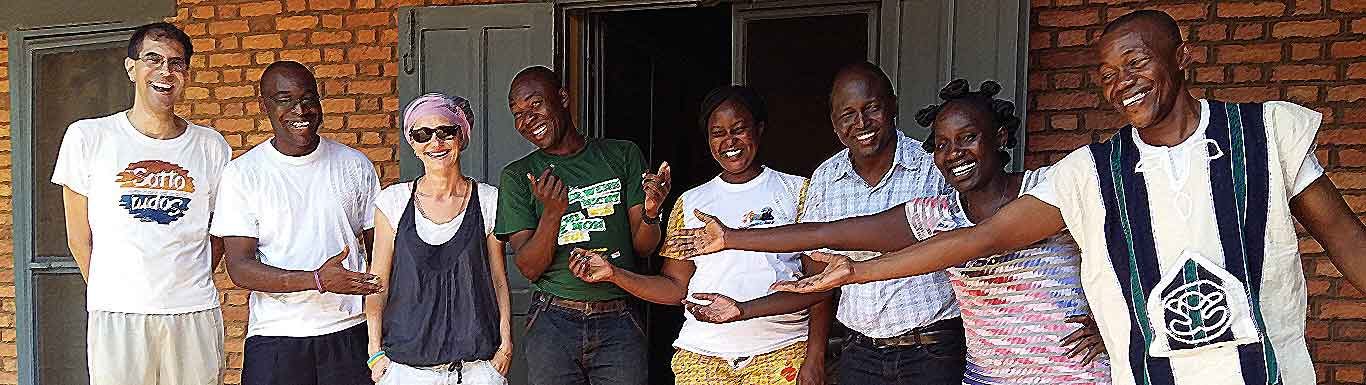
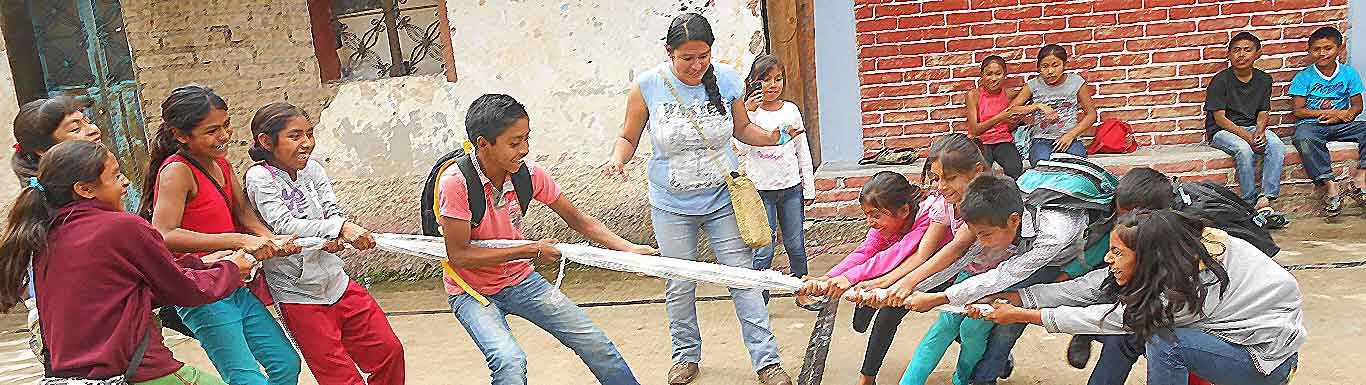
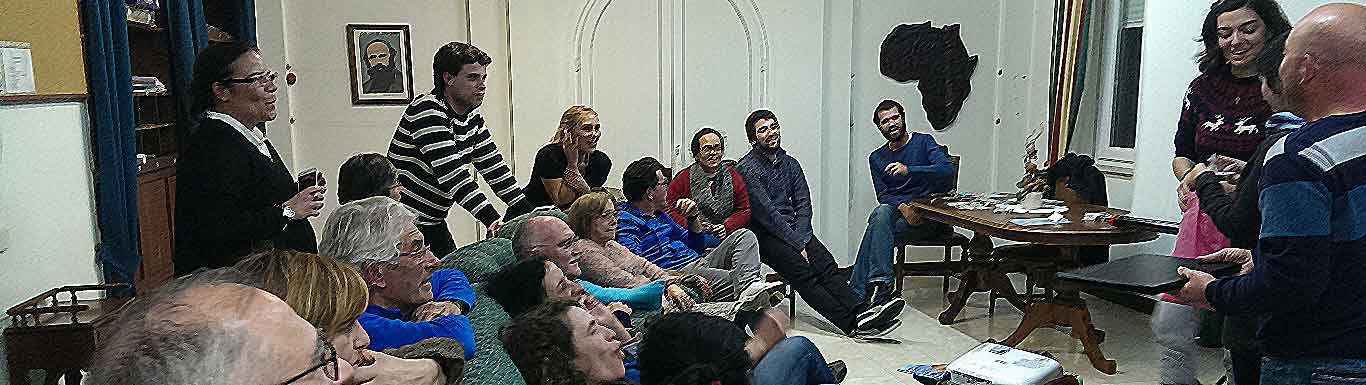
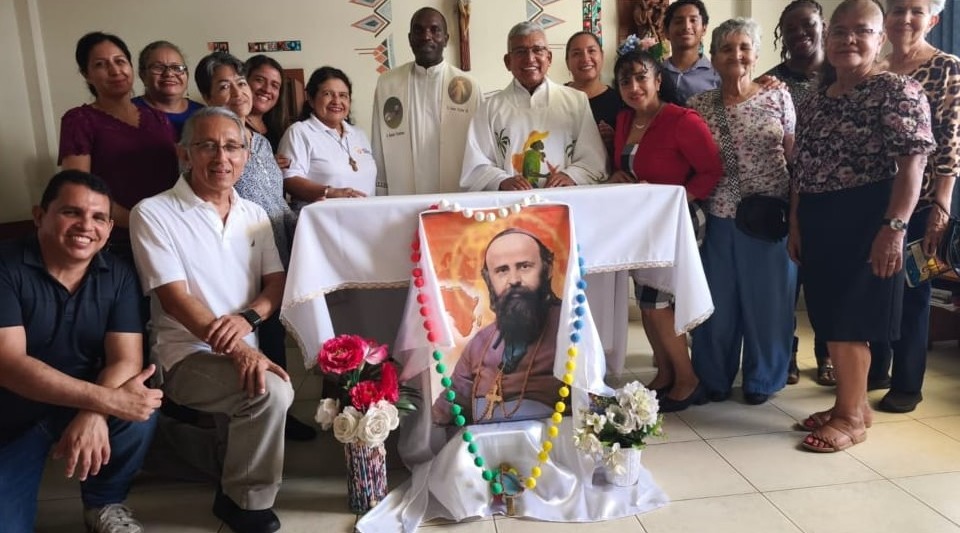
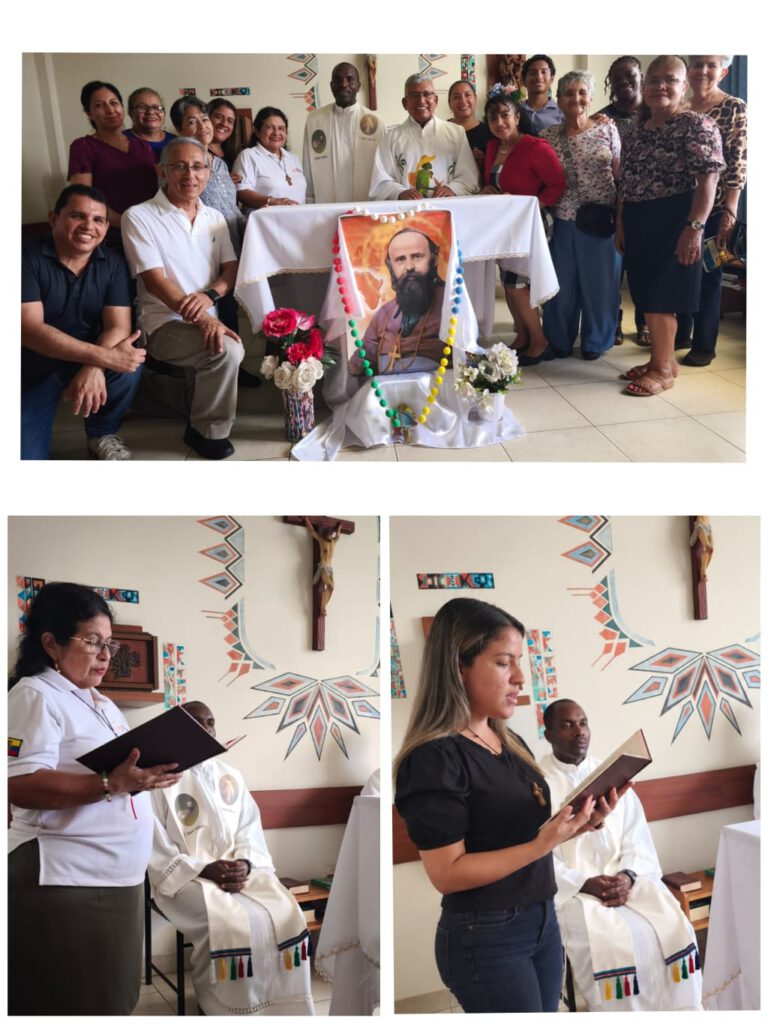
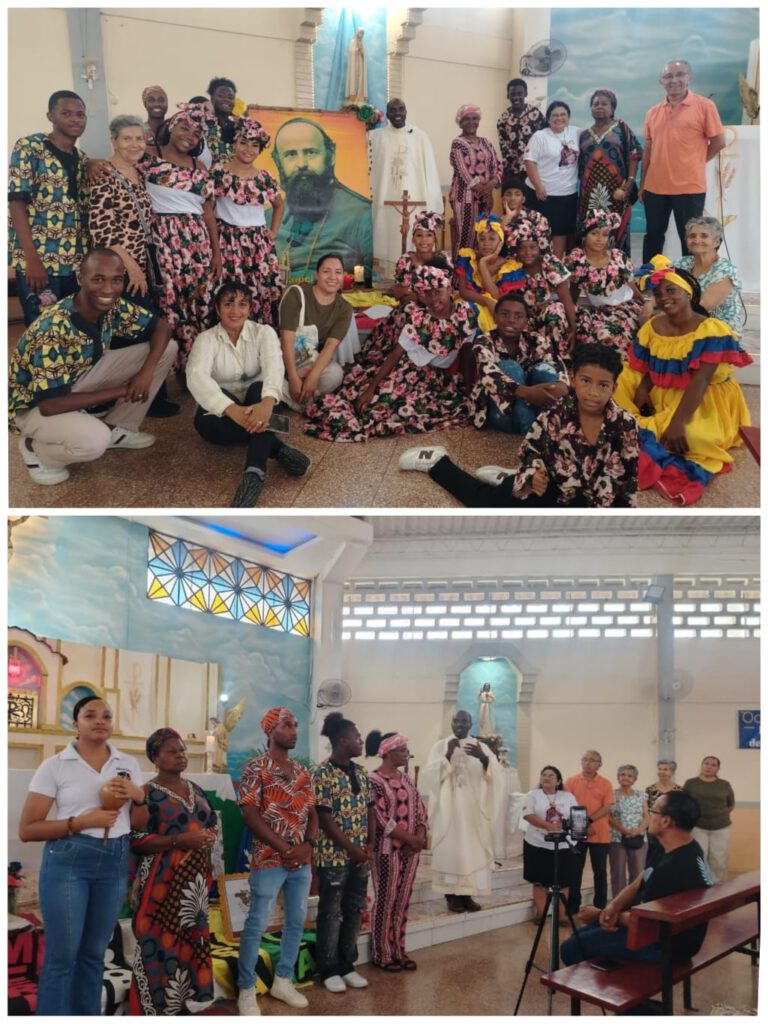
With joy, faith, and a missionary spirit, the Comboni Lay Missionaries in Ecuador celebrated the feast of St. Daniel Comboni on October 10 at the Afro-Ecuadorian Cultural Center in Guayaquil, in an atmosphere of fraternity, prayer, and community fellowship.
The day began with the celebration of Holy Mass, a special moment to give thanks for their shared missionary journey and to renew their commitment to continue living the Comboni charism in service to the poorest and most needy. Afterward, the participants shared a time of fellowship, strengthening the bonds of friendship, communion, and fraternity that animate the life of the community.
The celebration continued on October 11 with a brief tribute during Holy Mass at the Verbo Divino Parish, where the legacy of St. Daniel Comboni was also joyfully commemorated and the commitment to continue walking together in the mission was renewed.
These gatherings provided an opportunity to share our faith, give thanks for the gift of the missionary vocation, and reaffirm that the mission is built in community, through closeness, solidarity, and commitment to those most in need.
Inspired by the Comboni charism, the Comboni Lay Missionaries continue to bring the Gospel to life in their families, communities, and places of service, with the hope of contributing to a more just, fraternal, and supportive world.
Saint Daniel Comboni, continue to inspire and accompany our mission!
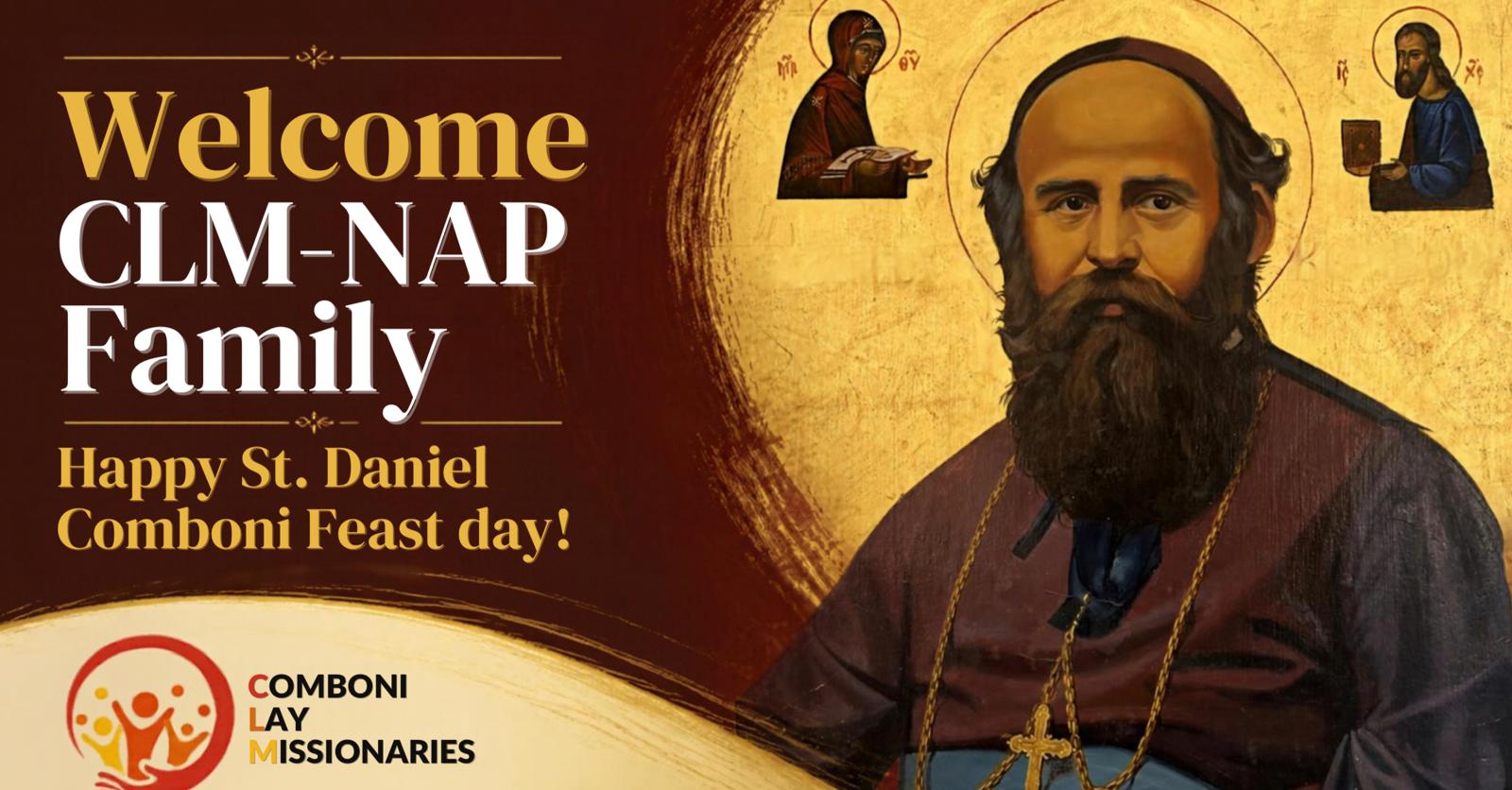
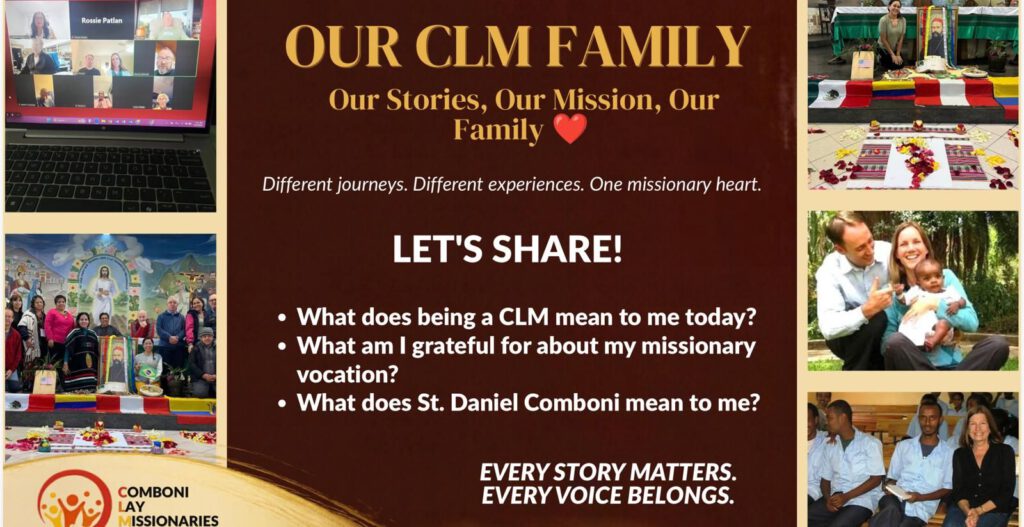
On October 10, the Comboni Lay Missionaries of the North American Province (CLM NAP) came together to celebrate the feast of our beloved missionary father and inspiration, St. Daniel Comboni. It was a beautiful day of prayer, fellowship, and renewed missionary spirit as we celebrated not only the life of St. Daniel Comboni but also the gift of our shared vocation.
United in Prayer, Even Across the Miles
Our celebration began with a morning Zoom prayer gathering, bringing CLMs together from different places to pray and give thanks for the gift of our Comboni charism. We began by praying the final day of our novena to St. Daniel Comboni, entrusting our community, our missionary vocations, and the people we serve to his intercession.
Knowing that not everyone could join us online, we also made space for the voices of our absent members. Through their personal reflections and messages, they were able to share what they are grateful for about being CLMs and what St. Daniel Comboni means to them. Although we could not all be physically present or connected at the same time, we were reminded that we remain one missionary family, united in prayer and in the Sacred Heart of Jesus.
Our gathering was also a meaningful opportunity to look toward the future as we begin a new chapter of ongoing formation. Inspired by Comboni’s example, we renewed our desire to grow in faith, deepen our missionary spirituality, and continue supporting one another in our vocation.
Celebrating Together in Faith and Community
Following our morning prayer, we continued the celebration with Holy Mass alongside the local community in California, giving thanks to God for the life and missionary witness of St. Daniel Comboni.
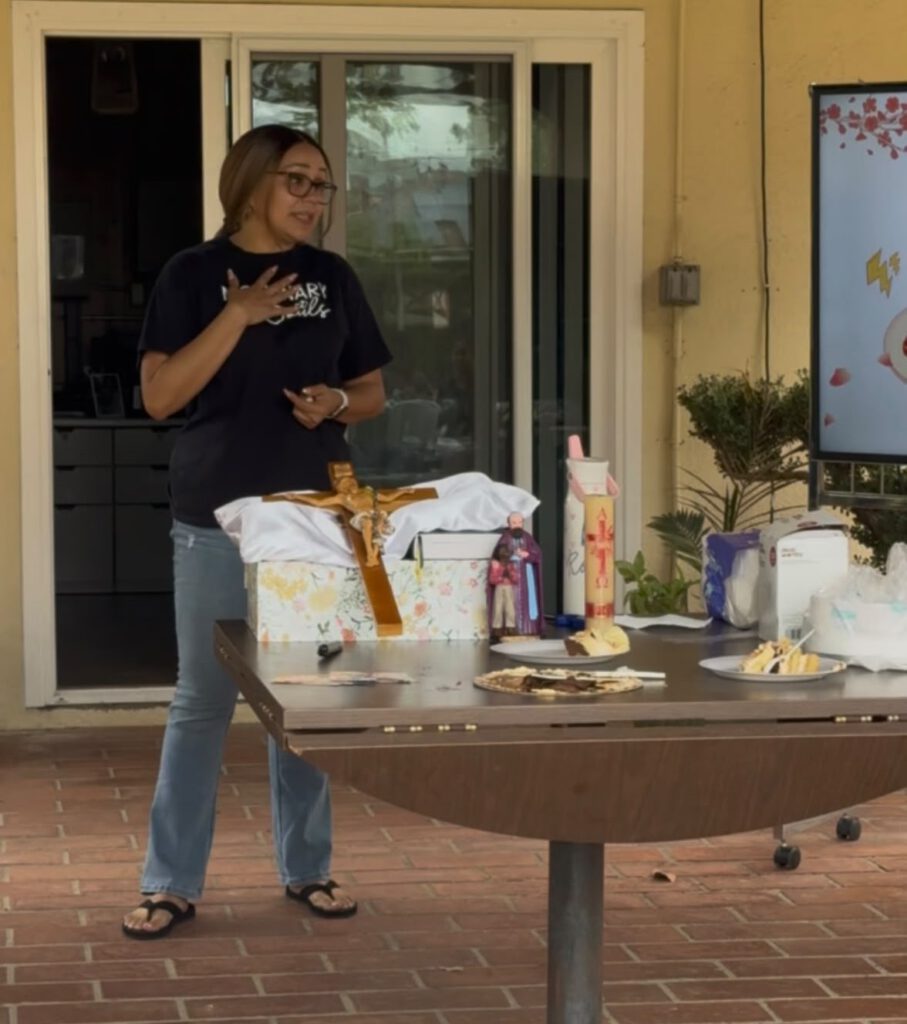
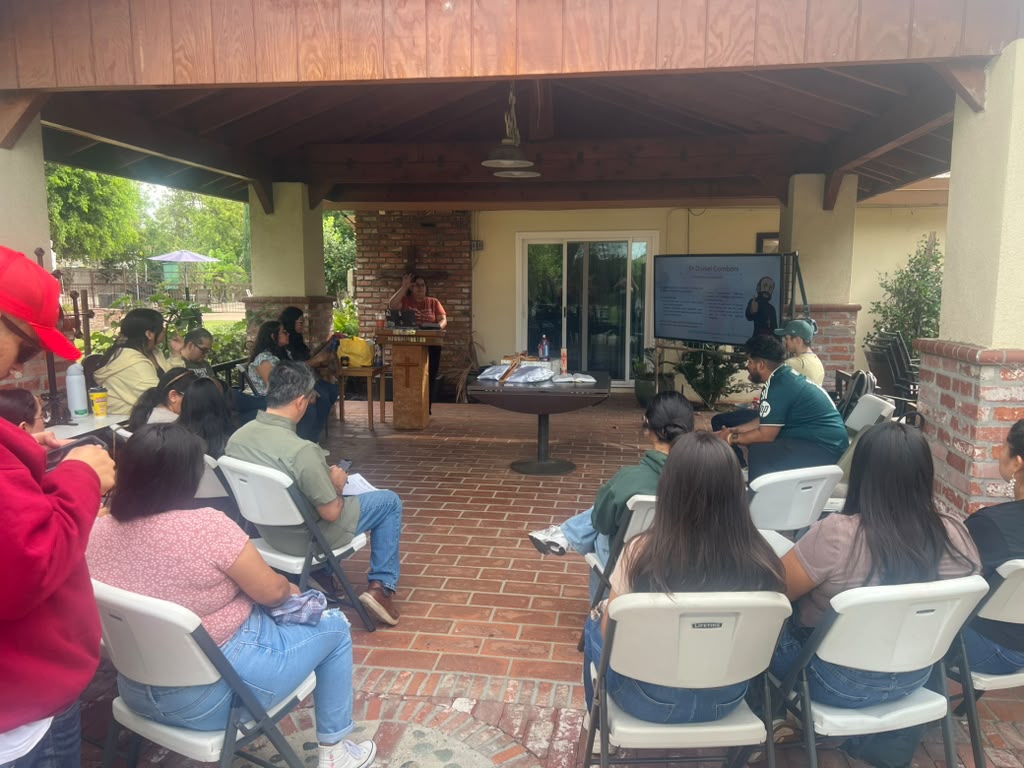
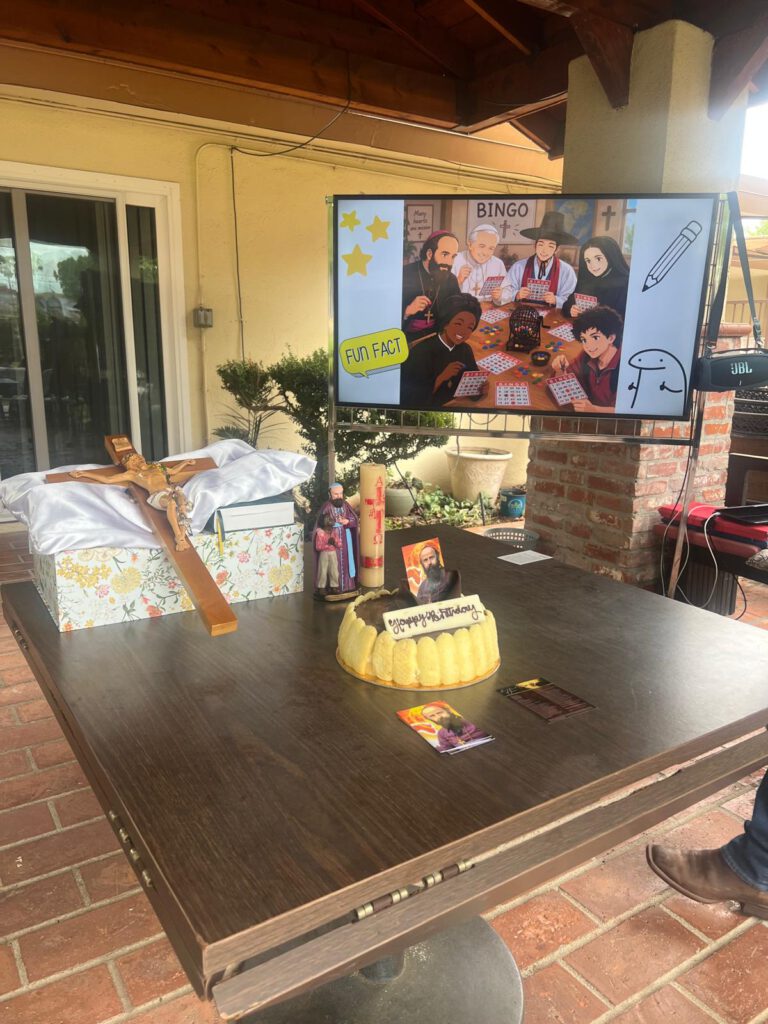
We concluded the morning with a joyful, in-person gathering at the Comboni Mission Center in Covina, California, alongside the young adult ministry, Missionary Souls. We shared fellowship, celebrated our missionary family, and, of course, enjoyed some cake! It was a simple but beautiful way to bring our celebration to a close, sharing the joy of our faith and the spirit of Comboni with the next generation.
Rekindling the Fire of Mission
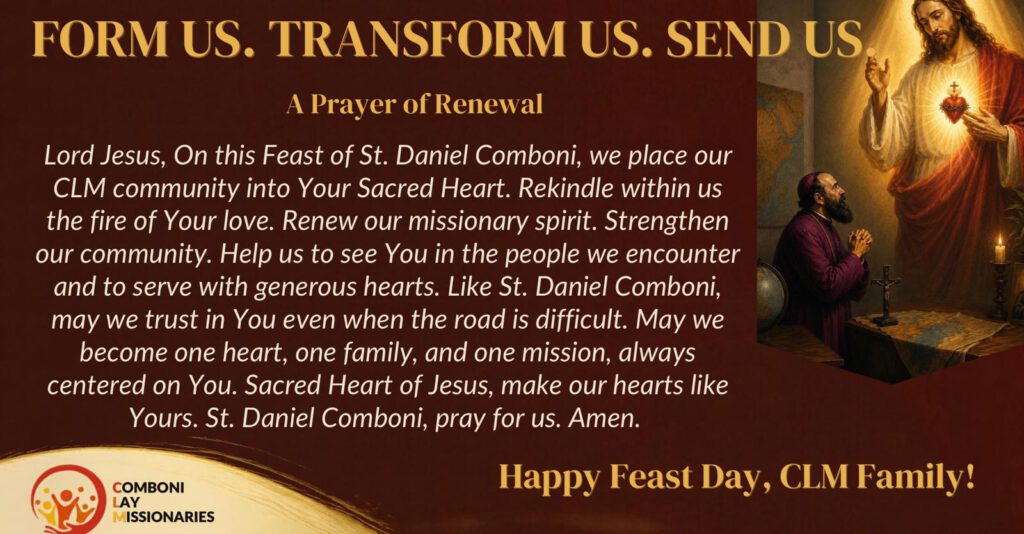
As the CLM NAP community continues its journey of renewal, this feast day was a reminder that the Comboni charism is alive in each of us. St. Daniel Comboni allowed the love of the Sacred Heart of Jesus to transform his life and send him out in service to others. His example continues to inspire us to respond generously to God’s call, recognizing the dignity of every person and serving with hearts full of love.
Though we may be separated by distance, we remain connected through our shared vocation and commitment to mission. We are grateful for everyone who participated, sent a message, prayed with us, or joined us in spirit.
May St. Daniel Comboni continue to intercede for our CLM community as we grow together in faith, strengthen our bonds of fraternity, and renew our commitment to serve wherever the Lord calls us.
St. Daniel Comboni, pray for us!
Sacred Heart of Jesus, make our hearts like Yours!
On October 10, we will celebrate the feast of St. Daniel Comboni.
It is a special occasion to return to the roots of our missionary vocation, renew our commitment, and continue to make Comboni’s dream a reality.
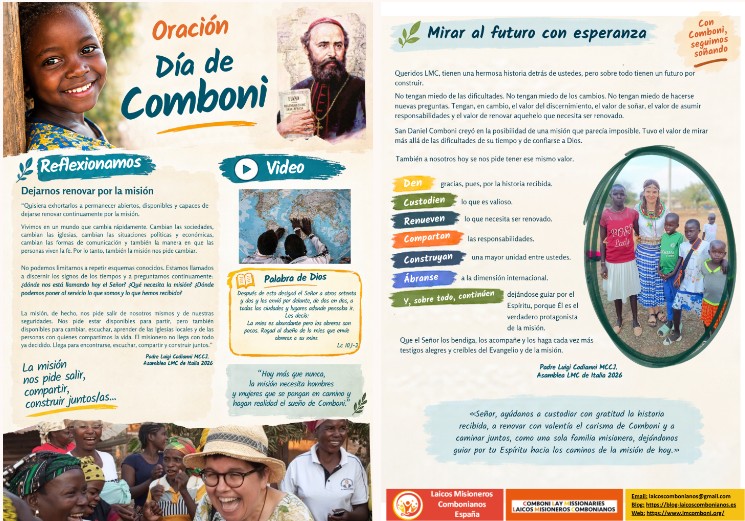
As Comboni Lay Missionaries, we wish to join in this celebration by inviting our groups, communities, and all those who share the missionary spirit to set aside a moment for prayer.
To that end, we have prepared a brief prayer to be said in our missionary groups—a simple prayer designed to help us come together, give thanks for the journey we have made, and allow ourselves to be challenged anew by Comboni’s missionary dream.
We invite you to celebrate this together, wherever you may be, feeling part of the same family and the same mission.
May Saint Daniel Comboni help us keep our hearts open and our eyes fixed on the mission.
Happy Feast of Saint Daniel Comboni!
Saint Daniel Comboni, pray for us and accompany us on our mission.
We pray that all members of the Comboni Family, sustained by the Holy Spirit and inspired by Saint Daniel Comboni, may proclaim the Gospel with joy and be signs of light, hope, and tenderness among the peoples to whom they are sent. Let us pray.
As Comboni Lay Missionaries of Peru, we lift our hearts to God and give thanks for the beautiful gift of experiencing our annual retreat on September 4, 5, and 6 in the city of Trujillo, in an atmosphere of fellowship, prayer, brotherhood, and deep reflection, accompanied by the MCCJ, Fr. David Nyinga Dunga. This retreat allowed us to step away from our daily activities to return to our hearts, listen to God’s voice, and renew the meaning of our missionary vocation. It was also a space to share our experiences, concerns, and hopes, strengthening our bonds as brothers and recognizing that we do not walk alone, but as a family called to serve.
In light of the encyclical *Dilexit te*, we were able to view the reality of poverty with fresh eyes. We came to understand that poverty is not limited to a lack of economic or material resources. There are also forms of spiritual, cultural, and social poverty that often remain hidden and may even be present within our own ecclesial communities.
This reflection has invited us to pause, to look with greater sensitivity, and to ask ourselves: Are we capable of recognizing our brother or sister who is suffering? Are we capable of drawing near to them and walking alongside them? Because when we learn to see with the eyes of the heart, we discover that behind every face there is a story, a need, and, above all, the presence of Jesus.
During these days, we have also reaffirmed the certainty that the face of the poor is the face of Christ. We are called to encounter God in the simple and everyday: in our families, at work, in our pastoral ministry, in our communities, and in every person with whom we share the journey.
But this gathering has also led us to look within and recognize our own shortcomings and frailties. We cannot approach others from a position of superiority or distance. We are brothers and sisters who need God and one another. That is why our mission springs from humility, empathy, solidarity, and a sincere desire to walk together.
Christ himself was born, lived, and died in poverty. He drew near to the little ones, the excluded, and those who suffered. He came as a poor man for the poor and showed us that true love is not merely words, but is transformed into service, self-giving, and closeness.
Saint Daniel Comboni deeply understood this call. He gave his life for the poorest and most forgotten peoples, convinced that the mission must be a concrete expression of God’s love. As Comboni Lay Missionaries, we wish to follow in his footsteps and make this charism our own, placing our lives at the service of evangelization and our brothers and sisters, especially those who most need our presence and solidarity.
As this retreat comes to a close, we carry in our hearts gratitude for what we have experienced, joy for the encounter, hope to continue on our journey, and the desire to renew our missionary commitment. We leave Trujillo with a renewed perspective on our mission, ready to recognize Jesus each day in our brothers and sisters—especially in those who suffer, feel alone, or experience various forms of poverty, and in those who look to us for a word of hope, a sense of closeness, and a helping hand.
May the Lord grant us the grace not to be indifferent to the suffering of our brothers and sisters. May He give us a simple, compassionate heart, ready to serve. And may we, following the example of St. Daniel Comboni, bring our charism to life and proclaim through our actions that the mission begins when we are able to love, serve, and walk alongside others.
Thank you, Lord, for this retreat, for our brothers and sisters, and for the gift of the missionary vocation! May we continue walking together, with faith, hope, and a Comboni heart.
CLM-PERU
Este sitio web utiliza cookies para mejorar su experiencia. Si continúa navegando consideramos que acepta el uso de cookies, pero puede optar por lo contrario si lo desea.
This website uses cookies to improve your experience. If you continue to browse we consider you accept the use of cookies, but you can opt-out if you wish. Acepto Puede obtener más información - You may have more information here
Politica y privacidad de Cookies - Privacy & Cookies Policy
Privacy Overview
This website uses cookies to improve your experience while you navigate through the website. Out of these, the cookies that are categorized as necessary are stored on your browser as they are essential for the working of basic functionalities of the website. We also use third-party cookies that help us analyze and understand how you use this website. These cookies will be stored in your browser only with your consent. You also have the option to opt-out of these cookies. But opting out of some of these cookies may affect your browsing experience.
Necessary cookies are absolutely essential for the website to function properly. This category only includes cookies that ensures basic functionalities and security features of the website. These cookies do not store any personal information.
Any cookies that may not be particularly necessary for the website to function and is used specifically to collect user personal data via analytics, ads, other embedded contents are termed as non-necessary cookies. It is mandatory to procure user consent prior to running these cookies on your website.