Comboni Lay Missionaries

The beauty of our vocation as a source of joy

LMC Portugal

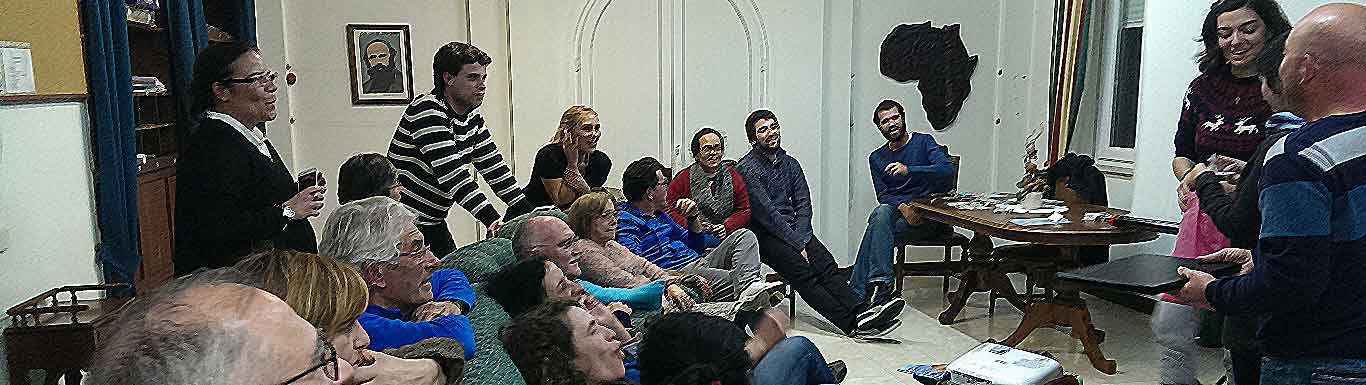
This was the theme with which we began our national assembly of the CLM in Portugal, which took place last weekend, October 25-26, at the MCCJ house in Maia. In her reflection, Sr. Graça, a Comboni Missionary and our advisor, inspired us to recognize God’s gaze on our CLM vocation and to realize how our vocation permeates our daily lives, like “yeast in dough.” She also invited us to recognize that it was God who called and chose us! She invited us to contemplate the beauty of mission and vocation, and to seek to recognize the presence of perennial joy, of mission as relationship, as a dynamic of communion, from which we radiate God’s Love.

Next, the Activity Plan and the annual budget for 2026 were presented and approved. Each local community also had space to share its plans for the coming year.

The following day, the Letters of the Ministries that make up the CLM Association were approved, which were drawn up since the last assembly, which took place in March this year.

At the end of Sunday morning, we celebrated Holy Mass, presided over by Fr. José Vieira, a Comboni missionary working in Ethiopia, where all the CLM members present, including those participating online, renewed their CLM commitment.

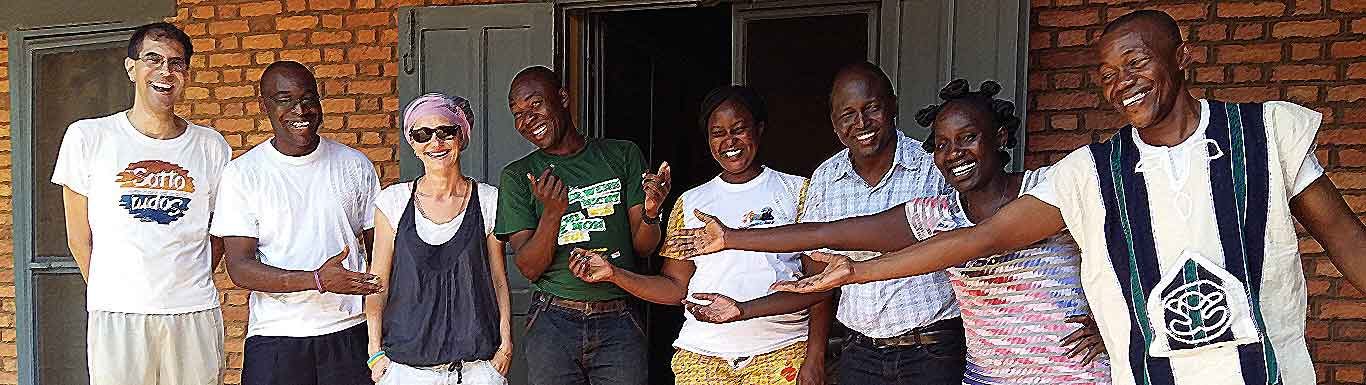
The weekend was a favorable time of encounter, reflection, and fellowship, with the participation of 15 CLM members, 3 of whom participated online. We thank God for calling each one of us and for always accompanying us on this missionary journey!

Saint Daniel Comboni, pray for us!

CLM Portugal Communication

How wonderful it is to reap the fruits of one’s labor!

Casa Familiar Rural

It is very rewarding to produce with dedication, striving for quality in nutritious, healthy, and unique food. But selling it and getting a fair price, hearing the praise of those who take it to their table, is even better.

This is what our third-year students at the Rural Family House in Açailândia experienced on Friday, thanks to a partnership between social movements, the Municipal Department of Agriculture of Açailândia, and the PAGES project of SAF/State of Maranhão. An Agroecological Fair for Family Farming.

This is the second year that the Rural Family House of Açailândia, in a project involving the subjects of Rural Economics, Introduction to Agroindustry, and others, has provided microcredit so that our students can have their first experience of entrepreneurship in the solidarity economy. We lend amounts of R$ 500 so that groups of 4 to 5 young people can produce a product based on ingredients from family farming and have a marketing experience. Thus, they produced geladim, truffles, cake in a jar, pé de moça… very tasty and sold them at school events and fairs.

Everyone repaid the microcredit and still made significant profits, in addition to learning how to organize production, marketing, working cooperatively, managing production costs, setting prices, and sharing profits. A win-win situation!

In addition, they also sold the routine production of all CFR students: fish, vegetables, fava beans, puba…

And they even helped other market vendors with their sales.

Cooperation is the way forward for family farming and overcoming capitalism!

Message from the General Council for the Feast of Saint Daniel Comboni

Comboni

REKINDLING THE FIRE OF MISSIONARY PASSION

Dear confrères,

Comboni

We greet you with the peace and joy of our Lord Jesus Christ, and we extend our warmest wishes to you on the solemnity of Saint Daniel Comboni, our Founder. This day is a special occasion for all of us, and for everyone whose life has been touched and inspired by his example and mission.

Two weeks ago, we concluded our Inter-capitular Assembly, which had begun with a day of formation on the theme Reviving the Fire for Mission. A clear message emerged: the urgent need to strengthen our unity and to build communities capable of responding to the challenges of our times, making careful use of the human and material resources entrusted to us. At the same time, we must recognise that our Comboni identity must be preserved and strengthened: some confrères leave the Institute, others retire, and we wonder where the courage to go where others dare not go has gone

From the very beginning, we have been an international and multicultural family. This diversity is not a mere detail: it is a sign of the Kingdom and a testimony that communion among peoples and cultures is possible in Christ. It is a message of hope for a world often divided. Preserving this gift is more essential than ever, if we want to counteract nationalism and tribalism, which risk creeping into our communities too.

To face these challenges, we must rekindle the fire of our missionary passion. Fire is a symbol of zeal, courage, and conviction; it drives us to mission and sustains us in difficult times. Jesus Christ, the first ‘Missionary of the Father’, said: “I have come to set the earth on fire, and how I wish it were already blazing!” (Lk 12:49). Comboni also often spoke of a “heart burning with genuine love of God”: “When the Missionary in Africa has a heart burning with the pure love of God, when he keeps his eyes fixed on the contemplation of the great goodness and sublimeness of the work for which he spends himself, then all the privations, the continuous hardships, the greatest trials become a paradise on earth for his heart” (Writings, 2705).

When this fire burns in us, crosses and difficulties cannot stop us. A heart on fire remains focused on the goal and is not distracted by obstacles or setbacks.

We are convinced that a mission such as ours — whose fruits we may not fully see, where years of work may seem fruitless, and which sometimes challenges logic and hope — can only be carried forward if we are truly inflamed with passion.

Today more than ever, we feel called to rekindle this fire. Many of us feel weary or fragile, and this fatigue can affect our communities as well. To nourish the flame, we must remove the ashes and add fresh wood. The best way to do this is to return to the original fire that burned within us when we first responded to the Comboni missionary call — those moments when Comboni’s life and the mission of the Comboni Missionaries touched our hearts deeply.

Each of us remembers the moment when Comboni’s life set our hearts ablaze: perhaps it was his selflessness in responding to God’s call as an only son; or his courage to leave the Mazza Institute to pursue what he considered essential; or his perseverance in the face of opposition, even within the Church; or his steadfast faith in times of loss; or his conviction of the dignity of the African people, his tireless commitment to integral human development, his openness to diverse cultures, and his prophetic vision of mission.

Whatever the spark that first inspired us, it still burns and can rekindle our missionary fire. When we let it burn again, we overcome fatigue, indifference, and complacency; our love for mission is renewed, giving us strength to face every challenge.

And what better time than the feast of our Founder to rekindle this flame, remembering that he has given us a unique identity in the Church and in the world as Comboni Missionaries of the Heart of Jesus?

Wishing you a joyful feast day!

Rome, 10th October 2025

Solemnity of Saint Daniel Comboni

The MCCJ general council

Caring for our common home and democracy is a daily struggle!

LMC Brasil

At the Generating Hope for Climate Justice conference, promoted by the Vatican to mark the 10th anniversary of the encyclical Laudato Si’, Pope Leo XIV emphasized that “there is no room for indifference or resignation,” and among many warnings, he spoke of the need for “Everyone in society, through non-governmental organizations and advocacy groups, must pressure governments to develop and implement stricter regulations, procedures, and controls. Citizens need to take an active role in political decision-making at the national, regional, and local levels.”

This call from the Pope is directly linked to the reflection made in this year’s Cry of the Excluded, a demonstration that takes place in Brazil every September 7, as we can read in the sharing made by the Italian CLM, Emma Chiolini, below:

The demonstration has had a profound meaning since its creation in 1995, highlighting existing inequalities in various areas, such as lack of access to health care, education, housing, decent work, and security, which will still not be guaranteed to everyone in 2025. This year’s event also has the motto “Caring for our common home and democracy is a daily struggle!”, reflecting the connection with the climate and social crises and the defense of democracy at a time of internal and external threats. In addition, this year in particular, there was solidarity with the Palestinian people and the genocide they are suffering in an unprecedented, politically, socially, and humanly unjust war. More than a protest, the Cry of the Excluded represents popular resistance, articulating the defense of human rights, national sovereignty, and democracy. The demonstration is, therefore, a call for solidarity and citizen participation, reaffirming that the struggle for social justice must be constant so that Brazil and the world can move toward a more just, democratic, and sustainable society.

In 2025, the movement strengthens these demands by promoting a Popular Plebiscite, whose objective is to include the population in decisions on issues such as the reduction of working hours, the end of the 6×1 shift, and the taxation of the super-rich. Everyone’s participation is important; it is democracy, it is equality, it is recognition. We cannot remain indifferent to the suffering of those who are crushed daily by this society. We cannot remain indifferent to inequality. We cannot remain indifferent to the suffering of oppressed peoples and the arrogance of the strongest. Therefore, the cry of the Excluded must not be silenced, nor must the denunciation of those who wish to silence it be silenced. I believe in a path that is built together, that starts from below, from the people, from a critical consciousness that allows us to see that the struggle must be constant and continuous. Bertolt Brecht said that when injustice becomes law, resistance becomes a duty. In a globalized world, we can no longer say that we do not know. Pepe Mujica left us a quote that serves as an example for our daily lives: “Politics is a struggle for the happiness of all.” In a world where humanity seems to be disappearing, let us make a difference again: let us be human again!

Emma Chiolini, Salvador, Brazil