 “The globalization of indifference, which today burdens the lives of so many of our brothers and sisters, requires all of us to forge a new worldwide solidarity and fraternity capable of giving them new hope.” Message of His Holiness Pope Francis for the celebration of the World Day of Pace: 1 January 2015.
No longer slaves, but brothers and sisters
At the beginning of this New Year, which we welcome as God’s gracious gift to all humanity, I offer heartfelt wishes of peace to every man and woman, to all the world’s peoples and nations, to heads of state and government, and to religious leaders. In doing so, I pray for an end to wars, conflicts and the great suffering caused by human agency, by epidemics past and present, and by the devastation wrought by natural disasters. I pray especially that, on the basis of our common calling to cooperate with God and all people of good will for the advancement of harmony and peace in the world, we may resist the temptation to act in a manner unworthy of our humanity.
In my Message for Peace last year, I spoke of “the desire for a full life… which includes a longing for fraternity which draws us to fellowship with others and enables us to see them not as enemies or rivals, but as brothers and sisters to be accepted and embraced”.[1] Since we are by nature relational beings, meant to find fulfilment through interpersonal relationships inspired by justice and love, it is fundamental for our human development that our dignity, freedom and autonomy be acknowledged and respected. Tragically, the growing scourge of man’s exploitation by man gravely damages the life of communion and our calling to forge interpersonal relations marked by respect, justice and love. This abominable phenomenon, which leads to contempt for the fundamental rights of others and to the suppression of their freedom and dignity, takes many forms. I would like briefly to consider these, so that, in the light of God’s word, we can consider all men and women “no longer slaves, but brothers and sisters”.
 Listening to God’s plan for humanity
The theme I have chosen for this year’s message is drawn from Saint Paul’s letter to Philemon, in which the Apostle asks his co-worker to welcome Onesimus, formerly Philemon’s slave, now a Christian and, therefore, according to Paul, worthy of being considered a brother. The Apostle of the Gentiles writes: “Perhaps this is why he was parted from you for a while, that you might have him back for ever, no longer as a slave but more than a slave, as a beloved brother” (vv. 15-16). Onesimus became Philemon’s brother when he became a Christian. Conversion to Christ, the beginning of a life lived Christian discipleship, thus constitutes a new birth (cf. 2 Cor 5:17; 1 Pet 1:3) which generates fraternity as the fundamental bond of family life and the basis of life in society.
In the Book of Genesis (cf. 1:27-28), we read that God made man male and female, and blessed them so that they could increase and multiply. He made Adam and Eve parents who, in response to God’s command to be fruitful and multiply, brought about the first fraternity, that of Cain and Abel. Cain and Abel were brothers because they came forth from the same womb. Consequently they had the same origin, nature and dignity as their parents, who were created in the image and likeness of God.
But fraternity also embraces variety and differences between brothers and sisters, even though they are linked by birth and are of the same nature and dignity. As brothers and sisters, therefore, all people are in relation with others, from whom they differ, but with whom they share the same origin, nature and dignity. In this way, fraternity constitutes the network of relations essential for the building of the human family created by God.
Tragically, between the first creation recounted in the Book of Genesis and the new birth in Christ whereby believers become brothers and sisters of the “first-born among many brethren” (Rom 8:29), there is the negative reality of sin, which often disrupts human fraternity and constantly disfigures the beauty and nobility of our being brothers and sisters in the one human family. It was not only that Cain could not stand Abel; he killed him out of envy and, in so doing, committed the first fratricide. “Cain’s murder of Abel bears tragic witness to his radical rejection of their vocation to be brothers. Their story (cf. Gen 4:1-16) brings out the difficult task to which all men and women are called, to live as one, each taking care of the other”.[2]
This was also the case with Noah and his children (cf. Gen 9:18-27). Ham’s disrespect for his father Noah drove Noah to curse his insolent son and to bless the others, those who honoured him. This created an inequality between brothers born of the same womb.
In the account of the origins of the human family, the sin of estrangement from God, from the father figure and from the brother, becomes an expression of the refusal of communion. It gives rise to a culture of enslavement (cf. Gen 9:25-27), with all its consequences extending from generation to generation: rejection of others, their mistreatment, violations of their dignity and fundamental rights, and institutionalized inequality. Hence, the need for constant conversion to the Covenant, fulfilled by Jesus’ sacrifice on the cross, in the confidence that “where sin increased, grace abounded all the more… through Jesus Christ” (Rom 5:20-21). Christ, the beloved Son (cf. Mt 3:17), came to reveal the Father’s love for humanity. Whoever hears the Gospel and responds to the call to conversion becomes Jesus’ “brother, sister and mother” (Mt 12:50), and thus an adopted son of his Father (cf. Eph 1:5).
One does not become a Christian, a child of the Father and a brother or sister in Christ, as the result of an authoritative divine decree, without the exercise of personal freedom: in a word, without being freely converted to Christ. Becoming a child of God is necessarily linked to conversion: “Repent, and be baptized, every one of you, in the name of Jesus Christ for the forgiveness of your sins; and you shall receive the gift of the Holy Spirit” (Acts 2:38). All those who responded in faith and with their lives to Peter’s preaching entered into the fraternity of the first Christian community (cf. 1 Pet 2:17; Acts 1:15-16, 6:3, 15:23): Jews and Greeks, slaves and free (cf. 1 Cor 12:13; Gal 3:28). Differing origins and social status did not diminish anyone’s dignity or exclude anyone from belonging to the People of God. The Christian community is thus a place of communion lived in the love shared among brothers and sisters (cf. Rom 12:10; 1 Thess 4:9; Heb 13:1; 1 Pet 1:22; 2 Pet 1:7).
All of this shows how the Good News of Jesus Christ, in whom God makes “all things new” (Rev 21:5),[3] is also capable of redeeming human relationships, including those between slaves and masters, by shedding light on what both have in common: adoptive sonship and the bond of brotherhood in Christ. Jesus himself said to his disciples: “No longer do I call you servants, for the servant does not know what his master is doing; but I have called you friends, for all that I have heard from my Father I have made known to you” (Jn 15:15).
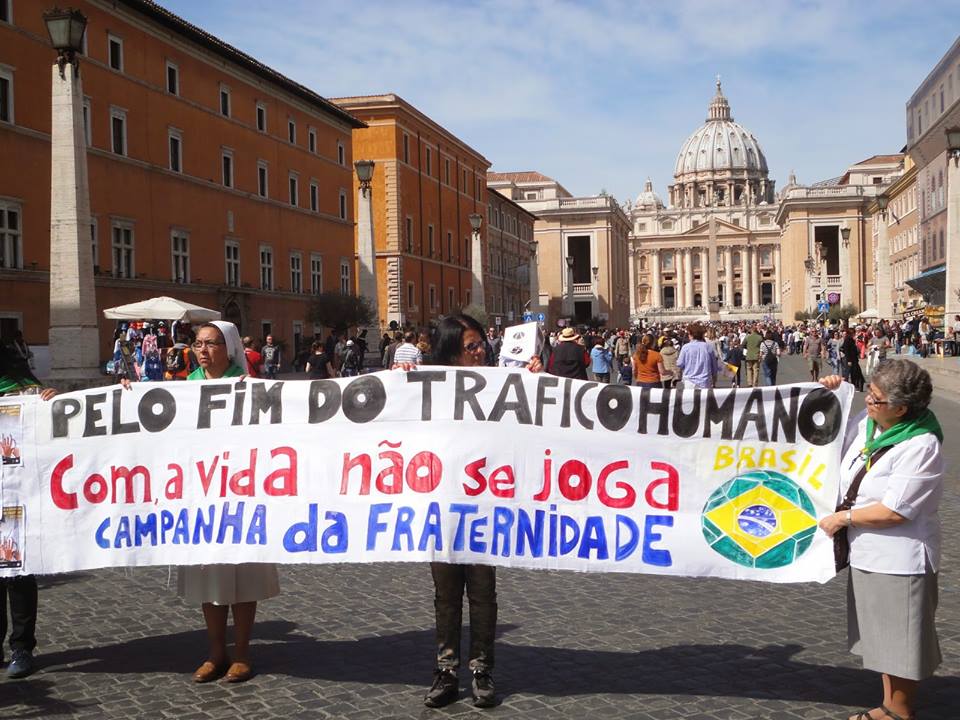 The many faces of slavery yesterday and today
From time immemorial, different societies have known the phenomenon of man’s subjugation by man. There have been periods of human history in which the institution of slavery was generally accepted and regulated by law. This legislation dictated who was born free and who was born into slavery, as well as the conditions whereby a freeborn person could lose his or her freedom or regain it. In other words, the law itself admitted that some people were able or required to be considered the property of other people, at their free disposition. A slave could be bought and sold, given away or acquired, as if he or she were a commercial product.
Today, as the result of a growth in our awareness, slavery, seen as a crime against humanity,[4] has been formally abolished throughout the world. The right of each person not to be kept in a state of slavery or servitude has been recognized in international law as inviolable.
Yet, even though the international community has adopted numerous agreements aimed at ending slavery in all its forms, and has launched various strategies to combat this phenomenon, millions of people today – children, women and men of all ages – are deprived of freedom and are forced to live in conditions akin to slavery.
I think of the many men and women labourers, including minors, subjugated in different sectors, whether formally or informally, in domestic or agricultural workplaces, or in the manufacturing or mining industry; whether in countries where labour regulations fail to comply with international norms and minimum standards, or, equally illegally, in countries which lack legal protection for workers’ rights.
I think also of the living conditions of many migrants who, in their dramatic odyssey, experience hunger, are deprived of freedom, robbed of their possessions, or undergo physical and sexual abuse. In a particular way, I think of those among them who, upon arriving at their destination after a gruelling journey marked by fear and insecurity, are detained in at times inhumane conditions. I think of those among them, who for different social, political and economic reasons, are forced to live clandestinely. My thoughts also turn to those who, in order to remain within the law, agree to disgraceful living and working conditions, especially in those cases where the laws of a nation create or permit a structural dependency of migrant workers on their employers, as, for example, when the legality of their residency is made dependent on their labour contract. Yes, I am thinking of “slave labour”.
I think also of persons forced into prostitution, many of whom are minors, as well as male and female sex slaves. I think of women forced into marriage, those sold for arranged marriages and those bequeathed to relatives of their deceased husbands, without any right to give or withhold their consent.
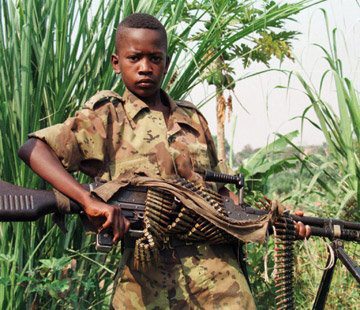
Nor can I fail to think of all those persons, minors and adults alike, who are made objects of trafficking for the sale of organs, for recruitment as soldiers, for begging, for illegal activities such as the production and sale of narcotics, or for disguised forms of cross-border adoption.
Finally, I think of all those kidnapped and held captive by terrorist groups, subjected to their purposes as combatants, or, above all in the case of young girls and women, to be used as sex slaves. Many of these disappear, while others are sold several times over, tortured, mutilated or killed.
 Some deeper causes of slavery
Today, as in the past, slavery is rooted in a notion of the human person which allows him or her to be treated as an object. Whenever sin corrupts the human heart and distances us from our Creator and our neighbours, the latter are no longer regarded as beings of equal dignity, as brothers or sisters sharing a common humanity, but rather as objects. Whether by coercion or deception, or by physical or psychological duress, human persons created in the image and likeness of God are deprived of their freedom, sold and reduced to being the property of others. They are treated as means to an end.
Alongside this deeper cause – the rejection of another person’s humanity – there are other causes which help to explain contemporary forms of slavery. Among these, I think in the first place of poverty, underdevelopment and exclusion, especially when combined with a lack of access to education or scarce, even non-existent, employment opportunities. Not infrequently, the victims of human trafficking and slavery are people who look for a way out of a situation of extreme poverty; taken in by false promises of employment, they often end up in the hands of criminal networks which organize human trafficking. These networks are skilled in using modern means of communication as a way of luring young men and women in various parts of the world.
Another cause of slavery is corruption on the part of people willing to do anything for financial gain. Slave labour and human trafficking often require the complicity of intermediaries, be they law enforcement personnel, state officials, or civil and military institutions. “This occurs when money, and not the human person, is at the centre of an economic system. Yes, the person, made in the image of God and charged with dominion over all creation, must be at the centre of every social or economic system. When the person is replaced by mammon, a subversion of values occurs”.[5]
Further causes of slavery include armed conflicts, violence, criminal activity and terrorism. Many people are kidnapped in order to be sold, enlisted as combatants, or sexually exploited, while others are forced to emigrate, leaving everything behind: their country, home, property, and even members of their family. They are driven to seek an alternative to these terrible conditions even at the risk of their personal dignity and their very lives; they risk being drawn into that vicious circle which makes them prey to misery, corruption and their baneful consequences.
 A shared commitment to ending slavery
Often, when considering the reality of human trafficking, illegal trafficking of migrants and other acknowledged or unacknowledged forms of slavery, one has the impression that they occur within a context of general indifference.
Sadly, this is largely true. Yet I would like to mention the enormous and often silent efforts which have been made for many years by religious congregations, especially women’s congregations, to provide support to victims. These institutes work in very difficult situations, dominated at times by violence, as they work to break the invisible chains binding victims to traffickers and exploiters. Those chains are made up of a series of links, each composed of clever psychological ploys which make the victims dependent on their exploiters. This is accomplished by blackmail and threats made against them and their loved ones, but also by concrete acts such as the confiscation of their identity documents and physical violence. The activity of religious congregations is carried out in three main areas: in offering assistance to victims, in working for their psychological and educational rehabilitation, and in efforts to reintegrate them into the society where they live or from which they have come.
This immense task, which calls for courage, patience and perseverance, deserves the appreciation of the whole Church and society. Yet, of itself, it is not sufficient to end the scourge of the exploitation of human persons. There is also need for a threefold commitment on the institutional level: to prevention, to victim protection and to the legal prosecution of perpetrators. Moreover, since criminal organizations employ global networks to achieve their goals, efforts to eliminate this phenomenon also demand a common and, indeed, a global effort on the part of various sectors of society.
States must ensure that their own legislation truly respects the dignity of the human person in the areas of migration, employment, adoption, the movement of businesses offshore and the sale of items produced by slave labour. There is a need for just laws which are centred on the human person, uphold fundamental rights and restore those rights when they have been violated. Such laws should also provide for the rehabilitation of victims, ensure their personal safety, and include effective means of enforcement which leave no room for corruption or impunity. The role of women in society must also be recognized, not least through initiatives in the sectors of culture and social communications.
Intergovernmental organizations, in keeping with the principle of subsidiarity, are called to coordinate initiatives for combating the transnational networks of organized crime which oversee the trafficking of persons and the illegal trafficking of migrants. Cooperation is clearly needed at a number of levels, involving national and international institutions, agencies of civil society and the world of finance.
Businesses[6] have a duty to ensure dignified working conditions and adequate salaries for their employees, but they must also be vigilant that forms of subjugation or human trafficking do not find their way into the distribution chain. Together with the social responsibility of businesses, there is also the social responsibility of consumers. Every person ought to have the awareness that “purchasing is always a moral – and not simply an economic – act”.[7]
Organizations in civil society, for their part, have the task of awakening consciences and promoting whatever steps are necessary for combating and uprooting the culture of enslavement.
In recent years, the Holy See, attentive to the pain of the victims of trafficking and the voice of the religious congregations which assist them on their path to freedom, has increased its appeals to the international community for cooperation and collaboration between different agencies in putting an end to this scourge.[8] Meetings have also been organized to draw attention to the phenomenon of human trafficking and to facilitate cooperation between various agencies, including experts from the universities and international organizations, police forces from migrants’ countries of origin, transit, or destination, and representatives of ecclesial groups which work with victims. It is my hope that these efforts will continue to expand in years to come.
 Globalizing fraternity, not slavery or indifference
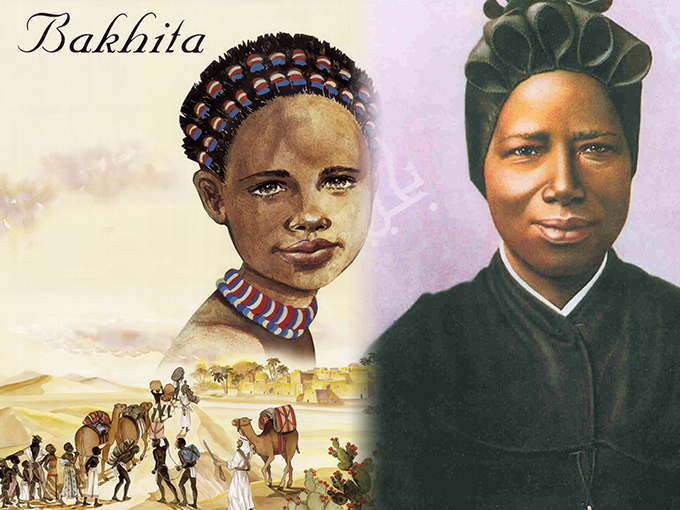
In her “proclamation of the truth of Christ’s love in society”,[9] the Church constantly engages in charitable activities inspired by the truth of the human person. She is charged with showing to all the path to conversion, which enables us to change the way we see our neighbours, to recognize in every other person a brother or sister in our human family, and to acknowledge his or her intrinsic dignity in truth and freedom. This can be clearly seen from the story of Josephine Bakhita, the saint originally from the Darfur region in Sudan who was kidnapped by slave-traffickers and sold to brutal masters when she was nine years old. Subsequently – as a result of painful experiences – she became a “free daughter of God” thanks to her faith, lived in religious consecration and in service to others, especially the most lowly and helpless. This saint, who lived at the turn of the twentieth century, is even today an exemplary witness of hope[10] for the many victims of slavery; she can support the efforts of all those committed to fighting against this “open wound on the body of contemporary society, a scourge upon the body of Christ”. [11]
In the light of all this, I invite everyone, in accordance with his or her specific role and responsibilities, to practice acts of fraternity towards those kept in a state of enslavement. Let us ask ourselves, as individuals and as communities, whether we feel challenged when, in our daily lives, we meet or deal with persons who could be victims of human trafficking, or when we are tempted to select items which may well have been produced by exploiting others. Some of us, out of indifference, or financial reasons, or because we are caught up in our daily concerns, close our eyes to this. Others, however, decide to do something about it, to join civic associations or to practice small, everyday gestures – which have so much merit! – such as offering a kind word, a greeting or a smile. These cost us nothing but they can offer hope, open doors, and change the life of another person who lives clandestinely; they can also change our own lives with respect to this reality.
We ought to recognize that we are facing a global phenomenon which exceeds the competence of any one community or country. In order to eliminate it, we need a mobilization comparable in size to that of the phenomenon itself. For this reason I urgently appeal to all men and women of good will, and all those near or far, including the highest levels of civil institutions, who witness the scourge of contemporary slavery, not to become accomplices to this evil, not to turn away from the sufferings of our brothers and sisters, our fellow human beings, who are deprived of their freedom and dignity. Instead, may we have the courage to touch the suffering flesh of Christ,[12] revealed in the faces of those countless persons whom he calls “the least of these my brethren” (Mt 25:40, 45).
We know that God will ask each of us: What did you do for your brother? (cf. Gen 4:9-10). The globalization of indifference, which today burdens the lives of so many of our brothers and sisters, requires all of us to forge a new worldwide solidarity and fraternity capable of giving them new hope and helping them to advance with courage amid the problems of our time and the new horizons which they disclose and which God places in our hands.
FRANCISCUS
[1] No. 1.
[2] Message for the 2014 World Day of Peace, 2.
[3] Cf. Apostolic Exhortation Evangelii Gaudium, 11.
[4] Cf. Address to Delegates of the International Association of Penal Law, 23 October 2014: L’Osservatore Romano, 24 October 2014, p. 4.
[5] Address to Participants in the World Meeting of Popular Movements, 28 October 2014: L’Osservatore Romano, 29 October 2014, p. 7.
[6] Cf. PONTIFICAL COUNCIL FOR JUSTICE AND PEACE, Vocation of the Business Leader: A Reflection, 2013.
[7] BENEDICT XVI, Encyclical Letter Caritas in Veritate, 66.
[8] Cf. Message to Mr Guy Ryder, Director General of the International Labour Organization, on the occasion of the 103rd Session of the ILO, 22 May 2014: L’Osservatore Romano, 29 May 2014, p. 7.
[9] BENEDICT XVI, Encyclical Letter Caritas in Veritate, 5.
[10] “Through the knowledge of this hope she was ‘redeemed’, no longer a slave, but a free child of God. She understood what Paul meant when he reminded the Ephesians that previously they were without hope and without God in the world – without hope because without God” (BENEDICT XVI, Encyclical Letter Spe Salvi, 3).
[11] Address to Participants in the Second International Conference on Combating Human Trafficking: Church and Law Enforcement in Partnership, 10 April 2014: L’Osservatore Romano, 11 April 2014, p. 7; cf. Apostolic Exhortation Evangelii Gaudium, 270.
[12] Cf. Apostolic Exhortation Evangelii Gaudium, 24 and 270.
——————————————————————————————–