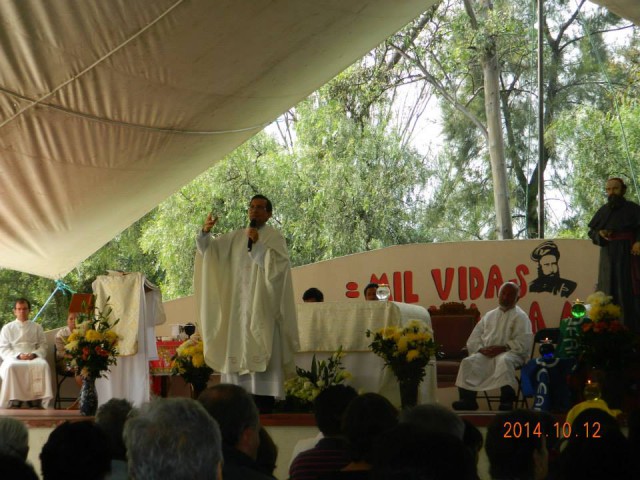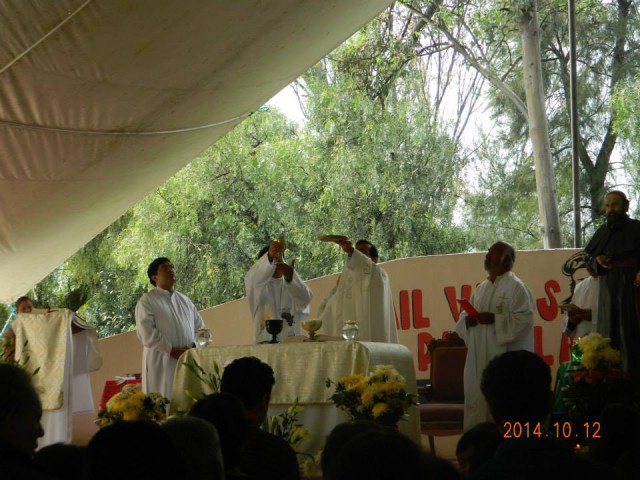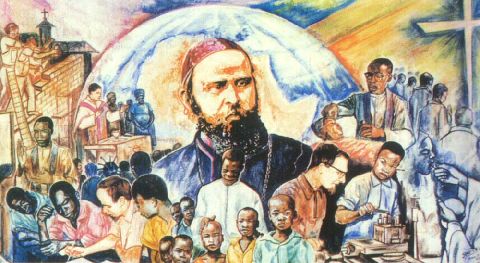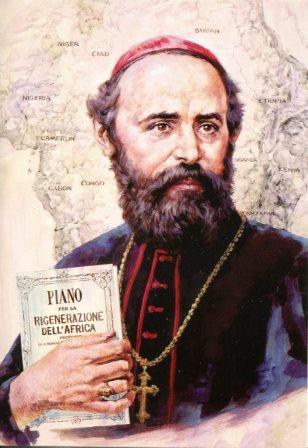
We are celebrating the 150th anniversary of the Plan of St. Daniel Comboni. The text has had various editions. Our analysis will be based on the fourth edition, published in Verona by the Diocesan Printing Press and edited by A. Merlo, under the title “Plan for the regeneration of Africa proposed by Rev. Daniel Comboni, apostolic missionary of Central Africa, superior of the Institutes of blacks in Egypt.”
ELEMENTS OF COMBONI SPIRITUALITY EMERGING FROM THE PLAN FOR THE REGENERATION OF AFRICA
Introduction
The first question we ask is whether it is more appropriate to call the text of Comboni a plan or a project. Although the Hebrew word that indicates that reality is constantly translated project, plan or design, the question deserves to be asked. The Greek word translated as project gives the idea of motion. The concept of “plan”, therefore, indicates something static, while “project” implies dynamism. The plan is usually a cold process without any subjective involvement, without heart; the project is experienced from within, with a strong subjective charge, and this is the case of the text that St. Daniel Comboni presented to the Church. There is the involvement of the heart of Comboni in the text of the plan, so it is perhaps more appropriate to speak of the “Project for the regeneration of Africa.” St. Daniel lived the work of the Regeneration of Africa from within (it is the image of Potier) before reaching its practical implications. In what follows we will continue to call the text of Comboni “Plan”, out of respect to the memory of our Founding father, but without forgetting the vibrant aspect, the dynamism which arises from the contemplation of the Heart of Christ the Good Shepherd, the source of his mission.
The charismatic experience in St. Peter’s, on the occasion of the canonization of St. Margaret Mary Alacoque, was the founding moment of this Plan but not the only one, as well underlined by the Superior General: “The Plan is not a textbook; it is life hidden within the words, thoughts, intuitions, dreams and the desires that were the motive power able to move the hands of Comboni to leave traces of the Spirit he tried to express, which goes far beyond the ideas and strategies that will somehow become the response to the cry that assails the ears of God to stir up his mercy.” (The Plan of Comboni, Letter of the Superior General, MCCJ Bulletin 258, January 2014).
We can say that the Plan stems, on the one hand, from a down to earth spirituality, made up of studies and research, and, on the other hand, from Comboni’s experience of God’s love that he translates in a textbook to the benefit of his African brothers and sisters.
Our contribution is divided into five points:
- A Plan born from a different perspective;
- A Plan filled with indignation;
- A Plan to be achieved through the commitment of all;
- A Plan with the “gender” factor;
- A Plan requiring total sacrifice.
1. A Plan born from a different perspective
“The Catholic, who is used to judging things in a supernatural light, looked upon Africa not through the pitiable lens of human interest, but in the pure light of faith; there he saw an infinite multitude of brothers who belonged to the same family as himself with one common Father in heaven. They were bent low and groaning beneath the yoke of Satan, and they were placed on the threshold of a most terrible precipice. Then he was carried away under the impetus of that love set alight by the divine flame on Calvary hill, when it came forth from the side of the Crucified One to embrace the whole human family; he felt his heart beat faster, and a divine power seemed to drive him towards those unknown lands. There he would enclose in his arms in an embrace of peace and of love those unfortunate brothers of his, upon whom it seemed that the fearful curse of Canaan still bore down.” (W 2742).
This no. 2742 is the most substantial paragraph which constitutes the absolute foundation of all the rest of the text: “The Catholic, who is used to judging things in a supernatural light…” Comboni is this Catholic who, by constantly evaluating and always starting from divine inspirations, has taken an attitude that leads him to look at Africa not starting from human interests but to discover brothers and sisters who have the same Father and to whom we have to bring the Good News of Salvation. Evidently, to judge from the top, one has to be born again (John 3); to be born from above is a gift of God, but it also requires ascesis (effort). The source of this different perspective, which looks on the African person considering him a brother belonging to the same family as himself and whom Comboni would like to enclose in his arms in an embrace of peace and of love, is truly the love set alight by the divine flame on Calvary hill, when it came forth from the side of the Crucified One. The experience of the love of the Crucified One is the engine of the missionary impulse that drives him towards this continent, Africa, seen by other people under the prism of human interests. The experience of faith, which transforms his perspective of the Africans, the experience of the divine love that drives him towards those unknown lands are therefore a source of his trust in African people whom he associates as the protagonists in the work of the regeneration of Africa, “to save Africa with Africa”. Today, in our communities, in our missions, this way of looking through faith on events, people and the experience of the love of the Crucified One, which is never separated from the love of our neighbour, is an important element for the construction of a fraternity and brotherhood that goes beyond skin, colour, ethnicity, national origin, etc. The Plan stems from the faith which works through charity for the liberation of the African people: “Our Work is based on faith. It is a language that few of the good on earth understand; but the saints, who alone we must imitate, have understood it.” (W 6933).
The Plan has a spiritual centre, the Heart of Jesus, and other centres, like the institutes where the evangelizers, both men and women, will be prepared, in areas in which both Europeans and Africans can live and work (cf. W 2764) and then move toward the centre Africa.
“We can say that the Plan stems, on the one hand, from a down to earth spirituality, made up of studies and research, and, on the other hand, from Comboni’s experience of God’s love that he translates in a textbook to the benefit of his African brothers and sisters.”
2. A Plan filled with indignation
 “The heart of every good and faithful Catholic, inflamed as it must be by the spirit of the love of Jesus Christ, will surely be deeply wounded and grievously stricken by the appalling idea of seeing the Church suspend, perhaps for many centuries, her work on behalf of so many millions of souls still languishing in the shadow of death. So the path so-far-followed must be altered, the old system must be changed and a new plan must be drawn up which will lead more effectively to the desired end.”(W 2752).
The Plan is born from the indignation caused in Comboni by the state of neglect in which Africa found itself from the point of view of faith as well as its human development. Comboni is that Catholic who is full of compassion, inflamed the charity of Jesus Christ and feels saddened and grief-stricken when facing the situation of Africa; who becomes so indignant that “we shall be forgiven if the impulse of our heart, where we feel most strongly the cry of misery directed towards us all by those unhappy sons of Adam who are our brothers, should carry our mind away from the path of truth and certainty.” (W 2754). An indignation that drives him to search for a way to evangelize Africa, without fear of making mistakes, without an absolute certainty; in the conviction that, even if mistaken, he would be forgiven. The fear of getting it wrong paralyzes the work of evangelization and causes us to withdraw into ourselves, limiting our audacity to go in search of new roads. Says Pope Francis “I prefer a Church which is bruised, hurting and dirty because it has been out on the streets, rather than a Church which is unhealthy from being confined and from clinging to its own security.” (EG 49).
God, too, is indignant for any form of non-dignity of a human person: “I have seen the miserable state of my people in Egypt. I have heard their appeal to be free of their slave-drivers. I know all about their sufferings.” (Ex 3,7). It is the indignation of Jesus in front of the exhausted multitudes of people, as sheep without a shepherd. Like any true outrage, which arises from observation, the indignation of Comboni did not remain sterile, but led him to compassion and action. An action that is characterized by an intimate life sharing with Africa: “Africa and the poor black people have taken possession of my heart which lives for them alone, especially since the Representative of Jesus Christ, the Holy Father, has encouraged me to work for Africa.” (W 941).
Many of our indignations when faced by the horrors of the world remain sterile because, while we condemn the situations of war that are in the world, at the same time we reproduce in our communities and in our missions the same mechanisms of war among us, even if on a smaller scale. “How many wars take place within the people of God and in our different communities! Spiritual worldliness leads some Christians to war with other Christians who stand in the way of their quest for power, prestige, pleasure and economic security.” (EG 98).
In addition, our indignation remains sterile when we become indignant of the extreme poverty in which thousands of our contemporaries live, but we are incapable of small sacrifices that the mission asks of us. We think, for instance, of missionaries who accept their assignment provided that, in the place where they’re going, there are technological means, like the Internet. When there is a passion for the mission and compassion for the people, the rest becomes superfluous.
3. A Plan to be achieved through the commitment of all
 “The Work must be catholic, not just Spanish, French, German or Italian. All Catholics must help the poor Africans, because one nation alone would not succeed in succouring the whole African race.” (W 944).
In the Plan it clearly appears this dimension of collaboration. The call for collaboration for the work of the regeneration of Africa comes from the awareness that St. Daniel Comboni has of the fact that the work is God’s work and not a personal matter; it is a responsibility of the Church: “Since the work I have in my hands belongs completely to God, for it is with God above all that we must deal with every important and lesser matter of the Mission.” (W 3615).
This collaboration is manifested from the time of the formation of the evangelizers. While enhancing the charismatic riches of every religious institute in the training of the Africans, men and women, St. Daniel Comboni indicates what not to miss in their formation journey. First of all, the Spirit of Jesus Christ (cf. W 2770): to impress and plant in their souls (in the hearts of those to be trained, both men and women), the Spirit of Jesus Christ.
What does Comboni mean by the Spirit of Jesus Christ? In the life of Jesus Christ there are two basic elements: the experience of God as Father (Abba) and the experience of the Kingdom. To embed the Spirit of Jesus Christ in the heart of the evangelizers means to get them to experience God as Father, that is to help them experience Christianity not as result of a set of laws or a lofty idea, but the encounter with the person of Jesus (cf. Deus Caritas Est, 1); it is the only way to develop in them the freedom of God’s children against any fear of spirits that paralyze the human, spiritual and social growth.
The second element is to develop in the African the passion for proclaiming the Kingdom of God, which is a Kingdom of love, peace, justice and mercy; the only way to dispel the mysterious darkness that still covers those distant expanses of Central Africa (W 2741).
The third element that characterizes the Spirit of Jesus is humility: “Though he was rich, he became poor for you, because you might become rich through his poverty” (cf. 2 Cor 8,9).
4. A Plan with the “gender” factor
“The plan, therefore, which we propose is: the creation of innumerable Institutes for both sexes to surround the whole of Africa. These would be carefully situated at the least possible distance from the interior of the continent, in stable and fairly civilised areas, in which both Europeans and Africans could live and work.” (W 2764).
The promotion of women in the work of evangelization by St. Daniel Comboni is not only a strategic option in the sense that women (European women) would stand more to the harsh climate of Africa or would more easily have access to certain environments hostile to Christianity. The enhancement of the female figure in his Plan for the regeneration of Africa is a life option. It is one of the consequences of that contemplative view of reality: For those who are in Christ Jesus, there is no distinction between Greek or Jew, between the circumcised or uncircumcised… between woman or man. There is only Christ who is everything and in everything (cf. Col 3.9 to 11).
This also explains St. Daniel’s devotion to Our Lady. Next to the title of “Our Lady of Africa”, we find in his writings other titles by which Comboni refers to the Mother of God. One of our confreres has even prepared a Litany based on the titles used by Comboni when he turns to Mary.
St. Daniel Comboni is in keeping with the heritage of the great Catholic tradition: far from any pietistic devotion, Mary is the heart of the Church. In the Church, says von Balthasar, Mary has a higher place than Peter and Pope Francis, in the Evangelii gaudium, says that Mary is more important than the bishops. It is, therefore, necessary to re-evaluate this feminine element in the Church to balance it with the masculine element so that we do not fall, on the one hand, into sexism and clericalism and, on the other hand, into an exasperated feminism or certain theories of gender that do so much harm to the human race. In the life of St. Daniel we find this balance, because, next to the Virgin Mary, we find St. Joseph, her husband, and even in Comboni’s character – we may say – the two elements are intertwined: Comboni is able to defend himself with power when slandered, and to condense the truth of the facts sometimes with very strong words, but at the same time he is able to completely forgive those who accuse him falsely. To his power he associates the element of mercy, compassion and tenderness, which are typically feminine. It is not a coincidence that the Commission which has the mandate to execute the Plan is called the “Society of the Sacred Hearts of Jesus and Mary for the regeneration of Africa, under the patronage of the Immaculate Virgin, St. Joseph, her husband, and the prince of the Apostles.”
5. A Plan requiring total sacrifice
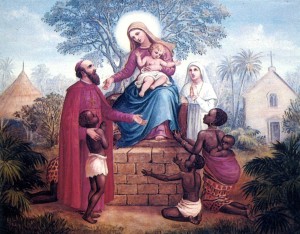 “Our thought has become set on this great idea; and the regeneration of Africa by Africa seems to us the only programme to be followed in bringing about so dazzling a conquest. This is the reason why, in our weakness, we have thought it permissible humbly to suggest a way along which the lofty goal may more probably be reached. On this goal every thought of our life will be centred and for it we would be happy to pour out the last drop of our blood.” (W 2753).
There is a close relationship between the Plan drawn up by St. Daniel Comboni and his real life. All his thoughts are turned to the Plan for which he would be willing to give his blood to the last drop. It is the image of the Good Shepherd who came so that all might have life and have it in abundance (cf. Jn 10:10).
This Comboni’s assertion is not rhetorical. St. Daniel, on 10 October 1881, died in Khartoum, at the climax of a life totally dedicated to Africa and the Africans. Behind the Plan of Comboni there are names, surnames, faces of African people for whom Comboni offers his own life. We can say that what Pope Francis says about the shepherds of the Church is quite true in the case of St. Daniel Comboni: we can smell the odour of the Africans under the clothing of the tireless missionary of Africa. For a pastoral plan, therefore, for a community project to remain not just on printed paper but to become organized – tells us St. Daniel Comboni – we must put our heart, love, and awareness that behind such Plan there are thousands of people who await their spiritual as well as human regeneration. So we must be willing to give our personal contribution and our own blood for its realization. Why, though, our pastoral plans remain just on printed paper? Perhaps they lack the affective and effective involvement with people which allows the plan to remain just another piece of paper, or perhaps it is because we are not willing to give a few drops of blood for its realization, or to give to it all our energy, time, etc.
Conclusion
At the end of this brief reflection, we can say that to understand the Plan, we must enter into serious dialogue with its author, St. Daniel Comboni, with his life and with his entire work. We have to discover the spirit of the Plan, beyond the plain words of translation, so that we do not get lost in sterile discussions, like “son of Ham” or similar words.
The Plan translates the passion of St. Daniel for Africa, his concern to conquer the black pearl back to the Church of Jesus Christ. The Plan was born of a vision of faith that moves to indignation, compassion and action when faced by the situation of abandonment in which Africa was laying. St. Daniel realized that the evangelization of Africa was not a personal matter, but a matter of the entire Church. He sought confrontation and dialogue with the Pope, the Prefect of Propaganda Fide and personalities connected with the African experience, and he sought a collaboration that closely involved also women. St. Daniel Comboni gave his life for the development and implementation of the Plan, because he realized that behind the Plan there was a multitude of people, of brothers and sisters, who were waiting for the message of regeneration.
November 2014
Fr. Fidèle Katsan, mccj

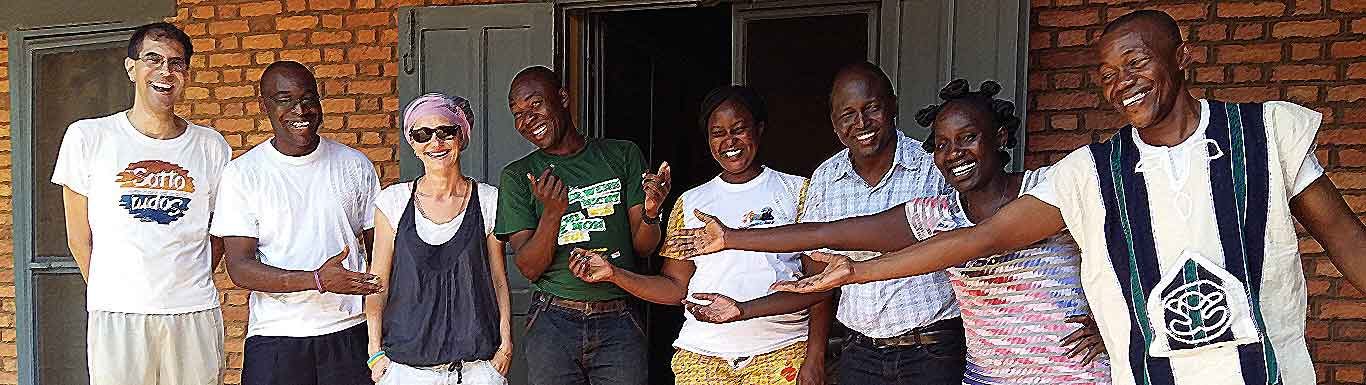
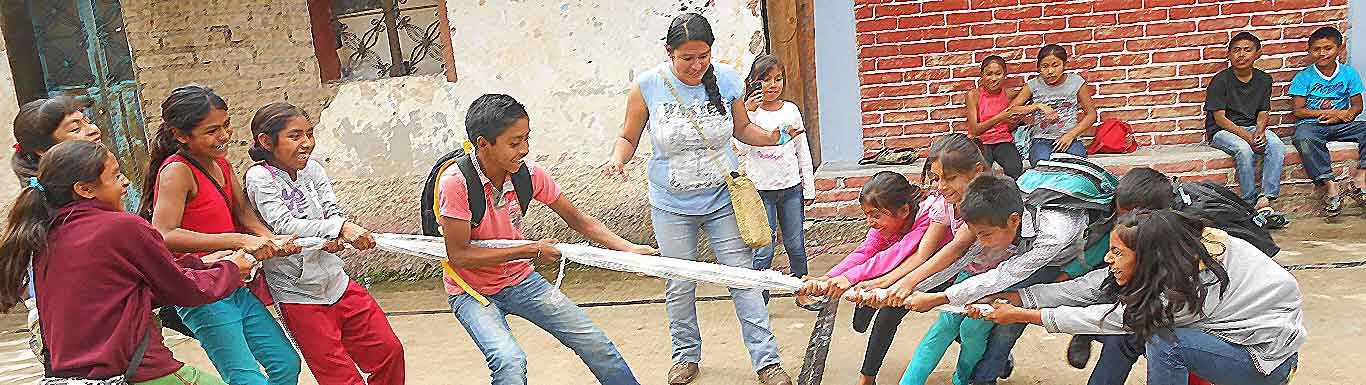
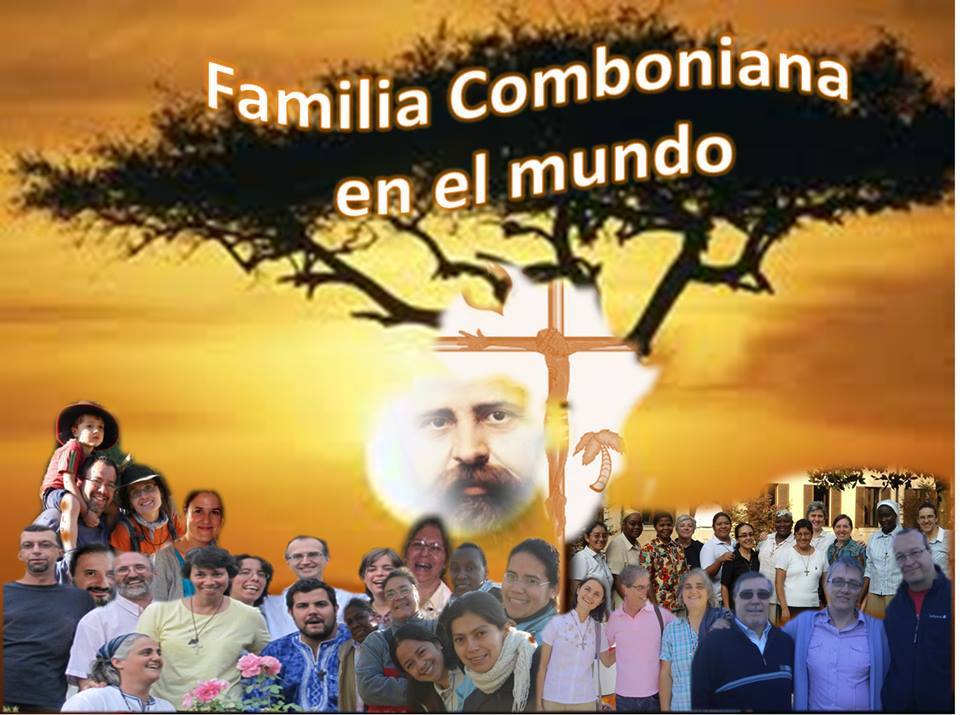
 The Harrington lived their first year of marriage in the United States and were prepared to collaborate with the work of the Comboni missionaries in Peru. They came to Lima from Minneapolis, Minnesota, three years ago and the next day departed for Trujillo, where they were expected for 30 children of a school for special children. The couple ends this year the first period of work and assesses whether to renew the commitment. Challenged they tell us some details of their experience.
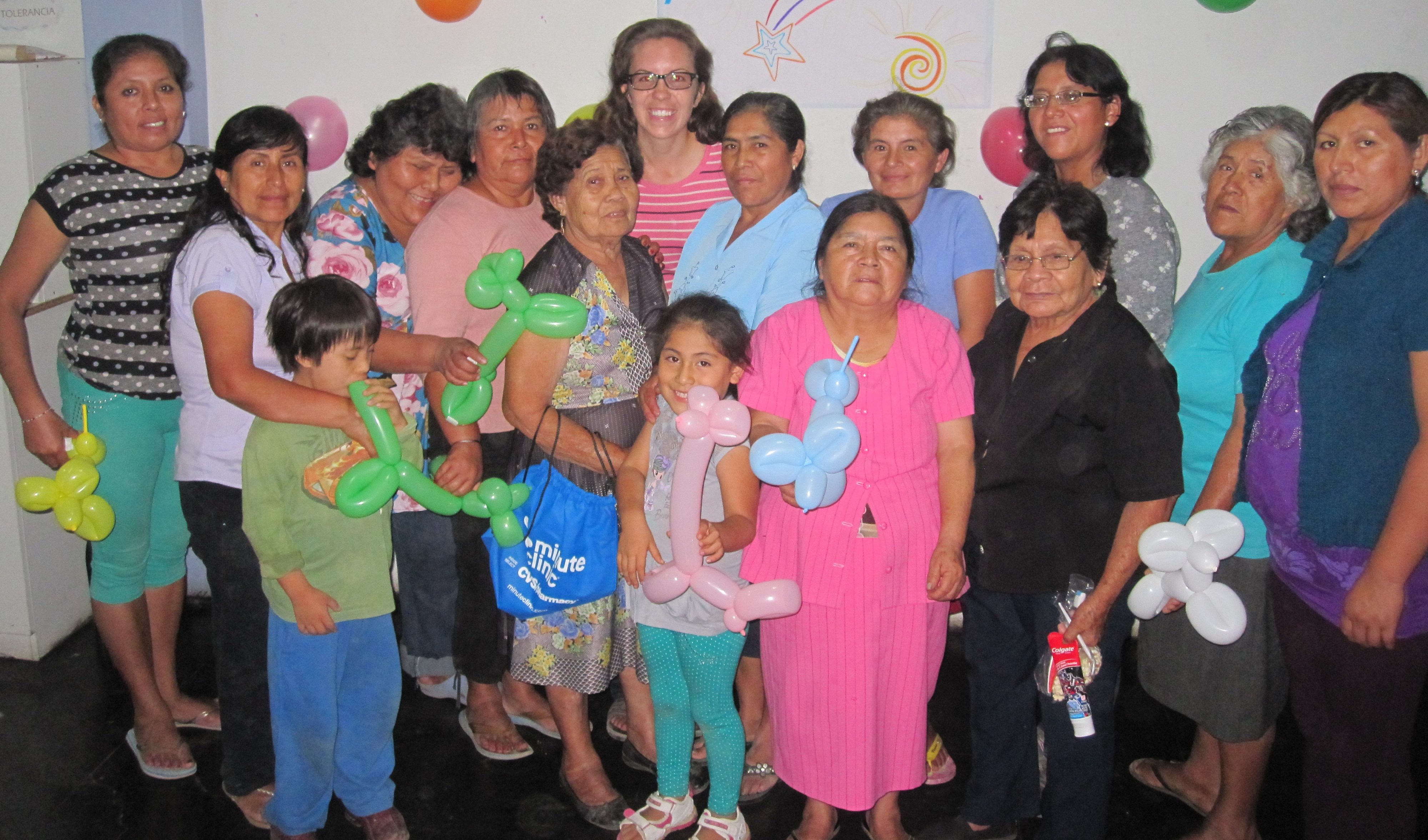 Emily: We work in three centers in the parish: Santa Rosa, Kumamoto and Villa El Paraíso, all on the outskirts of the district of El Porvenir. In Santa Rosa, I supported in the field of school psychology and Rafael in physical education. I participated in school for mothers and, during Lent, in a prayer group with my husband. In addition, a community of ladies get enthusiastic with baking, asked the school principal to give a workshop and I was elected as coordinator. Three times a week, we attended Kumamoto children, sometimes at Villa El Paraiso, in the organization of academic reinforcement, prayer and games.
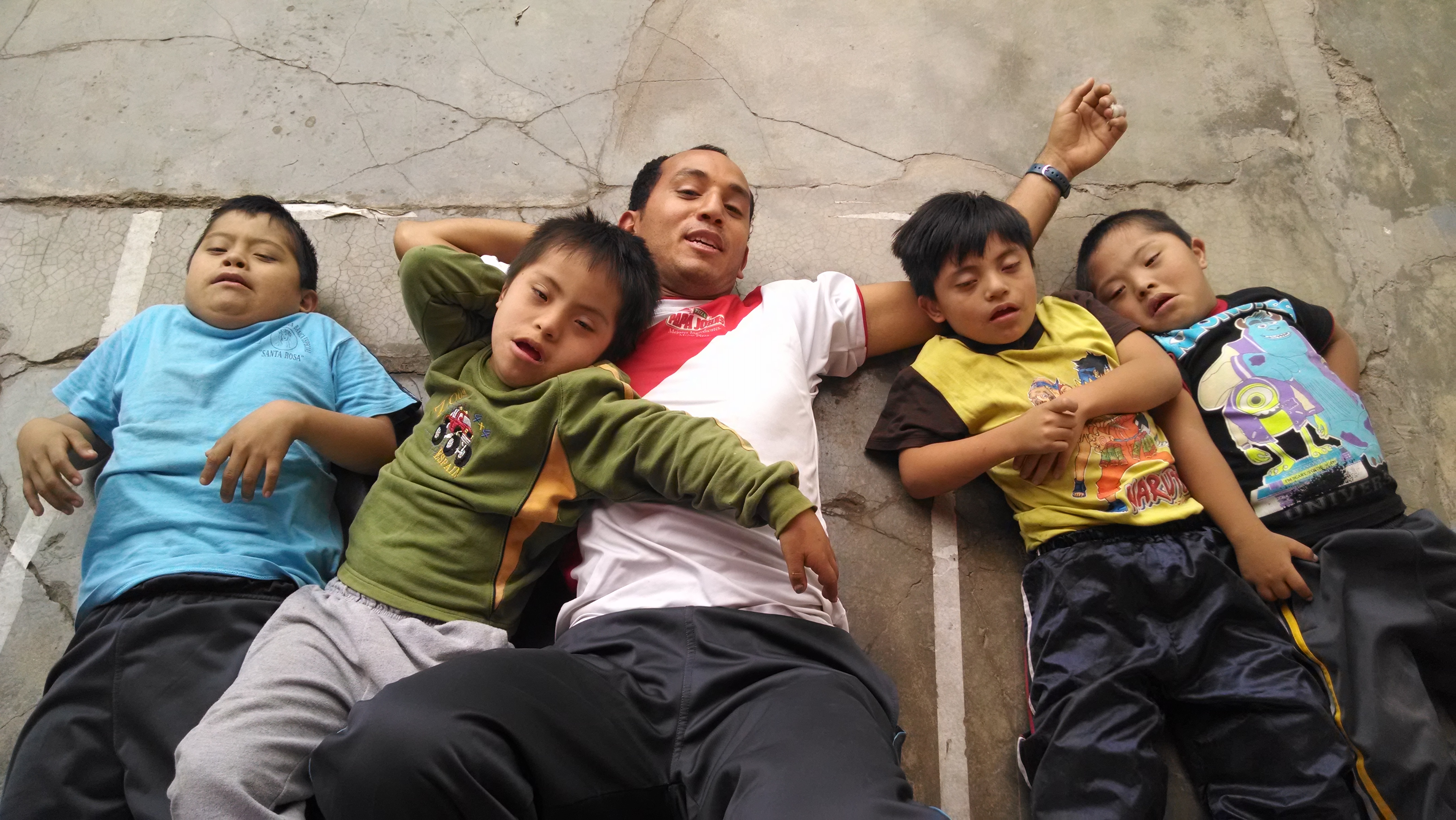 Rafael: One of the positive things has been encouraging basketball as the main sports. We achieved that each child has its own ball. Therefore, this year has increased the population of special children now attend 30. I like to see how each child progresses through simple little things that are great achievements for them. For example, there was a boy who could not jump, but after a lot of work and effort, at the end of year managed to do it. The smile you get when they achieve their goal is exciting. To see the fruit of their dedication is a gift from God. Another nice moment is to see how a young boy from his wheelchair participates in basketball, his teammates push him and he bounces the ball. Rarely score a basket, but when he get the ball, everybody clap and cheer him.