Comboni Lay Missionaries

Beyond Collaboration: Under Comboni’s Gaze

Familia CombonianaThe whole is greater than the part,

but it is also greater than the sum of its parts

(EG 235).

Dear Confreres, Sisters and Comboni Lay Missionaries

The beauty and joy of the encounter encourages us to open new paths in the collaboration among the Institutes founded by Comboni or which he has inspired.

In a world where walls are built to separate and divide, a world loaded with preconceptions due to differences in races, languages, and nations, and which struggles to open the door to those who are different, we greatly feel Jesus’ invitation to unity and communion: “May they all be one, so that the world may believe” (Jn 17:21). This unity is an invitation not only to work with others (collaborate), but also to enter into deeper relationships and to seek new ways of encounter not based on affinities of character or interest, but on gospel values that call us to open the way to the acceptance of the other with his limits and weaknesses, but also with his richness and beauty, in view of a more fruitful and productive mission.

The last decades have led to profound socio-political changes which challenge us and call us to search for new structures to make our mission more timely and meaningful. Popular movements demand active participation in decision-making processes. This is true not only in civil society: such wave of democratic values has also been experienced in the Church. The lay people are becoming increasingly present in various ministerial domains that have long been the exclusive domain of priests or religious, and contribute to the mission by offering their own viewpoint that helps to give a deeper reading of reality. Along with the laity we can reach areas where the Comboni presence is desired.

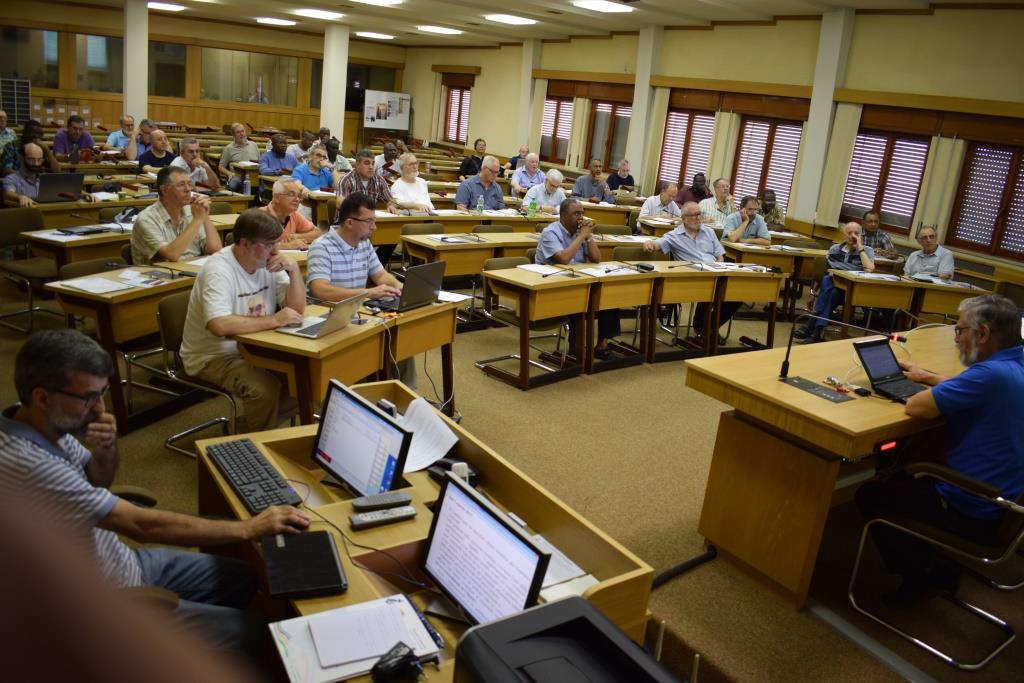
As we gathered as Comboni Family on June 2, 2017, at the annual meeting of the General Councils, for a day of reflection, prayer and sharing, we felt challenged to confirm and renew our desire to embark on a path of deeper collaboration among us. A journey already begun a long time ago as a Comboni Family, but which always needs to be renewed and deepened.

We recalled the document “Collaboration for Mission” of March 17, 2002, on the occasion of Daniel Comboni’s anniversary of beatification. In this letter are developed in depth not only the journey made and the “operational indications”, but above all the evangelical and Comboni foundations of collaboration. In fact, the Spirit of Jesus is the spirit of unity that Comboni has desired from the beginning for his Family, “a little Cenacle of Apostles… bringing warmth as well as illumination” revealing the nature of the Centre from which the rays emanate, that is, the Heart of the Good Shepherd (W 2648).

Familia CombonianaDuring our reflection, we realised that a long process of collaboration has been and is still being made in many different ways and situations in the life of our Institutes: we can think about the sharing at the level of secretariats and general offices, but also at the level of provinces through participation in provincial assemblies, common retreats, Comboni celebrations, ongoing courses of formation. There are also good examples of joint reflection and pastoral action in places where members of our Institutes and CLM live together.

We intensely feel that the desire to revitalise our being and doing mission together is rooted in the nature of the human person – to be in relationship – in the Word of God and in the legacy left by our founder Daniel Comboni. He wanted the whole Church to engage as one body in the evangelisation of Africa: “All God’s works that, if separated from each other produce scarce and incomplete results, but if united together and focused on the single purpose of planting the faith firmly in the heart of Africa, would acquire greater vigour, develop more easily and become most effective in achieving the desired objective” (W 1100). Many are his appeals to this collaboration and, looking at his example, we feel more intensely rise again in us this spirit of collaboration.

We are aware that there are difficulties in this journey that can lead us to discouragement, such as inadequate human and emotional maturity, self-referentiality, protagonism, individualism, lack of identity, and sharing of wealth. However, these situations are at the same time a challenge to seek new forms of collaboration together and with creativity. We’d like to mention some of the benefits of a combined work among the Comboni Institutes: the beauty inherent in collaboration, complementarity, mutual enrichment, ministeriality, the testimony of living and working in communities – men and women – of different nationalities and cultures. In this way we not only witness the unity in diversity, but we are seed of new Christian communities of brothers and sisters who witness the Word they announce.

We have a good common charism that has grown and developed in various forms. Thus, Comboni’s inspiration goes in history to become an announcement of the Gospel to every generation where peoples are marginalised. The charism grows and is renewed when it is shared with others who recreate it in the peculiarities of every Christian way of life. Diversity is not a threat to the form of being Comboni Missionaries, but it strengthens the sense of belonging when it is lived with simplicity and gives space to the other.

We humbly point out some aspects in which we feel we need a creative and bold effort to improve collaboration at the level of people, communities, provinces and the General Direction: “We constantly have to broaden our horizons and see the greater good which will benefit us all” (EG 235).

We commit ourselves:

  • to know more about the history of our Institutes, remembering with gratitude the wonders of God;
  • to know the people and the present life of our Institutes by communicating who we are and what we do by the means at our disposal for a greater sharing of our pastoral and missionary activities, by appreciating the efforts we are already making;
  • to reflect together on the Comboni mission today in the world: the new paradigms of mission, ministeriality (through specific pastoral commitments) and interculturality. More than providing answers to the problems, we need to halt and think so that we may offer visions to our Institutes;
  • to begin ministerial and inter-congregational (or inter-Comboni Family) communities, where we live in the sign of mutual trust. Looking to the future, to think about how to reconfigure the Comboni Family to better witness a work done together;
  • to work together at the level of formation at the initial stage of our candidates on the charism and Comboni spirituality, and sharing in the ongoing formation courses and meetings whenever possible (a letter on this topic has been written and distributed to all the mccj formators during the Formation Assembly in Maia, Portugal, in July 2017);
  • to deepen our Comboni spirituality and to encourage moments of discernment and prayer, in listening to the Word and the signs of the times, during special occasions in the life of our Institutes, promoting meetings on Comboni spirituality;
  • to respond together to emergency situations or other situations that imply a common effort.

On the occasion of the 150th Foundation of the Comboni Missionaries’ Institutes and of the 25th anniversary of the beginning of the setting up of the Comboni Lay Missionaries, we feel inspired by the Spirit to reiterate the effort of collaboration.

In the certainty that what has been said above represents some of the possible paths on the journey of collaboration, we invite you all to be creative and generous, to open up to the breath of the Holy Spirit who makes all things new and urges us to move forward with confidence: “The Spirit is the wind that drives us forward, keeps us on the journey, makes us feel pilgrims and strangers, and does not allow us to sit and become a ‘sedentary’ people” (Pope Francis’ General Audience, May 31, 2017).

Familia Comboniana

Rome, 10 October 2017


Mother Luigia Coccia (Sup. Gen.)

Sr. Rosa Matilde Tellez Soto

Sr. Kudusan Debesai Tesfamicael

Sr. Eulalia Capdevila Enriquez

Sr. Ida Colombo


Dalessandro Isabella (Resp. Gen.)

Dal Zovo Maria Pia

Galli Mariella

Rodrigues Pascoal Adilia Maria

Ziliotto Lucia


Mr. Alberto de la Portilla (Coordinator CLM Central Committee)


Fr. Tesfaye Tadesse Gebresilasie (Sup. Gen.)

Fr. Jeremias dos Santos Martins

Fr. Ciuciulla Pietro

Fr. Bustos Juárez Rogelio

Bro. Lamana Cónsola Alberto

German edition of the Writings (Schriften) of St. Daniel Comboni

Escritos Comboni en AlemánIt was a particularly difficult birth, but it was worth it. The last of the children of a family becomes, at times, the favorite son of all. Thus, on the occasion of the feast of St. Daniel Comboni, celebrated on October 10, 2017, his writings and letters were published in German. This book, published in two volumes, was presented to confreres and friends during the missionary symposium on 7 and 8 October 2017 in Ellwangen, Germany. Provincial Superiors or confreres desiring a copy of these Writings should contact with Fr. Anton Schneider, Vice-Provincial.
A special thanks to all who contributed and worked tirelessly to make this edition a reality and in particular the fathers Georg Klose and Alois Eder for the translation and Ms. Andrea Fuchs and Mr. Anton Schneider for the final edition.
We hope that this effort of the DSP will produce abundant fruits, that is, that by reading and meditating Comboni’s letters, his figure will become more alive and present in each one of us and among us, and thus strengthen our Comboni identity

Escritos Comboni en Alemán

Pictured from left: Fr. Georg Klose, Fr. Alois Eder and Fr. Karl Peinhopf, Provincial Superior of the German-speaking province (Deutschsprachige Provinz – DSP).

comboni.org

The story of Aman

LMC Etiopia

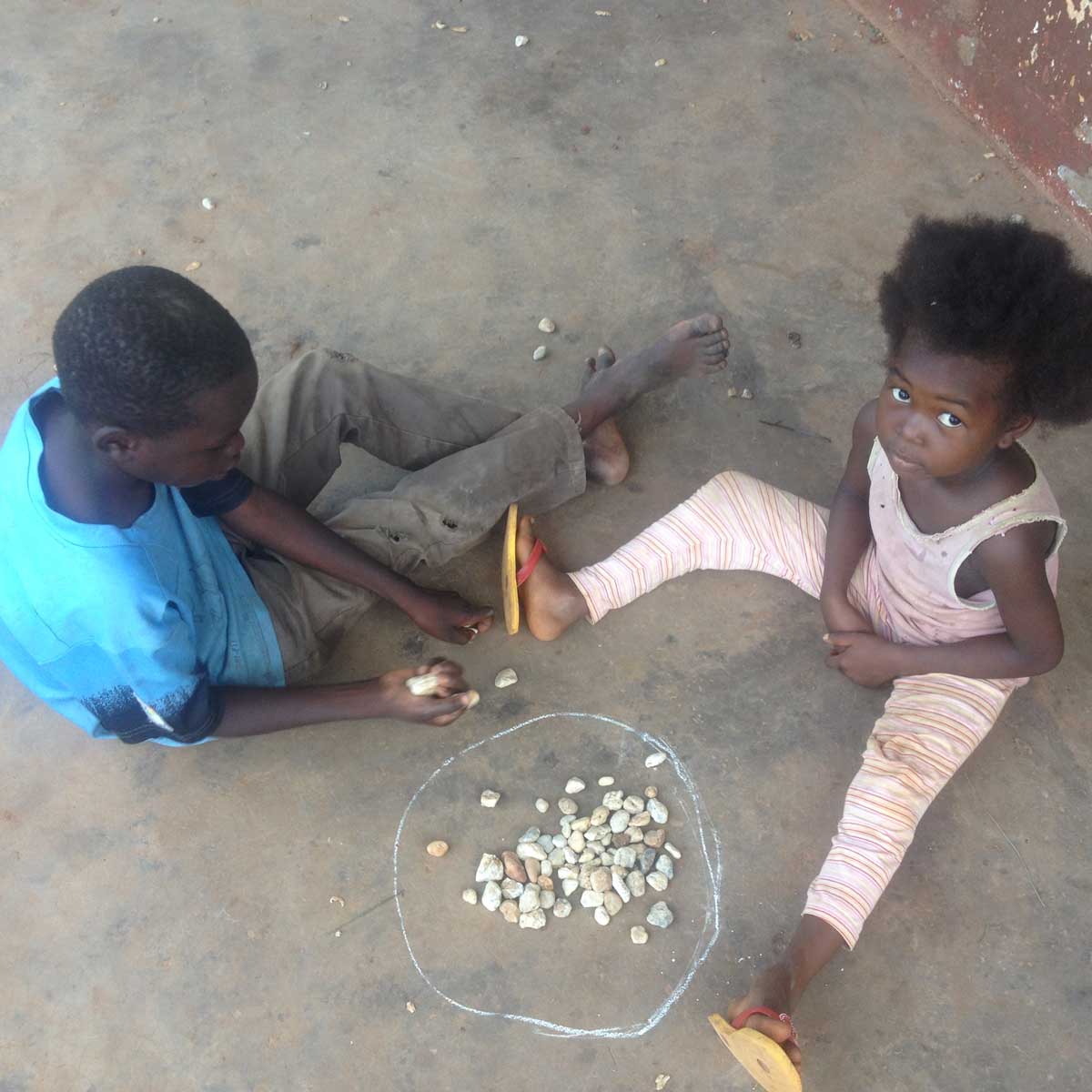
A few months ago, 12-years old Aman, after falling from a tree injured his spinal cord. His family brought him to us as the last place where they could receive some help. Unfortunately the damage was so serious that we were medically unable to do anything. Only we could try to get a wheelchair for him so he can become more independent. There is one organization in Awassa that distributes orthopedic equipment, so together with Aman we went there, full of hope. Unfortunately they could not help us. I was so disappointed… So the boy went home without anything … After a few weeks I visited this organization again and found out they have a new delivery of wheelchairs! However, I had no contact to Aman (most of our patients do not have a permanent address, phone number, or any other means of finding them). I felt really bad with it, that the chance to help the boy appeared too late, and now I probably never will meet him again… But God is reliable! I recently visited another child in hospital and how great was my surprise and disbelief when I saw Aman’s smiling face on the bed next to me! It turned out that he was getting discharged from the hospital the same day, so his mom willingly accepted the offer to come to our center (where we would continue to treat bedsores for which he was hospitalized) and at the same time try to get equipment for him. The next day Aman was with us, so we went to ask about the wheelchair. And we heard – “We are very sorry, but unfortunately we have no more …”. And such a cry in my soul – “Lord, this boy has already been disappointed once, now you put him again on my way, so please help!” And a moment later – “Although we have one wheelchair, which for a few weeks no one picked up, so if it fits can you get” And of course it fitted perfectly! How great was Aman’s joy when he started to  go around the center 🙂 And how great was my joy and gratitude to God for this miracle! For the fact that I met this boy again, for having arranged a wheelchair for him and it’s so immediate, because normal waiting process lasts 2 months 🙂 And also a lesson of trust for me that God never let us down and that He also knows better when it is good time to have something happen.

LMC Etiopia

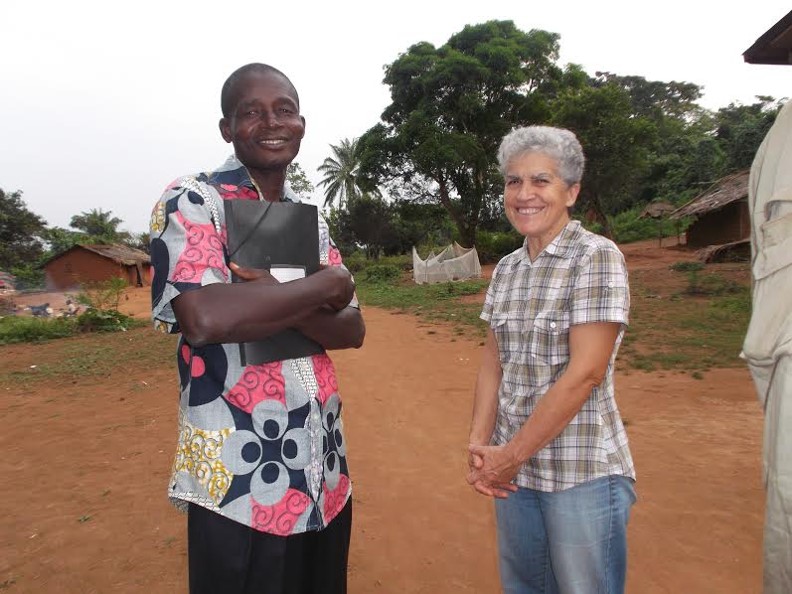
Madzia, CLM in Ethiopia

(Re) Living a Dream

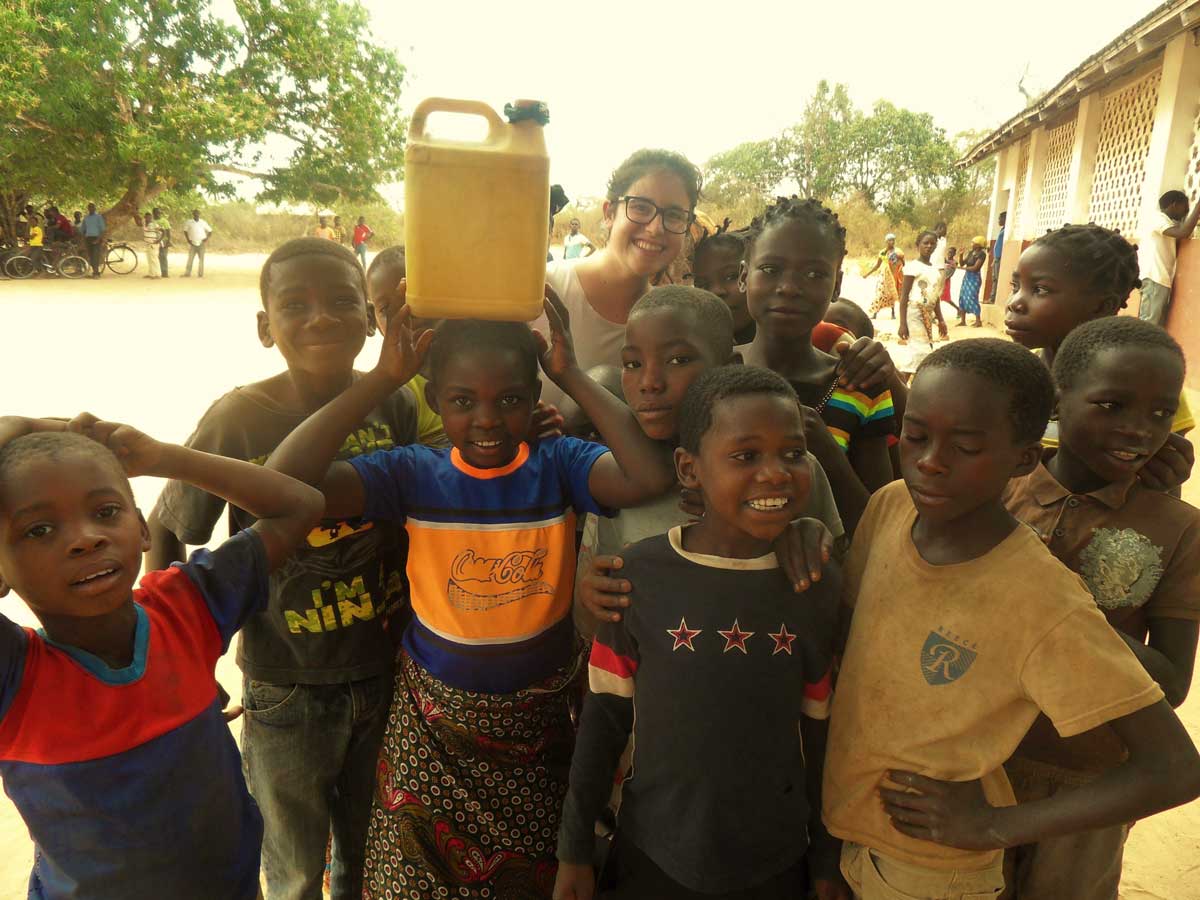
LMC Portugal“We are moved by a dream,” wrote Sebastián da Gama. Many times, a dream rules the soul of a person. It can take us to places we deeply desire, but we not always manage to reach in reality. Since 2015, Carapira had been a dream to me. To return to a place where I had been so happy, to see once more well-known faces, people who had touched me deeply, was something I did not think that could happen again.

But, by God’s grace, the dream became reality and the joy of living the mission God had entrusted to me on Mozambique’s soil filled again my heart with deep gratitude to God and to all those who prayed and worked to turn the dream into reality and make me live it again.

Unlike 2015, my first time in Mozambique, this year the task God entrusted to me consisted in being responsible for seven young people of the group Faith and Mission: Ana, Felipe, Inés, Jorge, Monica, Ruben and Sophia. My main mission was to ensure that these young people would spend a month filled with rich and deep experiences of God, with the people God had us know, within themselves and with the missionaries who, by their example, would teach us about mission.

LMC Portugal

This year, my greatest joy was to experience the fullness of these young people’s hearts, to see them happily giving of themselves without reserve to all the people who crossed our paths and to all the tasks entrusted to us. Once more, I am grateful to God for the young people he sent to Carapira, for their generosity and goodness, for their cheerfulness and enthusiasm, for all that I learned with them and for all they gave in such a short time.

Despite te fact that we only reached Carapira on August 19, I believe that the long journey was very important, because it allowed us to create greater empathy among ourselves and reflect a bit on mission. So, during the trip we held a catechesis on volunteering and mission, the sacred ground that Mozambique was for us, the other as “sacred” and “a mystery,” and the joy of meeting.

Many thanks to all the missionaries who with open hearts welcomed and accepted us into their homes, who took precious time out in their mission to to stop and be with us, to share marvelous personal stories and took us to see marvelous places.

For me, the best places were the village of Carapira, the communities we visited and all the other places where we were able to be with people. It is for the sake of people that God invites to move. Mission is made of faces: First of all, the face of Christ, filled of love for all and, in a special way, for the most abandoned; then, the face of each person we met and shared of our own selves. At times we only shared our presence, our being there, as it was the case with the sick. Truthfully, this simple sharing brought some people to say to the young people that they had been a blessing from God for the sick. And the young folks allowed themselves to be moved by that. I had the grace to be with some who were attempting to describe what was going on in their soul, on the interior journey they were on, and I can tell you that at times my heart was full of what had been shared, with the marvelous deeds God was working in each one’s heart. Only a loving God can bring about the marvels that our God worked in these young people of “Faith and Mission.”

At the end I said my good-bye to Carapira. Parting was serene, because in my heart I felt the joy of one who does not really say “Good-bye,” but rather “until we meet again.” It could very well be “good-bye” to Carapira, but a “see you again” to mission well beyond our borders. May God make it so!

LMC Portugal

I end with a little personal Magnificat which I wrote between Carapira and the airport of Nampula:

My soul magnifies the Lord,

I praise and bless God for all the marvels I relived in Mozambique.

The little I had and gave, the Lord multiplied in graces and gifts

transformed in simple gestures of giving and sharing.

Praise be to God!

For our entire group of “Faith and Mission,” the Lord filled our hearts with wonders

translated into a simple “ehali,” into a smile or just a look.

Praise be to God!

Contemplating the natural beauty of this beautiful garden which is Mozambique,

I give glory to God for all of Creation,

for so much love!

Faced with the many signs of God’s presence that we experienced and contemplated

I can only say: God is great!

And God’s greatness shows in all and in everything,

Including myself and my frailty!

Praise be to God!


Pedro Nacimiento, Portugal


Thanks, St. Daniel Comboni, for having founded the Institute

Comboni

Thanks, St. Daniel Comboni,
for having founded the Institute

Sing to the Lord, all the earth… Enter the temple gates with thanksgiving… Bless his name. The Lord is good, his love is eternal and his faithfulness lasts for ever.” (Psalm 100).

Dear confreres, Happy St. Daniel Comboni’s Feast Day!

In this year, when we celebrate the 150th anniversary of our Institute, one of the great things that we contemplate is the celebration of the holiness of Comboni in the Christian communities of the local Churches in which we live and of which we are part.

Comboni bendito é Deus em teu nome”, “Comboni, God is blessed in your name”: so were our dear brothers and sisters, our parishioners in Curitiba, whom I met during my visit to the province and to the confreres of Brazil. Yes, a local Church in Brazil, far from Africa, blessed be God and praised be St. Daniel Comboni. How beautiful that Daniel Comboni, our Father and Founder, became such an attractive figure, thanks to the sharing made by the Comboni Missionaries, the Comboni Sisters, The Secular Comboni Missionaries and the Comboni Lay Missionaries. Yes, our saints men and women speak to everyone and everywhere. In Mozambique, where the 150 years of life of the Institute were celebrated together with the 70 years of presence and the generous service of the Comboni Missionaries in the parish of Benfica-Maputo, the good young people of the choir were singing “Continente Africano alegremo-nos e cantemos, o mundo inteiro alegre-se e cante dando graças ao Senhor. Foi um profeta no seu tempo. Denunciou a escravidão. Ouviu o grito dos Africanos”, “African continent, let’s rejoice and sing, may the whole world rejoice and sing, giving thanks to the Lord, for Comboni was a prophet in his time. He denounced slavery and listened to the African people’s cry”.

Thank you, Comboni. Thanks Africa, because you have moulded Comboni and made of him a holy and generous man of God.

Dear Brothers, in this year when we celebrate the 150th anniversary of our missionary Institute, we want to thank God for the gift of St. Daniele Comboni and the gift of the confreres who have spent and donated themselves totally for the people of God in the mission. We thank our confreres who were killed while they were engaged in the service of the Gospel and the mission. We want to say thank you: they have become “holy and capable”: “Holy and capable. Saintliness without capability or capability without saintliness are of very little value to a person who wants to undertake a missionary career. The missionary man or woman cannot go to heaven alone. They must go to heaven in the company of the souls they have helped to save. So in the first place holiness, completely free from sin and offence against God, and humble. But this is not enough: love too is necessary to make these men and women do good work.” (Writing 6655)

In the context of the 150th anniversary of our Institute, it would be very nice to dedicate an amount of thanksgiving prayers to our “holy and capable” confreres, who have been consumed for the Kingdom of God among the peoples they had been sent to. Contemplating our holy and capable confreres causes us to ask: and I, am I willing to make a journey of constant conversion? Do I aspire to missionary holiness and to the evangelical ability that contributes to the lives of my brothers and sisters, with whom we build the Kingdom of God, and to our world so desperate and wounded?

Thinking of our “holy and capable” confreres, we realize that we have a deep and rich well of missionary and Comboni spirituality from which to draw. We have many confreres of all ages, cultures and races who yesterday and today have lived and live filled with this great spirituality and have become exemplary. “There are many well-identified Comboni Missionaries, generous and ready to give up their lives for Christ and the Mission; they spend their lives quietly, day after day, in the various services entrust to them” (AC 2015, No. 14).

In this year when we celebrate the 150th anniversary of our Institute, I would like to mention four confreres and one sister whose process of beatification and canonisation, within the Christian communities and the Church, has already begun.

Holy and capablein evangelization: “From me depends the salvation of so many souls; the holier I am, the more people I will save… One who much loves, will do a lot and one who much suffers will achieve a lot. In front of Our Lady of Lourdes, I have asked for the grace of martyrdom,”: “O Sacred Heart of Jesus, I lock myself in the wound of your sweetest side. I have handed over the keys to my dear Mother Mary and besieged her not to open it unless it is for coming to enjoy you for all eternity” (Mgr. Antonio Maria Roveggio, from his personal diary).

Holy and capablein community life: “Between me and my confreres I remember to have insisted twice, and even with some passion, in my opinion, for perhaps about two minutes, so that the harmony, perhaps, was not of the most pleasant, but bless be God both times, immediately, I begged them to forgive my passionate words, and they said: yes, yes, okay. If rarely it happens to succeed in splashing water on other people’s fire, one does it willingly, especially as it costs little” (Bro. Giosuè dei Cas, 13.1.1927, Letter to Sup. Gen., office letter).

Holy and capablein charity: “Holiness is the tree and love is its fruit. The more we strive to love, know, serve God, the more we feel attracted, as to a magnet, to serve Him in the person of all the needy, especially the most distant and suffering.” (Fr. Bernardo Sartori, Letter from Otumbari, 19.01.1979).

Holy and capablein the desire to live the Gospel: “I’ll have just to continue in the effort to live the presence of Jesus in my heart and to ask myself frequently what He would do in my place. I was struck by the thought of listening to the word of God without raising barriers, and to converse with Jesus in the tabernacle without raising barriers. That is, not to defend myself with so many excuses if my life is different from the Word of God, and not to talk about Jesus and impose my petty human point of view. Unfortunately I have to repeat more or less the same resolutions as in the past” (Fr. Giuseppe Ambrosoli, Extract from the Spiritual Exercises, 9-15.1.1981).

Holy and capablein prophecy: “I love you all and love justice, and for justice it’s enough the willingness of every person, it’s enough the willingness of the Church and the community, before the revolt may cause unforeseeable brutality in our social environment. We do not approve of violence, even though we receive violence. The priest who is speaking to you has received death threats. Dear brother of mine, if my life belongs to you, also my death will belong to you” (Fr. Ezechiele Ramin, Homily at Cacoal, 17.02.1985).

Holy and capable in our collaboration: Sr. Maria Giuseppa Scandola, quite ill, sends a message to the sick young missionary, Fr. Giuseppe Beduschi, saying “The Scilluk need you…, you will not die. I will I die in your place…” She offers her life in his place and dies after a few days (1.9.1903), while Fr. Giuseppe will survive and still live for many more years († 10.11.1924).

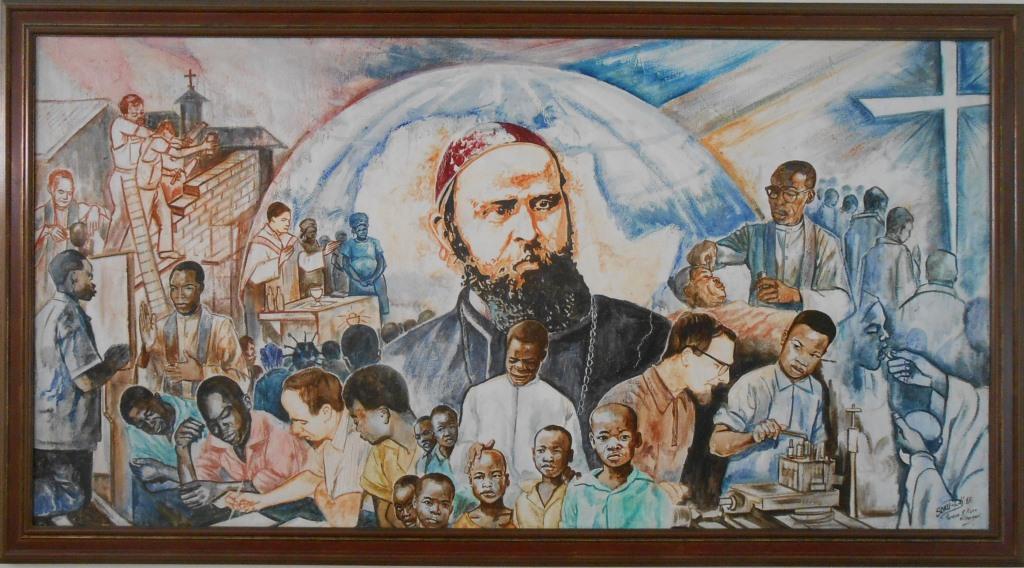
ComboniHere are the sons and daughters of St. Daniel Comboni.
St. Daniel Comboni, happy feast day.
Fr. Tesfaye Tadesse Gebresilasie, mccj

on behalf of the General Council