Comboni Lay Missionaries

Yes means No

Borana Culture Ethiopia
Borana Culture, Southern Ethiopia

“What do you think? A man had two sons. He went to the first and said, ‘Son, go and work in the vineyard today.’  The boy answered, ‘I will not.’ But later he had a change of heart and went.  The father went to the other son and said the same thing. This boy answered, ‘I will, sir,’ but did not go.  Which of the two did his father’s will?…”  Matthew 21:28-31

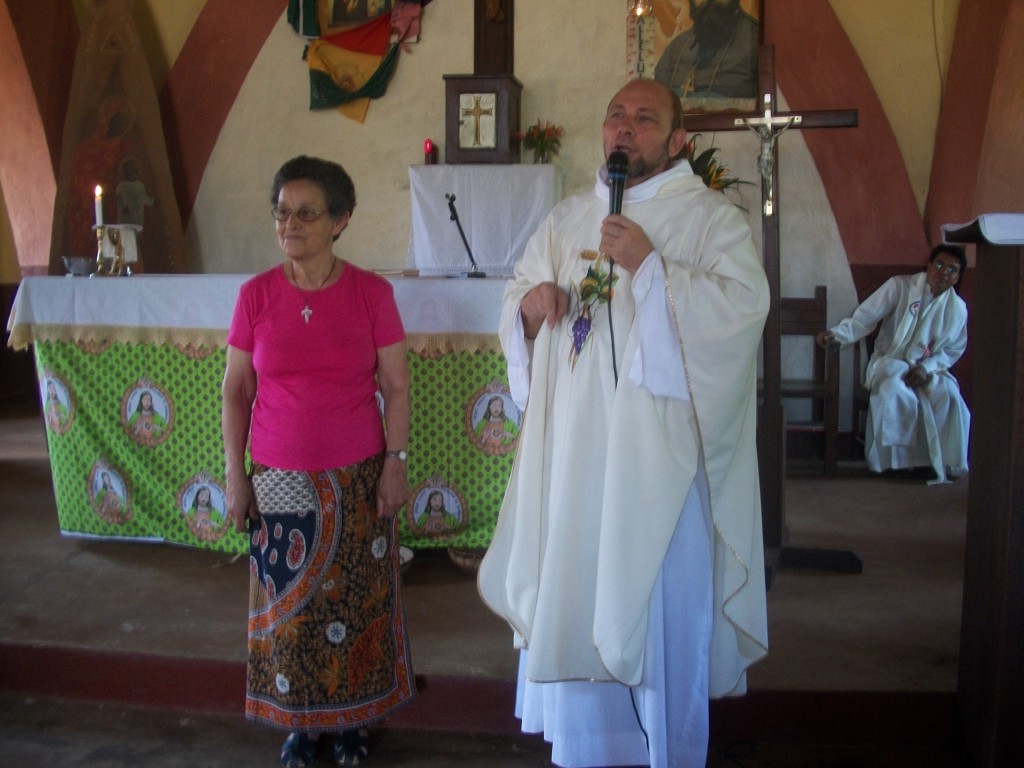
After the reading of this parable at mass one Sunday in the rural mission of Dadim, the parish priest Fr. Anthony, a Nigerian missionary, dove into his homily with confidence.  A vineyard here is unimaginable amidst the arid red earth of southern Ethiopia, so he changed the details of the parable to something the people could relate to in their daily life.  Dadim is a pastoralist region near the border of Kenya, where cattle and camels roam free and the life of the semi-nomadic Borana people surrounds tending their livestock.  So Fr. Anthony equated the story to a son being requested to take the herd to water. The story however was the same: first son said “No” and then went; second son said “Yes” but did not go.  He asked the congregation “Which of the two did the will of the parent?”   The parishioners were unanimous in agreement: the second son.   The parish priest, a little confused, painstakingly explained the story again.  However, the congregation had not misunderstood. They were clear in their answer – definitely the second son was right.

In their culture, ‘No’ is never voiced, never uttered or even whispered. To insult someone by refusing a request in word, especially the father, is the ultimate in disrespect. The only reply ever is “Yes”.  But must your “Yes” mean “Yes” among the Borana?  The answer seems to be no.  One can agree to a meeting time and place and never show up, one can agree to certain work and never do it, one can agree to stay but instead leave, or leave but instead stay. It could be that they really do mean “Yes” with good intention, but then there are so many factors in their challenging lifestyle that could abort their plan that most “Yes’” are in fact never fulfilled.  To say “No” is so grave that even doing the appropriate action afterwards cannot right the original wrong.

A consensus between the priest (who had only recently arrived) and the parishioners was not reached.   For the Borana it was the initial attitude of the first son that made him wrong. What audacity for him to say “No” to his father.  Missionary work is plump full of these types of perplexities.  This moment reminded me about the differences in culture and the challenges of communicating the Gospel message within the context of culture.  Perhaps Fr. Anthony also learned an important lesson for his future work with the community in this area, though surely he still hopes that a “Yes” really will transmit into an action and commitment.

– Maggie

Maggie, Mark and Emebet Banga, Comboni Lay Missionaries, Awassa, Ethiopia
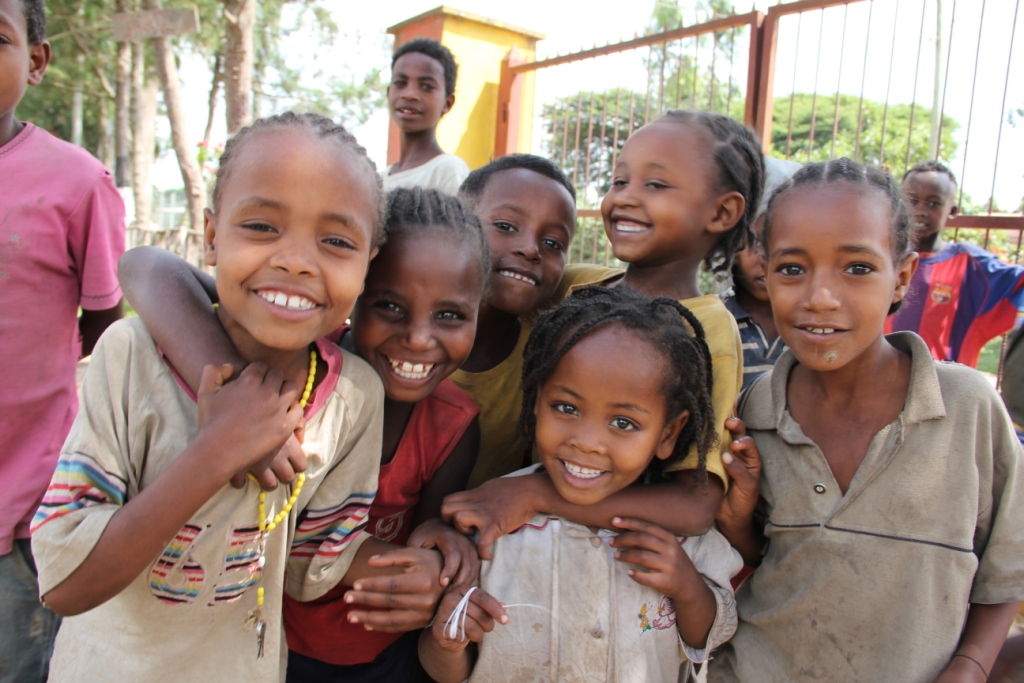
Just two tiny hands

Ethiopian children in Fullasa

In today’s Gospel reading (Matthew 18:1-5,10,12-14), in response to the question “Who is the greatest in the Kingdom of Heaven?”, Jesus calls a little child over to him. He presents the child as a model of how we should approach and trust God.

A story from Rafael Gonzalez, a Comboni Missionary who worked in Kenya, came quickly to my mind after listening to the scripture reading:

“There were 120 starving, poor children in the mission nursery school in the semi-desert of Northern Kenya where I used to live. They received their only food each day from the school. At noon daily, the youngsters lined up to receive their dinner. Old tin cans, wooden bowls, or just two tiny hands, received a modest amount of porridge made from roughly ground maize flour boiled in water.

One girl, named Namoe, who walked very, very far each day to attend school, filled her little baked bean tin daily. Then, unlike the rest of the children (who consumed their food on the spot), Namoe left the mission property with her full container.

One day I followed her at a distance. On and on she walked, porridge in hand. A few kilometers away from the school, she met her mother and her younger sister, sitting alongside the road in the shade.

Namoe sat down. She placed the little tin of porridge on the ground in the middle of the group. And she shared her only food for the day with her mother and sister.”

What a rare moment of beautiful love Rafael witnessed that day.  It speaks to me, in a special way, of Jesus’ words today: “Unless you change and become like little children, you will not enter the kingdom of heaven.”

– Maggie, Mark, Emebet, Isayas and Therese Banga, Comboni Lay Missionaries, Awassa, Ethiopia
[Central African Republic] My first day in the mission

After 3 days in Bangui, capital of the Central African Republic, to address the problems of documentation for obtaining a letter of residence in the country and also to accompany Élia and Teresa, my colleagues in the Mission, who had to buy food supplies, medicines, fuel, etc., we depart on the 24/05 at 6:00 am, to Mongoumba place of my destiny. On the road we came across the MISCA soldiers who were there to control the inputs and outputs, and still other groups of “popular militias” hitchhiking to collect “tolls”, money for their livelihood. We made several stops to visit some communities of sisters who are on their way, and especially to greet the Bishop of this Diocese M’Baiki, primarily responsible for this portion of the flock of Christ, the Church. I had a warm welcome and he gave me some advice, especially to be available to “serve” the people. We arrived to Mongoumba about 17:30, where the Comboni Fathers were waiting for us, responsible for this mission, which embraced with love and joy, and that night offered me a “welcome dinner “.

My first day in the mission

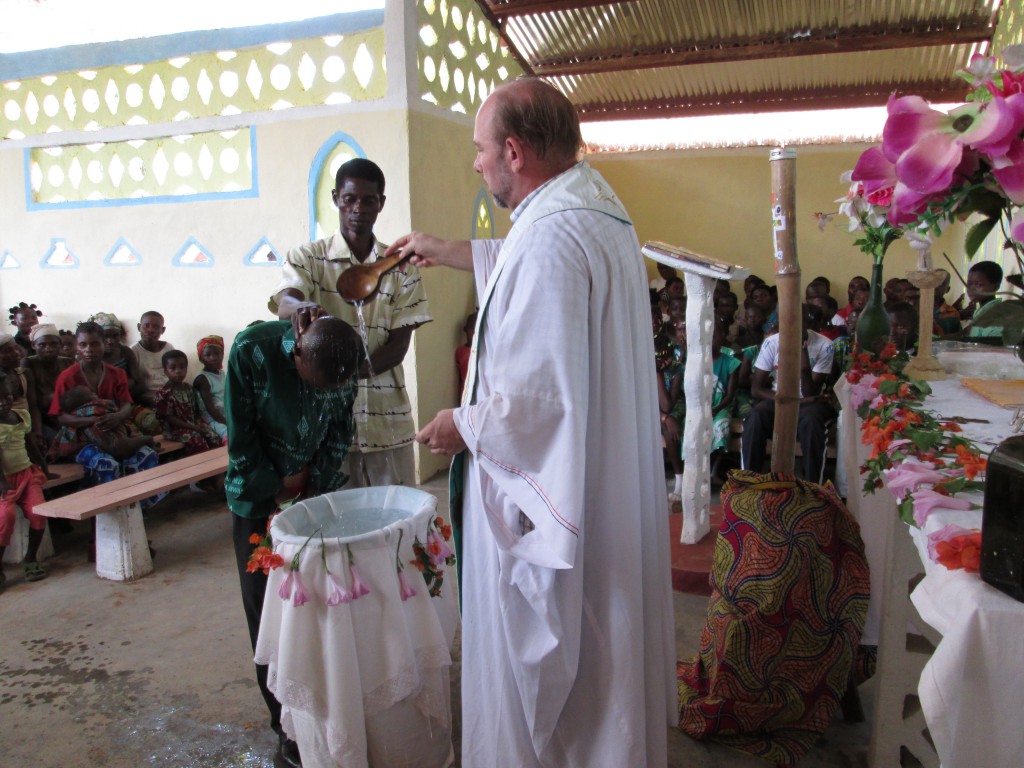
I left my parish, where I receive ​​the “missionary mandate” in the Good Shepherd Day (May 11, 2014), and it was the motto: “That all may have life in abundance.” That He (Good Shepherd) sends his collaborators around the world. And so I went from Portugal to Central African Republic with this eco vibrating in my soul. Give life, give joy, give love. “But the Lord, never outdone in generosity, wanted to give me a good gift in my first day in the Mission: “To live with these people the full joy, the true “life in abundance”. With Élia and father Jesus we went to a Christian community in which was held, during the Eucharist, the baptism of 11 young, 6 boys and 5 girls, the result of “life” that others surrender to generate these Sons of God and the Church. I felt at home, in the country of my dreams and my soul vibrating with joy, to live the Party, the real “Party of Life”. Who said or thought I came to deal with the bullets, or death? Here, life is breathed through every pore of the body and soul!


Baptismo na RCA
Baptism in the CAR

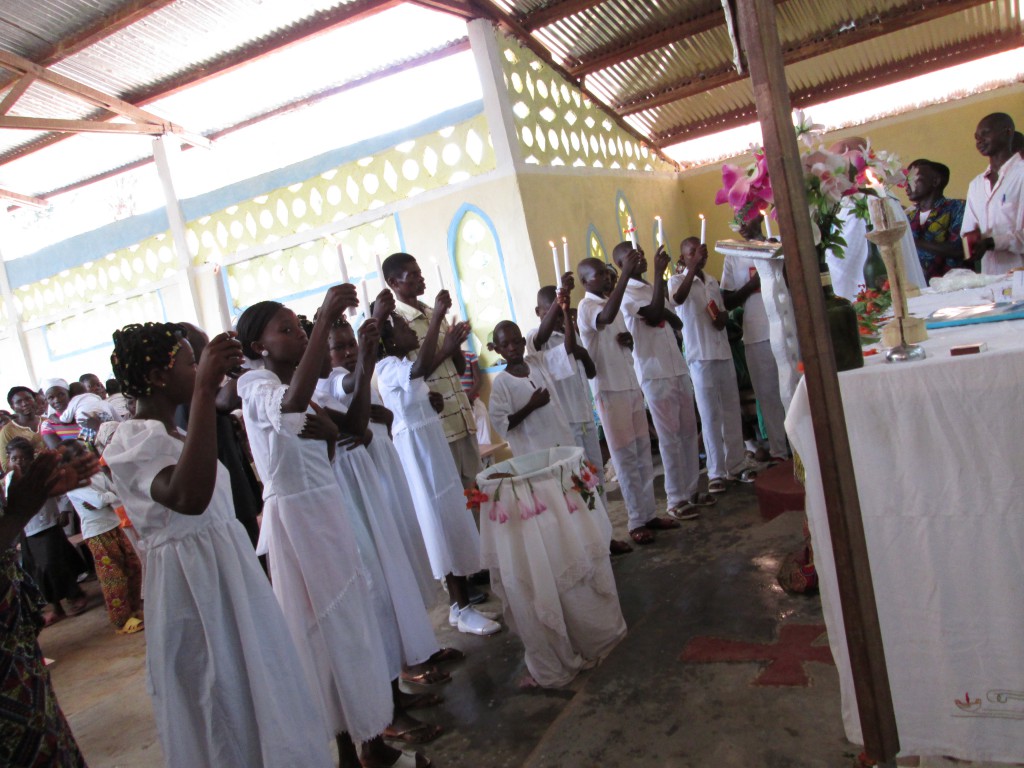
The Mass began with a procession to the beat of a song with hundreds of vibrant vocals, drums and dance. It was the party started. At the appropriate time were called the catechumens, with decisive and powerful voice answered the priest: “I want the baptism of the Church”. They were then baptized, one after another, in the name of the Father and of the Son and of the Holy Spirit. Then all leave the church and leave aside their old clothes and now dressed all in white, come back in procession to the altar of the church, singing and dancing, feeling the true joy of the children of God and the Church. Of the hands of their parents, received the lighted candle from the Paschal Candle to continue singing and dancing around the altar, holding, not the sword of death but the candlelight of life that was given to them from the Altar of Christ they surround with enthusiasm. It really touched me and I let a few tears roll. I looked at my watch and it was 10.15 hours, then remembered that it was celebrating Mass, also in my parish, Torredeita, with the difference that here had started at 9:00 am! I felt in tune with who I left, but deeply rooted in the people that the Lord provides me with such tenderness and benevolence.

At the time of consecration, were not the parents, but that the newly baptized that lit their own candles at Easter candle and make a crown around the altar, symbol of the guests for the wedding of the Lamb (Jesus Christ), who blew himself up to give them life. The Mass ended around noon; 3 hours party where everyone showed their smiling faces, a sign that they still wanted to continue.

Baptismos na RCA
Baptism in the CAR

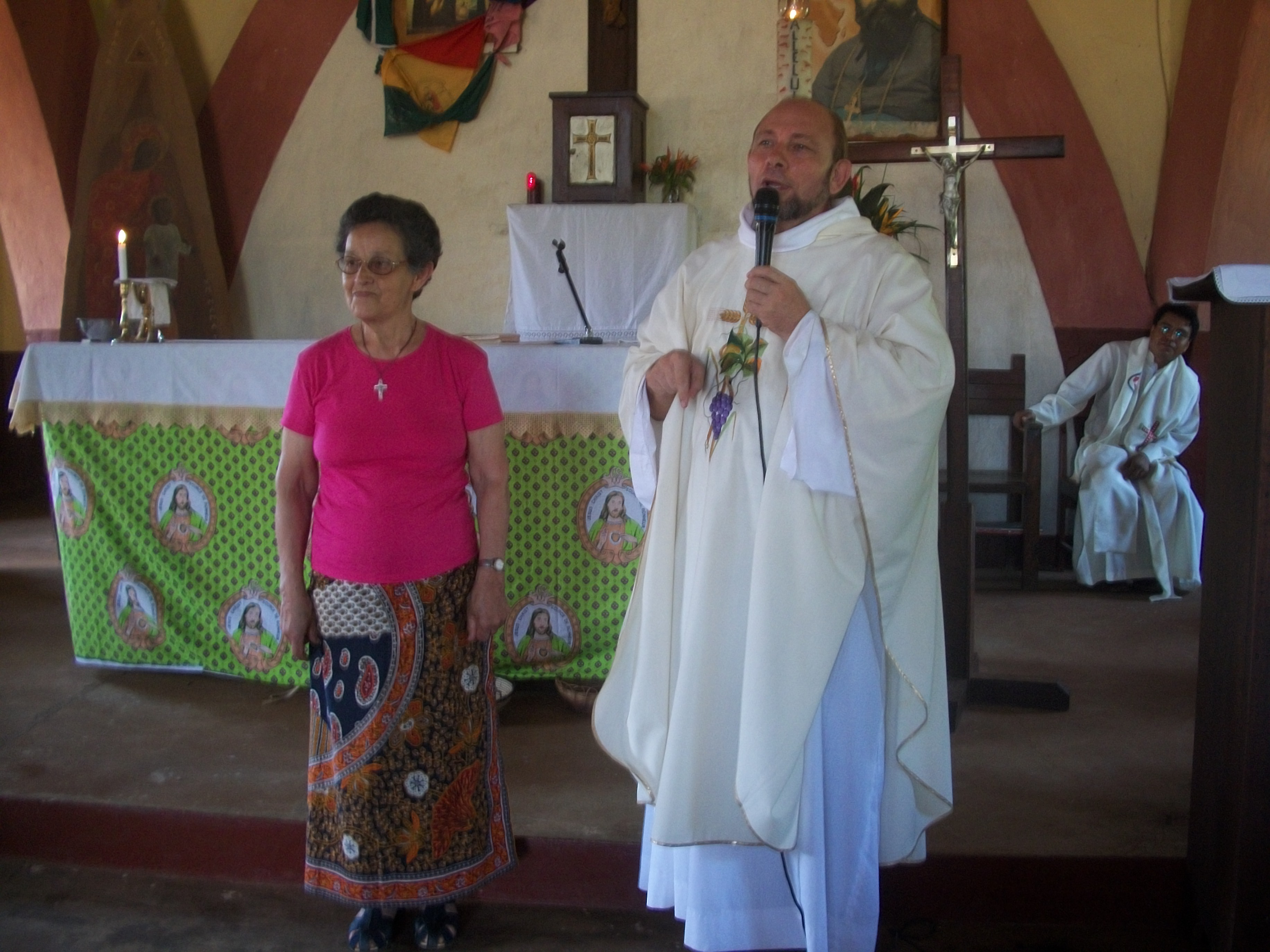
Father Jesus took the opportunity to introduce me to the population as a well reinforces the community of missionaries, the servants of the People.

Presentación de Palmira
Presentation of Palmira

Élia was the photographer of the day, and at the end everyone were approaching her asking for a picture. Back home still Élia has to be “bad” and leave part of the passage of all those who want to return in the car, but they were so many that it was impossible. We got home three hours later. Élia asked: “Are you tired?” And I answered: “no, I’m very happy”. Maria Teresa was out with another priest and came later. However, it also came with an air of satisfaction.

And so began my first day of mission in the Central African Republic. A missionary hug to you all.

By Palmira Pinheiro


Dr. Samuel’s Story: “I should be your age”

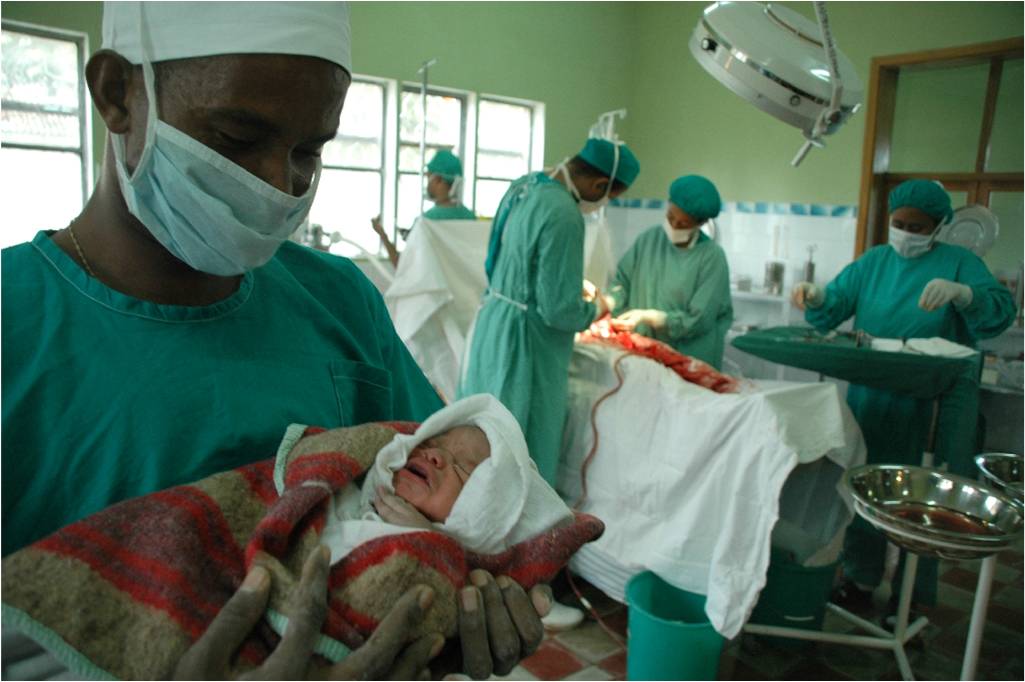
Doctor SamuelI (Maggie) was at a conference in Awassa last month with medical staff from several clinics. During a break, I chatted with a doctor – let me call him Dr. Samuel – that I had met a few times before from another clinic in the city.  After multiple ‘hellos’ and customary Ethiopian greetings, I asked about his family, and whether he had any children, as this had not come up during our previous conversations.  He replied that he had one daughter and another child on the way. I quickly congratulated him but he said “No, don’t congratulate me – my wife cheated me, I didn’t want another child”.

I was surprised by his reaction and then he said. “I don’t want my children to grow up with no father”.

This doctor had always appeared to be in good health to me, so I said causally with a smile “you are not old, what will happen to you?” 

At that point, a small bell rang, signaling the start of the conference session.  So our conversation came to a premature end.  However, we met up later in the day and before the conference began he turned to me and started telling me about his sister in the USA. So I enquired whether he had ever had the chance to go to the USA.

Dr. Samuel replied with the following story.  “I have only left Ethiopia once, actually 7 years ago to go to Kenya.  I had had a cough for a few months and on the x-ray they saw a growth and referred me for more tests. They discovered a tumor but no treatment was available in Ethiopia.  I arranged with my sister in the USA and she coordinated everything to get me there for treatment including her commitment to pay for all the hospital and travel bills. We had all the paperwork complete and I went to the US embassy in Addis Abeba to apply for a travel visa.  Without a thought to me or a thorough read of my papers, the woman at the desk with skin even darker than mine, quickly stamped REJECTED on my papers.  I was so hurt, not only because of the rejection but mostly because of the disregard I was shown.  With this door shut, I had no option but to try to get to Nairobi, Kenya for treatment.”  Dr. Samuel paused and while staring me straight in the eyes, he then abruptly interrupted his story by venturing down a side tangent: “You know, I should be your age….. do you know I was in prison for 12 years?” I kept silent and Dr. Samuel went on. 

“When the DERG (the communist regime that held control in Ethiopia from 1974 until 1991) took power in the 1970’s, many university students were imprisoned because they were seen as a threat to the socialist manifesto.  I was kept for 6 years.  Following my release I went back to school and completed a Masters degree, but a few months later I was re-imprisoned again by the regime. I sat 6 more years in prison…. By the way, how old are you Maggie?” he asked me, but before I could peep an answer, he directed his eyes in a blank stare back to the wall and added: “If only I could have those years back.”

“When I got to Kenya, I failed to find any treatment for my tumor, so I ended up entering a refugee camp, thinking I might be able to get to the US for treatment but after three months they were on to me and they deported me back to Ethiopia.”  He paused again.

“So what about your health now?” I cautiously enquired. “I don’t know” he replied.  “I guess I’m doing okay. The tumor is still there.” The little bell rang again and with it, our conversation came to end as the conference session resumed.  We didn’t meet again afterwards.

Last week, I ran into Dr. Samuel and heard his good news. His wife gave birth to a baby girl, his new daughter, shortly after the conference.  Dr. Samuel smiled as he shared about his baby – a smile which at least for the moment seemed to soothe his scars from yesterday and fears for tomorrow.

– Maggie, Mark and Emebet, Comboni Lay Missionaries, Awassa, Ethiopia
Come on in

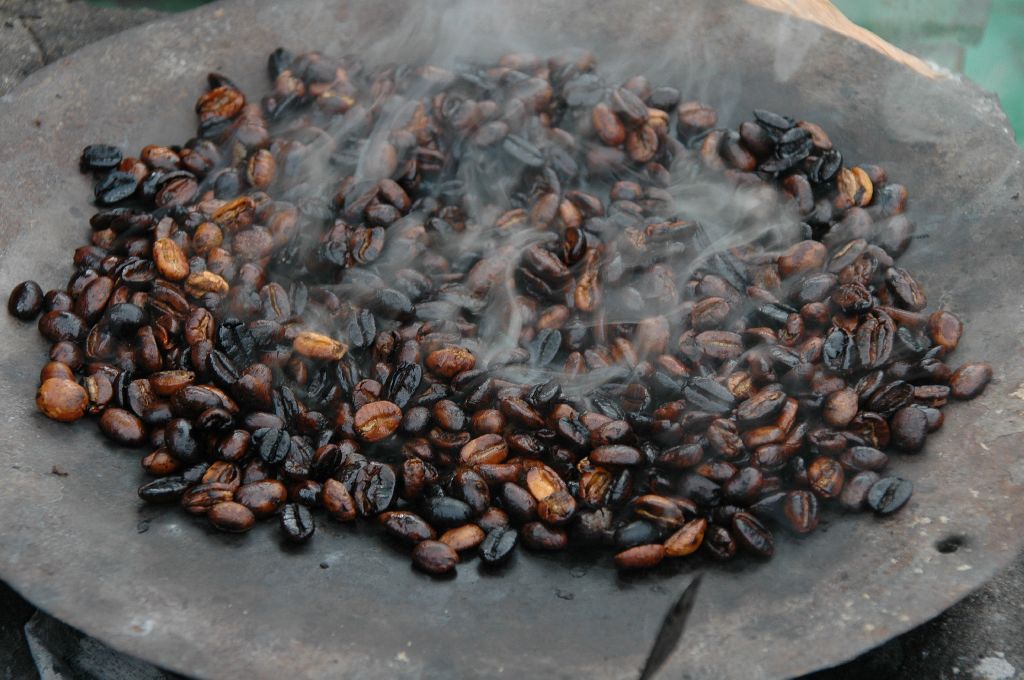
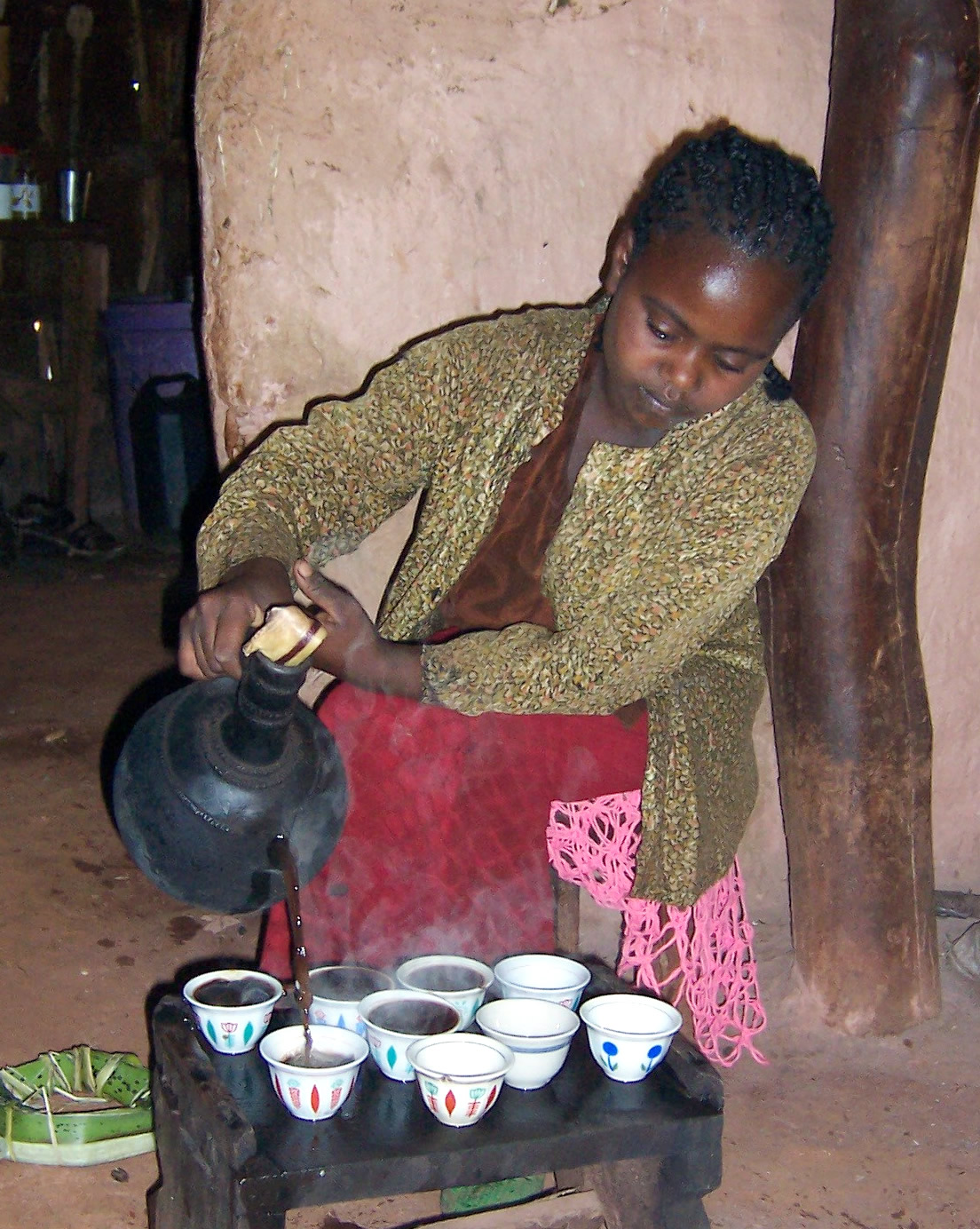
4217The warm Ethiopian hospitality has been constant throughout our 5 years here in Awassa.  We reflect much on how many Ethiopians have opened their homes to us. No matter the size of family, shape of home, economic situation, hosting is a deep part of their culture. It struck us that the hospitality and openness is greater here than we have experienced in many other countries, including our own. Ethiopians are good at hosting and really enjoy just being together.  On New Years Day of the Ethiopian calendar (September 11 in the international calender), we arrived at noon at our neighbour’s home. Before eating, they brought around a pitcher of warm water and a basin, and individually washed our hands. This is customary.  We had a delicious lunch together and then a very long and relaxing coffee ceremony in the afternoon. There was chatting, stories, and even some dancing. Finally it was getting close to 6pm, so I nudged Mark, thinking we may overstay our welcome. However, when we suggested that it was time for us to go, they exclaimed “but we haven’t had supper yet!”.  We stayed until 9pm! This beautiful trait of Ethiopian culture has always made us feel incredibly welcome here.

– Maggie

Maggie, Mark and Emebet Banga, Comboni Lay Missionaries, Awassa, Ethiopia
Ethiopia coffee ceremony