Comboni Lay Missionaries

Easter; Mary Magdalene, Peter and “the other disciple”

Commentary on a John 20, 1-10, Easter Sunday April the Fifth 2015

In this Easter Sunday, we read the first part of John’s chapter 20th. There we can meet a community formed by three disciples: Mary Magdalene, Peter and “the other disciple” (let us call him John, following a long tradition). They, apart from being themselves, represent us all, disciples who try to learn from our Teacher the new life that He is showing to us. I invite you to read carefully, meditate and contemplate this Gospel. Let us go a bit into detail:

pascua

  • Mary Magdalene: unconditional love

Mary was, doubtless, an extraordinary woman. We do not know much about her previous life, but we do know that she has found in Jesus her faithful Friend, her undisputed Teacher and the Master of her life… She went after Him from Galilee to Jerusalem, in good and bad moments, and she stayed by Him till death, more, beyond death.

In fact, according to John (and other evangelists), she went to the place where Jesus was buried out of pure faithfulness, even in spite of not knowing how to remove the big stone and presuming that Jesus was dead. That was not important for her, because her love was absolute and unconditioned. And this definitive, unbroken love was rewarded with the stone removed and the vision of Jesus as He really is now, in his most authentic reality, not as a dead man but as the ever living Son of the Father.

Contemplating this woman, we are inspired and moved to imitate her in this radical, total love, and to give ourselves up to Him, in good and bad moments, no matter what kind of stones are put to separate us from Him, knowing as she did that Jesus is worthy of our love and our trust; and that Jesus is revealing Himself alive and present in our life, in our Church, in our World. It is this experience of Jesus alive in us that makes us missionaries, witnesses to the world.

  • Peter, a sinner ready to learn

Peter was, somehow, the chief of that small group of disciples, but it does not seem to be the one, who believed most clearly, or the cleverest one, or the one to understand things quicker. He was not the first one to go to the tomb; neither was he the first to arrive… He rather was the latest one to arrive, to understand things, to catch God’s signs… But he was humble, he was able to acknowledge his errors and sins, he knew how to open himself to others and how to learn from them.

Contemplating Peter, many of us feel represented in him. We, also, have our own history of sins, errors and unfaithfulness; we too are quite often slow to understand God’s ways; we too find it difficult to see the presence of God in our today’s world, in our Church, in our community; we also lack confidence and are afraid to be deceived. But, as Peter did, we can open ourselves to the help of others, allow ourselves, once more, to be accompanied and to be conquered by Jesus, and then say humbly: “Lord, you know that I love you”.

Piazza S. Pietro (amanecer)
The “other disciple” was able to see the sunrise in the first day of the new Creation.


  • The other disciple”

Among the disciples there was one (let us call him John), who was quicker and readier to see the new action of God in the world, able to go over the superficialities of live. There are many things that only love knows how to see, and it seems that John had that type of love that was enabling him to see beyond superficialities.

Also among us today there are some who seem to be quicker and smarter than the others: they are able to discern the signs of the times; they feel where the “wind” of God is pushing humanity; they have the capacity to look further… These ones are a gift for the community with one condition: That they learn to be members of a community that they do not go on by themselves alone, that they accept and adapt to the rhythm of the others. Only in that way the community is built up, only in that way Jesus reveals himself alive, only in that way we become real missionaries, starting with Jesus the new “week” of regeneration for Humanity.

In fact, as God created the world in a symbolic “week”, according to the book of Genesis, in the same way in Jesus He is creating a new Humanity. As Mary Magdalene, Peter and John, we too believe in this new creation, this new sunrise, no matter how big are the stones on our way. God’s love is stronger than sin and death. In God everything is re-created, re-generated, re-“newed”. And we are part of this project.

Fr. Antonio Villarino

Roma


Voice from the mission

We received with joy, a testimony from the mission of Palmira Pinheiro the Comboni missionary secular who is currently in the Central African Republic together with the CLM Elia Gomes. Here we leave the testimony of the joys and hardships of this mission in the heart of Africa.

VOICE FROM THE MISSION

Although today is not Samedi (Saturday), Samedi arrived! As always out of time, when I’ve closed the door of the clinic and look forward to some rest because fatigue gets you. However, while I get to grumble with his mother, because she is not in hours, his smile, his bright eyes like two stars, his arms outstretched towards me, make me put aside my mood completely. All are my “dears” but Samedi has a special place in my heart. He was one of my earliest success stories! He was a child destined to die, but Life won!

In the second week of my arrival, some day when I had to close the door of the clinic, a woman appears, for more signs pygmy. She gave me the impression of having some mental retardation, and holding in her arms a small child than as explained by someone who accompanied would be premature, newborn and the mother had no milk to feed him. I weighed the baby, he hardly reach 2 kilograms because the pygmies are small, but he already had a “time”. What really matters is that he was hungry, since the mother, who seemed depressed, but with huge breasts, was not motivated to breastfeed, so the mammary glands need to be stimulated by the baby’s sucking to produce the “juice of life”.

We leave them to remain in the Rehabilitation Center about a month and a half trying to feed the mother and encouraging her to breastfeed the child. This was difficult because we could not always be present and, when we went we found her lying on the veranda of the Center asleep with his huge chest extended, the child also lying next, but, of course, without the ability to take the breast and suck. We used as a strategy, another mother also pygmy, who was accompanying her malnourished tiny, Jean Pierre, another favorite of mine, whom we trust to teach and encourage her to breastfeed the child. And in this way it was overcoming the most critical phase, in which, to make matters worse appeared some diseases (malaria, pneumonia, diarrhea, etc.) to which we responded with proper medication. Until one day the mother decided to leave without saying anything, then we lost hope, and thought he would die, he will not have a chance! But to our surprise, she appeared two weeks later with the child very sick with pneumonia, tremendously weakened and we doubt we have the chance to save him. But he stayed here a few days, and began treatment, feeding the mother so that she in turn feed the child, but when everything started to go well she stop treatment and return to the “Camp”. And so she continued to appear when the child was in his last and we just kept saying, This time he will not get it! But “LIFE” is stronger than death and Samedi won! Now he is 9 months all and remains small (like all pygmy), but he weighs 8 kilograms. It is great! When I approached him, jumps of joy, smiling and opening his arms to come into my lap. 

I pressed him against my chest as a beloved son in whom I feel I’ve helped to live. He plays, laughs and has fun. It’s a happy boy! Occasionally taking his crisis of malaria, diarrhea, bronchitis, etc., but at least the mother is aware of bringing him when it is bad, because in addition to medication, always carry a bag full of food for two.

I think for me and for God: “Although I have not done anything, it was worthy to come to Mongoumba to see this child smile after being destined to die”

A hug to everyone.

Palmira Pinheiro (MSC)

The donkey and the costly ointment

A commentary on Mk 11, 1-11 and Mk 14-15. Palm Sunday, 29th Mark 2015

OLYMPUS DIGITAL CAMERA

Today’s Liturgy offers us two readings from the Gospel of Mark: the first one, to be read before the blessing of the palms, tells us the well-known story of Jesus entering Jerusalem sitting on a young donkey (Mk 11, 1-11); the second one, during the Mass, is the reading of the “Passion” (Jesus’ last hours in Jerusalem), this time narrated in chapters 14th and 15th of Mark.
With this, we enter into the Great Week in the Christian year. In this week we celebrate, renew and make ours the extraordinary experience of our Master and Friend, our Brother and Redeemer Jesus, who with clear mind and courageous will, in spite of the anguish and pain that He was suffering as any human being, went to Jerusalem, knowing that He would have to give up his life out of an immense love for the Father and for all of us.
For us, all this week must be a time of special intensity, with more Bible reading, meditation, silence and contemplation of our Lord, noting His presence among us and in our own experiences of life and suffering, grace and sin, anguish and hope.
On my side, I reflect on these three points:

IMG_1025

1) The King sitting on a young donkey
Some year ago I was blessed with the grace of a visit to the Holy Land and I was able to spend ten days in Jerusalem. One of those days, I walked from Betfagé to the mountain of the Olives, from which you can see the Holy City. According to Mark, Jesus did this same way, but sitting on a donkey. We may think of that almost as a folkloric scene, risking to miss its real meaning. To understand it properly, I do not find anything better than quoting a test from the book of Zechariah, to which probably refers Mark himself. Please, read and compare:

Rejoice greatly, Daughter Zion!
Shout, Daughter Jerusalem!
See, your king comes to you,
righteous and victorious,
lowly and riding on a donkey,
on a colt, the foal of a donkey.
I will take away the chariots from Ephraim
and the warhorses from Jerusalem,
and the battle bow will be broken.
He will proclaim peace to the nations.
His rule will extend from sea to sea
and from the River[bto the ends of the earth.
(Zech 9, 9-10).

Just a brief comment on my part: How much we do need nowadays, in this time full of arrogance and violence, the kingship of this humble and peaceful king, that rules, not by the force of horses and weapons, but by the consistency of his liberating truth and his unconditional love!

2) The “wasted” ointment
The Passion, narrated by Mark, begins with the story of an anonymous woman who comes to Jesus and breaks a flak containing an expensive oil and spreading that precious oil over Jesus head. Those present at the scene started grumbling and rebuking the lady for that “exaggerated and absurd” expenditure that could have had a better use. But Jesus defends her saying that she is anticipating de anointing of his dead body.

In fact, meditating on this “broken flask” of precious oil, we cannot but think of the body of Christ, totally broken and given out to us as a marvellous “perfume” of grace and sanctity, of God’s redeeming love. The “Passion” we read today talks of Jesus being betrayed by his friends, Jesus in anguish before the suffering that is awaiting Him, Jesus going trough a terrible martyrdom, Jesus abandoned on the cross… An yet Jesus that gives himself up willingly and lovingly: “Let it be, not as I wish, but as you, Father, wish”.
Jesus’ death may appear too many as an absurd “waste”; the same may happen to the lives of so many missionaries spent in risky places: Why risk our life in places torn out in wars, unhealthy situations, lack of human rights… ? The answer is at the same time simple and marvellous: Love has no limits or “reasons of convenience”; the one who loves is ready to break the flask of his love, so that it spreads the good “scent” in a world that quite often does not smell so well.
The same can be said of so many mothers and fathers, nurses and teachers, religious and lay alike that are able to give themselves up entirely for the good of children, elders, sick, and people in need in general…
Each one of us today is called to break his or her own life in favour of others, especially those in need.
To contemplate Christ on the Cross leads us to identify ourselves with him and to determine ourselves to follow on His steps, sure that love is greater than death. Some will laugh at us, but God will smile and lead us to resurrection and fulfilment.

Fr. Antonio Villarino
Roma

First months in Ethiopia

Madzia-AdisIn the beginning of January I came to Ethiopia, beginning my mission! I’ll work as a physiotherapist in Bushullo Health Center, near Awassa (in the south part of Ethiopia). Joining there Maggie & Mark with their children!

amaric

But now the first months I’m spending in Addis Abeba (in the community of MCCJ) on the language training – trying to learn Amharic. It is the second-most spoken Semitic language in the world, after Arabic.  The graphs of the Amharic writing system are called fidel. Each character represents a consonant+vowel sequence and there are more than 230 of them! Now it’s such big joy for me to be able to read something (finally!). So wherever I go I try to decipher the texts around me – on the buses, on the buildings… 😉

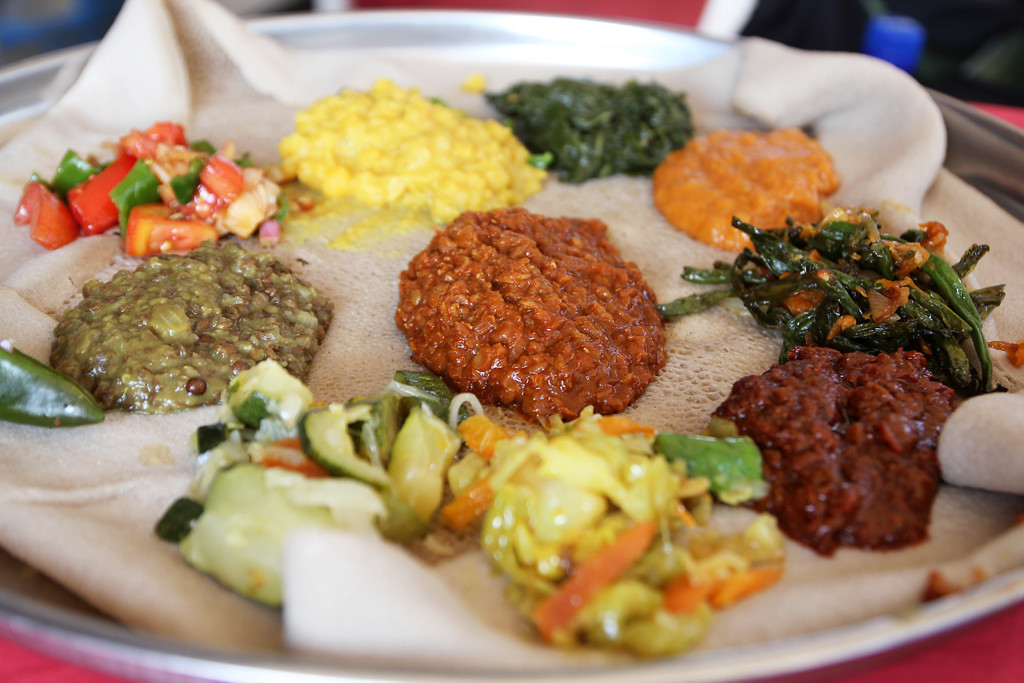
After school usually I spend some time for voluntary service, using my physiotherapy skills and at the same time improving Amharic through communication with the patients 🙂 . People here are so friendly for me, helping a lot with everything, always smiling and greeting. I really enjoy it! And also they teach me their culture – like for example inviting for coffee ceremonies or for enjera. I also had the possibility to be here for Timkat – one of the biggest feasts of Ethiopian Orthodox Church, which celebrates Epiphany and Baptism of Jesus. For me it’s so interesting to experience the variety of churches here – catholic is only 1%, the biggest is Orthodox church, then protestants and Muslims. But the religion seems to be very important part of live, even in the language all the most common expression include God – like for example the answer for greeting is “I’m fine, thanks be to God”.

peopleSo slowly I’m getting to know this place, these people, this culture, this language. And day by day I’m more and more happy that God sent me here!

Madzia Plekan. CLM in Ethiopia