Comboni Lay Missionaries

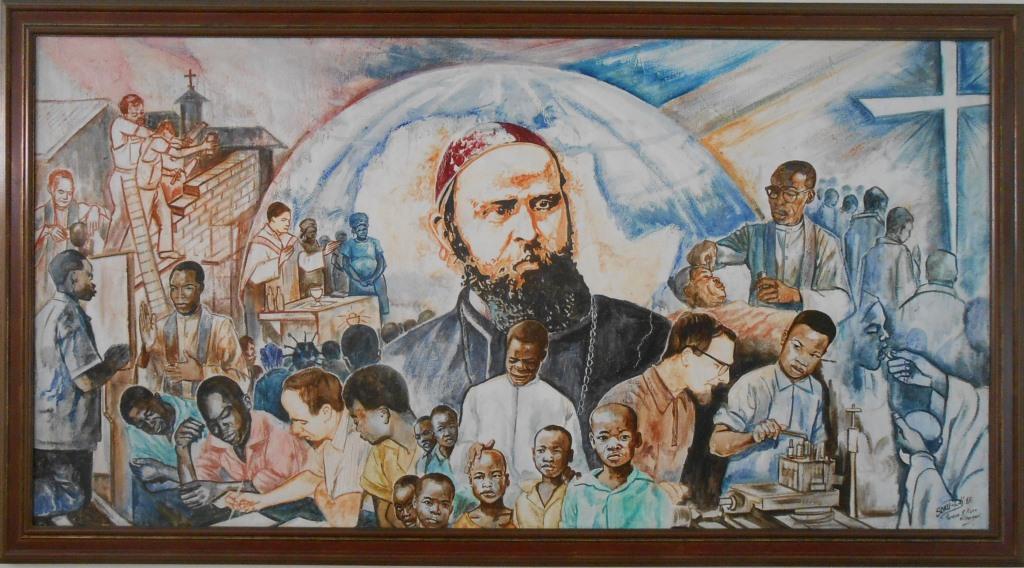
Thanks, St. Daniel Comboni, for having founded the Institute

Comboni

Thanks, St. Daniel Comboni,
for having founded the Institute

Sing to the Lord, all the earth… Enter the temple gates with thanksgiving… Bless his name. The Lord is good, his love is eternal and his faithfulness lasts for ever.” (Psalm 100).

Dear confreres, Happy St. Daniel Comboni’s Feast Day!

In this year, when we celebrate the 150th anniversary of our Institute, one of the great things that we contemplate is the celebration of the holiness of Comboni in the Christian communities of the local Churches in which we live and of which we are part.

Comboni bendito é Deus em teu nome”, “Comboni, God is blessed in your name”: so were our dear brothers and sisters, our parishioners in Curitiba, whom I met during my visit to the province and to the confreres of Brazil. Yes, a local Church in Brazil, far from Africa, blessed be God and praised be St. Daniel Comboni. How beautiful that Daniel Comboni, our Father and Founder, became such an attractive figure, thanks to the sharing made by the Comboni Missionaries, the Comboni Sisters, The Secular Comboni Missionaries and the Comboni Lay Missionaries. Yes, our saints men and women speak to everyone and everywhere. In Mozambique, where the 150 years of life of the Institute were celebrated together with the 70 years of presence and the generous service of the Comboni Missionaries in the parish of Benfica-Maputo, the good young people of the choir were singing “Continente Africano alegremo-nos e cantemos, o mundo inteiro alegre-se e cante dando graças ao Senhor. Foi um profeta no seu tempo. Denunciou a escravidão. Ouviu o grito dos Africanos”, “African continent, let’s rejoice and sing, may the whole world rejoice and sing, giving thanks to the Lord, for Comboni was a prophet in his time. He denounced slavery and listened to the African people’s cry”.

Thank you, Comboni. Thanks Africa, because you have moulded Comboni and made of him a holy and generous man of God.

Dear Brothers, in this year when we celebrate the 150th anniversary of our missionary Institute, we want to thank God for the gift of St. Daniele Comboni and the gift of the confreres who have spent and donated themselves totally for the people of God in the mission. We thank our confreres who were killed while they were engaged in the service of the Gospel and the mission. We want to say thank you: they have become “holy and capable”: “Holy and capable. Saintliness without capability or capability without saintliness are of very little value to a person who wants to undertake a missionary career. The missionary man or woman cannot go to heaven alone. They must go to heaven in the company of the souls they have helped to save. So in the first place holiness, completely free from sin and offence against God, and humble. But this is not enough: love too is necessary to make these men and women do good work.” (Writing 6655)

In the context of the 150th anniversary of our Institute, it would be very nice to dedicate an amount of thanksgiving prayers to our “holy and capable” confreres, who have been consumed for the Kingdom of God among the peoples they had been sent to. Contemplating our holy and capable confreres causes us to ask: and I, am I willing to make a journey of constant conversion? Do I aspire to missionary holiness and to the evangelical ability that contributes to the lives of my brothers and sisters, with whom we build the Kingdom of God, and to our world so desperate and wounded?

Thinking of our “holy and capable” confreres, we realize that we have a deep and rich well of missionary and Comboni spirituality from which to draw. We have many confreres of all ages, cultures and races who yesterday and today have lived and live filled with this great spirituality and have become exemplary. “There are many well-identified Comboni Missionaries, generous and ready to give up their lives for Christ and the Mission; they spend their lives quietly, day after day, in the various services entrust to them” (AC 2015, No. 14).

In this year when we celebrate the 150th anniversary of our Institute, I would like to mention four confreres and one sister whose process of beatification and canonisation, within the Christian communities and the Church, has already begun.

Holy and capablein evangelization: “From me depends the salvation of so many souls; the holier I am, the more people I will save… One who much loves, will do a lot and one who much suffers will achieve a lot. In front of Our Lady of Lourdes, I have asked for the grace of martyrdom,”: “O Sacred Heart of Jesus, I lock myself in the wound of your sweetest side. I have handed over the keys to my dear Mother Mary and besieged her not to open it unless it is for coming to enjoy you for all eternity” (Mgr. Antonio Maria Roveggio, from his personal diary).

Holy and capablein community life: “Between me and my confreres I remember to have insisted twice, and even with some passion, in my opinion, for perhaps about two minutes, so that the harmony, perhaps, was not of the most pleasant, but bless be God both times, immediately, I begged them to forgive my passionate words, and they said: yes, yes, okay. If rarely it happens to succeed in splashing water on other people’s fire, one does it willingly, especially as it costs little” (Bro. Giosuè dei Cas, 13.1.1927, Letter to Sup. Gen., office letter).

Holy and capablein charity: “Holiness is the tree and love is its fruit. The more we strive to love, know, serve God, the more we feel attracted, as to a magnet, to serve Him in the person of all the needy, especially the most distant and suffering.” (Fr. Bernardo Sartori, Letter from Otumbari, 19.01.1979).

Holy and capablein the desire to live the Gospel: “I’ll have just to continue in the effort to live the presence of Jesus in my heart and to ask myself frequently what He would do in my place. I was struck by the thought of listening to the word of God without raising barriers, and to converse with Jesus in the tabernacle without raising barriers. That is, not to defend myself with so many excuses if my life is different from the Word of God, and not to talk about Jesus and impose my petty human point of view. Unfortunately I have to repeat more or less the same resolutions as in the past” (Fr. Giuseppe Ambrosoli, Extract from the Spiritual Exercises, 9-15.1.1981).

Holy and capablein prophecy: “I love you all and love justice, and for justice it’s enough the willingness of every person, it’s enough the willingness of the Church and the community, before the revolt may cause unforeseeable brutality in our social environment. We do not approve of violence, even though we receive violence. The priest who is speaking to you has received death threats. Dear brother of mine, if my life belongs to you, also my death will belong to you” (Fr. Ezechiele Ramin, Homily at Cacoal, 17.02.1985).

Holy and capable in our collaboration: Sr. Maria Giuseppa Scandola, quite ill, sends a message to the sick young missionary, Fr. Giuseppe Beduschi, saying “The Scilluk need you…, you will not die. I will I die in your place…” She offers her life in his place and dies after a few days (1.9.1903), while Fr. Giuseppe will survive and still live for many more years († 10.11.1924).

ComboniHere are the sons and daughters of St. Daniel Comboni.
St. Daniel Comboni, happy feast day.
Fr. Tesfaye Tadesse Gebresilasie, mccj

on behalf of the General Council


Ayllu CLM Community in Arequipa Peru

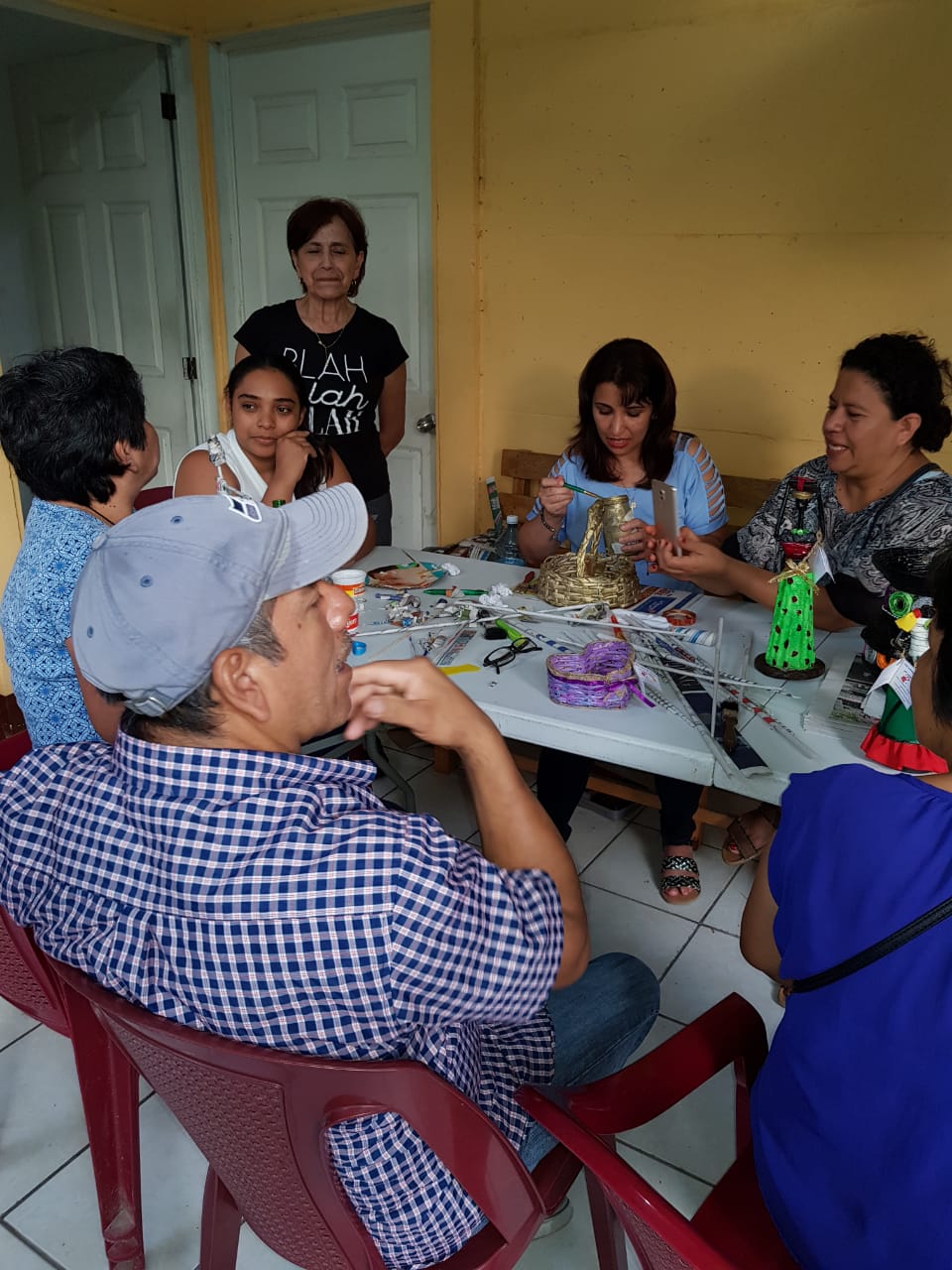
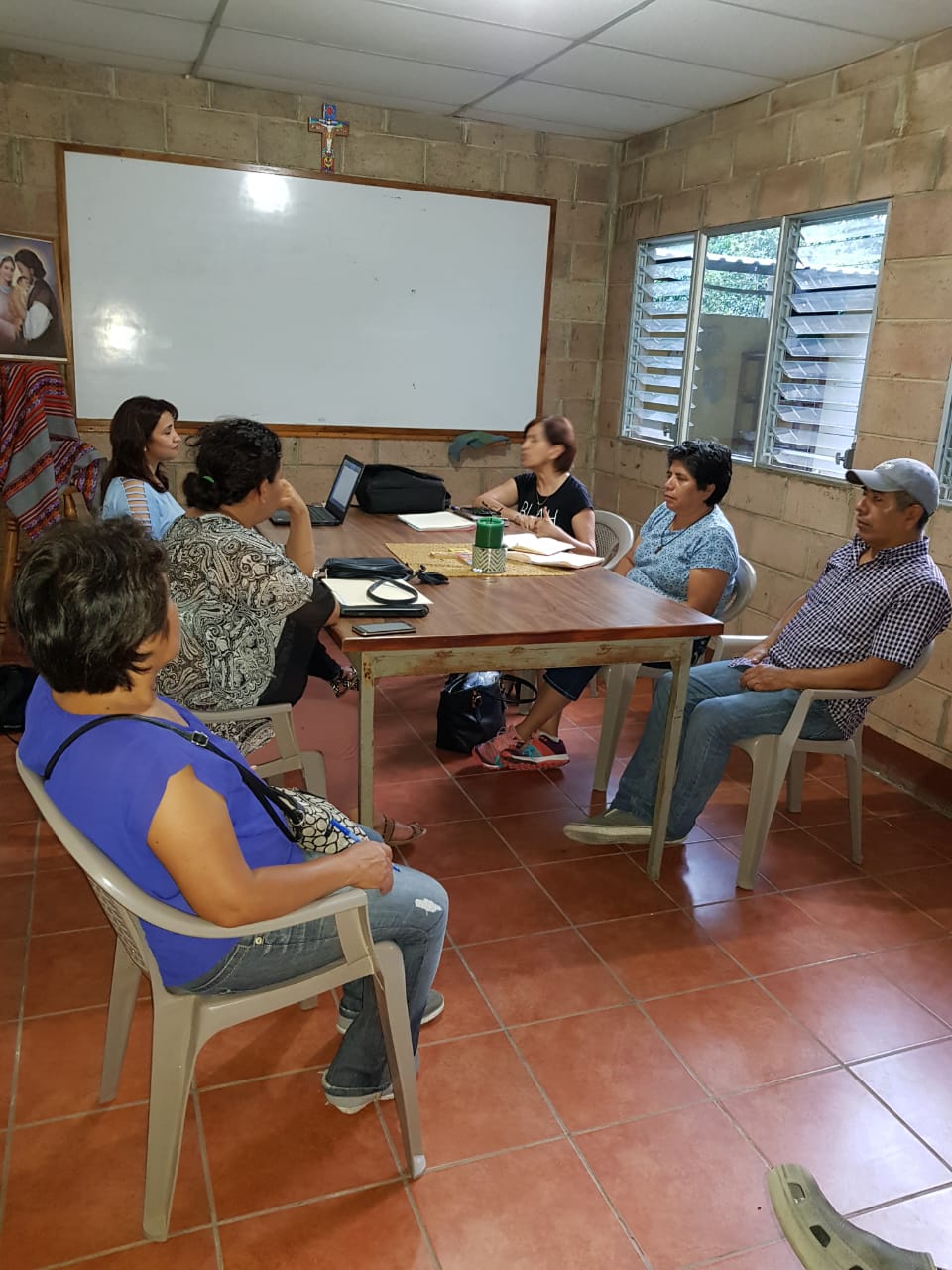
To arrive at the mission is to arrive home. Not the one that saw us being born, but another that now welcomes us, where we now sleep, grow and love. To arrive at the mission is to reach the people. Not the one that saw us being born, but another who receives us with open arms as if we were its daughters coming home. To arrive at the mission is to embrace another people. Not the one who saw us being born, but the one who receives us with open arms and prepares to grow with us. Each person is a world and has a world to share with us. In each person we meet God and it is this God and this world that today we want to show to you. It is in this panorama where each day we awake with hope and fall asleep blessed. This mission is not ours, it belongs to all and we hope that you will walk through each day and each story with us.

Paula y Neuza. CLM in Peru

Piquiá

LMC Brasil

I went to see an open cut mine, the largest iron ore mine in the world which is located in the mountains of Carajás. When I got there, I was overwhelmed by its size, I took a technical look at that exploitation and thought: at one time I would have given anything to work in a place like this… Then I looked at the reality of this place and felt great sorrow remembering all those who are affected by the impact it has for hundreds of miles. It was not by chance that we had to travel an entire night to visit this mine, since between the mountains of Carajás and São Luís stands Piquiá.

And in Piquiá, where our mission is located, we are well aware of the social and environmental impact of the mine. The ore extracted from there is taken to Piquiá by train to be treated in the various local iron plants, then still by train it is taken to the harbor of Sâo Luís from where it is shipped all over the world.

Piquiá is a neighborhood on the outskirts of Acailândia, MA and is divided into High Piquiá, where we live, and Lower Piquiá, where the iron plants are located in people’s backyard.

LMC BrasilThe inhabitants of Lower Piquiá suffer daily from the contamination coming from the factories. With the coming of summer, the contamination increases and, on a daily basis, one sees black clouds spewing from the smokestacks without any emission control and without any type of government control. The amount of iron dust found in the air, and the damage caused to our health and wellbeing are staggering. While visiting the families in Lower Piquiá, I could not remain indifferent to the stories of life and sufferings encountered by this community due to the contamination and the destructive environmental impact caused in this area that used to be a little paradise.

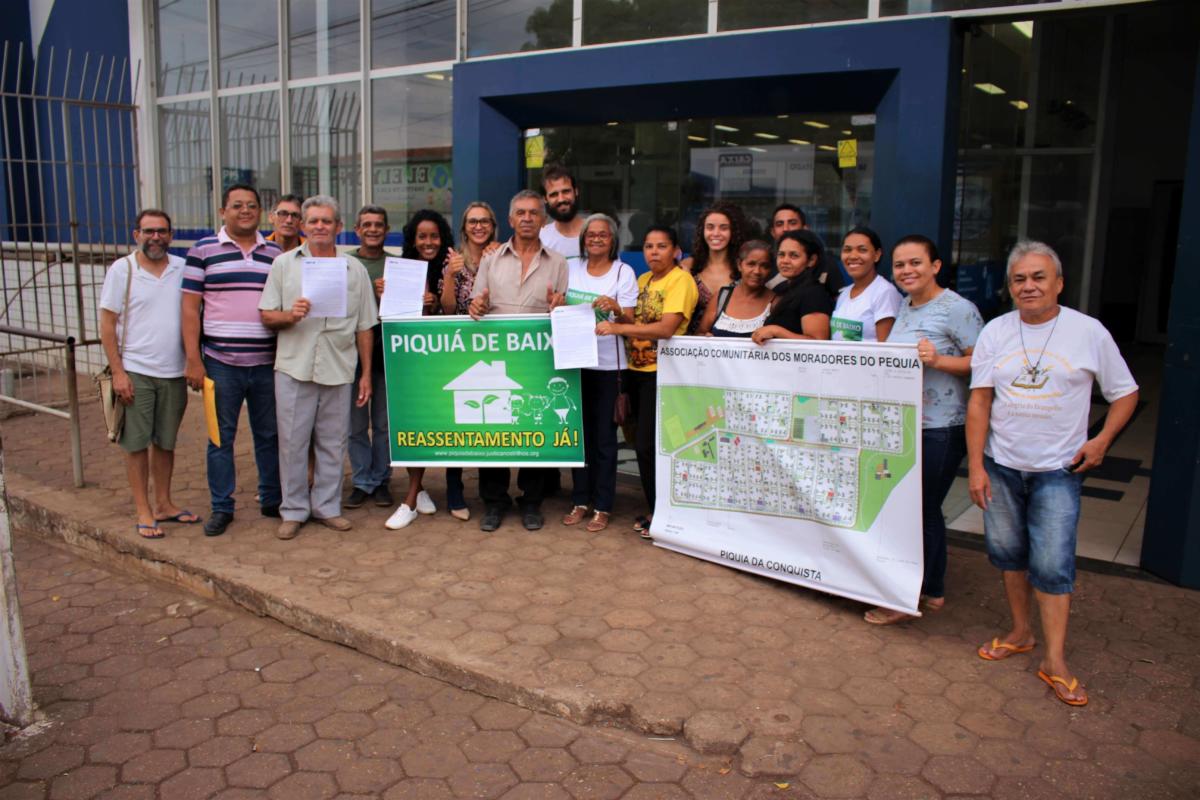
Over the years, there have been many struggles, the people united to fight for their rights, for an healthy and clean place where to live and, little by little, they have had some success against these giants in order to give dignity to their lives. Currently, they already have a piece of land and a project for the construction of a new neighborhood, “Piquiá de la Conquista,” removed from the source of contamination. Bureaucracy is still the main obstacle, but hope still lives on…

Lower Piquiá, already resettling!

LMC Brasil

Liliana and Flávio CLM Brazil

A Prayer for Brazil

Oracion Brasil

The cry of the excluded is a movement tha takes to the streets on September 7, Brazil’s Independence Day.


This cry is a demonstration of the people denouncing how the government does not represent the will of the people, but rather, on the contrary, the interests of the elite.


Since we could not take part in this symbolic demonstration and not wanting to be indifferent to the cause, in the parish of St. Lucy we held a prayer vigil on the night of September 6. It was a good time and full of symbolism where we united our hearts to Christ and remembered the sufferings of the persecuted and of all those whose rights are being denied. We prayed for a more just country and for a more dignified life. At this time of gathering with the community and with God I felt praise in my heart, thanking God for this people:

… who gathers in prayer;

… who does not give up in face of adversity;

… who, not only points fingers, but also faces corrupt government officials;

… who does not lose hope;

… who daily teaches me that stopping is to die, to suffer is to live, and that love is always possible.

Oracion BrasilFlávio and Liliana, CLM in Brazil

Message of Pope Francis for World Mission Day 2017

PapaFrancisco

Mission at the heart of the Christian faith

Dear Brothers and Sisters,

Once again this year, World Mission Day gathers us around the person of Jesus, “the very first and greatest evangelizer” (Paul VI, Evangelii Nuntiandi, 7), who continually sends us forth to proclaim the Gospel of the love of God the Father in the power of the Holy Spirit. This Day invites us to reflect anew on the mission at the heart of the Christian faith. The Church is missionary by nature; otherwise, she would no longer be the Church of Christ, but one group among many others that soon end up serving their purpose and passing away. So it is important to ask ourselves certain questions about our Christian identity and our responsibility as believers in a world marked by confusion, disappointment and frustration, and torn by numerous fratricidal wars that unjustly target the innocent. What is the basis of our mission? What is the heart of our mission? What are the essential approaches we need to take in carrying out our mission?

Mission and the transformative power of the Gospel of Christ, the Way, the Truth and the Life

1. The Church’s mission, directed to all men and women of good will, is based on the transformative power of the Gospel. The Gospel is Good News filled with contagious joy, for it contains and offers new life: the life of the Risen Christ who, by bestowing his life-giving Spirit, becomes for us the Way, the Truth and the Life (cf. Jn 14:6). He is the Way who invites us to follow him with confidence and courage. In following Jesus as our Way, we experience Truth and receive his Life, which is fullness of communion with God the Father in the power of the Holy Spirit. That life sets us free from every kind of selfishness, and is a source of creativity in love.

2. God the Father desires this existential transformation of his sons and daughters, a transformation that finds expression in worship in spirit and truth (cf. Jn 4:23-24), through a life guided by the Holy Spirit in imitation of Jesus the Son to the glory of God the Father. “The glory of God is the living man” (Irenaeus, Adversus Haereses IV, 20, 7). The preaching of the Gospel thus becomes a vital and effective word that accomplishes what it proclaims (cf. Is 55:10-11): Jesus Christ, who constantly takes flesh in every human situation (cf. Jn 1:14).

Mission and the kairos of Christ

3. The Church’s mission, then, is not to spread a religious ideology, much less to propose a lofty ethical teaching. Many movements throughout the world inspire high ideals or ways to live a meaningful life. Through the mission of the Church, Jesus Christ himself continues to evangelize and act; her mission thus makes present in history the kairos, the favourable time of salvation. Through the proclamation of the Gospel, the risen Jesus becomes our contemporary, so that those who welcome him with faith and love can experience the transforming power of his Spirit, who makes humanity and creation fruitful, even as the rain does with the earth. “His resurrection is not an event of the past; it contains a vital power which has permeated this world. Where all seems to be dead, signs of the resurrection suddenly spring up. It is an irresistible force” (Evangelii Gaudium, 276).

4. Let us never forget that “being Christian is not the result of an ethical choice or a lofty idea, but the encounter with an event, a Person, which gives life a new horizon and a decisive direction” (Benedict XVI, Deus Caritas Est, 1). The Gospel is a Person who continually offers himself and constantly invites those who receive him with humble and religious faith to share his life by an effective participation in the paschal mystery of his death and resurrection. Through Baptism, the Gospel becomes a source of new life, freed of the dominion of sin, enlightened and transformed by the Holy Spirit. Through Confirmation, it becomes a fortifying anointing that, through the same Spirit, points out new ways and strategies for witness and accompaniment. Through the Eucharist, it becomes food for new life, a “medicine of immortality” (Ignatius of Antioch, Ad Ephesios, 20, 2).

5. The world vitally needs the Gospel of Jesus Christ. Through the Church, Christ continues his mission as the Good Samaritan, caring for the bleeding wounds of humanity, and as Good Shepherd, constantly seeking out those who wander along winding paths that lead nowhere. Thank God, many significant experiences continue to testify to the transformative power of the Gospel. I think of the gesture of the Dinka student who, at the cost of his own life, protected a student from the enemy Nuer tribe who was about to be killed. I think of that Eucharistic celebration in Kitgum, in northern Uganda, where, after brutal massacres by a rebel group, a missionary made the people repeat the words of Jesus on the cross: “My God, My God, why have you abandoned me?” as an expression of the desperate cry of the brothers and sisters of the crucified Lord. For the people, that celebration was an immense source of consolation and courage. We can think too of countless testimonies to how the Gospel helps to overcome narrowness, conflict, racism, tribalism, and to promote everywhere, and among all, reconciliation, fraternity, and sharing.

Mission inspires a spirituality of constant exodus, pilgrimage, and exile

6. The Church’s mission is enlivened by a spirituality of constant exodus. We are challenged “to go forth from our own comfort zone in order to reach all the peripheries in need of the light of the Gospel” (Evangelii Gaudium, 20). The Church’s mission impels us to undertake a constant pilgrimage across the various deserts of life, through the different experiences of hunger and thirst for truth and justice. The Church’s mission inspires a sense of constant exile, to make us aware, in our thirst for the infinite, that we are exiles journeying towards our final home, poised between the “already” and “not yet” of the Kingdom of Heaven.

7. Mission reminds the Church that she is not an end unto herself, but a humble instrument and mediation of the Kingdom. A self-referential Church, one content with earthly success, is not the Church of Christ, his crucified and glorious Body. That is why we should prefer “a Church which is bruised, hurting and dirty because it has been out on the streets, rather than a Church which is unhealthy from being confined and from clinging to its own security” (ibid., 49).

Young people, the hope of mission

8. Young people are the hope of mission. The person of Jesus Christ and the Good News he proclaimed continue to attract many young people. They seek ways to put themselves with courage and enthusiasm at the service of humanity. “There are many young people who offer their solidarity in the face of the evils of the world and engage in various forms of militancy and volunteering… How beautiful it is to see that young people are ‘street preachers’, joyfully bringing Jesus to every street, every town square and every corner of the earth!” (ibid., 106). The next Ordinary General Assembly of the Synod of Bishops, to be held in 2018 on the theme Young People, the Faith and Vocational Discernment, represents a providential opportunity to involve young people in the shared missionary responsibility that needs their rich imagination and creativity.

The service of the Pontifical Mission Societies

9. The Pontifical Mission Societies are a precious means of awakening in every Christian community a desire to reach beyond its own confines and security in order to proclaim the Gospel to all. In them, thanks to a profound missionary spirituality, nurtured daily, and a constant commitment to raising missionary awareness and enthusiasm, young people, adults, families, priests, bishops and men and women religious work to develop a missionary heart in everyone. World Mission Day, promoted by the Society of the Propagation of the Faith, is a good opportunity for enabling the missionary heart of Christian communities to join in prayer, testimony of life and communion of goods, in responding to the vast and pressing needs of evangelization.

Carrying out our mission with Mary, Mother of Evangelization

10. Dear brothers and sisters, in carrying out our mission, let us draw inspiration from Mary, Mother of Evangelization. Moved by the Spirit, she welcomed the Word of life in the depths of her humble faith. May the Virgin Mother help us to say our own “yes”, conscious of the urgent need to make the Good News of Jesus resound in our time. May she obtain for us renewed zeal in bringing to everyone the Good News of the life that is victorious over death. May she intercede for us so that we can acquire the holy audacity needed to discover new ways to bring the gift of salvation to every man and woman.

From the Vatican, 4 June 2017
Solemnity of Pentecost

FRANCIS