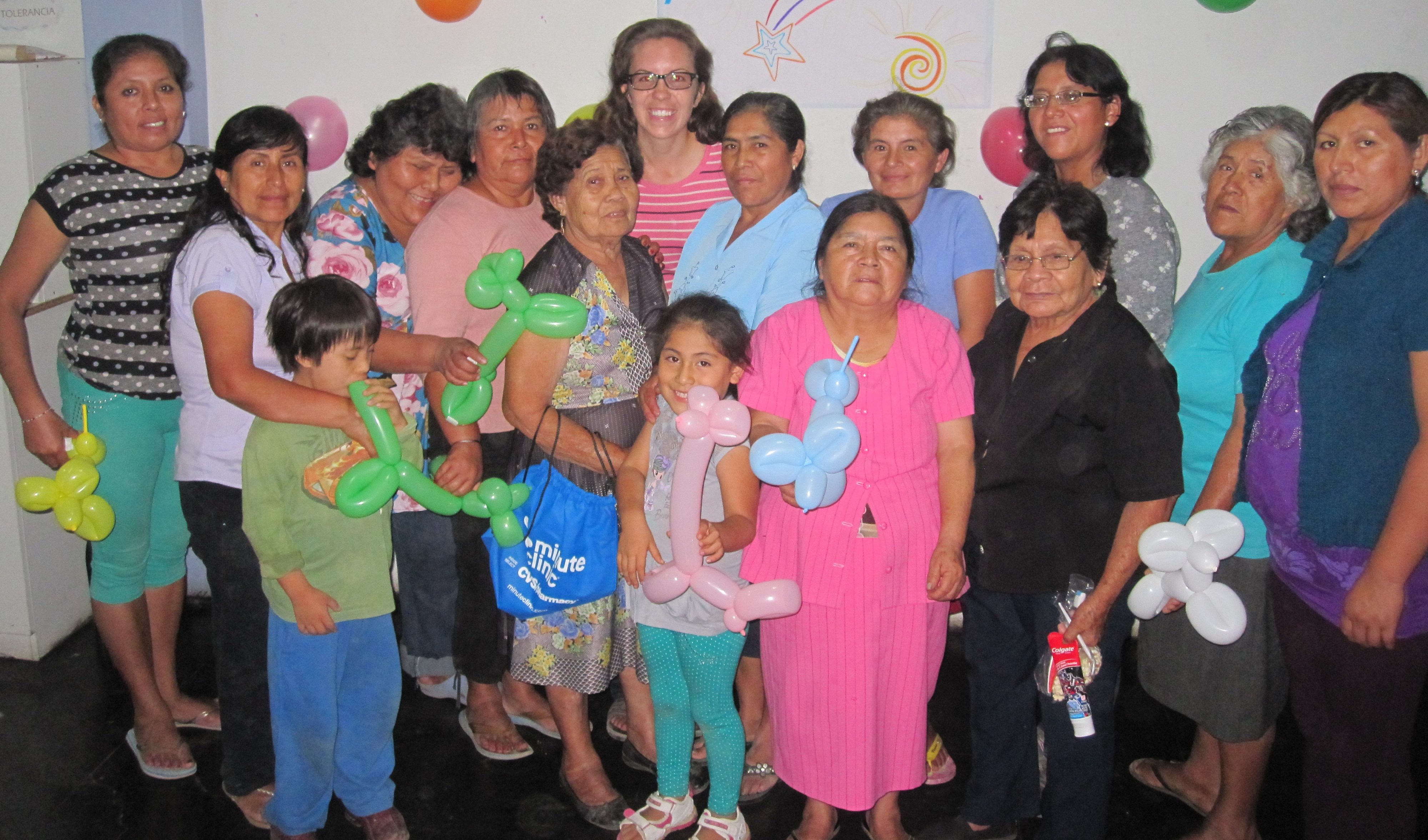
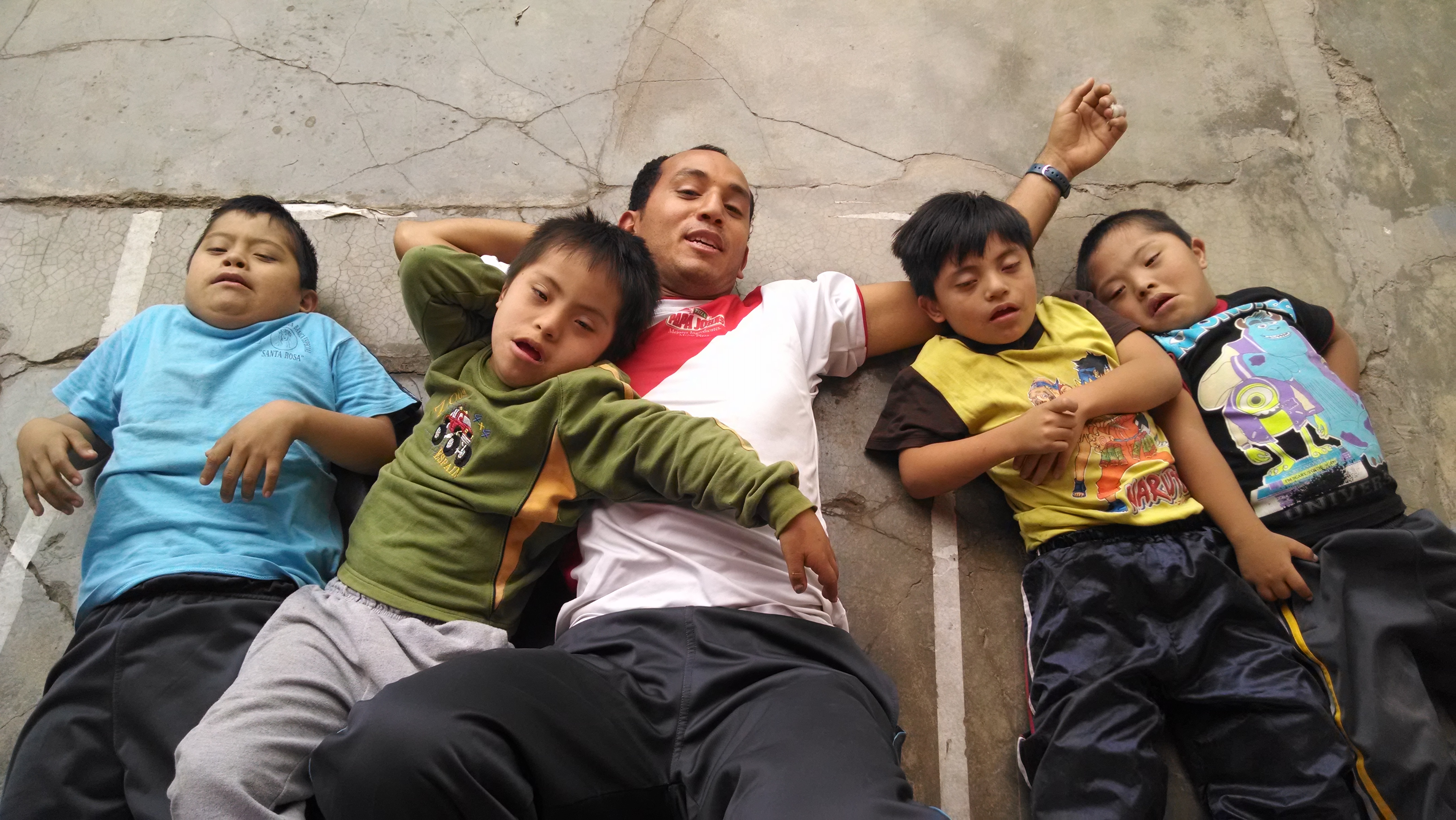
Comboni Lay Missionaries

Children and poor rejoice in my presence

Lety LMC

Testimony of Leticia Ordoñez Bañales

Originally from Guadalajara, Mexico, this Comboni Lay Missionary (CLM) decided to accompany the Catholic community of Rondos, a small town located on the heights of the province of Lauricocha, in the department of Huanuco, since November 2011. She ends her commitment this year and now tells us about her experience.

My vocation began when I was 16; I attend a Mass of missionary sending. The parish organized the event to send a Comboni priest who was leaving for Africa. I felt the call of God and in 1988 and I joint the religious Missionaries sisters of Guadalupe. However, I didn´t feel my vocation realizes and in 1999 I retired to participate in the mission fields in Guatemala with the Episcopal Pontifical Mission Societies of Mexico (SSMO) until 2000.

In 2001 I joined the CLM while working in the parish notary of Saints Crispin and Crispiniano of Guadalajara. In 2004, I had to drop everything and travel to Mexico FD to participate in an experience of community formation with other Comboni Lay Missionaries.

I first came to Peru with Rocío Quintero, my Mexican partner, in 2005. We were both sent to Huarin, in the Sierra de Huanuco. Salome Flores, a Peruvian lay, joined us and accompanied us for a year. Rocío had to return to Mexico after the second year. The third year came the Peruvian laities Doris Pereira and Enrique Garcia. I returned to my country and between 2009-2011 participated, along with Mexican CLM Marcela Alanis and Olivia Ayala, of the new mission in Metlatonoc in the state of Guerrero.

Currently, Rondos is the town where I perform my mission since November 2011. When I arrived, I found again Rocío. Together we carry out the work with the “mamitas” and an education program for the children of the town. We give religion classes in primary schools and biblical catechesis for children and youth. We keep the library open during the summer months and organize “useful vacation” workshops for students. Besides, we have training at the School of Mothers and prepare candidates for the sacraments. Especially, we encourage couples to marry in church, but only there was a marriage in 2013. The patron saint fiestas are times of increased demand for sacraments. We always consider on our agenda visiting the sick and helping the poor and vulnerable elderly.

This second experience in Peru has been characterized by the loneliness that many times I have lived. After six months Rocío had to return to Mexico. After a while came Daniel, a Peruvian CLM, with a great desire to work and a great friend of children. But he only remained seven months. The time he was, we make a great teamwork. Last year they sent Sharliman, a Brazilian CLM, who could not get used to the altitude of 3650 m and had to ask to be transferred to Arequipa one month after reaching Rondos. However, the whole time I was alone, God and Mary have been my company.

I confess you that many times I say to God: “What do I do here alone?” And the answer comes from children who knock on the door to ask me something; mamitas who ask me “How are you?”; young people who say, “I have come to visit you”; the sick and abandoned that rejoice in my presence. The school kids exclaim with joy sister Lety! Behold my reason for being present among them! You may wonder why I did not stay? Because I need my blood family and they also need me. In addition Rondos has the right that YOU take my place.

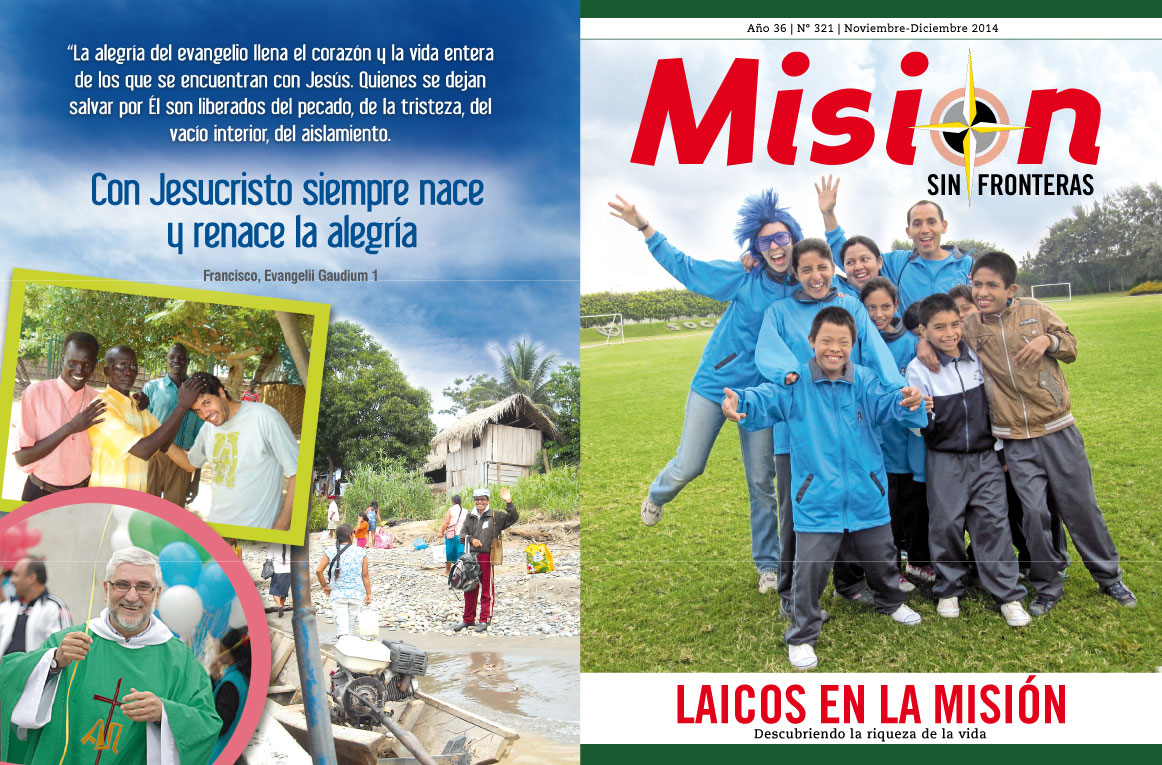
Magazine “Missión Sin Fronteras”

We have discovered the wealth of life

Interview to Emily and Rafael Harrington in “Misión sin fronteras”.

A couple of lay people who found love and inspiration giving them up to children with different abilities and their families.
PeruThe Harrington lived their first year of marriage in the United States and were prepared to collaborate with the work of the Comboni missionaries in Peru. They came to Lima from Minneapolis, Minnesota, three years ago and the next day departed for Trujillo, where they were expected for 30 children of a school for special children. The couple ends this year the first period of work and assesses whether to renew the commitment. Challenged they tell us some details of their experience.

What activities have you carried out in these three years?
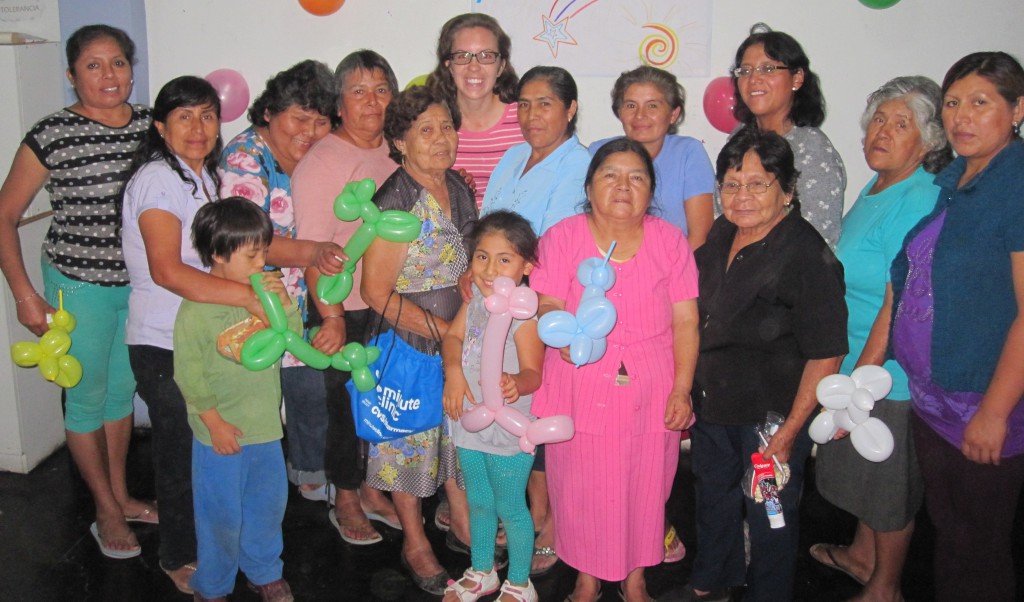
Grupo reposteriaEmily: We work in three centers in the parish: Santa Rosa, Kumamoto and Villa El Paraíso, all on the outskirts of the district of El Porvenir. In Santa Rosa, I supported in the field of school psychology and Rafael in physical education. I participated in school for mothers and, during Lent, in a prayer group with my husband. In addition, a community of ladies get enthusiastic with baking, asked the school principal to give a workshop and I was elected as coordinator. Three times a week, we attended Kumamoto children, sometimes at Villa El Paraiso, in the organization of academic reinforcement, prayer and games.

What challenges do found in your work?

Emily: The first months were used to meet neighbors. In Kumamoto, it was difficult to summon them because we do not live there and we knew just a few people. The pastoral center was closed and when we opened the doors no one entered. We had to go out and find the children. Now there are so many that we have to divide into small groups to work in comfort. In Santa Rosa, the challenge was to organize my work in the department of psychology at the special school, because I was mistaken for therapist. When someone needs this attention I refer to the appropriate person.

In the group of pastries, moms were happy from the first meeting. However, the challenge in that group was the lack of resources and small infighting. From these crises, they learned to work in teams, created rules and regulations and made better decisions.

Rafael: The first difficulty I encountered in physical education was the lack of adequate training to customize my therapeutic interventions. Each child has different abilities: one is in a wheelchair, some do not walk well or their intellectual state differs from the rest. I could not help everyone equally. My treatment has been general to include the majority. One or two children have been left out because they require the undivided attention of a person.

The second limitation was the lack of resources. For example the first year, the school did not even have a ball and gradually we acquired the basic equipment needed. Third, the school is small and the recreation space is not enough to perform well physical activities.

How do you help the mothers of the children?

Emily: Families usually do not easily accept to have at home a child with different skills. They have to live with the burden of the people on the street, which stares at them or makes inappropriate comments. Following that, we created a support group for moms who meet twice a year. There they have opportunity to talk about their experience. I accompanied the moderating an also control the time so that everyone gets the chance to talk and at the end of the cycle we do a little walk. It is an activity that ladies like and ask when we organized another meeting again.

What joys has given your work?
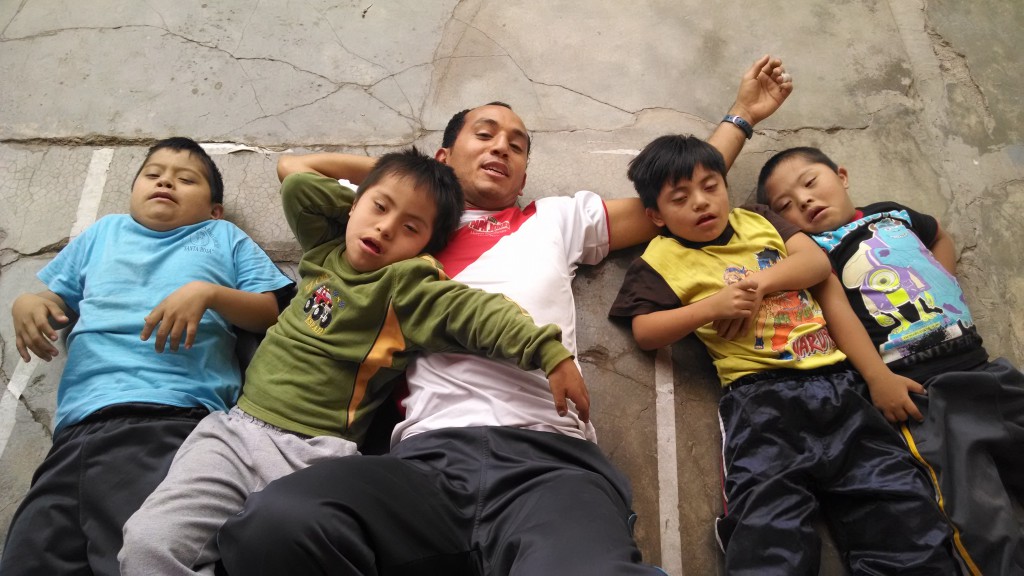
Rafael en TrujilloRafael: One of the positive things has been encouraging basketball as the main sports. We achieved that each child has its own ball. Therefore, this year has increased the population of special children now attend 30. I like to see how each child progresses through simple little things that are great achievements for them. For example, there was a boy who could not jump, but after a lot of work and effort, at the end of year managed to do it. The smile you get when they achieve their goal is exciting. To see the fruit of their dedication is a gift from God. Another nice moment is to see how a young boy from his wheelchair participates in basketball, his teammates push him and he bounces the ball. Rarely score a basket, but when he get the ball, everybody clap and cheer him.

Emily: In the group of moms the activity that unites us is the pastry, but we are there for something else. Once I asked the ladies: “Why do you come?” They mentioned that they do it to make friends, share ideas or to have a space to unfold, but nobody remembered the pastry. They are there to something deeper and has been very good to see how developed the group. For example, two ladies lived on the same block for over twenty years but they didn´t know their names. Last year it was born from them to say a prayer at the beginning and end of the meetings. And even though not all are Catholic, because we have an Adventist lady, take turns leading prayer. This year we made pastries inclusion. We organized a share in the chapel and invite other children to create bonds of friendship. Unfortunately, some children copy the attitudes of their parents and there were children who did not want their special companions dealt them biscuits.

What do you take from this experience?

One comes to the mission with the idea that will give more than receive. But it is never like that. In the mission one receives more than you can give. For me the smile of a child is the most you can receive and the most he can give. I lived in an orphanage and when missionaries arrived to offer me an hour to play, that was enough. I don´t remember gifts or things, but the support of many people. My presence among them is the most important and I do the impossible to make a child smile.

Something you wish to add?

Emily: From the perspective of our friends in the United States, we have stopped our lives for three years to come to the mission. But for me it has been to discover the richness of life.

Rafael: In North America we have forgotten the simple things, our friends tell us that we have sacrificed our lives. They do not know that we are growing and we are uniting ourselves more. The mission has been an experience we could not buy with all the money in the world.

El Trueque: A Lesson in Sharing

pastel de melocotón
What I gave.

I recently went to visit two of the ladies from the women’s baking group, whom I hadn’t seen for a couple of weeks. I decided to bring them my portion of the desert that the group and I had made that day, yogurt cake with peaches. When I arrived at the first house, I was greeted by Rocio. She accepted the cake and disappeared into a room at the far end of her house. She returned with a smile and a huge slab of chocolate fudge cake that she had just finished making.

pastel de chocolate
What I received.

As I left her house, chocolate cake in hand, I shook my head, thinking, “It is impossible to give something to a Peruvian without them giving me something in return.” I have several friends who sell food in the market and on the streets. If I try to buy something from them, they often won’t accept my money. If they do let me buy from them, the next I pass by they insist on gifting me at least as much as I originally bought from them.

Arriving at the second house, Manuela greeted me with a hug. She happily took the peach cake, and replied, “Es un trueque entonces. (It’s a trade then).” Before I could respond, she went into her house and emerged with a cup of arroz zambito (the Peruvian version of arroz con leche/ ride pudding).

Arroz zambito
Manuela’s Arroz Zambito.

I thanked her for the arroz zambito and told her that it was very kind but not necessary, as she relies on the sales of the rice desert as an income for her family. Manuela smiled and explained the cultural importance of a “trueque” (exchange of goods). She related that it is a cultural value passed on by the Incas that continues to be an integral part of the Peruvian culture.

Rafael and I were taught something very similar in an intensive course on Peruvian realities that we completed in Lima in 2012. One of the professors taught us that reciprocity is a key value of the Peruvian culture, a value which has a historical basis stemming from the Incas, whose economy was based on a barter system. If someone does something for you, you find a way to do something beneficial for them. I can see this value in action in my everyday life here. Any act of service on my part has been selflessly returned to me, often in ways surpassing anything I have done. My experience of mission here in Peru has been one not just of giving, but of learning to humbly receive what others give me. The people do not give out of their excess or surplus, but rather they give of the best they have to offer.

Aji de gallina
Ají de gallina

One of the women from the baking group recently told me that she would like to prepare lunch for Rafael and me. She stopped by my house early one morning and told me not to not cook lunch that day. At exactly 1:00pm, the Peruvian lunchtime, she arrived with two heaping plates of food for us. She hadn’t prepared just any meal. Weeks before making this lunch, she had casually asked us what Peruvian dish we like the most. This past Sunday she came bringing us this very meal, “Aji de Gallina.” There are ways to cut corners economically when preparing this dish, but without her having to say anything, I could tell that she had used the very best ingredients at the market. I was at a loss for something to give in return, but it was not necessary. This was a special, loving gift, which she happily gave, without expectation of anything in exchange. I am continually amazed by the people’s generosity and thoughtfulness, and their practice of the principal of “el trueque.”

Emily Harrintong

CLM Annual Retreat 2014 in Peru

Retiro PeruOn 26, 27 and 28 of this month of September the Comboni Lay Missionaries of Peru had the opportunity to live a spiritual retreat in the Foyer de Charité in Ñaña home, a district of Lima. There were present CLM from Trujillo, Arequipa, Lima and Huanuco. The occasion was propitious to reflect important points of our life as Comboni Lay Missionaries, share our life experiences on the mission especially with our foreign and national brother’s Ad Gentes.

Difficulties come and go in our lives, occur daily the economic, family, work… problems. But our strength is in our prayer and faith that we share in the midst of these storms.

Being a Lay Missionary in these times requires great dedication and passion. For this way of life St. Daniel Comboni sought missionaries “Saints and Able.”

This retreat comforts us and encourages us to make significant strides in our life as CLM and grow as a missionary family.

Fisher CLM Peru

We confess You as the Lord of Life

CruzDear friends,

What a joy to celebrate Easter with the people in struggle!

This year the community of Villa Ecológica feels more mature and grown up, and we participate in the celebrations with more calm less responsibility and a certain distance.

It happens that the Lord touches the hearts when he wants and the way he wants. Yesterday I feel touched in front of the monument hearing the song “My confidence is You, Lord”. I lay contemplating my future in peace, in confidence. Even on the night of Holy Thursday, Jesus is Lord. His smile calm storms. Like when Carmen is afraid at night and my presence beside her causes her to sleep in peace. So I felt last night in front of the Blessed Sacrament.

We do not know what lies ahead of us and fear wants to grasp me, but I rest in Jesus. During these months I give thanks all the time for being alive and being healthy. I can walk, I can get dressed by myself, I can take a car to go downtown, I can load my kids… The Lord has allowed me to continue here. I wish it never pass the clarity of such certainty.

After the prayer before the Monument, a neighbor who is being abused by her husband for too many years kneels before the Lord, and I knelt with her. I felt clearly how she was sharing Jesus’ struggle, unfair victim. She and Jesus, Jesus and she. She shows me Jesus and Jesus pointed me to her. I had to be like her kneeling before the Lord. Worshiping, resting in Him, the only one who has words of life. Begging that passes the bitter cup represented by her husband from her. What a privilege, to be able to share in the distance, the path with these women protagonists of faith!

What a joy I felt for being able to share these six years with these people! The Lord has given me many lessons and has worked on me.

Yesterday morning came another neighbor carrying piggyback eighteen years of abuse. It is so heavy this burden on her that the poor goes hunched, skinny, almost unable to look at your eyes. I cannot imagine the burden of pain that carry over even to see her daughter trying to kill herself. She came to my house on Holy Thursday to ask about the progress of her last complaint. But the judiciary is on strike. On Holy Thursday, Jesus himself with his cross came to my house. Why Jesus wanted to manifest so clearly to me? I was able to hold her, try to strengthen and increase her hope for justice. I am very happy for it. I suffer with her and I feel happy at the same time. What if one of these nights this neighbor commits suicide? What will I do then?

Isabel and I had past uncomfortable weeks because of Mr. Juan, my neighbor across the street, sick for six months that has passed through two operations and no heals, but it is getting worse. It is a sigh of the strong man who was. Why God put us this in front of us? How could I passed by his door every morning without being moved? Together we realized that the Lord called us to be present with greater intensity. The first thing we thought was of paying a particular doctor to diagnose correctly. But that’s not all he needs. Paulina took the father an afternoon and administered the Anointing. Because Juan is not close to the Church, does not participate in the community. We call Bety and Domingo, from the team of the Father Jaime, to pray for him. They came right away to evangelize him. And Juan and Yanet got happy, appreciated that very much and want to get married after twenty years of living together. If it is the God will, Isabel and I are going to prepare them. They went together to Palm Sunday Mass, I do not know how long ago they were not going, and on Holy Thursday the father washed their feet during the celebration. They want to approach the Lord! The Lord is acting, is healing. Bety told us after a Mass of health. The Lord works bodies and hearts.

I felt that Juan is my last teaching. Do I believe or do not believe that Lord can heal him? Will I be able to watch him die slowly doing nothing more than paying a doctor? Juan needs the strength of the Lord Jesus to rise from his prostration. Only Jesus can lift him.

Lord Jesus, save your people, that so much awaits you!

We confess You as the Lord of Life, but my faith is so weak…

Gonzalo Violero. Spanish CLM in Peru