Comboni Lay Missionaries

Third Formation Meeting of the FEC – Mission, Cultures, and Religions

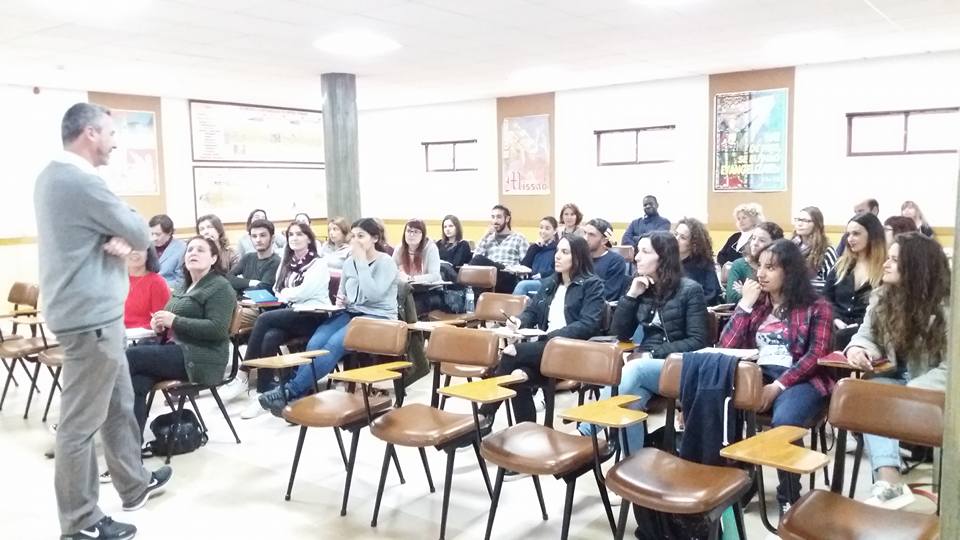
Curso fec PortugalThe third formation session of the Faith and Cooperation Foundation (FEC) on the topic of Mission, Cultures and Religions took place on March 11-12. This time it was held at the Capuchins’ house in Fatima. The moderator was Bro. Vítor Lameiras, a member of the Hospitaller Order of St. John of God.

We can only confront our culture when we know another.

Saturday began with the theme of inculturation, as a way to approach. The speaker gave a brief explanation of the concept of inculturation. He stressed that it presupposes the ability of starting a dialogue with other cultures rather than imposing our own. It is strictly connected to the values of Christian faith and to its adaptation in a different cultural context.

The afternoon program followed a shared meal. We spoke of mission and culture in dialogue. Here we had the opportunity to reflect on the many pre-conceived ideas that can exist concerning other cultures and, above all, on the Gospel values that are evident across the world and in all cultures, as being the same. They are not “solely Christian” values, but rather universal. And what are these Gospel values? They are the values that allow a dialogue between cultures: first of all love (“to love to the point of loving the enemy and give one’s life”), tolerance, humility, spirituality, giving, acceptance, sacrifice, trust, faith, fidelity, the capacity of active listening, opening to those who are “different,” detachment. We are called to sow, not to reap.

Knowing that mission does not exist as a mechanism of escape and flight, this requires great integrity on our part, a heart open to what is new, total availability of our soul, it also requires honesty and humility, values deeply rooted in a greater commandment: “Love one another as I have loved you.” The only certainty that accompanies us is the certainty of love, gratuitous love, as the principal value that will give life to mission.

Following, we saw a video on the mission experience of Catarina Lopes of the FEC team of East-Timor. From this video, we are left with the image of a great missionary. Let us be honest: in all the segments of formation Catalina surprises us and makes us think of something else, of her missionary experience and the fruits that came of it. From the video, we were left with some sentences that she was writing in her diary during her mission there and that she shared with us:

Here (in East-Timor) we cry over death because we celebrate life.”

“Our job is to sow, not to reap.”

“I thought that I was going to save the world (…) I discovered that the world saved me.”

Following this moving video, we began to work: we started with a hands on activity “face to face. Which means that Bro Victor challenged us to share our values as a couple by using our hands. This turned out to be an interesting exercise of knowing the other and of the other’s way of making oneself known through the hands. First of all, it requires an attitude of active listening devoid of judgment of the other. At the end, each one told the group what the partner had said both in words and with the hands. We came to the conclusion that both the hands and the way we relate to the world speak volumes about ourselves and we need to look at the other without prejudice. This is something that is certainly necessary when we try to relate to other cultures, in inculturation, when we try to enter another culture.

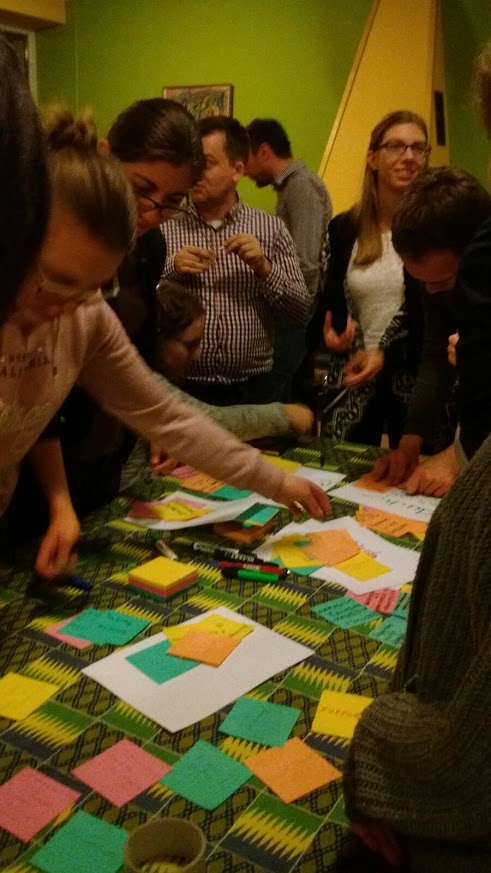
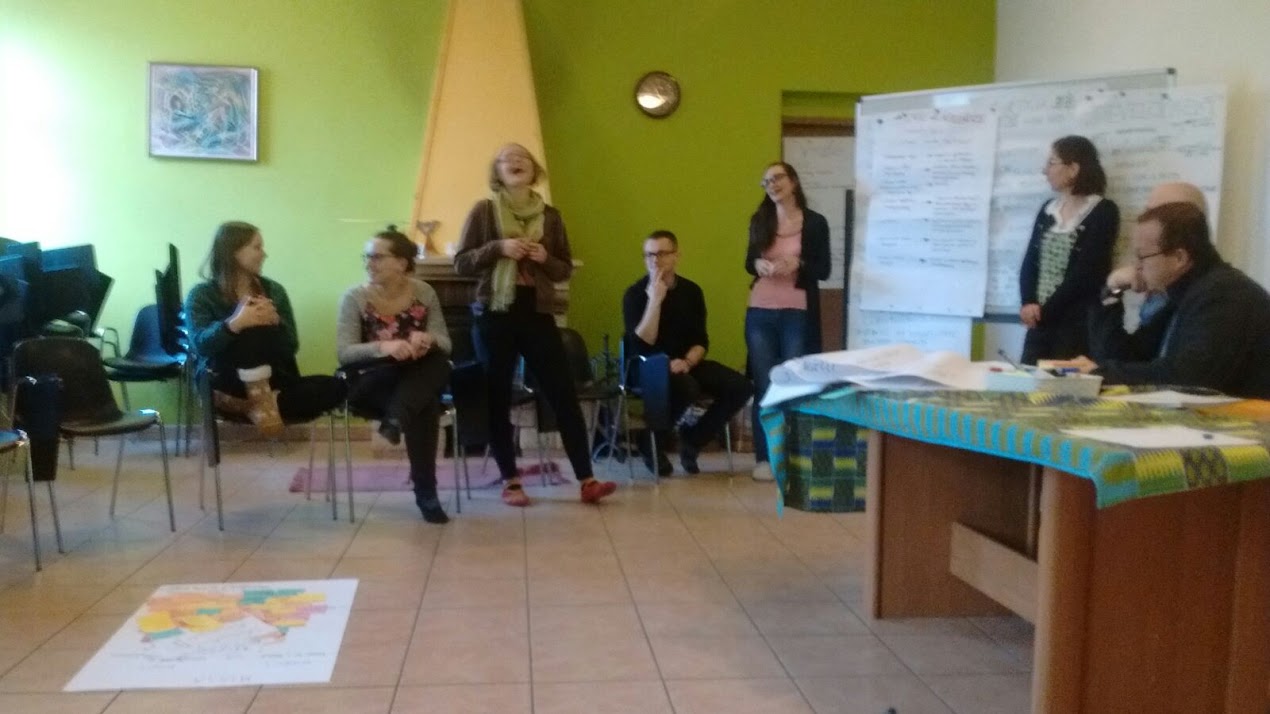
Bro Victor also proposed another group activity. There was a group representing a specific Portuguese population with specific needs, and another representing missionaries. The objective was that the group with specific needs would alert the group of missionaries. Then the missionary group had to identify their abilities/capabilities/gifts, how the needs could be answered, the characteristics of that population (rhythm of life, culture, traditions, customs, education, etc. and, secondly, together with the asking group, come up with a plan of action/a mission with objectives, a methodology and a time line. Several conclusions emerged from this activity, namely: difficulties in communication between the two groups and within each group, the importance of humility in order to learn how to say “I can’t do it.”

In the evening we listened to the missionary testimony of Daniela Pereira of the Hospitaller Youth, who shared her missionary experience of a year in Mozambique. The experience marked her for life, as it was reflected in her eyes and in the frailty of her voice.  Saturday ended with prayer in the Shrine of Fatima. Thus, together with Mary, we had the opportunity to reflect over all that we had heard and to offer her the next day.

On Sunday we began with group work, just as on Saturday: here again we had two groups – a group of missionaries getting ready for mission from which four candidates were picked to go; the other group picked to represent an African people of their choice. The “African” group picked the Democratic Republic of Congo, identifying the problems of child exploitation, and the health situation. While presenting the problems to the missionary “candidates,” they in turn introduced themselves with their motivations/talents/gifts. It was a very active exercise that allowed us, among other things, to realize the difficulties involved in formation, namely: difficulties in facing the real needs of the country, since we do not know many of the specifics of the other culture. There may be many candidates, but not everyone can go. This is a difficult moment in formation: to accept our own frailty, of being incomplete, on a journey, unable and that it is not all bad. When we lose the ability to ask questions, we lose the capacity to live fully the gift of life.

Those who love, make mistakes

The meeting ended in the best of ways, with the celebration of the Eucharist in the Shrine of Fatima.

Curso fec Portugal

By Carolina Fiúza y Neuza Francisco.

CLM of Portugal
 

“Christmas Eve” Polish CLM meeting

LMC Polonia

On 16-18th December we had our last formation meeting in 2016.

It was very extraordinary time. The main topic for this weekend was “Community”.

On Friday, after the supper, we had some introduction, and we talked a little bit about the components of CLM community. We looked closer at this issue on Saturday during some workshops conducted by Alberto de Portilla – our CLM International Coordinator from Spain.

LMC PoloniaDuring our Bible lesson with Sister Joanna, we were analysing Haggai Book. Israel as “exclusive People” needed to cooperate, live as a community and trust God in order to rebuild their Temple.

In the evening, there was a time for the Christmas Eve dinner. After reading story about Jesus’ birth from the Holy Bible, we shared  a special wafer when exchanging Christmas greetings. After that, we started to eat delicious Christmas food: croquettes with beetroot soup, dumplings with dried plums, a lot of gingerbreads and some traditional food from Silesia (administrative part of Poland) – “moczka”. It was also a time for the Christmas presents, it was a lot of fun and joy for all of us.

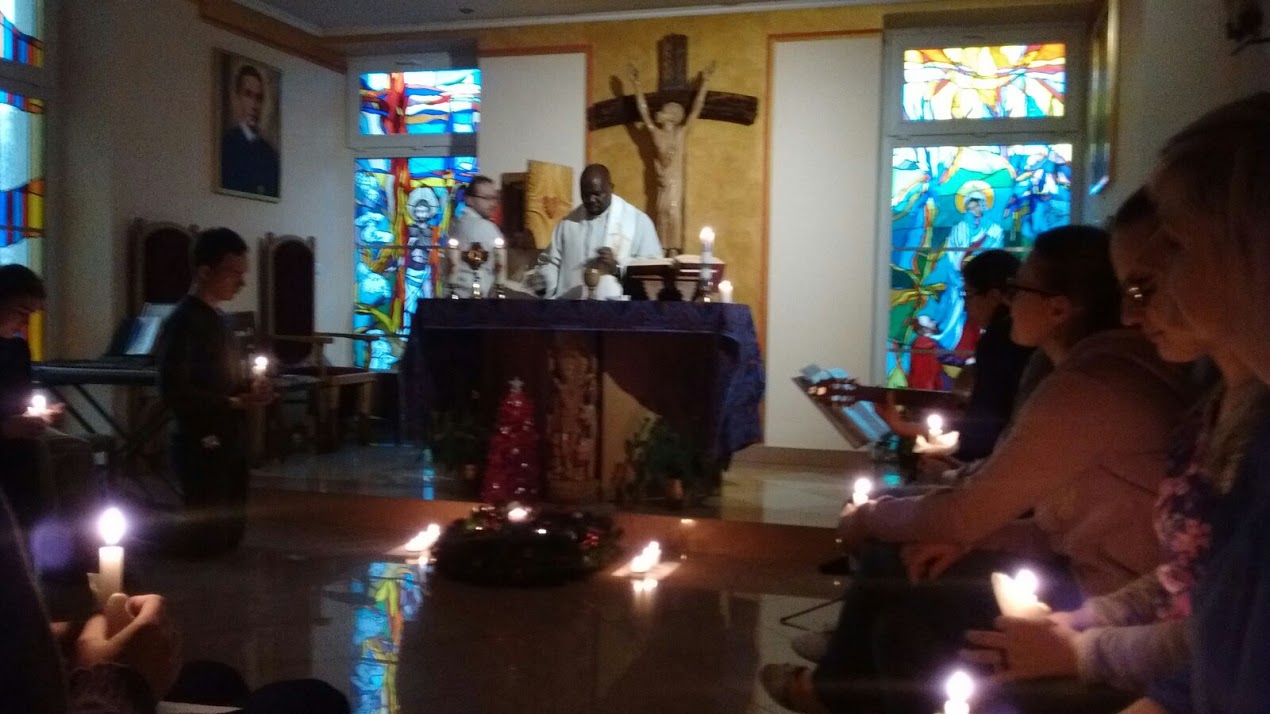
Late evening we started vigil in the Chapel, praying for all the continent in many different languages, having a special prayer for all the missionaries spread all over the World, and at midnight we participated in traditional Mass called “Pasterka”.

On Sunday, during the Comboni lesson we explored St. Daniel Comboni’s attitude regarding community and participation of everyone in the missions through the study of his Plan for the regeneration of Africa.
LMC PoloniaJesus is born every day, we just need to be courageous enough to notice it and accept Him in our hearts!

Merry Christmas to all of you!

CLM Poland

Meskel

EtiopiaThe Feast of the Holy Cross (called ‘Meskel’) is one of the biggest celebrations in Ethiopia. It is especially celebrated in the Gurage region where we had the opportunity to spend a few days and see the celebrations for ourselves. Our friend Desalegn invited us, so we could observe life in his village. We slept in a traditional hut that we shared with Desalegn’s relatives.

During the Meskel celebrations, whole families come to the villages to spend this special time together. Slaughtering a bull is one of the most important traditions and everyone is involved. After prayers were said, the men of Desalegn’s village slaughtered the animal by cutting its throat. Then everyone helped cut up the meat and prepared it to be eaten raw during the feast. Raw meat is a very popular delicacy in Ethiopians, especially when fresh.

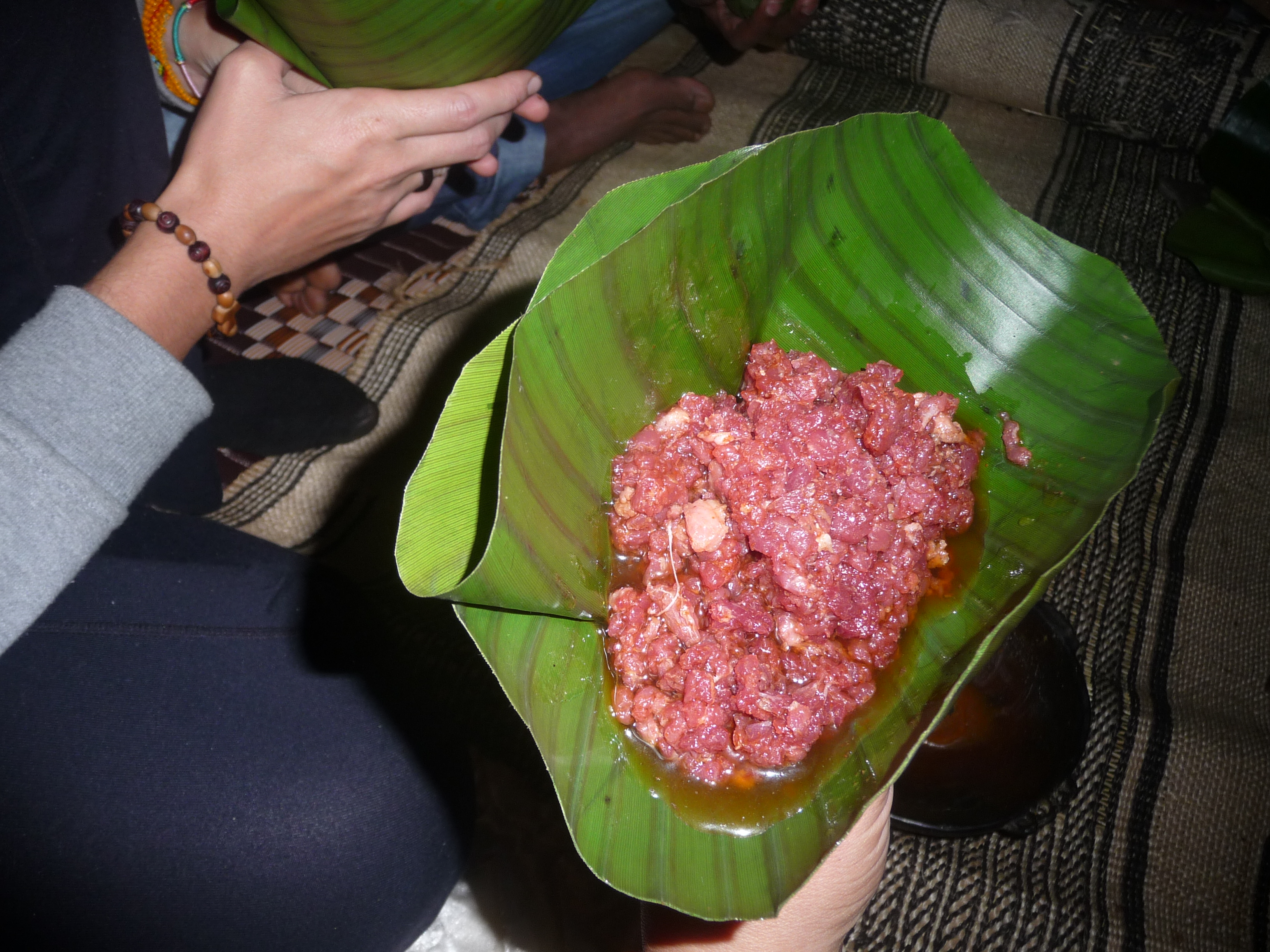
That same day, the women prepared a traditional speciality called Kitfo – raw meat cut into very small pieces and served with butter and very hot spice. Nobody asked us if we would like some – we were all given a portion so we couldn’t refuse. Magda, my namesake, coped quite well, but it was a big challenge for me to eat raw meat. I ate just a little.

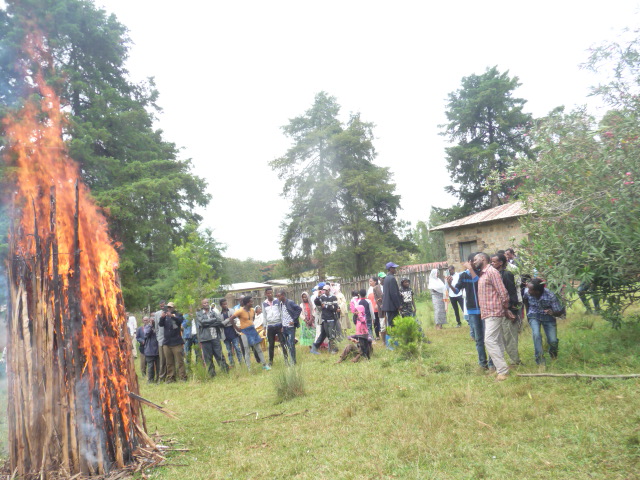
EtiopiaAccording to tradition, Saint Helen, who wanted to find the Holy Cross to save it from desecration, discovered it by following the smoke of a fire. In memory of this event, people all over Ethiopia light bonfires on Meskel Eve. In the Gurage region, the people from the whole village meet together in a large open space and then light the bonfire together.

After speeches by one or more leaders, people wish each a Happy New year. It is indeed the beginning of New Year according to the local calendar. Next they start to dance a traditional Gurage dance in a circle. After some time they go home and each family lights a bonfire in front of their house. Many people move from one bonfire to another.

We noticed that when a number of people gathered at one particular bonfire, many of the neighbours joined them. Then they all together wandered from place to place dancing and singing the same traditional song. This lasted late into the night.

The next day we went to a church for Mass. Afterwards, another large bonfire was lit. There was dancing and singing. First religious songs were sung and then the same traditional Gurage song as on Meskel Eve.

Many people visit their relatives and friends on Meskel Day. We too went with Desalegn to visit his relatives. Everywhere we were welcomed with food and drink, starting with coffee and various snacks and finishing with Kitfo.

EtiopiaSumming up, I can say we personally witnessed the Gurage traditions associated with the Feast of the Holy Cross. It is special family time for this tribe. Just as in Poland we spend Christmas with our close relatives and friends, with special meals together, eating Christmas fare, the Gurage people spend most of the time sitting, talking and eating together. Of course there are also differences. For instance, the Gurage people do not use tables for meals and don’t spend hours watching TV.

During our brief visit, we had a privileged view of a Gurage family. They allowed us to come into their life, feel the atmosphere of the place, observe the way they greet each other, have their meals, drink coffee and talk to each other. We saw up close how they work, rest, celebrate and live their daily life. It was a really interesting and enriching experience. We sincerely thank Desalegn and his relatives and the Gurage people for this great honour.

Magda Fiec, CLM Awassa (Ethiopia)

What title?

Marisa LMC

What title should I use? “one week has already passed” or “it’s only been a week” (since I came here)?

I arrived in London on September 3rd. It was almost midnight when I entered in “my new house.” Sometimes (yes, sometimes), this is not just my house, it’s more than that: it’s my home – I can feel it. [“It’s only been a week” and I’m fine here, in this community.]

Normally, we are seven persons at home – me; four priests (Father Angelo, Father Rogelio, Father Louis and Father Patrick); and two others (Paul and Amir, who joined us few days ago). But this number often changes: sometimes priests from other communities, or family / friends come to pass the night or some days with us, in our community. [“It’s only been a week” and I’ve met so many people!].

This community allows me to learn, grow and mature. We start the day together in the Chapel – for Morning Prayers and Mass. In the evening, before dinner, that’s where we return for the Evening Prayers. Slowly, I’m feeling abler to pray without peek constantly to the books (all in English!). [Sometimes I think that “it’s only passed a week and I can say a prayer without read (well, occasionally, I look to the book…); other times, if I feel some frustration for the language, I think: “one week has already passed and I still need a guide.”] Yet, the priests are very patient and encourage me to not lose the will to learn. Sometimes, they even invite me to do the Readings.

Usually I leave home 10 or 15 minutes before 9am to go to school, for the English lessons, where I spend the rest of the morning. In the same class as I am, there are other people of many ages and nationalities (Turkish, Brazilian, Argentine, Mexican, Peruvian, Japanese and Chinese).

The (moments of) meals are made in community, with the Fathers. It’s another moment of sharing. More than share food, we share life with each other. It’s also an added time for affection and learning, a privileged space where relationship flows. [“it’s only been a week ” but our relations are growing gradually and every day we know more and more of each one].

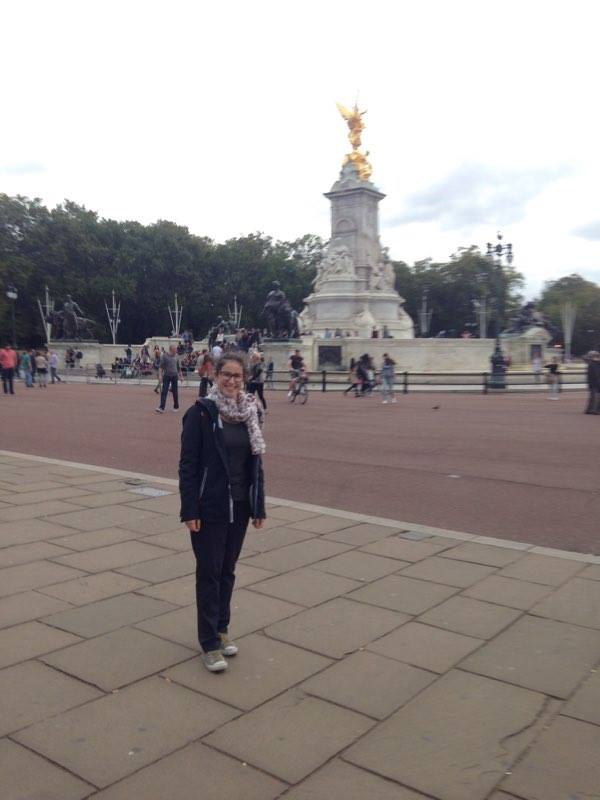
In my spare time I have the opportunity to visit London (like the Natural History Museum, Science Museum, Southbank Museum, London Eye, Big Ben, Buckingham Palace, Portobello Road (market), Royal Parks (Hyde Park, Diana – Princess of Wales Memorial Fountain, Serpentine Lake, Kensington Gardens, Albert Memorial, …). [“it’s only been a week ” but I could see so much!]

I also take some time to read, to know/ talk with someone or to help with something at home.
Here I can learn with anything, no matter what. But I’m observing that it’s important to be available, predisposed, to let it happen – make some (or many) mistakes without fear and then, accept all the corrections with humbly. Read, watch television, hear all we can, study, … it’s also important to learn [English], but I’m recognising that I can learn more every time that I make a mistake and someone corrects me. I’m learning that the correction has, in some way, a relational dimension – because needs a generous opening, spontaneousness and empathy – and it also help to grow and construct life between who corrects and who let be corrected.

Marisa LMC

Yesterday, on Sunday, something wonderful happened! According to the Ethiopian calendar, the September 11th is the first day of the year – it’s called «Enkutatash» (“gift of jewels” – I’m not sure of the translation or the meaning…). Father Frasa, who’s with us only for few days, invited me to celebrate the New Year with the Ethiopian Community. It was delicious, a paradise experience, at least! The Eucharist, with the Ethiopian Ritual took about 3 hours (the Mass was celebrated in ge’ez, Amharic, so, I had serious difficulties to understand «anything» of what they’re saying or praying or singing…).

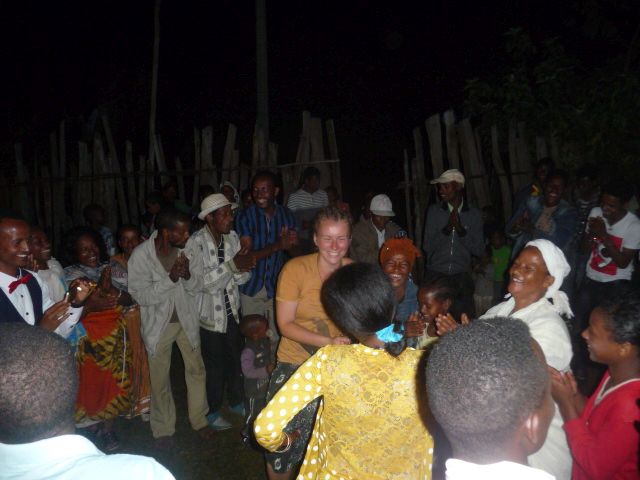
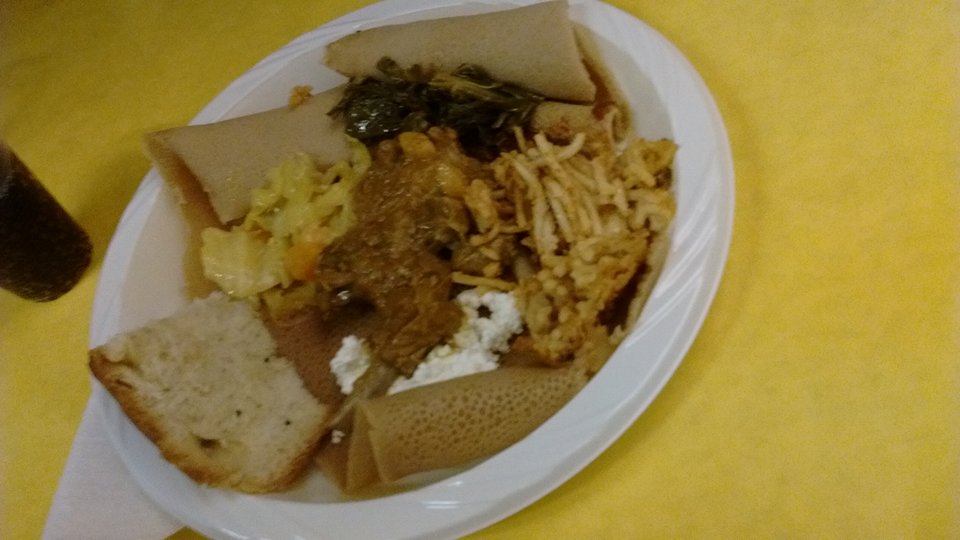
Marisa LMCIn the end, the Father introduced me to the Community and they welcomed me with pleasure and huge hospitality, inviting me to a traditional meal with them. I shared the dish with 4 other children and a mom: I understood that it’s a sign of friendship, hospitality, loyalty (“those who eat the same dish will not be betrayed”, they told me). I taste injera and gursha (when someone rolls a piece of injera, soak in wot and feeds us directly to the mouth – feed someone is a sign of friendship (“I like you, so, I food you”); receive someone’s food is a sign of hospitality and acceptance (it’s like a hug between friends) [“it’s only been a week ” and I already have been blessed with a little from “Ethiopia”!] it was the promise of a reunion on Sunday. On next Sunday, I’ll return there. it’s curious to repair that one of my first contacts, where I tried an experience of intimacy, and where I felt like «as baptism» to the Ethiopian culture and people, in deed, happened at Mass and with the sharing of meal. What a blessing!

I’m ending. But not before noting that was not “only in Ethiopia” that the new year started. In some way, it’s how I feel also: starting something unique, ushering a new cycle and making the first steps on the Mission that God trusts me.

What title should I use? Love – the Community; the sharing; the service; the correction; … – Love is the title (and all the rest).

[Note: “one week has already passed,” and I (was/ have been) blessed with so many miracles, with so many meetings, so many experiences… and I’m confident that more things are coming because, in fact, ” it’s only been a week ” – ” I’ve come that they may have life, and have it abundantly. “(John 10:10)

Marisa Almeida, CLM in London

11.09 – Happy New Year 2009!

flor

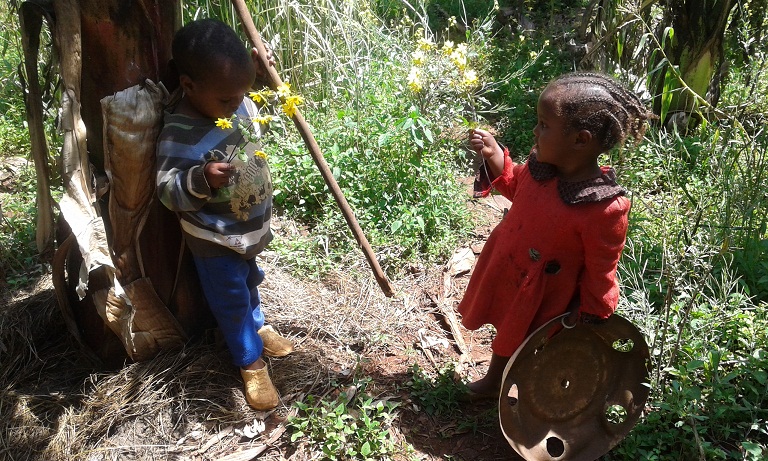
For several days in the street everywhere you could see people with chickens! Walking, riding on motorcycles, in bajajs, mini-busses … Everywhere! And also topic about the price of chicken he was one of the most common ones (because the price is not small, 250 birr, which is about 10 euro!). All these things are the sign of the approaching New Year, which we celebrate today! Ethiopia uses the Julian calendar, according to which today began year 2009. For me, it is still quite strange, once the celebration of the New Year in mid-September, secondly that it is year 2009, and thirdly that the year has 13 months … 🙂 However, here it is the most natural thing and great joy! All the people are very grateful to God that he brought them through another year and they ask to bless them for the new one. Celebrating this day is completely different from ours in Europe; there are no big New Year’s Eve parties. However, in the New Year’s Day, in the morning the girls walk on the streets and visit homes singing a special song – blessing for the New Year. Then give flowers – September in Ethiopia is the time when bloom very typical for this time yellow flowers, beautiful! However, nowadays the most commonly they give a flower drawn on paper. They also expect a small gift. It is also a family holiday – all people prepare doro wat (a special dish from the chicken, mentioned above), and together with the loved ones gather for a lunch. This is very joyful time 🙂

So, Happy New Year!

And let’s pray that God will bless the Ethiopians and give them peace.

flores

Magda Plekan, CLM in Awassa (Ethiopia)