
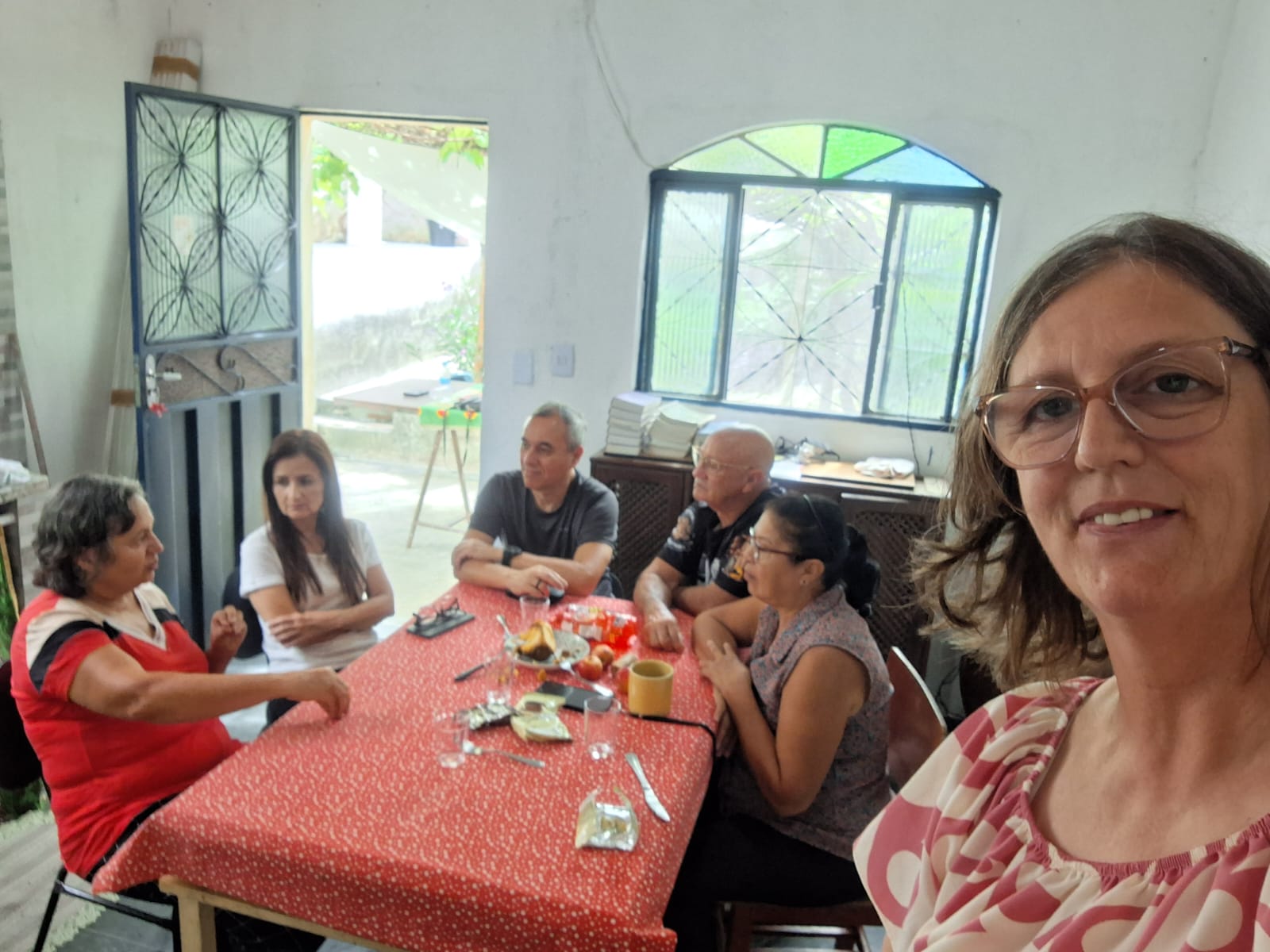
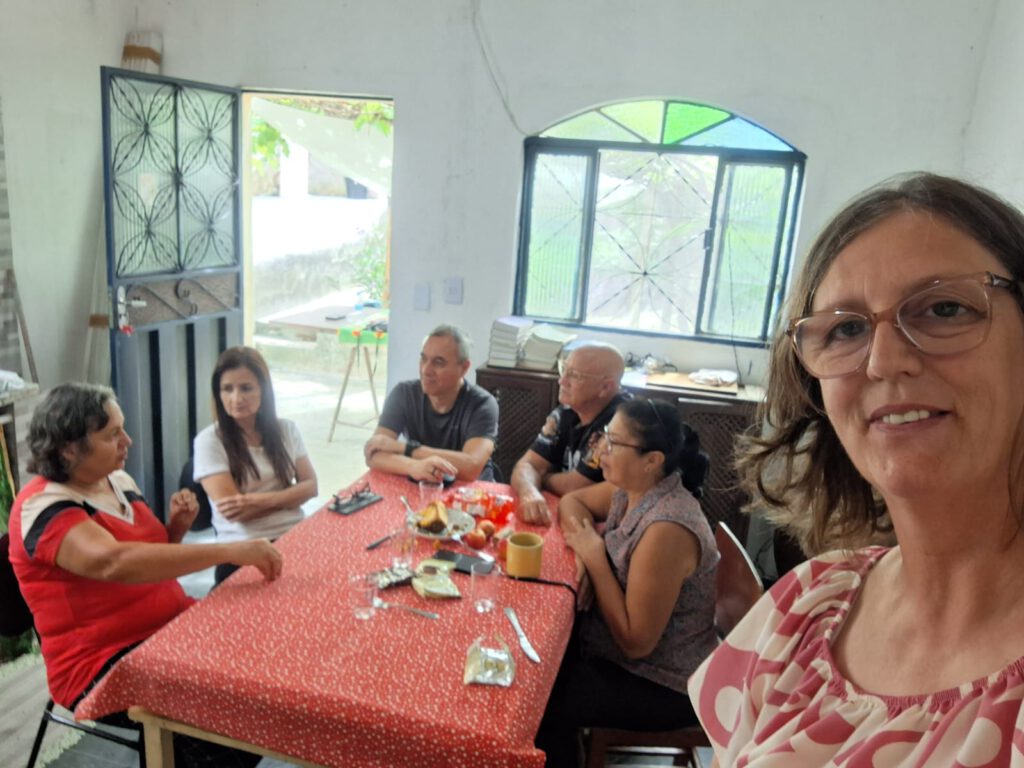
On the second day of the in-person segment of our journey, we were welcomed by Brother Marcos, a member of the Brothers of St. Gabriel, a congregation that has been present in the parish for many years and has worked in collaboration with the Comboni family since the beginning of their presence in the 1990s.
Continuing with the personal dimension of “self-discovery,” we had an introductory overview of the Enneagram, exploring the different types and helping us deepen our self-knowledge. It was a very enriching time of sharing and personal growth, and we committed to continuing this journey on a personal level.
Another memorable encounter was with the women’s group, who gather in the community for fabric painting, crochet, and other beautiful creations made by their own hands, during these moments of fellowship and relief from the pains of daily life.
On Tuesday, with Alan’s arrival from São José dos Campos, São Paulo, we began by sharing reflections on the previous days and offering the day’s prayer.
Adélia—a CLM resident of Contagem and a member of the ALMC Council—shared her life story and her work in the political arena, shedding light on some important points, such as the need to practice active listening in times of intense polarization, such as the one we are facing.
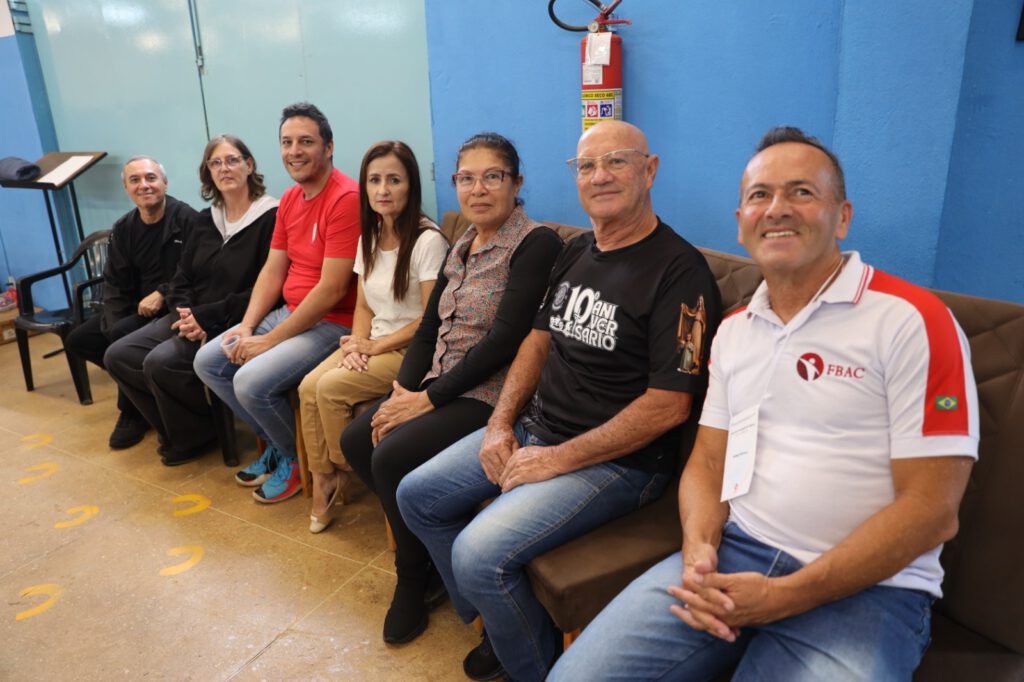
In the afternoon, Alejandro—a CLM from Guatemala—accompanied us to the APAC (prisons that apply a Restorative Justice method) in Santa Luzia, where we were welcomed by CLM Valdeci and Marcelo, who were there with the FBAC (Brazilian Fraternity for Assistance to the Incarcerated – https://site.fbac.net.br), who were conducting a leadership course for the “recuperandos” at the facility (the term used for inmates in prisons using the APAC method). This encounter with the recuperandos was very important, allowing us to immerse ourselves in this different reality.
We toured the APAC facility, learning about its entire methodology and organization, which enables a prison without armed guards, and where the inmates themselves are the protagonists in their resocialization process, involving their families and the community as well. From the initial apprehension of those unfamiliar with this work, a significant shift occurred after the visit, broadening horizons to the possibility of envisioning a rehabilitation process where the inmates themselves hold the keys to their cells.
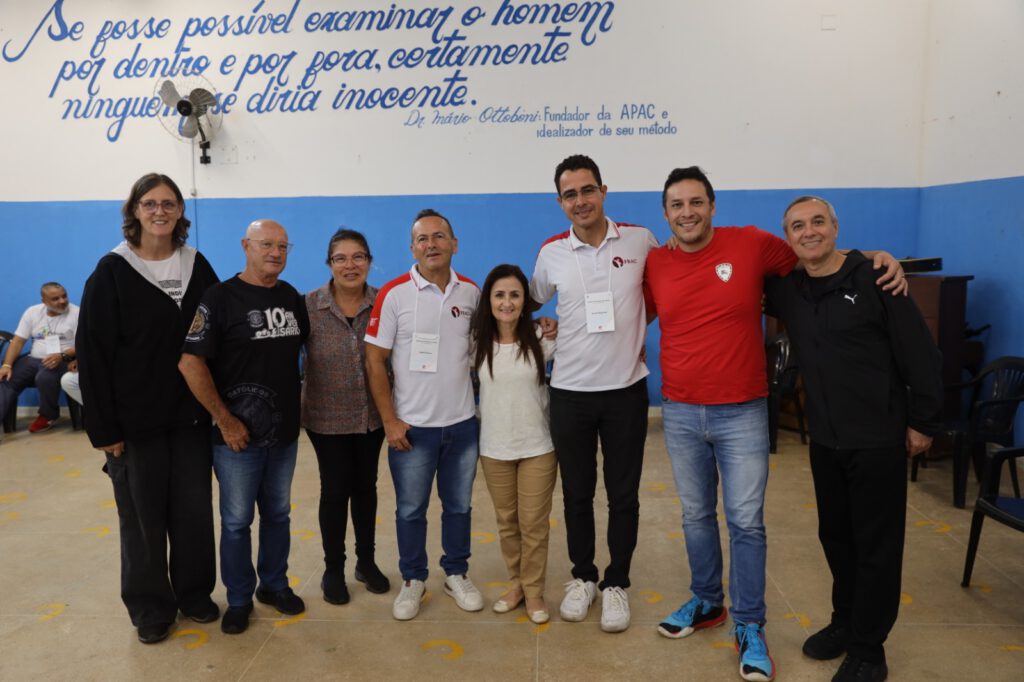
CLM 2026/2027 Itinerary Group


